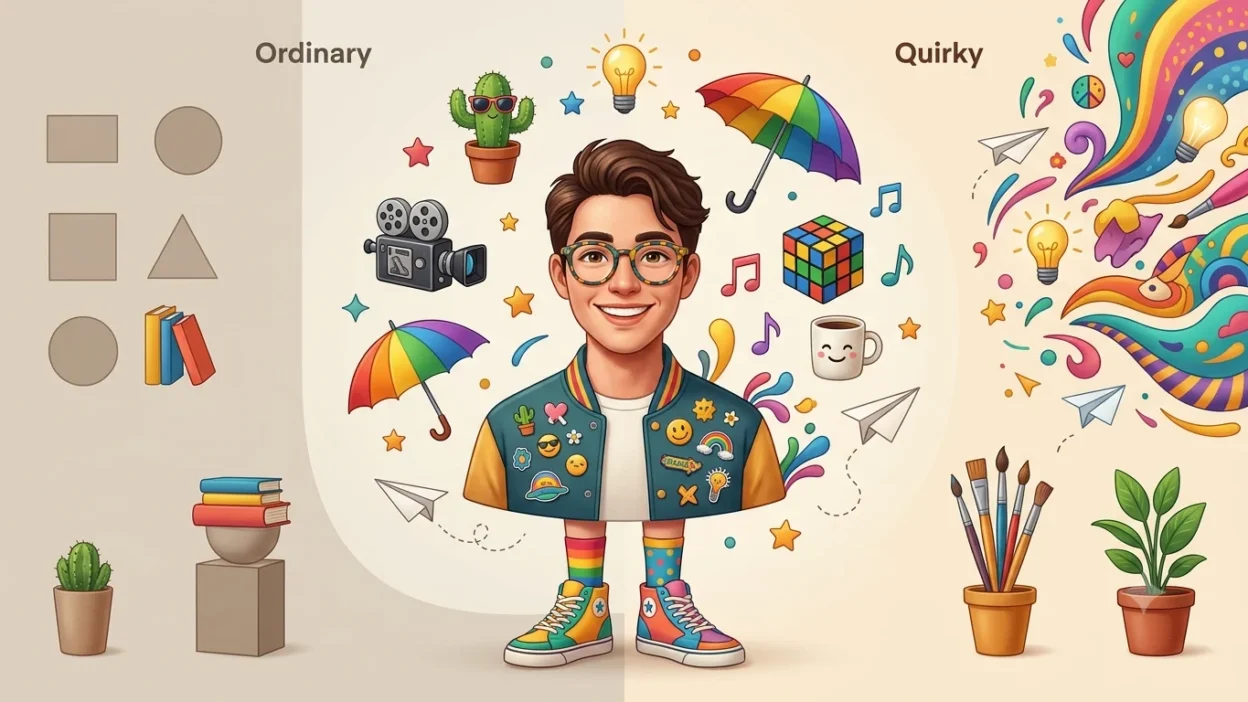
Not everyone who is quirky is weird—and that’s exactly what makes the word special. Have you ever heard someone described as “quirky” and wondered whether it was a compliment or an insult? Quirky (pronounced KWER-kee) is an adjective that describes someone or something with unusual, distinctive, or unexpected qualities that are charming, creative, and memorable.
Unlike weird or odd, quirky is usually a positive compliment, celebrating originality, individuality, and confidence. A quirky personality, quirky sense of humor, or quirky style stands out because it feels authentic rather than ordinary.
In simple terms, quirky means pleasantly unusual or charmingly different. Whether describing a person, café, fashion style, movie character, or creative idea, quirky highlights uniqueness in an appealing way. This guide explains its meaning, pronunciation, origin, examples, synonyms, antonyms, and how to use quirky naturally and confidently in everyday English.
What Does Quirky Mean?
The quirky meaning is surprisingly simple.
Quirky describes someone or something that is pleasantly unusual, creatively different, or charmingly unconventional in a way that makes them interesting, memorable, and enjoyable.
Unlike words such as weird, odd, or strange, the word quirky usually carries a positive emotional tone. Rather than suggesting something is abnormal, it highlights originality, creativity, personality, and individuality.
Today, quirky is commonly used to describe:
- People
- Personalities
- Humor
- Fashion
- Home décor
- Art and design
- Businesses and brands
- Books and movies
- Creative ideas
- Everyday habits
Dictionary Definition of Quirky
Quirky (adjective)
Definition: Having unusual or unexpected qualities, habits, or characteristics that are attractive, amusing, distinctive, or appealing.
Simple Meaning for Beginners
If you’re learning English, think of it this way:
Quirky = Different in a good way.
Someone who is quirky isn’t trying to be unusual—they naturally have little characteristics that make them stand out in a positive and memorable way.
Quirky Meaning in English
Here are the basics at a glance.
| Feature | Details |
|---|---|
| Word | Quirky |
| Part of Speech | Adjective |
| Pronunciation | /KWUR-kee/ |
| Meaning | Pleasantly unusual or uniquely different |
| Tone | Mostly positive |
| Common Use | Personality, fashion, humor, design, branding, creativity |
How Do You Spell Quirky?
Many people search how to spell quirky or accidentally type quarky, quirkyy, or quriky.
The correct spelling is:
Q-U-I-R-K-Y
Pronounced:
KWUR-kee
What Does the Word “Quirky” Really Mean?
At its core, the word celebrates individuality.
Instead of describing someone who simply follows the crowd, quirky highlights the little details that make a person or thing unique.
A quirky person may:
- Laugh at unexpected things.
- Wear colorful mismatched socks.
- Decorate their room creatively.
- Collect unusual souvenirs.
- Tell imaginative stories.
- Have fascinating hobbies.
- Think differently from everyone else.
These qualities don’t make someone strange—they make them memorable.
That’s why quirky has become one of the most positive personality words in modern English.
Quirky Meaning in a Person
A quirky person is someone whose natural personality includes charming, distinctive, or unconventional traits that make them stand out in a positive way.
Their uniqueness isn’t forced or fake.
Instead, it comes from being comfortable expressing who they really are.
A quirky person might have:
- An unusual sense of humor.
- Creative hobbies.
- Original ideas.
- Unique fashion choices.
- Interesting habits.
- Playful expressions.
- Unexpected talents.
- A memorable way of speaking.
These qualities often make people seem more approachable, authentic, and interesting.
Real-Life Examples
Example 1
“Emma always carries a tiny notebook where she writes funny ideas she hears during the day. Her quirky personality is one of the reasons everyone enjoys talking to her.”
Example 2
“Ryan collects antique cameras even though he rarely uses them. His quirky hobby always becomes a conversation starter.”
Example 3
“Sophia decorated her office desk with miniature plants, vintage postcards, and colorful stationery. Her quirky workspace reflects her creative personality.”
Each of these examples shows that quirky is about expressing individuality, not trying to be different for attention.
What Is a Quirky Personality?
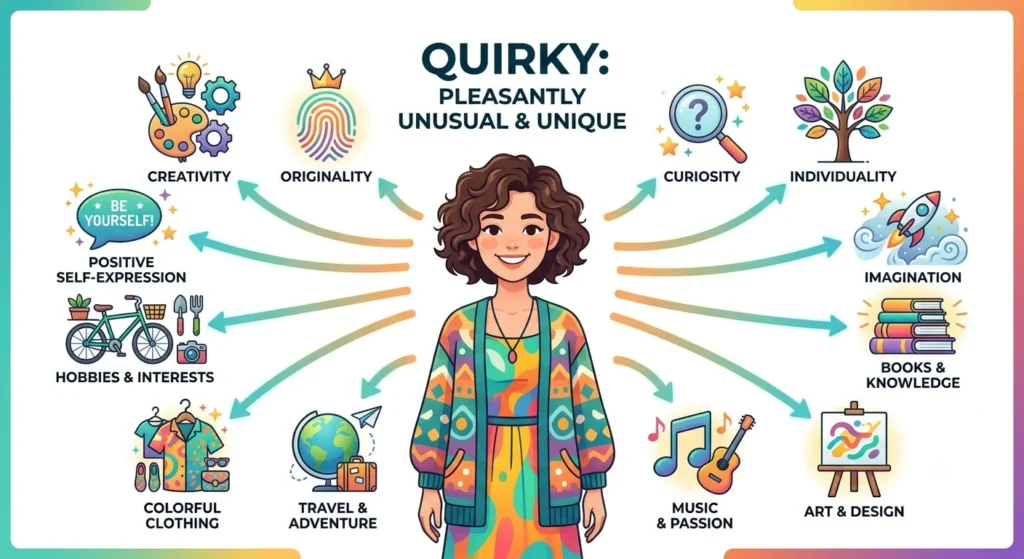
A quirky personality combines originality, creativity, curiosity, confidence, and authenticity.
Instead of copying trends, quirky people often create their own style and enjoy expressing themselves in unique ways.
While every quirky person is different, they often share a few common qualities.
Signs of a Quirky Personality
- They enjoy creative self-expression.
- They think outside the box.
- They appreciate unusual ideas.
- They often have memorable hobbies.
- They don’t mind standing out.
- They value authenticity over popularity.
- They see humor in everyday situations.
- They embrace their individuality.
Being quirky doesn’t mean being perfect—it simply means feeling comfortable enough to let your personality shine.
Why Do People Like Quirky Personalities?
Research in personality psychology suggests that people are often drawn to individuals who display authenticity, creativity, curiosity, and confidence. Quirky personalities frequently combine these qualities, making them appear more genuine, engaging, and memorable.
Rather than pretending to fit in, quirky people tend to embrace what makes them different. That sense of self-confidence often leaves a lasting impression in friendships, workplaces, classrooms, and creative communities.
In many cases, what first seems unusual becomes the very quality people admire most.
Quick Summary
If you only remember one thing, remember this:
Quirky means being pleasantly different. It’s a positive word used to describe people, personalities, ideas, styles, or places that stand out because of their originality, creativity, charm, and authenticity—not because they’re weird in a negative way.
Is Quirky a Compliment?
One of the most common questions people ask is:
“Is quirky a compliment?”
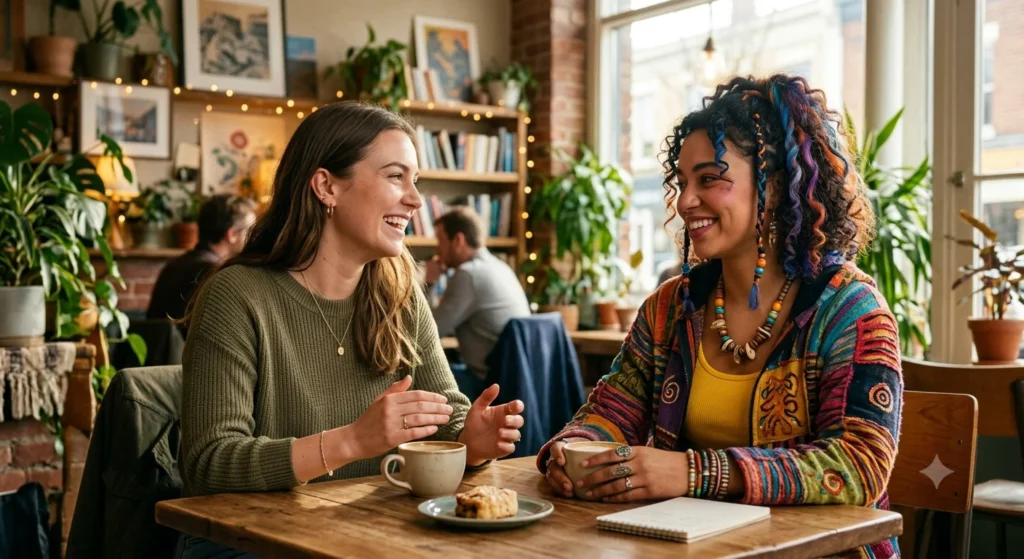
In most situations, yes. Being called quirky is generally considered a compliment because it highlights qualities like creativity, originality, confidence, and individuality.
Unlike words such as strange or odd, quirky has a much warmer and more positive meaning. It suggests that someone stands out because of their personality, ideas, style, or behavior in a way that others find interesting or memorable.
For example:
✔ “You have such a quirky sense of humor.”
✔ “I love your quirky fashion style.”
✔ “She has a quirky personality that makes everyone feel welcome.”
In each example, quirky expresses admiration rather than criticism.
Why Being Called Quirky Is Usually Positive
People often use quirky to describe someone who is:
- Creative
- Original
- Interesting
- Authentic
- Memorable
- Playful
- Confident
- Imaginative
- Fun to be around
Instead of blending into the crowd, quirky people often make everyday situations more enjoyable simply by being themselves.
Quick Answer: If someone calls you quirky with a smile or friendly tone, it’s almost always meant as a compliment.
Is Quirky an Insult?
Another popular search is:
- Is quirky an insult?
- Is being called quirky an insult?
- Is calling someone quirky an insult?
The answer is usually no.
In modern English, quirky has a positive or neutral meaning. It rarely functions as an insult unless the speaker uses it sarcastically.
For example:
Positive
“Your quirky ideas made this project much more interesting.”
Positive
“The café has a quirky atmosphere that everyone loves.”
Sarcastic
“Well… that’s certainly… quirky.”
In the last example, the speaker’s tone—not the word itself—creates the negative feeling.
Can Quirky Ever Sound Negative?
Yes, but only in certain situations.
If someone deliberately uses quirky to mock another person’s behavior, appearance, or personality, it may feel dismissive. However, this is relatively uncommon.
Most dictionaries and language experts agree that quirky generally has a positive connotation.
Is Quirky Positive or Negative?
If you searched:
- Is quirky good or bad?
- Is quirky positive or negative?
- Is quirky bad?
Here’s the simple answer:
Quirky is overwhelmingly positive.
Today, people often admire originality more than perfection. That’s one reason words like quirky, authentic, and unique have become increasingly popular in conversations, social media, and creative industries.
Positive Uses of Quirky
People often describe these things as quirky:
- A creative personality
- An artistic home
- A colorful fashion style
- A memorable café
- An unusual bookstore
- A playful office
- A creative business
- A unique sense of humor
These examples show that quirky celebrates individuality rather than criticizing it.
Crone Meaning 🌕 Ancient Power & Transformation
What Makes Someone Quirky?
Many people wonder:
- What makes someone quirky?
- What does being quirky mean?
- What is a quirky person?
A quirky person isn’t someone who tries to be different. Instead, their uniqueness feels natural and genuine.
People are often described as quirky because they have small characteristics that make them memorable.
These qualities may include:
Creative Thinking
Quirky people often enjoy solving problems in original ways and looking at everyday situations from fresh perspectives.
Unique Hobbies
Collecting vintage cameras, restoring old furniture, learning unusual languages, or painting miniature figures are examples of hobbies that people sometimes describe as quirky.
Individual Style
Some people express themselves through colorful clothing, handmade jewelry, or vintage fashion rather than following every trend.
Distinctive Humor
Quirky humor often comes from clever observations, playful storytelling, or unexpected jokes instead of traditional punchlines.
Authentic Personality
Perhaps the biggest quality of all is authenticity.
Quirky people usually aren’t pretending to be different—they simply feel comfortable being themselves.
The Psychology Behind Quirkiness
From a psychological perspective, quirkiness is often connected with several positive personality traits.
These include:
- Creativity
- Curiosity
- Openness to new experiences
- Self-expression
- Individuality
- Confidence
- Imagination
People with these qualities are often more willing to explore new ideas, experiment with different hobbies, and express themselves without worrying too much about fitting in.
That doesn’t mean every creative person is quirky or every quirky person is highly creative. However, these characteristics often overlap.
In many cases, people find quirky personalities refreshing because they feel genuine rather than predictable.
Quirky Personality Definition
A quirky personality is a personality that naturally includes charmingly unusual habits, interests, humor, or behaviors that make someone stand out in a positive and memorable way.
Someone with a quirky personality often:
- Thinks independently.
- Enjoys learning new things.
- Expresses ideas creatively.
- Has unique tastes.
- Appreciates originality.
- Makes ordinary situations more interesting.
Rather than following the crowd, they enjoy expressing their authentic self.
What Does Quirky Mean in Personality?
When people ask,
“What does quirky mean in personality?”
they’re usually referring to someone whose behavior feels refreshingly different.
A quirky personality doesn’t mean someone is loud or dramatic.
Instead, it often means they have small, lovable habits that make them unique.
Examples include:
- Keeping a notebook filled with random ideas.
- Wearing colorful socks under formal clothes.
- Naming houseplants.
- Decorating a workspace with vintage postcards.
- Collecting unusual souvenirs from every trip.
These habits aren’t strange—they simply reflect individuality.
Quirky Person Meaning
A quirky person is someone who expresses their personality in ways that are original, charming, and slightly unconventional.
They might:
- Laugh at unexpected moments.
- Ask interesting questions.
- Enjoy unusual hobbies.
- Wear distinctive clothes.
- Think creatively.
- Notice details that others overlook.
Their uniqueness often makes them enjoyable to spend time with because they bring fresh perspectives into everyday conversations.
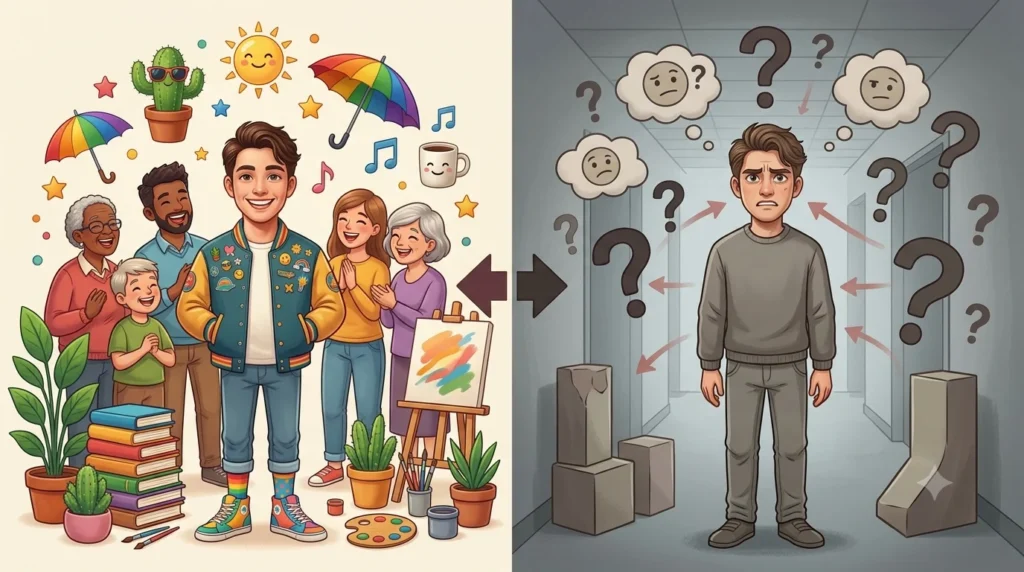
Difference Between Quirky and Weird
One of the biggest misunderstandings is thinking that quirky and weird mean exactly the same thing.
Although both describe someone who is different, they create very different impressions.
| Quirky | Weird |
|---|---|
| Pleasantly unusual | Simply unusual |
| Positive or affectionate | Neutral or sometimes negative |
| Creative | Strange |
| Charming | Confusing |
| Memorable | Unexpected |
| Individualistic | Often difficult to understand |
Easy Way to Remember
Think of it like this:
Quirky is weird with charm.
Someone who’s quirky usually makes people smile.
Someone who’s weird may simply leave people confused.
That’s why saying,
“She has a quirky personality.”
feels very different from saying,
“She has a weird personality.”
The first sounds like praise.
The second may sound critical.
Quirky vs. Unique vs. Eccentric
These words are similar, but they’re not interchangeable.
| Word | Meaning | Common Tone |
|---|---|---|
| Quirky | Charmingly unusual | Positive |
| Unique | One of a kind | Positive |
| Eccentric | Extremely unconventional | Neutral to slightly negative |
| Whimsical | Playfully imaginative | Positive |
| Offbeat | Different from the usual | Positive |
Among these words, quirky usually has the friendliest and most approachable tone.
That’s why it’s commonly used in conversations, dating profiles, movie reviews, lifestyle blogs, and social media captions.
Origin and Etymology of Quirky
Have you ever wondered where the word quirky came from?
Understanding its history makes it easier to remember its meaning and use it correctly.
The word quirky comes from the older English noun quirk, which first appeared in the 16th century. At that time, quirk referred to an unexpected twist, a peculiar feature, or an unusual habit.
Over the centuries, the meaning gradually evolved. By the late 19th and early 20th centuries, quirky began describing people or things with unusual characteristics. Instead of sounding negative, it increasingly suggested originality, charm, and individuality.
Today, the word is commonly associated with creativity, authenticity, and self-expression. Whether describing a person, a home, a fashion style, or a business, quirky usually celebrates the qualities that make something unique and memorable.
Evolution of the Word
| Time Period | Meaning of “Quirk” or “Quirky” |
|---|---|
| 1500s | An unexpected twist or peculiar feature |
| 1700s | An unusual habit or characteristic |
| Early 1900s | Someone slightly unconventional |
| Today | Pleasantly unusual, creative, and charming |
Language changes over time, and quirky is a perfect example of a word that has developed a much more positive meaning than it once had.
Is Quirky a Slang Word?
Many people search:
- Quirky meaning slang
- What does quirky mean in slang?
- Is quirky slang?
- Quirky Urban Dictionary
The answer is simple:
No, quirky is not slang.
It is a standard English adjective found in dictionaries and used in both formal and informal communication.
However, because the word appears frequently on TikTok, Instagram, YouTube, and other social media platforms, some people mistakenly assume it’s internet slang.
Why Do People Think It’s Slang?
Modern social media has made words like quirky, iconic, chaotic, and aesthetic much more common in everyday conversations.
For example:
- “I’m so quirky 😂.”
- “She’s giving quirky vibes.”
- “Stay quirky!”
- “That’s such a quirky outfit!”
Although these expressions are informal, the meaning of quirky stays exactly the same—it still refers to someone or something that is uniquely charming or pleasantly different.
Quirky Meaning in Different Contexts
One reason the word quirky is so popular is that it can describe many different things. While its core meaning remains the same, the exact nuance changes depending on the context.
Let’s look at the most common uses.
Quirky Meaning in Texting
In text messages and online chats, quirky is often used as a playful compliment.
It usually refers to someone doing something unexpectedly funny, creative, or uniquely “them.”
Examples
Friend: “You brought cupcakes to a study session?”
You: “Of course! Studying is better with dessert.”
Friend: “You’re so quirky 😂.”
In this example, quirky means playfully unique.
Another example:
“Only you would organize your bookshelf by rainbow colors. That’s so quirky!”
Quirky Meaning on Instagram and TikTok
If you spend time on social media, you’ve probably seen captions like:
- Quirky vibes ✨
- Quirky girl energy
- Stay quirky
- Living my quirky life
- Quirky aesthetic
- Quirky style
On platforms like Instagram and TikTok, quirky usually celebrates individuality and creativity.
People use the word when sharing:
- Colorful outfits
- Vintage fashion
- DIY projects
- Artistic cafés
- Creative room décor
- Handmade crafts
- Fun photography
- Unusual hobbies
Rather than trying to look perfect, quirky content focuses on expressing personality.
Quirky Style Meaning
A quirky style is a fashion or personal style that stands out because it’s original, playful, and creative.
It doesn’t follow every trend. Instead, it reflects someone’s personality.
Examples include:
- Mixing vintage and modern clothing
- Wearing bold colors
- Choosing unusual accessories
- Styling outfits creatively
- Wearing handmade jewelry
- Pairing unexpected patterns together
The goal isn’t to look strange—it’s to create a look that’s authentic and memorable.
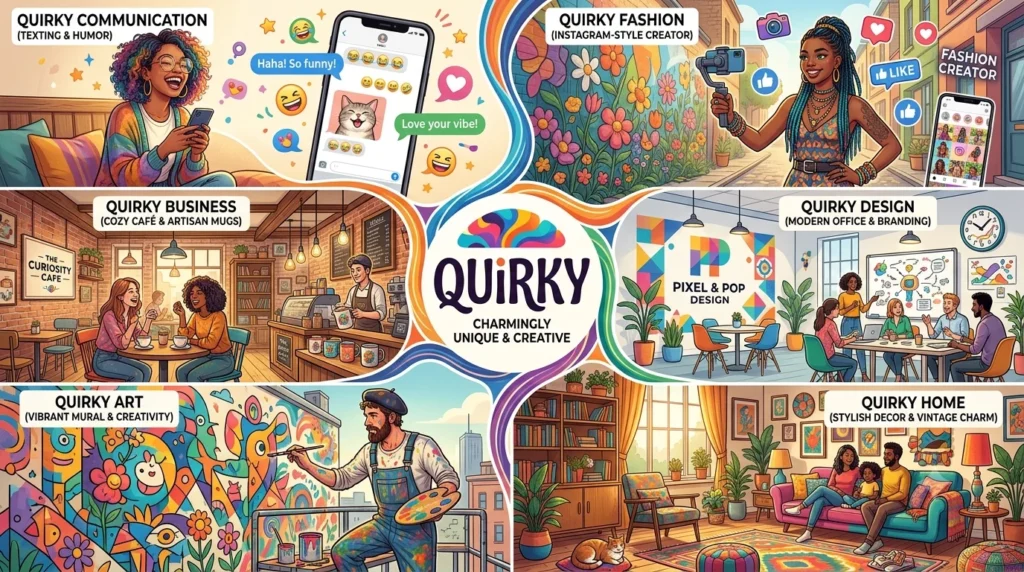
Quirky Fashion Meaning
Fashion magazines often use quirky fashion to describe clothing that’s imaginative rather than conventional.
Someone with quirky fashion might wear:
- Bright sneakers with formal clothes
- Colorful socks
- Vintage jackets
- Graphic shirts
- Handmade accessories
- Patterned scarves
- Creative hats
Their clothing reflects self-expression rather than simply following current trends.
Quirky Design Meaning
The phrase quirky design usually refers to creative visual styles that feel fresh, playful, or unexpected.
You might hear it used for:
- Interior design
- Product packaging
- Graphic design
- Websites
- Logos
- Furniture
- Architecture
Examples of quirky design include:
- Bright color combinations
- Asymmetrical layouts
- Vintage furniture
- Hand-drawn illustrations
- Creative lighting
- Unexpected decorative elements
Businesses often use quirky design to create a memorable brand identity.
Quirky House Meaning
When someone describes a quirky house, they’re talking about a home with lots of personality.
A quirky house might include:
- Hidden reading corners
- Colorful front doors
- Eclectic furniture
- Vintage decorations
- Creative wallpaper
- Indoor swings
- Artistic wall murals
- Handmade decorations
Instead of looking perfectly modern, quirky homes feel warm, personal, and imaginative.
Quirky Humor Meaning
One of the most common compliments is:
“You have a quirky sense of humor.”
But what exactly does that mean?
Quirky humor isn’t about telling loud jokes or performing comedy routines.
Instead, it’s based on:
- Clever observations
- Unexpected comments
- Playful imagination
- Dry wit
- Funny storytelling
- Seeing humor in everyday life
People with quirky humor often make others laugh because they notice little details most people overlook.
Quirky Smile Meaning
A quirky smile is slightly unusual in a charming way.
It might be:
- A playful grin
- A crooked smile
- A mischievous smile
- A shy smile with lots of personality
Rather than looking perfectly posed, a quirky smile feels natural and memorable.
Quirky Vibes Meaning
If someone says,
“She’s giving quirky vibes.”
they usually mean the person seems:
- Creative
- Relaxed
- Confident
- Artistic
- Fun
- Different in a positive way
The phrase is especially common on TikTok, Instagram, Pinterest, and lifestyle blogs.
Quirky Meaning in Business and Branding
Businesses also use quirky as a marketing word.
A quirky brand often has:
- Creative packaging
- Playful advertising
- Original product names
- Friendly communication
- Memorable logos
- Fun customer experiences
Many successful cafés, bookstores, gift shops, and lifestyle brands intentionally build quirky identities because they help customers remember them.
Example:
“The café became famous for its quirky décor, handwritten menus, and colorful coffee mugs.”
Quirky Meaning in Relationships
In friendships and relationships, being called quirky is usually a sign of affection.
Someone might admire your:
- Funny habits
- Creative ideas
- Unique traditions
- Unexpected surprises
- Original conversations
For example:
“I love how quirky you are. You always find ways to make ordinary days exciting.”
In this context, quirky reflects warmth, appreciation, and emotional connection.
Quirky Meaning for Kids
Explaining quirky to children should be simple and encouraging.
Quirky means having special or interesting qualities that make someone different in a fun and positive way.
For example:
“Noah loves wearing superhero socks with his school uniform. That’s one of his quirky habits.”
This child-friendly definition helps children understand that being different can be something to celebrate rather than hide.
APB Meaning Explained 🚨 | Full Form & Use
How to Use “Quirky” Correctly
Now that you understand the quirky meaning, the next step is learning how to use the word naturally in everyday English.
The word quirky is most often used as an adjective to describe a person, personality, habit, object, place, idea, style, or behavior that is pleasantly unusual or creatively different.
You Can Use “Quirky” to Describe:
- People
- Personalities
- Fashion styles
- Homes and décor
- Businesses and brands
- Cafés and restaurants
- Books and movies
- Art and illustrations
- Humor
- Hobbies
- Pets
- Everyday habits
Correct Examples
✔ “She has a quirky personality that makes everyone smile.”
✔ “The café has quirky decorations and colorful furniture.”
✔ “I love his quirky sense of humor.”
✔ “Their quirky marketing campaign attracted thousands of customers.”
✔ “The artist is famous for her quirky illustrations.”
✔ “My grandmother has a quirky habit of singing while she cooks.”
In each sentence, quirky highlights something memorable, creative, or charming.
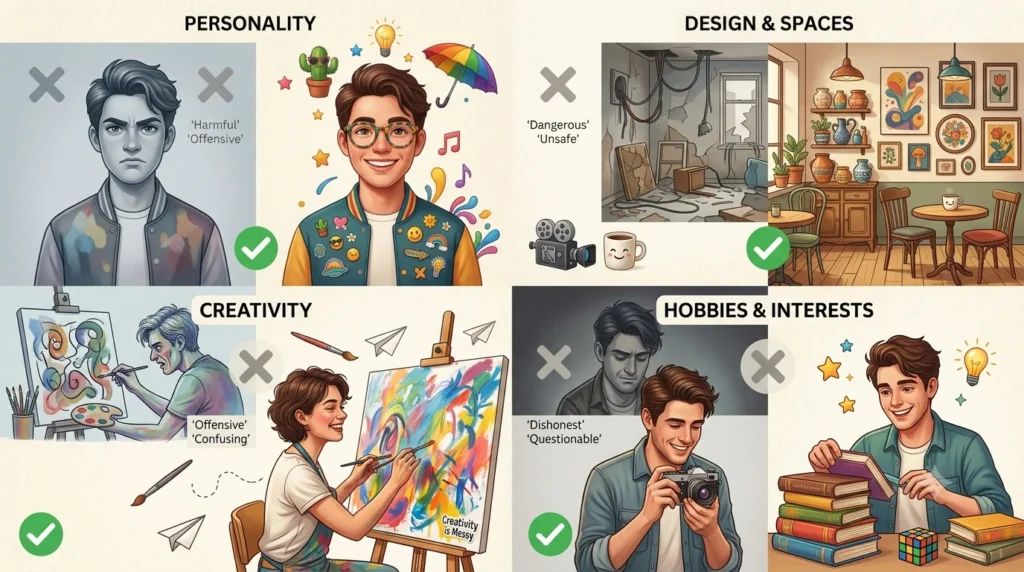
When You Shouldn’t Use “Quirky”
Although quirky is a positive word, it doesn’t fit every situation.
Avoid using quirky for things that are harmful, offensive, dangerous, or upsetting.
Incorrect Examples
❌ “His reckless driving is quirky.”
❌ “That scam was quirky.”
❌ “Bullying is quirky.”
These examples sound unnatural because quirky describes pleasant individuality, not negative behavior.
Instead, use words such as:
- Dangerous
- Careless
- Harmful
- Offensive
- Inappropriate
- Irresponsible

Quirky in a Sentence (30+ Examples)
One of the easiest ways to remember a word is by seeing it used naturally.
Here are examples covering different situations.
About People
- She has a quirky personality that everyone loves.
- Ethan’s quirky jokes always make the office laugh.
- My neighbor has a quirky habit of greeting every dog by name.
- Olivia’s quirky imagination makes her stories unforgettable.
- His quirky smile immediately puts people at ease.
About Fashion
- Her quirky outfit combined sneakers with a vintage dress.
- Jake enjoys quirky socks with funny patterns.
- Their quirky style reflects their artistic personality.
- The designer became famous for quirky fashion collections.
- She prefers quirky accessories instead of expensive jewelry.
About Homes
- Their quirky house is full of colorful paintings.
- The apartment has quirky furniture collected from antique markets.
- Every room has its own quirky theme.
- The quirky decorations give the café a cozy atmosphere.
- Visitors love the quirky little bookstore downtown.
About Work and Business
- The company uses quirky advertisements to attract younger customers.
- Our office has a quirky coffee corner with handmade mugs.
- The brand’s quirky packaging makes its products memorable.
- Customers enjoy the shop’s quirky atmosphere.
- The startup became popular because of its quirky branding.
About Hobbies
- Mia has the quirky hobby of collecting vintage postcards.
- His quirky interest in astronomy surprises everyone.
- Emma enjoys creating quirky handmade gifts.
- My cousin has a quirky collection of old maps.
- Painting tiny houses is one of Liam’s quirky hobbies.
Everyday Conversations
- Only you would think of that—you’re so quirky!
- I love your quirky sense of humor.
- She has such quirky ideas.
- That’s a wonderfully quirky café.
- His quirky personality makes every conversation interesting.
Difference Between Quirky and Similar Words
Many English learners confuse quirky with words like weird, eccentric, unique, odd, and whimsical.
Although these words are related, they have different meanings.
Quirky vs. Weird
| Quirky | Weird |
|---|---|
| Pleasantly unusual | Simply unusual |
| Usually positive | Neutral or negative |
| Creative | Strange |
| Charming | Confusing |
| Endearing | Sometimes uncomfortable |
Example
✔ “She has a quirky personality.” (Positive)
✔ “That situation was weird.” (Neutral or negative)
Quirky vs. Unique
People also search:
- Is quirky the same as unique?
- Difference between quirky and unique
Both words describe something different, but unique simply means “one of a kind.”
Quirky, however, adds personality, warmth, and charm.
| Unique | Quirky |
|---|---|
| One of a kind | Charmingly different |
| Neutral | Positive |
| Doesn’t imply personality | Often describes personality |
Quirky vs. Eccentric
Although both describe unconventional people, eccentric is much stronger.
| Quirky | Eccentric |
|---|---|
| Mildly unusual | Extremely unconventional |
| Friendly tone | More formal |
| Common in conversation | Less common in everyday speech |
| Often playful | Can sound more serious |
Example:
A person who wears colorful socks is quirky.
Someone who builds an upside-down house and lives in it might be called eccentric.
Quirky vs. Whimsical
These words overlap but aren’t identical.
Whimsical focuses on imagination and fantasy.
Quirky focuses on personality and originality.
For example:
- A whimsical fairy tale
- A quirky personality
Quirky vs. Odd
The word odd simply means unusual.
Unlike quirky, it doesn’t automatically suggest anything positive.
Example:
“His behavior seemed odd.”
sounds much less friendly than:
“His behavior is quirky.”
Synonyms of Quirky
If you’re looking for another word with a similar meaning, these are some of the best options.
| Synonym | Best Used For |
|---|---|
| Unique | General descriptions |
| Original | Creative ideas |
| Distinctive | Professional writing |
| Offbeat | Casual conversations |
| Whimsical | Artistic subjects |
| Unconventional | Formal writing |
| Creative | Ideas and personality |
| Imaginative | Art and storytelling |
| Individualistic | Personality |
| Idiosyncratic | Academic writing |
Positive Synonyms
- Original
- Creative
- Distinctive
- Individual
- Offbeat
- Inventive
- Expressive
- Unconventional
Antonyms of Quirky
The opposite of quirky includes words such as:
- Ordinary
- Conventional
- Typical
- Predictable
- Traditional
- Standard
- Common
- Plain
- Unremarkable
- Generic
These words describe people or things that blend in rather than stand out.
Common Mistakes People Make
Even native English speakers sometimes misunderstand the word.
Mistake #1: Thinking Quirky Means Weird
This is the biggest misconception.
Remember:
Quirky = pleasantly different.
Weird = simply different (sometimes negatively).
Mistake #2: Using Quirky for Bad Behavior
Quirky should describe positive individuality—not dangerous, rude, or harmful actions.
Incorrect:
❌ “His cheating was quirky.”
Correct:
✔ “His behavior was dishonest.”
Mistake #3: Overusing the Word
Not every unusual thing is quirky.
Reserve the word for qualities that feel genuinely charming, creative, or memorable.
Mistake #4: Confusing Quirky with Funny
Someone can be funny without being quirky.
Likewise, a quirky person doesn’t always tell jokes.
Quirkiness often comes from personality, habits, interests, or creativity rather than humor alone.
Frequently Asked Questions About Quirky
If you still have questions about the quirky meaning, you’re not alone. Below are clear, concise answers to some of the most common questions people search online.
What Does a Quirky Person Mean?
A quirky person is someone with unique habits, interests, or personality traits that make them stand out in a positive way. They often express themselves creatively, think differently, or have charming little behaviors that others find memorable rather than strange.
For example, someone who collects vintage postcards, wears colorful socks, or has a playful sense of humor may be described as quirky.
What Does Quirky Mean in a Person?
When used to describe a person, quirky means they have an original, slightly unconventional personality that feels authentic and appealing.
Rather than trying to fit in, quirky people often embrace what makes them different. Their confidence, creativity, and individuality are usually what others admire most.
What Does Quirky Mean in Personality?
A quirky personality is one that naturally combines creativity, originality, curiosity, humor, and authenticity. People with quirky personalities often enjoy unusual hobbies, think outside the box, or express themselves in distinctive ways.
Being quirky doesn’t mean acting strangely on purpose—it simply means being comfortable with who you are.
Is Quirky a Good Compliment?
Yes.
In modern English, calling someone quirky is usually meant as a compliment. It suggests that the person is refreshingly different, creative, interesting, or memorable.
For example:
“I love your quirky style.”
“Your quirky sense of humor always makes me smile.”
Both sentences express appreciation rather than criticism.
Is Being Called Quirky a Compliment?
Almost always.
When friends, coworkers, or family members describe someone as quirky, they’re typically recognizing the person’s originality and individuality.
However, as with any adjective, the speaker’s tone matters. If it’s used sarcastically, it could sound less positive, but that’s the exception rather than the rule.
Is Quirky an Insult?
No. Quirky is generally not considered an insult.
It usually has a positive or neutral meaning and describes someone who is pleasantly unusual.
Only in rare cases—when spoken sarcastically—might it sound slightly negative.
Is Quirky Positive or Negative?
The word quirky is overwhelmingly positive.
It often suggests qualities such as:
- Creativity
- Confidence
- Originality
- Individuality
- Authenticity
- Playfulness
That’s why it’s commonly used in compliments, social media captions, lifestyle blogs, and creative industries.
Does Quirky Mean Cute?
Not exactly, but the two ideas often overlap.
A quirky person may be seen as cute because their unique habits or personality feel genuine, playful, and endearing.
For example:
- Smiling at random dogs while walking.
- Wearing colorful mismatched socks.
- Decorating notebooks with tiny doodles.
- Giving funny names to houseplants.
These habits aren’t necessarily “cute” by definition, but many people find them charming.
Does Quirky Mean Weird?
Not really.
Although both words describe someone who is different, quirky has a much more positive meaning.
A quirky person is pleasantly unusual.
A weird person may simply be unusual, confusing, or difficult to understand.
That’s why many people prefer being called quirky instead of weird.
What Makes Someone Quirky?
People are often considered quirky because they naturally display qualities such as:
- Creative thinking
- Original ideas
- Unique hobbies
- Interesting habits
- Distinctive humor
- Individual style
- Curiosity
- Authentic self-expression
It’s not about trying to stand out—it’s about comfortably being yourself.
Can a House Be Quirky?
Yes.
A quirky house is one with lots of personality and creative design elements.
It may include:
- Colorful front doors
- Vintage furniture
- Hidden reading corners
- Handmade decorations
- Artistic wall paintings
- Eclectic décor
These unique features make the home memorable and inviting.
What Is Quirky Fashion?
Quirky fashion refers to clothing that expresses personality rather than simply following trends.
Examples include:
- Vintage jackets
- Bright colors
- Handmade jewelry
- Colorful socks
- Patterned scarves
- Unusual accessories
The goal is self-expression, creativity, and individuality.
What Is Quirky Humor?
A quirky sense of humor comes from seeing everyday situations in unexpected ways.
Instead of relying on traditional jokes, quirky humor often includes:
- Clever observations
- Dry wit
- Playful storytelling
- Unexpected comparisons
- Creative imagination
Many beloved movie characters and comedians are known for their quirky humor.
Can Businesses Be Quirky?
Absolutely.
Many successful businesses intentionally build quirky brands to stand out from competitors.
Examples include:
- Creative packaging
- Colorful interiors
- Funny product names
- Playful advertisements
- Friendly customer experiences
A quirky brand often feels more memorable because it has a distinct personality.
Can Pets Be Quirky?
Yes.
People often describe pets as quirky when they have funny or unusual habits.
For example:
- A cat that sleeps inside a shoe.
- A dog that watches television.
- A parrot that sings songs every morning.
- A rabbit that carries toys around the house.
These behaviors make pets more lovable and memorable.
Can Food Be Quirky?
Yes.
Restaurants sometimes create quirky dishes by combining unexpected ingredients or presenting food in imaginative ways.
Examples include:
- Rainbow-colored pancakes
- Animal-shaped desserts
- Creative milkshakes
- Artistic coffee designs
Here, quirky suggests creativity rather than unusual taste.
Is Quirky a Good Personality Trait?
In many situations, yes.
A quirky personality often reflects:
- Confidence
- Creativity
- Curiosity
- Authenticity
- Emotional warmth
- Individuality
These qualities can help people build stronger friendships, express themselves more freely, and leave lasting positive impressions.
Conclusion
The quirky meaning is much more than simply being different. It describes a person, place, idea, style, or habit that stands out because of its originality, creativity, and charm.
Whether you’re talking about a quirky personality, quirky fashion, quirky humor, quirky home, or quirky business, the word almost always carries a positive message. It celebrates the qualities that make people and things memorable rather than ordinary.
In today’s world, where individuality is valued more than ever, being called quirky is usually something to appreciate. It suggests that you’re authentic, creative, and confident enough to express yourself without trying to fit into every expectation.
So the next time someone smiles and says, “You’re quirky,” you can take it as a compliment—because your uniqueness is often your greatest strength.

Lucas Hayes is a content writer at Meanovia, specializing in slang, texting meanings, and internet phrases. He creates simple, clear, and engaging explanations of modern digital language 💬✨