Have you ever heard someone say, “We’re at DEFCON 3,” and instantly thought, “Does that mean World War III is about to start?” You’re not alone. Thanks to movies, breaking news, and social media, DEFCON 3 is one of the most misunderstood military terms in the world, often mistaken for an immediate declaration of war or a nuclear emergency.
In reality, DEFCON 3 means “Increase in Force Readiness Above Normal Readiness”—a higher state of military preparedness that signals increased vigilance and operational readiness, not that war is inevitable. Understanding the difference matters because misinformation can quickly turn routine military terminology into unnecessary panic.
Whether you discovered the term in a news headline, documentary, military article, video game, movie, or online discussion, this guide explains the DEFCON 3 meaning, how the five DEFCON levels work, when DEFCON 3 has been used in history, what changes at this alert level, common myths, and exactly why it is important without the Hollywood exaggeration.
What Is DEFCON 3? Simple Explanation
When people hear the phrase “DEFCON 3”, they often imagine a situation where a country is seconds away from war. Movies, television shows, and online discussions have made the term sound more dramatic than it actually is.
The real DEFCON 3 meaning is much more specific.
DEFCON 3 is a military readiness level that tells U.S. armed forces to prepare for a possible escalation of threats. It means commanders have increased their level of preparedness and certain military units may need to respond faster than they would during normal conditions.
In simple words:
DEFCON 3 means the military is more alert than usual and ready to act quickly if necessary, but it does not mean an active war is happening.
The term belongs to the Defense Readiness Condition (DEFCON) system, a five-level military alert framework created to help the United States coordinate military responses during periods of international tension or emergencies.
Why Is Everyone Searching for DEFCON 3 Meaning?
The phrase DEFCON 3 often appears during discussions about:
- International conflicts
- Military tensions
- Presidential decisions
- Cybersecurity threats
- Nuclear concerns
- Historical events
- Movies and television shows
- Online debates and memes
Many people search:
- What does DEFCON stand for?
- What does DEFCON 3 mean?
- Is DEFCON 3 bad?
- Are we at DEFCON 3?
- What are the DEFCON levels?
- What does DEFCON mean in military terms?
- What does DEFCON 1 mean?
- What does DEFCON 5 mean?
The reason for this curiosity is simple: DEFCON sounds like a warning system, but most people do not know what each level actually represents.
Understanding the DEFCON scale helps separate real military information from exaggerations found online.
What Does DEFCON Stand For?
DEFCON is an abbreviation for:
Defense Readiness Condition
It is a U.S. military system used to describe the current level of readiness required by the armed forces.
The DEFCON acronym was designed to provide a simple and standardized way for military leaders to communicate readiness levels across different branches of the U.S. military.
Instead of sending complex instructions every time a threat changes, commanders can refer to a DEFCON level that immediately indicates how prepared forces should be.
The system helps coordinate:
- Military operations
- Strategic planning
- Emergency responses
- National defense preparations
What Does DEFCON Mean in Military Terms?
In military terms, DEFCON means a measure of defense readiness.
The lower the DEFCON number, the higher the readiness level.
This often confuses people because many alert systems work the opposite way. For example:
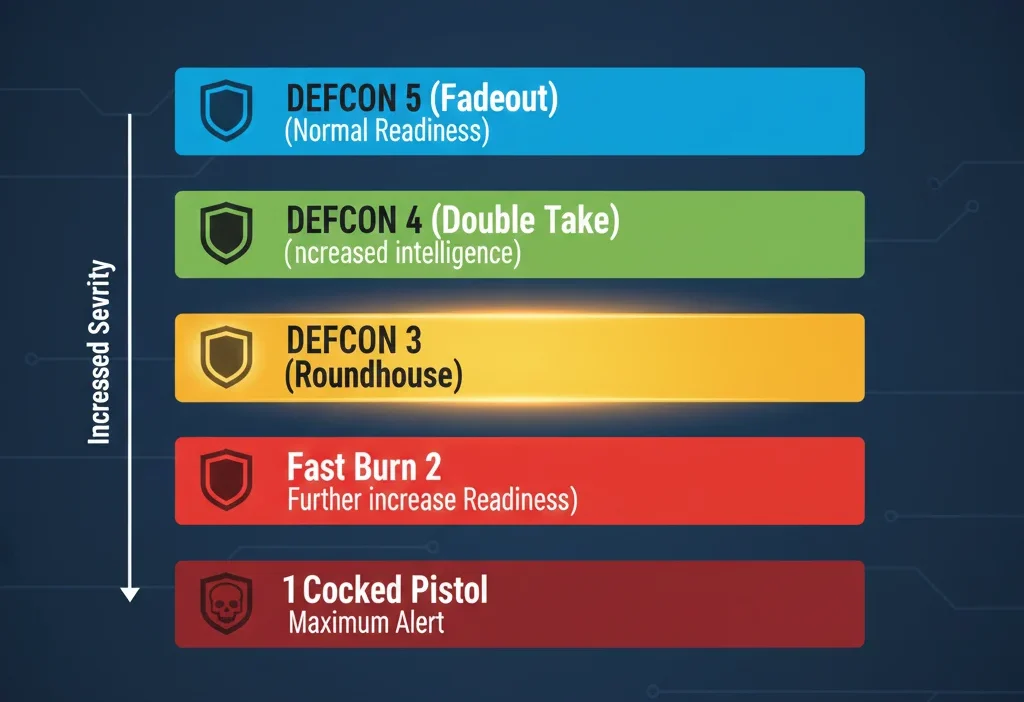
- DEFCON 5 = normal readiness
- DEFCON 4 = increased awareness
- DEFCON 3 = increased force readiness
- DEFCON 2 = very high readiness
- DEFCON 1 = maximum readiness
A simple way to remember it:
DEFCON number goes down → military readiness goes up
How the DEFCON Alert System Works
The DEFCON alert system was created to help military leaders respond quickly during dangerous situations while maintaining organized communication.
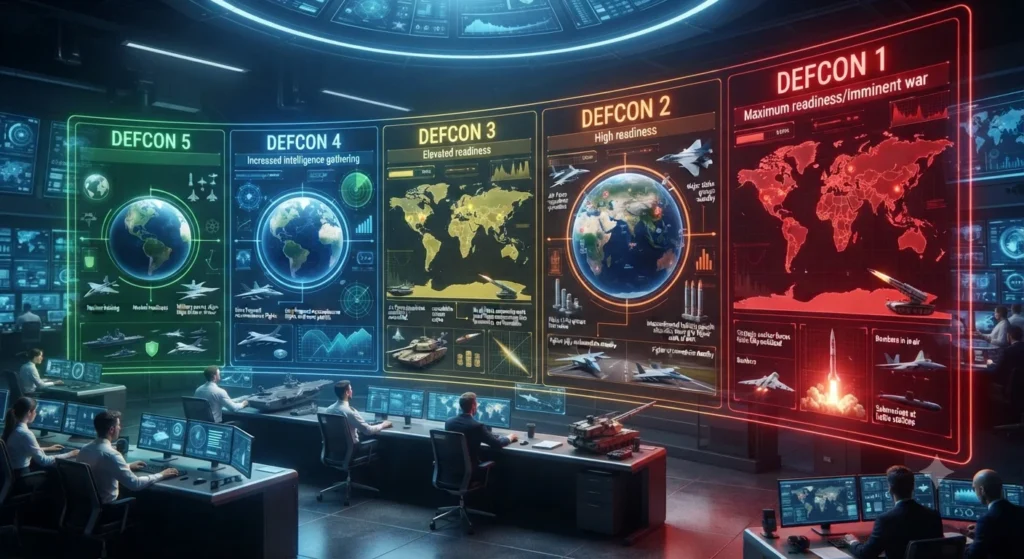
The system contains five levels:
DEFCON 5
Normal peacetime readiness.
DEFCON 4
Increased intelligence monitoring and security awareness.
DEFCON 3
Increased military readiness above normal.
DEFCON 2
Military forces prepared for rapid deployment.
DEFCON 1
Maximum readiness during an extreme crisis.
Each level represents a different stage of preparedness. Moving to a higher readiness level does not automatically mean conflict will occur. It means military planners are preparing for possible developments.
Key Takeaways About DEFCON 3
Before exploring the details, here are the most important facts:
1. DEFCON 3 Does Not Mean War
One of the biggest misunderstandings is believing that DEFCON 3 means the United States is already fighting a war.
That is incorrect.
DEFCON 3 means increased readiness—not active combat.
2. DEFCON 3 Is Not the Highest Alert
Many people assume DEFCON 3 is the most dangerous level because it sounds serious.
However:
- DEFCON 2 is higher.
- DEFCON 1 is the highest.
3. Current DEFCON Levels Are Usually Not Public
People often search:
“Are we at DEFCON 3 today?”
However, the exact nationwide DEFCON status is generally not publicly announced because operational military readiness information can involve national security consideratio
DEFCON Levels Explained: What Do DEFCON 1, 2, 3, 4, and 5 Mean?
One of the most searched questions about the DEFCON system is:
“What do the different DEFCON levels mean?”
The DEFCON scale contains five levels, ranging from normal peacetime readiness to the highest state of military preparedness. Understanding these levels helps explain why DEFCON 3 meaning, DEFCON 1 meaning, DEFCON 2, DEFCON 4, and DEFCON 5 meaning are frequently searched online.
The most important thing to remember is:
A lower DEFCON number means a higher level of military readiness.
DEFCON 5 Meaning: Normal Military Readiness
DEFCON 5 is the lowest alert level and represents normal peacetime conditions.
At DEFCON 5:
- Military forces operate under routine procedures.
- Standard training and operations continue.
- No unusual emergency preparations are required.
- Defense organizations maintain normal monitoring.
Many people incorrectly assume that DEFCON 5 is the highest level because the number is larger. However, the DEFCON system works in reverse:
DEFCON 5 = lowest readiness
DEFCON 1 = highest readiness
In everyday terms, DEFCON 5 means there is no unusual military alert situation requiring increased preparation.
DEFCON 4 Meaning: Increased Intelligence Monitoring
DEFCON 4 indicates a higher level of awareness compared with normal peacetime conditions.
At this level:
- Intelligence activities may increase.
- Security monitoring may become stronger.
- Military planners pay closer attention to possible threats.
However, DEFCON 4 does not mean a military conflict is about to begin.
It is better understood as a precautionary stage where officials remain alert and gather additional information.
Examples of situations that could require increased awareness include:
- Rising international tensions
- Emerging security concerns
- Regional conflicts
- Potential threats requiring closer observation
DEFCON 3 Meaning: Increased Force Readiness
DEFCON 3 meaning is one of the most searched military terms because it represents a significant increase in readiness.
Officially, DEFCON 3 means:
Increase in Force Readiness Above Normal Readiness
At this level:
- Military forces prepare for faster responses.
- Certain units may move to higher readiness positions.
- Command structures increase operational awareness.
- The military becomes prepared for possible escalation.
Historically, DEFCON 3 has been associated with major moments of international tension.
However, it is important to understand:
DEFCON 3 does not mean the United States is at war.
It means military leaders believe conditions require greater preparation than normal.
Is DEFCON 3 Bad?
A common question is:
“Is DEFCON 3 bad?”
The answer is:
DEFCON 3 is serious, but it is not automatically a disaster.
It indicates that military officials are taking a situation seriously and increasing readiness. However, there are still higher levels above it.
A simple comparison:
| Level | Situation |
|---|---|
| DEFCON 5 | Normal conditions |
| DEFCON 4 | Increased awareness |
| DEFCON 3 | Increased readiness |
| DEFCON 2 | Near maximum readiness |
| DEFCON 1 | Maximum readiness |
So while DEFCON 3 represents a more serious situation than normal, it does not mean immediate war.
ONB Meaning: The Deeper Tone Most Ignore
DEFCON 2 Meaning: Very High Readiness
DEFCON 2 is one level below the highest DEFCON condition.
At this stage:
- Military forces are prepared for extremely rapid action.
- Strategic assets are placed at a very high state of readiness.
- Leaders anticipate that a crisis could escalate quickly.
DEFCON 2 is extremely rare.
The most famous historical example occurred during the Cuban Missile Crisis, when the Strategic Air Command was reportedly placed at DEFCON 2 while the broader U.S. military reached DEFCON 3.
This event remains one of the closest known moments when the United States approached the highest levels of military alert during the Cold War.
DEFCON 1 Meaning: Maximum Military Readiness
DEFCON 1 is the highest level in the Defense Readiness Condition system.
It represents:
- Maximum military preparedness
- The most severe possible security situation
- An extreme crisis involving imminent or ongoing major conflict
Because DEFCON 1 represents such an extraordinary situation, it has never been publicly confirmed as the nationwide status of the entire United States military.
Movies often portray DEFCON 1 as something that happens frequently during fictional crises, but in reality, reaching this level would represent a historically significant event.
DEFCON Scale Summary Table
| DEFCON Level | Meaning | Readiness |
|---|---|---|
| DEFCON 5 | Normal peacetime readiness | Lowest |
| DEFCON 4 | Increased intelligence and security awareness | Low |
| DEFCON 3 | Increased force readiness above normal | Medium |
| DEFCON 2 | Armed forces ready for rapid deployment | Very High |
| DEFCON 1 | Maximum readiness | Highest |
History of the DEFCON System
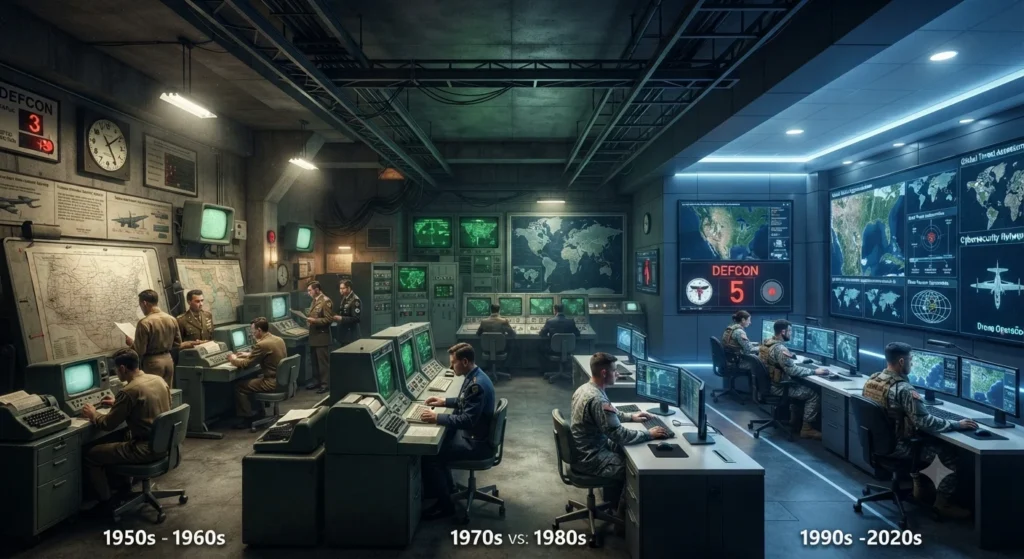
The Defense Readiness Condition (DEFCON) system was created in 1959 during the Cold War.
During this period, the United States and the Soviet Union were involved in a prolonged geopolitical rivalry. The possibility of a sudden military confrontation created a need for a standardized alert system.
Before DEFCON existed, different branches of the military could use different methods of describing readiness. This created the possibility of confusion during emergencies.
The new system provided a common language that allowed military leaders to communicate quickly and efficiently.
The DEFCON system was designed to help answer important questions:
- How prepared should military forces be?
- How quickly should units respond?
- What level of caution is required?
- How should different branches coordinate?
Major Historical Events Involving DEFCON 3
Although most DEFCON decisions are not publicly discussed, several historical events have confirmed the use of DEFCON 3.
Cuban Missile Crisis (1962)
The Cuban Missile Crisis was one of the most dangerous moments of the Cold War.
During the crisis:
- The Soviet Union placed nuclear missiles in Cuba.
- The United States discovered the missile installations.
- Tensions between the two nations reached an extremely dangerous point.
Publicly available historical information indicates that the United States moved to DEFCON 3 during this crisis.
The Strategic Air Command was reportedly moved even higher to DEFCON 2, representing an extraordinary level of military readiness.
The crisis ended through diplomatic negotiations, avoiding direct military conflict.
Yom Kippur War (1973)
During the Yom Kippur War, tensions between global powers increased as conflict spread in the Middle East.
The United States raised military readiness to DEFCON 3 due to concerns about possible escalation involving the Soviet Union.
This event demonstrated how DEFCON levels could be used not only during direct attacks against the United States but also during international situations that could potentially expand.
September 11 Attacks (2001)
Following the terrorist attacks on September 11, 2001, the United States increased military readiness.
Public reports confirmed that the military moved to DEFCON 3 after the attacks.
The purpose was to:
- Increase national defense readiness
- Prepare military responses
- Protect against additional threats
This remains one of the most well-known modern examples connected to DEFCON 3.
Has DEFCON 3 Ever Been Declared?
Yes.
Based on publicly available historical records, DEFCON 3 has been used during several major national security events, including:
- The Cuban Missile Crisis (1962)
- The Yom Kippur War (1973)
- The September 11 attacks (2001)
However, not every military crisis results in DEFCON 3.
Military leaders consider many factors before changing readiness levels, including:
- Intelligence information
- International developments
- Potential threats
- Military requirements
Are We at DEFCON 3 Today? Understanding Current DEFCON Levels
One of the most searched questions related to the DEFCON system is:
“Are we at DEFCON 3 today?”
Many people search this after seeing news about wars, international conflicts, cyberattacks, or political tensions. However, understanding the answer requires knowing how the DEFCON system actually works.
The current U.S. DEFCON level is generally not publicly disclosed. Military readiness conditions involve sensitive national security information, so official announcements about nationwide DEFCON status are rare.
This means online claims such as:
- “The U.S. is at DEFCON 3!”
- “America moved to DEFCON 2!”
- “DEFCON 1 is happening!”
should always be checked carefully.
Social media posts, rumors, and unofficial websites often use DEFCON terminology incorrectly or exaggerate situations.
How Is the DEFCON Level Decided?
The DEFCON level is not changed because of public opinion or news headlines.
Military leaders consider multiple factors, including:
- Intelligence assessments
- International security developments
- Military threats
- Potential conflicts
- Strategic risks
- National defense requirements
A DEFCON change represents a carefully evaluated military decision.
It does not happen automatically every time there is a global crisis.
Why Is the Current DEFCON Level Usually Secret?
People often ask:
“What is the DEFCON level today?”
The reason there is usually no public answer is that military readiness information can reveal important details about:
- How prepared forces are
- Response capabilities
- Strategic planning
- Military operations
Keeping this information limited helps protect national security.
Historical DEFCON changes become known because they are later confirmed through official statements, military records, or historical research.
DEFCON 3 Meaning in Slang and Everyday Language
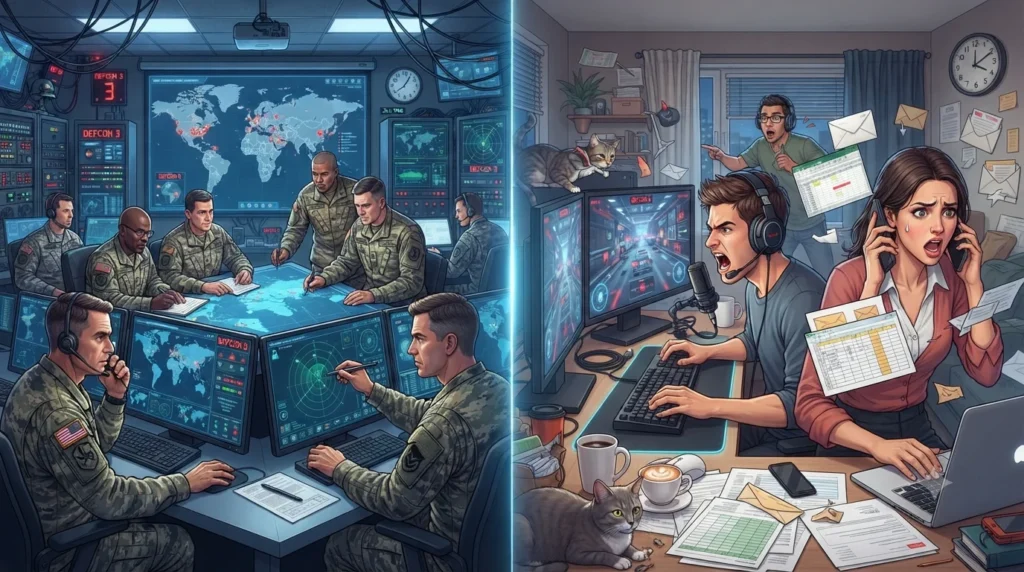
Beyond its official military definition, DEFCON 3 meaning slang has become popular in everyday conversations.
When someone says:
“We’re going DEFCON 3.”
they usually mean:
“The situation is becoming serious, and we need to prepare.”
In casual use, it can describe:
- A stressful situation
- A busy deadline
- A family emergency
- A workplace crisis
- A competitive challenge
The phrase is often used humorously rather than literally.
Examples of DEFCON 3 Slang Usage
Workplace Example
Employee:
“The client wants major changes two hours before launch.”
Manager:
“Everyone, we’re officially at DEFCON 3.”
Meaning:
The team needs to focus because the situation has become urgent.
Family Example
Person 1:
“Why is everyone cleaning so quickly?”
Person 2:
“Guests are arriving in 20 minutes. It’s DEFCON 3.”
Meaning:
Everyone is rushing because the situation has become stressful.
Gaming Example
Player 1:
“The enemy team is attacking our base.”
Player 2:
“DEFCON 3! Protect the objective!”
Meaning:
The team needs to become more alert and coordinated.
Sniffies Meaning: Why It’s Popular in Adult Communities
DEFCON Meaning in Movies and Pop Culture
The phrase DEFCON became widely recognized because of entertainment.
Movies, television shows, and video games often use DEFCON levels to create tension. When a character says:
“Raise DEFCON!”
viewers immediately understand that the situation is becoming dangerous.
However, fictional portrayals often exaggerate how quickly DEFCON levels change.
In reality:
- Military decisions involve extensive evaluation.
- Readiness changes are carefully controlled.
- Current levels are not usually announced publicly.
Popular culture helped make DEFCON a common phrase, but it also created many misconceptions.
DEFCON vs INFOCON vs FPCON: What’s the Difference?
Many people confuse DEFCON with other military readiness systems.
Although these systems are related, they measure different types of preparedness.
| System | Full Name | Purpose |
|---|---|---|
| DEFCON | Defense Readiness Condition | Overall military readiness |
| INFOCON | Information Operations Condition | Cyber and information security readiness |
| FPCON | Force Protection Condition | Protection of military personnel and facilities |
DEFCON
DEFCON focuses on the overall readiness of U.S. military forces.
It answers:
“How prepared should the armed forces be?”
INFOCON
INFOCON relates to information operations and cybersecurity.
It focuses on:
- Digital threats
- Cybersecurity risks
- Protection of information systems
FPCON
FPCON focuses on physical security.
It helps protect:
- Military bases
- Personnel
- Facilities
- Operations
Understanding these differences prevents confusion between military alert systems.
DEFCON Myths vs Facts
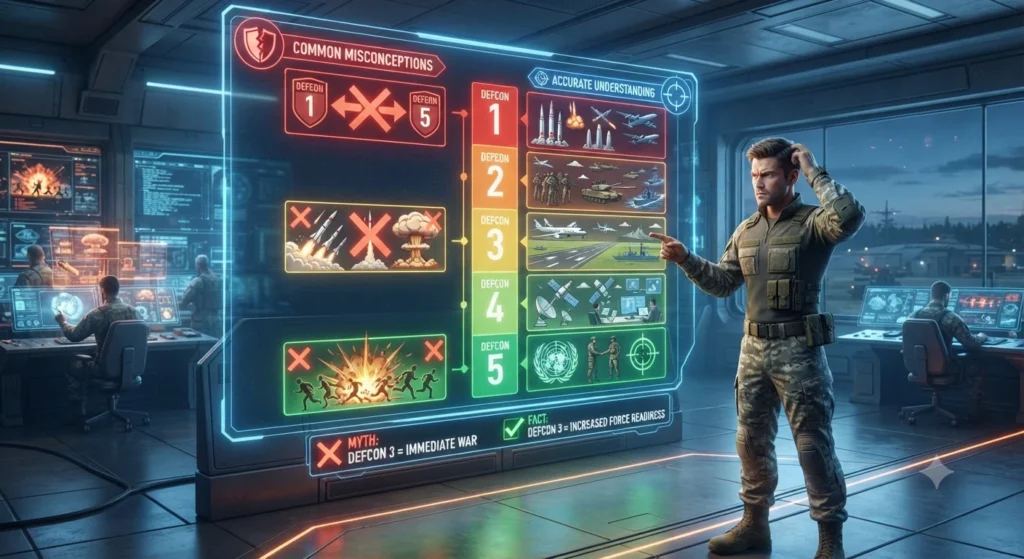
Myth 1: DEFCON 3 Means Nuclear War Is Starting
Fact:
DEFCON 3 means increased readiness, not nuclear war.
There are higher levels above it, including DEFCON 2 and DEFCON 1.
Myth 2: DEFCON 5 Is the Most Dangerous Level
Fact:
This is one of the most common mistakes.
DEFCON 5 is the lowest readiness level.
DEFCON 1 is the highest.
Myth 3: The Public Always Knows the Current DEFCON Level
Fact:
The current nationwide DEFCON status is generally not publicly available.
Myth 4: Every International Crisis Causes DEFCON Changes
Fact:
Not every conflict leads to a DEFCON adjustment.
Military leaders evaluate many factors before changing readiness levels.
Common DEFCON Mistakes People Make
When searching for DEFCON meaning, people often confuse:
DEFCON vs Death Con
Some people write:
- death con 3 meaning
- deathcon meaning
- what does death con mean
This is a common spelling mistake.
DEFCON means Defense Readiness Condition.
It is unrelated to the phrase “death con.”
DEFCON vs DEF CON Conference
Another common confusion is:
DEF CON
The famous cybersecurity conference uses a similar name but is a separate topic.
The military term is:
DEFCON = Defense Readiness Condition
The cybersecurity event is:
DEF CON = hacking and cybersecurity conference
They are not the same thing.
DEFCON Glossary
DEFCON
Defense Readiness Condition, a U.S. military alert system.
DEFCON Level
A measurement of military preparedness.
Defense Readiness Condition
The official expanded name of DEFCON.
Military Alert System
A system used to communicate readiness during possible threats.
Strategic Readiness
The ability of military forces to respond quickly when required.
INFOCON
Information Operations Condition related to cyber readiness.
FPCON
Force Protection Condition related to physical security.
Key Facts to Remember
Before you leave, remember these important points:
✓ DEFCON means Defense Readiness Condition.
✓ DEFCON 3 means increased military readiness.
✓ DEFCON 3 is serious but not the highest alert.
✓ DEFCON 1 is the highest readiness level.
✓ DEFCON 5 is normal peacetime readiness.
✓ Current DEFCON levels are usually not publicly announced.
✓ The term is also commonly used as slang for stressful situations.
✓ Movies often exaggerate the meaning of DEFCON alerts.
Frequently Asked Questions About DEFCON 3 Meaning
What does DEFCON stand for?
DEFCON stands for Defense Readiness Condition. It is a five-level U.S. military alert system designed to communicate the readiness level required by the armed forces during different security situations.
The DEFCON acronym helps military leaders quickly understand how prepared forces should be without sharing lengthy operational instructions.
What does DEFCON 3 mean?
DEFCON 3 means increased force readiness above normal readiness.
In simple terms, it means the U.S. military is more prepared than usual and certain forces may be ready to respond more quickly if needed.
However, DEFCON 3 does not mean:
- War has officially started.
- A nuclear attack is guaranteed.
- Civilians should panic.
It is a heightened readiness condition, not an automatic sign of conflict.
What is DEFCON 3 meaning in military terms?
In military terms, DEFCON 3 indicates that forces have increased their readiness level due to a potential threat or serious situation.
It allows military organizations to prepare for possible escalation while remaining below the highest alert conditions.
The exact operational actions connected to DEFCON levels are not fully public because many details involve national security information.
Is DEFCON 3 bad?
DEFCON 3 is serious, but it is not the worst alert level.
It means military leaders consider a situation important enough to increase preparedness.
The DEFCON scale continues upward in seriousness:
- DEFCON 5 = Normal readiness
- DEFCON 4 = Increased awareness
- DEFCON 3 = Increased readiness
- DEFCON 2 = Very high readiness
- DEFCON 1 = Maximum readiness
So DEFCON 3 indicates concern, but it does not automatically mean disaster.
What does DEFCON mean in slang?
In slang, DEFCON is often used to describe how intense or stressful a situation has become.
For example:
“The office is at DEFCON 3 before the deadline.”
This means:
“The situation is becoming serious and everyone needs to focus.”
This casual use is different from the official military meaning.
What does DEFCON 1 mean?
DEFCON 1 is the highest level in the Defense Readiness Condition system.
It represents maximum military readiness during an extreme crisis involving an imminent or ongoing major conflict.
Although DEFCON 1 appears frequently in movies and fictional stories, it is an extremely rare condition.
What does DEFCON 2 mean?
DEFCON 2 means military forces are at an extremely high level of readiness, just below DEFCON 1.
It indicates that forces are prepared for rapid action during a severe international crisis.
One historical example connected to DEFCON 2 occurred during the Cuban Missile Crisis, when the Strategic Air Command was reportedly moved to this level.
What does DEFCON 4 mean?
DEFCON 4 indicates increased intelligence monitoring and security awareness.
It represents a higher level of caution compared with normal peacetime conditions but does not mean a military conflict is about to happen.
What does DEFCON 5 mean?
DEFCON 5 is the lowest alert level and represents normal peacetime readiness.
At this level:
- Military operations continue normally.
- Forces maintain routine preparedness.
- No unusual emergency measures are required.
What are the DEFCON levels?
The DEFCON levels are:
| DEFCON Level | Meaning |
|---|---|
| DEFCON 5 | Normal peacetime readiness |
| DEFCON 4 | Increased intelligence monitoring |
| DEFCON 3 | Increased force readiness |
| DEFCON 2 | Armed forces ready for rapid deployment |
| DEFCON 1 | Maximum readiness |
Has DEFCON 3 ever been declared?
Yes.
Publicly known historical examples include:
Cuban Missile Crisis (1962)
The United States increased readiness during one of the most dangerous moments of the Cold War.
Yom Kippur War (1973)
The U.S. raised readiness due to concerns about possible wider international escalation.
September 11 Attacks (2001)
The United States increased military readiness following the terrorist attacks.
Are we at DEFCON 3 today?
The current nationwide DEFCON level is generally not publicly disclosed.
Military readiness information can involve sensitive national security details, so official current DEFCON levels are rarely announced publicly.
People should be careful with online claims about “current DEFCON level” unless they come from reliable sources.
What is the worst DEFCON level?
DEFCON 1 is the worst and highest DEFCON level.
It represents maximum military readiness and the most severe possible security situation.
What is DEFCON III?
DEFCON III is another way of writing DEFCON 3.
The Roman numeral style was historically used in some military contexts, but today the standard writing is usually:
DEFCON 3
Is DEFCON an acronym?
Yes.
DEFCON is an acronym for:
Defense Readiness Condition
Conclusion
Understanding the DEFCON 3 meaning helps clear up confusion around one of the most recognized military alert terms. DEFCON 3 represents increased military readiness above normal conditions, but it does not mean war has started or that a nuclear attack is imminent.
The DEFCON system allows the U.S. military to prepare for potential threats while maintaining organized responses. Whether you see DEFCON 3 in news reports, movies, or everyday conversations, you now know its true meaning, history, and importance.
Remember, the lower the DEFCON number, the higher the level of military readiness.

Kinza ✨ is a content writer at Meanovia, specializing in slang, texting meanings, and internet phrases. She simplifies modern digital language for easy understanding and daily use 💬🔥