
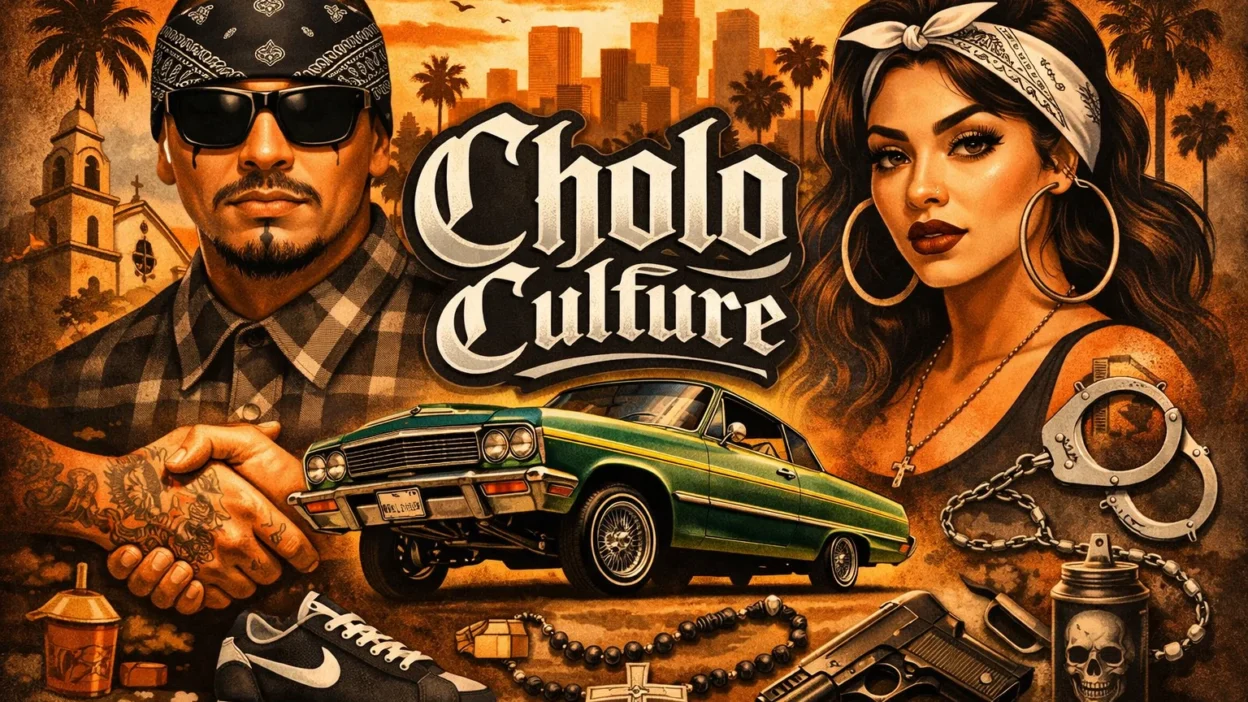
Have you ever heard someone use the word cholo in a movie, rap song, social media post, or everyday conversation and wondered whether it describes a culture, a person, a style, or something offensive? You’re not alone.
The word cholo is one of the most misunderstood terms in English and Spanish because its meaning changes dramatically depending on the country, history, and context in which it is used. In short, cholo can refer to a person associated with a distinctive urban subculture, describe someone of Indigenous or mixed ancestry in certain regions, or be used as slang that ranges from neutral to offensive depending on who says it and where.
Because there is no single universal definition, understanding the context is essential before using the term. This guide explains the cholo meaning, pronunciation, origin, cultural significance, regional differences, examples, and exactly how to understand and use the word respectfully, accurately, and confidently in modern English.
What Does Cholo Mean?
At its core, cholo is a word whose meaning depends on where it is used, who is saying it, and the cultural context behind it.
Today, the term is most commonly associated with Mexican-American culture, where it can describe a person connected to a distinctive community, lifestyle, fashion, and shared heritage. For many people, being a cholo reflects neighborhood pride, family loyalty, resilience, and cultural identity—not criminal behavior.
Historically, however, the word has much older roots. During the Spanish colonial era, cholo was used as a social classification related to ancestry. As the centuries passed, the term developed different meanings across Latin America. In countries like Peru, Bolivia, and Ecuador, it often relates to Indigenous or mixed heritage, while in the United States it became closely linked with Chicano and barrio culture.
This is why cholo meaning in Spanish is not always the same as cholo meaning in English.
Simple Definition
Cholo is a culturally significant term that may refer to a person associated with Mexican-American identity, barrio culture, or, in some Latin American countries, Indigenous or mixed heritage. Its meaning varies by region and context, so it should always be understood within the culture in which it is used.
Why Is the Word “Cholo” So Confusing?
Many people become confused because the internet often gives only one definition. In reality, cholo has several meanings that have changed over time.
For example:
- In Mexico and the United States, it is commonly linked with Mexican-American culture, neighborhood identity, and a recognizable fashion style.
- In Peru, it may refer to Indigenous or mixed ancestry and can be either respectful or offensive depending on the speaker and situation.
- In everyday conversation, some people use cholo affectionately, while others use it as slang. Because of this, context matters far more than a literal translation.
Understanding these differences helps avoid stereotypes and encourages respectful communication.
Cholo Meaning at a Glance
| Context | Meaning |
|---|---|
| Mexican-American culture | Cultural identity, heritage, community, and style |
| English usage | Informal regional term connected with Mexican-American culture |
| Spanish usage | Meaning varies by country and region |
| Peru | Indigenous or mixed heritage; tone determines whether it is respectful or offensive |
| Mexico | Urban cultural identity influenced by Chicano traditions |
| Slang | May describe someone associated with cholo culture or style |
| Offensive use | Can be offensive when used to stereotype or insult someone |
The Origin and History of the Word “Cholo”
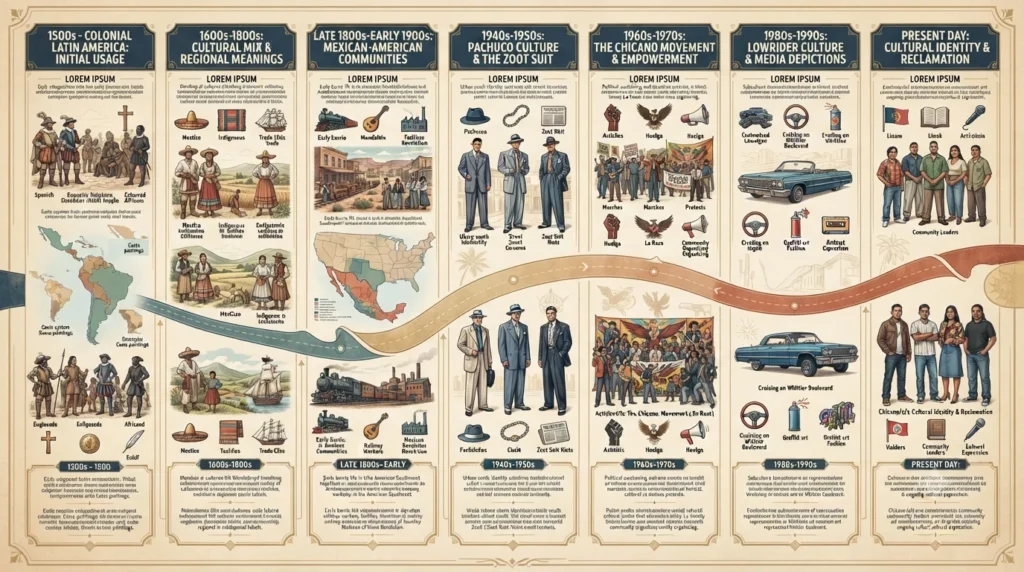
The word cholo has a long and complex history that stretches back more than 500 years. Although many people today connect it with Mexican-American culture or street style, its origins date to colonial Latin America, where it was used as part of a social classification system during Spanish rule.
Over time, the meaning of cholo changed dramatically. What began as a historical label gradually evolved into a cultural identity in different parts of Latin America. By the 20th century, especially in the United States, the term became closely associated with Chicano communities, neighborhood pride, and a unique urban subculture. Today, the word carries different meanings depending on the country, community, and context.
This evolution explains why there is no single definition of cholo. Instead, its meaning reflects history, language, and culture.
Timeline of the Word “Cholo”
| Time Period | How the Meaning Evolved |
|---|---|
| 1500s–1700s | Used in colonial Latin America as a social classification related to ancestry. |
| 1800s | Meanings varied across different Spanish-speaking countries. |
| Early 1900s | Became associated with Mexican-American neighborhoods in the United States. |
| 1940s–1970s | Influenced by the Chicano Movement, barrio culture, and lowrider communities. |
| 1980s–2000s | Popularized through films, music, and urban fashion. |
| Today | Represents culture, identity, style, and heritage, while meanings still vary by region. |
Cholo Meaning in Different Countries
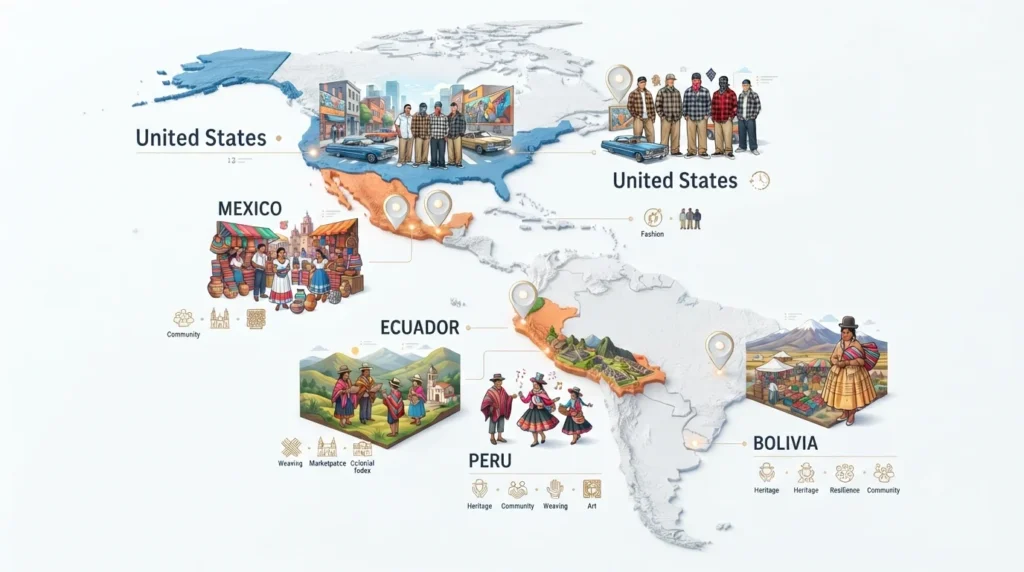
One reason the word creates confusion is that its meaning changes from one country to another. Understanding these regional differences helps avoid misunderstandings and stereotypes.
Cholo Meaning in Mexico
In Mexico, the word is commonly connected with urban culture influenced by Mexican-American communities. It may describe someone who embraces cholo style, lowrider traditions, neighborhood identity, or Chicano-inspired fashion.
Importantly, being a cholo does not mean someone is a gangster. For many people, it simply reflects a cultural identity and lifestyle rooted in community and heritage.
Cholo Meaning in Peru
The meaning in Peru is very different. Historically, cholo referred to people of Indigenous or mixed ancestry. Today, the term may be used in a neutral, affectionate, or offensive way depending on the speaker, tone, and situation.
Many Peruvians proudly identify with the word as part of their cultural heritage, while others may consider it disrespectful if it is used to stereotype or demean someone.
Cholo Meaning in Bolivia and Ecuador
In Bolivia and Ecuador, cholo often relates to Indigenous identity, traditional customs, and regional heritage rather than modern street culture. The meaning is shaped by local history and should not be confused with its Mexican-American usage.
Cholo Meaning in the United States
In the United States—particularly in California, Texas, Arizona, and other Southwestern states—the term is most closely associated with Mexican-American barrio culture.
Here, cholo often represents:
- Community pride
- Family loyalty
- Cultural identity
- Traditional fashion
- Lowrider culture
- Chicano heritage
- Neighborhood roots
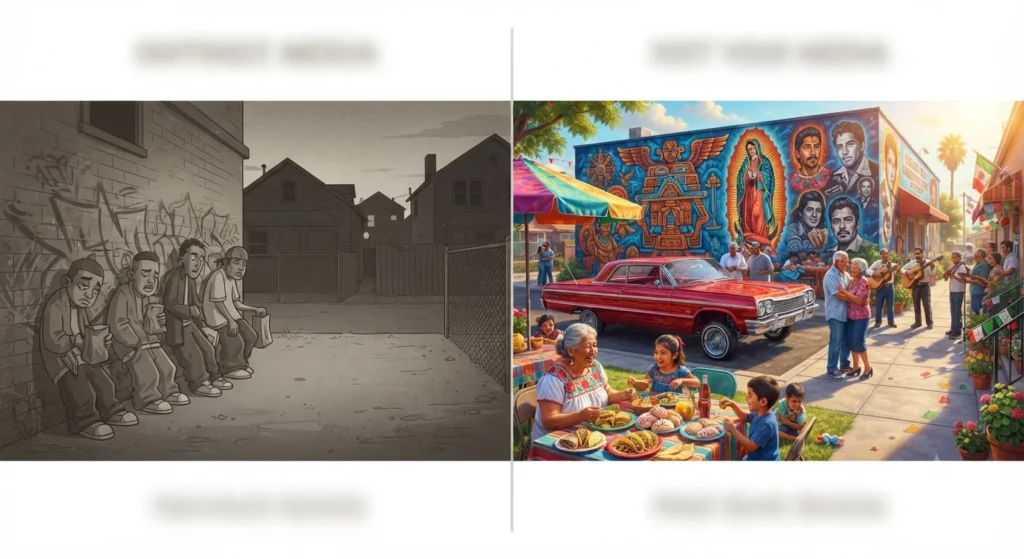
Although movies have sometimes portrayed cholos as gang members, that stereotype does not accurately represent the culture as a whole.
Cholo Meaning in English
Many people search for “cholo meaning in English” or “what is cholo in English?”
In English, cholo is generally treated as an informal regional term. It usually refers to a person associated with Mexican-American culture, especially someone connected with barrio traditions, distinctive fashion, and community identity.
The word is often left untranslated because there is no single English word that captures all of its cultural and historical meanings.
Pronunciation
Cholo is pronounced:
CHOH-loh
IPA: /ˈtʃoʊ.loʊ/
Cholo Meaning in Spanish
In Spanish, cholo is a word whose meaning depends heavily on the country where it is spoken.
For example:
- In some regions, it relates to ancestry or Indigenous heritage.
- In others, it refers to cultural identity or style.
- In casual conversation, it may even be used affectionately among friends or family.
This is why dictionaries often note that the meaning of cholo varies by region.
Cholo Meaning in English (Oxford-Style Explanation)
If you’re searching for “cholo meaning in English Oxford,” it’s important to understand that formal English dictionaries generally describe cholo as an informal or regional term linked to Mexican-American culture or identity.
Rather than offering one universal definition, dictionaries typically recognize that the word’s meaning changes depending on historical and regional context.

Cholo Culture: More Than a Style
One of the biggest misconceptions online is that cholo is only about appearance.
In reality, cholo culture is much deeper than clothing or slang. It reflects decades of history, shared experiences, and community values within many Mexican-American neighborhoods.
Core elements of cholo culture include:
- Pride in family and heritage
- Loyalty to community
- Respect for neighborhood traditions
- Chicano identity
- Artistic expression through murals and tattoos
- Lowrider car culture
- Music and storytelling
- Distinctive street fashion
For many people, embracing cholo culture is a way of honoring their roots rather than following a trend.
Cholo Style Explained
The term cholo style refers to a recognizable fashion that developed alongside the culture.
Traditional cholo fashion often includes:
- Oversized plaid flannel shirts
- Crisp white T-shirts
- Baggy khaki pants
- Nike Cortez sneakers
- Bandanas
- Slicked-back hair
- Thick belts
- Visible tattoos
While these fashion choices have become iconic, they should not be used to stereotype or judge individuals. Today, elements of cholo style have influenced mainstream fashion, music videos, and streetwear around the world.
Myth vs. Reality
| Common Myth | The Reality |
|---|---|
| Every cholo is a gangster. | Most people who identify with cholo culture are not involved in crime. |
| Cholo has only one meaning. | The meaning changes by country, culture, and context. |
| Cholo is always offensive. | It can be respectful, neutral, affectionate, or offensive depending on usage. |
| Every Mexican is a cholo. | Cholo describes a cultural identity or subculture, not nationality. |
| Cholo culture is only about clothing. | It includes history, community, heritage, art, music, and identity. |
Chola Meaning
The feminine form of cholo is chola. While both words share the same cultural roots, chola specifically refers to a woman who identifies with or is associated with cholo culture.
Today, many women proudly embrace the term as a symbol of strength, confidence, cultural heritage, and community pride. Like cholo, the meaning of chola varies depending on the country, community, and context.
In Mexican-American communities, a chola may express her identity through traditional fashion, makeup, music, and neighborhood traditions. However, it is important to avoid reducing the term to appearance alone. Chola culture represents history, family values, resilience, and self-expression—not simply a fashion trend.
Traditional Chola Style
Classic chola fashion often includes:
- Oversized flannel shirts
- Khaki pants
- Hoop earrings
- Dark lipstick
- Sharp eyeliner
- Styled eyebrows
- Bandanas
- Nike Cortez shoes
Today, many elements of chola fashion have influenced mainstream beauty and streetwear while remaining deeply connected to Mexican-American cultural identity.
What Does “Mi Cholo” Mean?
One of the most searched phrases is “mi cholo meaning.”
In Spanish, mi means “my.”
Therefore:
Mi cholo = “My cholo.”
Depending on the relationship between the speakers, it may be used:
- Affectionately
- Romantically
- Between close friends
- As a playful nickname
- To express familiarity or closeness
Example
“Mi cholo siempre me hace reír.”
English: “My cholo always makes me laugh.”
In most cases, the phrase is warm and affectionate rather than offensive.
What Does “El Cholo” Mean?
Another popular search is “el cholo meaning.”
In Spanish:
- El = “the”
- Cholo = cultural identity or descriptive term
So,
El cholo simply means:
“The cholo.”
It may refer to:
- A specific individual
- A nickname
- A cultural identity
- Someone known within a community
The phrase itself is neutral. Its meaning depends on the situation in which it is used.
Down to Earth Meaning – Tiny Detail That Changes Everything
What Does “Vato Cholo” Mean?
The phrase vato cholo combines two common words used in Mexican-American slang.
- Vato = guy, dude, man
- Cholo = person connected with cholo culture
Together,
Vato cholo generally means:
“A guy who identifies with or belongs to cholo culture.”
It is an informal expression rather than formal Spanish and is most often heard in casual conversation, music, or popular culture.
What Does “Qué Cholo” Mean?
The phrase qué cholo does not have a single fixed translation because regional slang differs across Spanish-speaking countries.
Depending on where it is used, it may mean:
- That’s cool!
- How nice!
- That’s stylish!
- That’s awesome!
Because the meaning changes by location, it is always best to understand the local context before translating it literally.
What Does “Está Cholo” Mean?
People also search for “está cholo meaning.”
In informal conversation, the phrase may express approval or admiration.
Possible meanings include:
- It looks cool.
- He looks stylish.
- That outfit looks good.
- It looks awesome.
Again, the exact meaning depends on the speaker, country, and situation.
What Does “Soy Cholo” Mean?
Soy cholo translates directly to:
“I am a cholo.”
People may use this phrase to express:
- Cultural identity
- Pride in their heritage
- Connection to their community
- Personal style
For many individuals, it is a statement of belonging rather than a reference to criminal behavior.
Cholo Slang Meaning
As slang, cholo usually refers to someone recognized for a particular cultural identity, neighborhood background, or traditional style.
However, slang meanings are not universal. In one community, the word may be used affectionately among friends, while in another it may carry negative stereotypes.
Because slang evolves over time, it is important to understand who is speaking, where they are from, and what they intend before interpreting the word.
Is Cholo Offensive?
This is one of the most frequently searched questions online.
The answer is:
Sometimes—but not always.
Whether cholo is offensive depends on:
- The speaker
- The listener
- The country
- The situation
- The tone of voice
Within many Mexican-American communities, cholo is embraced as a symbol of cultural identity and heritage. When used respectfully, it can express pride and belonging.
However, if the word is used to stereotype, mock, or insult someone, it can be hurtful and offensive.
When It Is Generally Appropriate
✅ Discussing history or culture
✅ Talking about fashion or identity respectfully
✅ Academic or educational writing
✅ Self-identification within the community
When It Can Become Offensive
❌ Using it as an insult
❌ Assuming all Mexican-Americans are cholos
❌ Equating cholo with criminal behavior
❌ Mocking someone’s appearance or heritage
The safest approach is to use the word thoughtfully and respectfully.
Is Cholo a Slur or a Racist Term?
Many readers ask:
- Is cholo a slur?
- Is cholo racist?
- Is cholo derogatory?
- Is cholo a bad word?
There is no universal answer, because the meaning depends on context and community.
Unlike universally recognized slurs, cholo is a context-dependent cultural term. Many people proudly identify with it, while others may find it offensive if it is used in a mocking or stereotypical way.
The word itself is not inherently racist. However, using it to stereotype, discriminate against, or insult people based on their ethnicity or cultural background can make its use discriminatory.
The best practice is to avoid assumptions and use the term only when it is relevant, accurate, and respectful.
What Is a Cholo Gangster?
One of the most searched questions is “What is a cholo gangster?”
The answer requires some important context.
Over the years, movies, television shows, and media reports have often portrayed cholos as gang members. While some street gangs have adopted elements of cholo fashion or language, this does not mean every cholo is a gangster.
In reality, cholo is primarily a cultural identity, whereas a gangster refers to someone involved in organized criminal activity. Confusing these two ideas creates unfair stereotypes and ignores the rich history of Mexican-American communities.
Cholo vs. Gangster
| Cholo | Gangster |
|---|---|
| Cultural identity | Criminal identity |
| Rooted in heritage and community | Associated with illegal activities |
| Includes fashion, art, music, and traditions | Not connected to any single culture |
| Many law-abiding people identify as cholos | Defined by criminal behavior, not appearance |
Understanding this difference helps avoid harmful assumptions and encourages respectful discussions about culture.
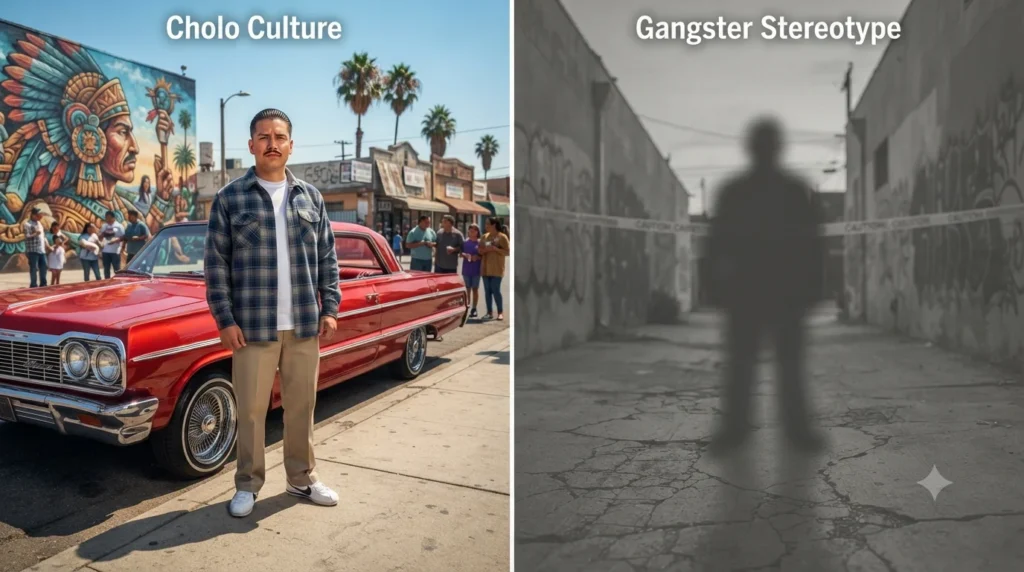
Cholo Stereotypes vs. Reality
For decades, Hollywood and popular media have shaped public perceptions of cholo culture. Unfortunately, these portrayals often highlight crime while overlooking the community’s history, resilience, and contributions.
Common Stereotypes
- Every cholo belongs to a gang.
- Cholos are violent.
- Cholos avoid education.
- Cholo culture promotes crime.
- Cholo fashion automatically means criminal behavior.
The Reality
For many people, cholo culture is about:
- Family values
- Community pride
- Cultural identity
- Art and murals
- Lowrider traditions
- Music and dance
- Neighborhood history
- Self-expression
- Resilience and perseverance
Like any community, individuals have different backgrounds and experiences. Reducing an entire culture to one stereotype is inaccurate and unfair.
Cholo Church Meaning
Another search people make is “What is cholo church?”
There is no official religious meaning for the phrase cholo church.
Online, it may refer to:
- Churches serving barrio or Latino communities
- Community outreach programs
- Informal social media expressions
- Churches attended by members of cholo culture
It is not a recognized term in Christianity or any other major religion. If you see the phrase online, the intended meaning depends entirely on the context.
Cholo Meaning in Medical Terms
Some users search for “cholo meaning medical.”
The answer is straightforward:
Cholo has no medical meaning.
It is:
- Not a medical condition
- Not a disease
- Not a diagnosis
- Not a medical abbreviation
- Not a scientific term
If someone uses cholo in a medical context, it is almost certainly unrelated to healthcare terminology.
What Does the Cholo Whistle Mean?
The cholo whistle is a loud, sharp whistle sometimes associated with Mexican-American neighborhoods.
Historically, people have used it to:
- Get someone’s attention
- Call friends from a distance
- Signal their arrival
- Communicate casually within the neighborhood
Although movies sometimes portray the whistle as a gang signal, there is no universal meaning. In most situations, it is simply a cultural expression rather than a secret code.
Cholo Language and Cholo Talk
Some readers wonder whether there is a separate cholo language.
The answer is no.
People associated with cholo culture commonly speak:
- English
- Spanish
- Spanglish
- Regional slang
Common expressions include:
- Vato
- Carnal
- Órale
- Simón
- Barrio
These words come from everyday speech in Mexican-American communities rather than a separate language.
Cholo vs. Vato
Although the two words are often heard together, they have different meanings.
| Term | Meaning |
|---|---|
| Cholo | A cultural identity or person connected with cholo culture. |
| Vato | Mexican slang meaning “guy,” “dude,” or “man.” |
Example
- Vato: “That guy over there.”
- Cholo: “A person who identifies with cholo culture.”
Cholo vs. Chicano
These terms are related but not interchangeable.
| Cholo | Chicano |
|---|---|
| Cultural subculture | Broader Mexican-American identity |
| Connected with barrio traditions | Refers to people of Mexican heritage in the U.S. |
| Includes distinctive fashion and style | Focuses on heritage, history, and identity |
| Represents one expression of Mexican-American culture | Covers a wider cultural and historical community |
Not every Chicano is a cholo, and not every cholo uses the label Chicano. However, the two identities often overlap.
Frequently Asked Questions
What does cholo mean in slang?
In slang, cholo usually refers to a person associated with Mexican-American culture, neighborhood identity, or traditional street style. The meaning varies by region and context.
What does cholo mean in Spanish?
In Spanish, cholo has different meanings depending on the country. It may refer to ancestry, cultural identity, or community background.
What does cholo mean in English?
In English, cholo is generally used as an informal regional term connected with Mexican-American culture and identity.
Is cholo offensive?
Not necessarily. It can be respectful, neutral, affectionate, or offensive depending on who says it, the tone, and the context.
Is cholo a bad word?
No. However, using it to stereotype or insult someone can make it offensive.
What is a female cholo called?
The female form is chola.
What does “mi cholo” mean?
It means “my cholo” and is often used affectionately between partners, friends, or family members.
What does “el cholo” mean?
It translates to “the cholo” and may refer to a specific person or nickname.
What is cholo style?
Traditional cholo style includes flannel shirts, khaki pants, Nike Cortez shoes, bandanas, and other fashion elements rooted in Mexican-American culture.
Where did the word cholo come from?
The word originated in colonial Latin America and evolved over centuries into different regional meanings and cultural identities.
Key Takeaways
✔ Cholo does not have one universal meaning.
✔ Its meaning changes by country, culture, history, and context.
✔ For many people, it represents heritage, community, identity, and pride.
✔ It should not automatically be associated with gangs or criminal activity.
✔ Using the word respectfully requires understanding its cultural background and regional differences.
Conclusion
The word cholo has a rich and evolving history that cannot be reduced to a single definition. From its origins in colonial Latin America to its role in modern Mexican-American culture, the term has developed different meanings across regions and generations.
Today, cholo may describe cultural identity, community pride, fashion, or heritage. At the same time, it can become offensive when used to stereotype or insult others. Understanding these differences helps us communicate more respectfully and appreciate the history behind the word.
Whether you searched for what does cholo mean, cholo meaning in Spanish, cholo meaning in English, what is a cholo, or is cholo offensive, the most important lesson is this:

Liza is a content writer at Meanovia, focused on slang, texting meanings, and internet phrases. She makes modern online language simple, clear, and easy to understand 💬✨