
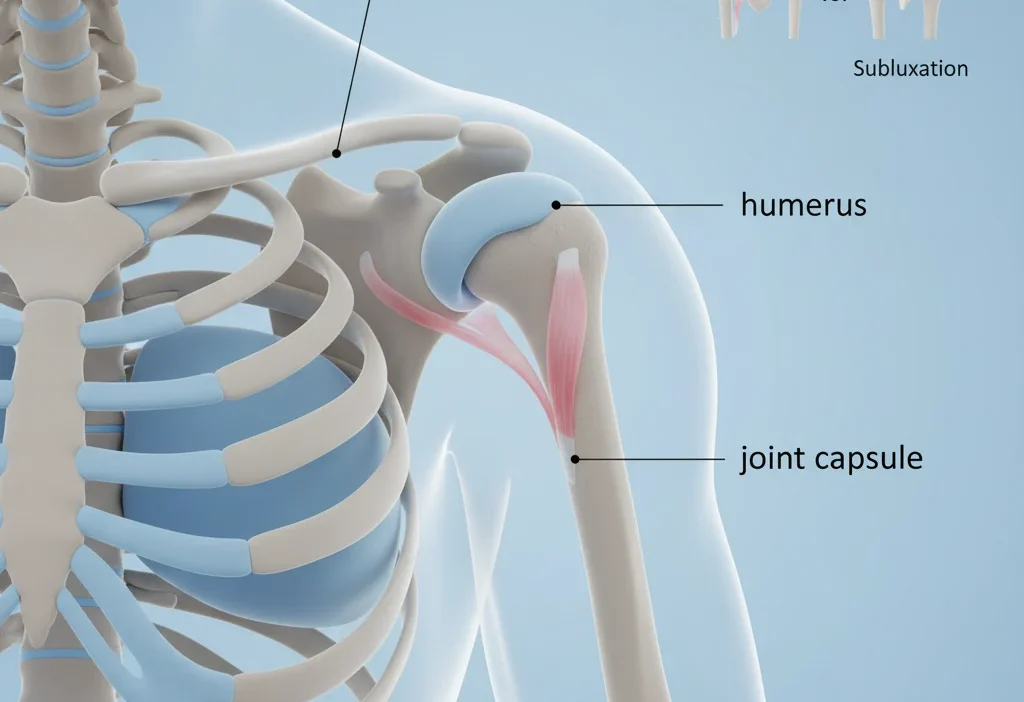
Have you come across the word “subluxation” in a medical report, injury discussion, or health-related article and wondered what it actually means? In medical usage, subluxation generally refers to an abnormal relationship in which a joint has partially lost its normal alignment or contact between its surfaces.
It differs from a dislocation, which generally involves complete loss of normal joint contact. The exact description can vary depending on the joint and medical context. The term also appears in chiropractic terminology, where “vertebral subluxation” may be used as a broader concept involving spinal or biomechanical abnormalities and is not equivalent to the conventional medical definition.
Understanding this distinction is important when reading health information because the same word may be used differently in different settings. This guide explains the subluxation meaning, types, causes, symptoms, diagnosis, treatment, and difference between subluxation and dislocation, using clear, easy-to-understand language.
What Does Subluxation Mean in Medical Terms?
In conventional medicine, subluxation generally describes a joint in which the bones are partly out of their normal position rather than completely separated.
The word itself does not automatically tell you how serious the condition is. A subluxation may be relatively uncomplicated, or it may occur alongside a fracture, ligament injury, joint instability, nerve injury, or blood-vessel damage.
Its significance depends on:
- The structure involved
- The degree of displacement
- The cause of the injury
- Whether surrounding tissues are damaged
- Whether nerves or blood vessels are affected
- Whether the joint remains unstable
So, subluxation should not automatically be interpreted as a minor injury.
Subluxation vs. Dislocation
| Term | Meaning | Main Difference |
|---|---|---|
| Subluxation | Partial displacement or separation | Some normal joint relationship remains |
| Dislocation | Complete separation | Normal joint contact is completely lost |
| Misalignment | Abnormal positioning | Broader term; not necessarily a joint injury |
| Luxation | Complete dislocation | Often used as the counterpart to subluxation |
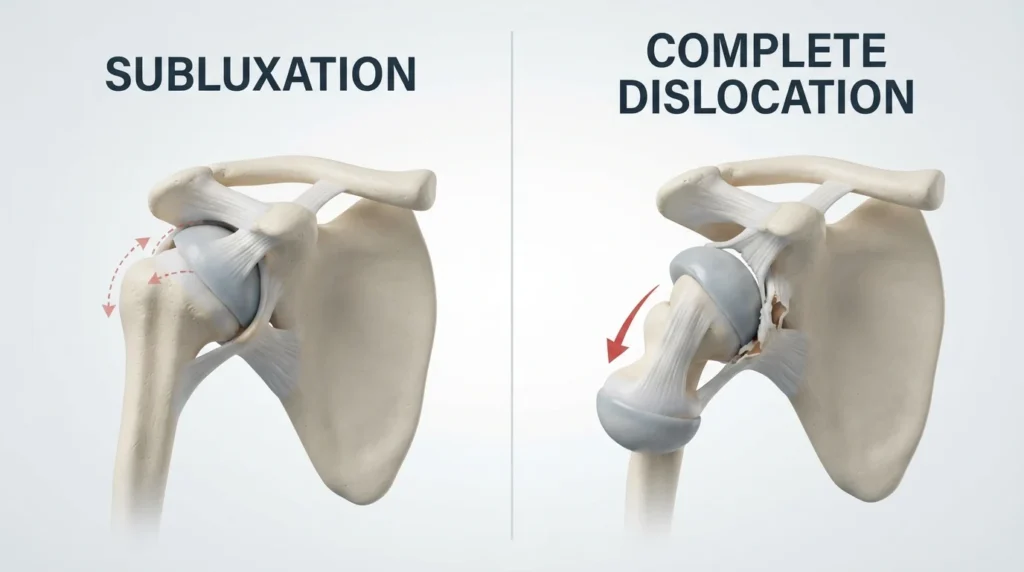
The easiest way to remember it is:
Subluxation = partial displacement
Dislocation = complete displacement
However, the word “partial” does not automatically mean “harmless.”
Where Can Subluxation Occur?
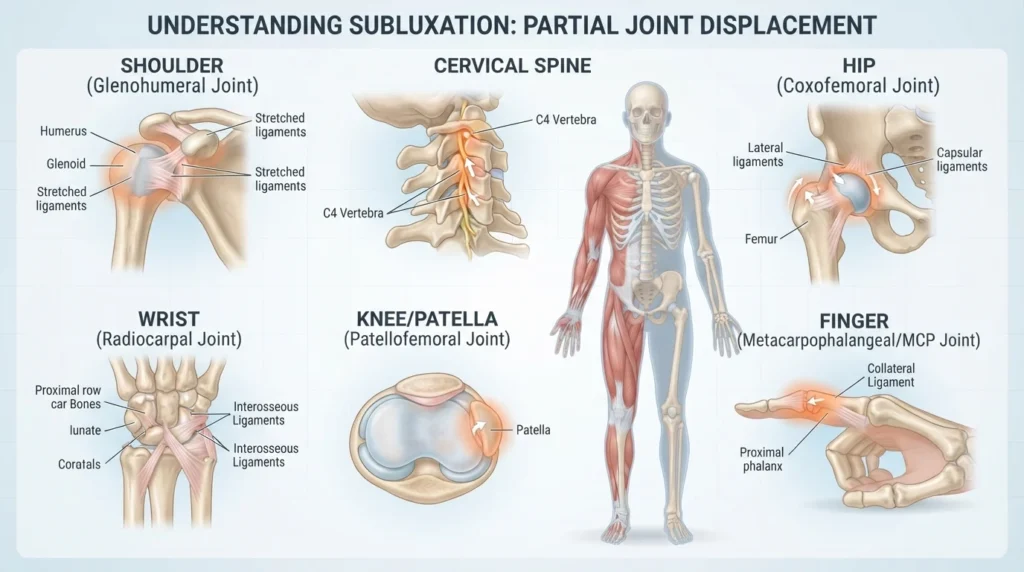
Subluxation can occur in many different joints and anatomical structures, including the:
- Shoulder
- Elbow
- Hip
- Knee
- Kneecap or patella
- Fingers
- Wrist
- Ankle
- Spine
- Cervical vertebrae
- Jaw
- Tooth
- Eye lens
For example, radial head subluxation, commonly called nursemaid’s elbow, involves partial displacement of the radial head at the elbow and is especially common in young children.
This variety is important because the meaning of subluxation changes slightly depending on the structure involved.
A dental subluxation is not the same thing as a shoulder subluxation, and a lens subluxation is different from a spinal subluxation.
Subluxation Meaning in Orthopedics
In orthopedics, subluxation generally refers to partial displacement or abnormal positioning involving a joint or vertebral structure.
You may see terms such as:
- Joint subluxation
- Vertebral subluxation
- Cervical subluxation
- Facet subluxation
- Volar subluxation
- Dorsal subluxation
- Anterior subluxation
- Posterior subluxation
These words often describe where or in which direction the structure has shifted.
For example, anterior subluxation indicates movement toward the front relative to another structure, while posterior subluxation indicates movement toward the back.
Similarly, volar generally refers to the palm side of the hand, while dorsal refers to the back side.
So if an imaging report says “mild anterior subluxation,” the surrounding wording matters. The body part, degree of displacement, symptoms, cause, and other imaging findings all help determine its significance.
Shoulder Subluxation Meaning
A shoulder subluxation occurs when the upper arm bone partially moves out of its normal relationship with the shoulder socket.
It may happen after:
- A fall
- A sports injury
- A collision
- A sudden twisting movement
- Repetitive shoulder instability
A shoulder subluxation differs from a complete shoulder dislocation, although either injury can affect surrounding ligaments, tendons, nerves, blood vessels, or bone.
Some people experience a sensation that the shoulder is slipping, shifting, or “coming out” and then returning.
If a shoulder injury causes severe pain, visible deformity, numbness, weakness, or inability to move the arm normally, prompt medical assessment is important.
Hip Subluxation Meaning
Hip subluxation means partial displacement or abnormal positioning involving the hip joint.
The cause matters because traumatic hip subluxation is different from hip instability associated with developmental or structural conditions.
Because the hip is a major weight-bearing joint, symptoms such as persistent pain, difficulty walking, or suspected displacement should be medically evaluated.
Trying to force a suspected hip subluxation back into position yourself can cause additional injury and should be avoided.
Knee and Patellar Subluxation Meaning
The phrase knee subluxation can refer to partial displacement involving structures of the knee, so the exact wording of a medical report is important.
A patellar subluxation, however, specifically involves the kneecap.
It occurs when the patella partially moves away from its normal tracking position rather than becoming completely dislocated.
Possible symptoms include:
- Knee pain
- Swelling
- Instability
- A slipping sensation
- Difficulty bending or straightening the knee
- A feeling that the kneecap is moving sideways
Sports injuries, sudden twisting, and problems affecting knee stability can contribute to patellar subluxation.
Spinal and Vertebral Subluxation Meaning
Spinal subluxation or vertebral subluxation can describe abnormal positioning involving spinal structures, but its precise meaning depends on the clinical context.
Cervical subluxation specifically refers to the neck region.
One example is atlantoaxial subluxation, which involves abnormal movement between the first and second cervical vertebrae, C1 and C2.
Some cervical subluxations can be associated with trauma or underlying conditions and may be serious because of the spinal cord’s location in the cervical spine.
Therefore, a suspected spinal or cervical subluxation should not be treated as an ordinary joint problem or manipulated at home.
Also, seeing the phrase “spinal subluxation” does not automatically prove that a nerve has been damaged. The actual imaging findings, symptoms, physical examination, and diagnosis are what matter.
Subluxation Meaning in Chiropractic
The phrase “subluxation meaning in chiropractic” requires an important distinction.
Chiropractors may use vertebral subluxation as terminology within chiropractic practice to describe spinal dysfunction, altered movement, or positional abnormality.
This use is not necessarily identical to the conventional orthopedic meaning of a partial joint displacement.
Therefore, if a chiropractor says that you have a “subluxation,” it is reasonable to ask:
- Which structure is involved?
- Is the finding based on imaging?
- What exactly does “subluxation” mean in this assessment?
- What treatment is being recommended?
- What evidence supports that treatment?
Most importantly, a chiropractic use of the term should not automatically be interpreted as proof that a vertebra is physically dislocated or that it is damaging nerves.
Keeping these meanings separate makes the article more medically accurate and prevents a common misunderstanding.
Subluxation Meaning in Dental Terms
Dental subluxation has a specialized meaning.
A dental subluxation is a traumatic tooth injury in which the tooth becomes more mobile or tender but has not been displaced from its normal position.
This means that the general joint definition of subluxation should not simply be applied to teeth.
Dental subluxation can occur after:
- A fall
- A sports injury
- A direct blow to the mouth
- An accident
A loose or painful tooth after trauma should be evaluated by a dentist. Even when the tooth has not visibly moved, the supporting tissues and inner structures of the tooth may still require assessment and follow-up.
Subluxation Meaning in Ophthalmology
Subluxation can also be used in ophthalmology.
A lens subluxation means that the eye’s natural lens has shifted from its normal position. The broader medical term ectopia lentis refers to abnormal positioning of the lens.
This is completely different from a shoulder, hip, or knee subluxation.
Lens displacement can occur after eye trauma or in association with certain underlying conditions, and it may affect vision.
Because vision can be affected, suspected lens displacement should be evaluated by an appropriate eye-care professional.
What Causes Subluxation?
There is no single cause of every subluxation.
Common causes include:
1. Trauma
Falls, collisions, sports injuries, and accidents can force a joint or structure partly out of its normal position.
2. Sudden twisting or force
A rapid movement can place excessive stress on the tissues that stabilize a joint.
3. Repetitive stress
Repeated movements or loading can contribute to instability in some joints.
4. Ligament or connective-tissue problems
Damaged or unusually loose supporting tissues can make abnormal joint movement more likely.
5. Underlying conditions
Some developmental, inflammatory, degenerative, or connective-tissue conditions can affect joint stability or alignment.
So, if someone asks “What are the three causes of subluxation?”, there isn’t one universal list of exactly three. Trauma, sudden force, and instability-related problems are common examples, but the actual cause depends on the body part and individual situation.
What Are the Symptoms of Subluxation?
Symptoms vary depending on the affected structure.
Possible symptoms include:
- Pain or tenderness
- Swelling
- Bruising
- Reduced range of motion
- Joint instability
- A slipping or shifting sensation
- Difficulty using the affected body part
- Numbness or unusual sensations in some injuries
However, symptoms alone cannot confirm a subluxation.
A fracture, sprain, tendon injury, complete dislocation, or another condition can produce similar symptoms.
How Is Subluxation Diagnosed?
Diagnosis depends on the location and suspected cause.
A healthcare professional may consider:
- How the injury happened
- Your symptoms
- Physical examination
- Joint stability
- Range of motion
- Neurological findings
- Circulation
- X-rays
- MRI or CT scans when appropriate
An X-ray may help show abnormal alignment, displacement, or associated fractures. Other imaging methods may be useful when soft-tissue, spinal, or more complicated injuries are suspected.
Not every subluxation requires the same diagnostic process.
What Does Subluxation Mean on an X-Ray or Medical Report?
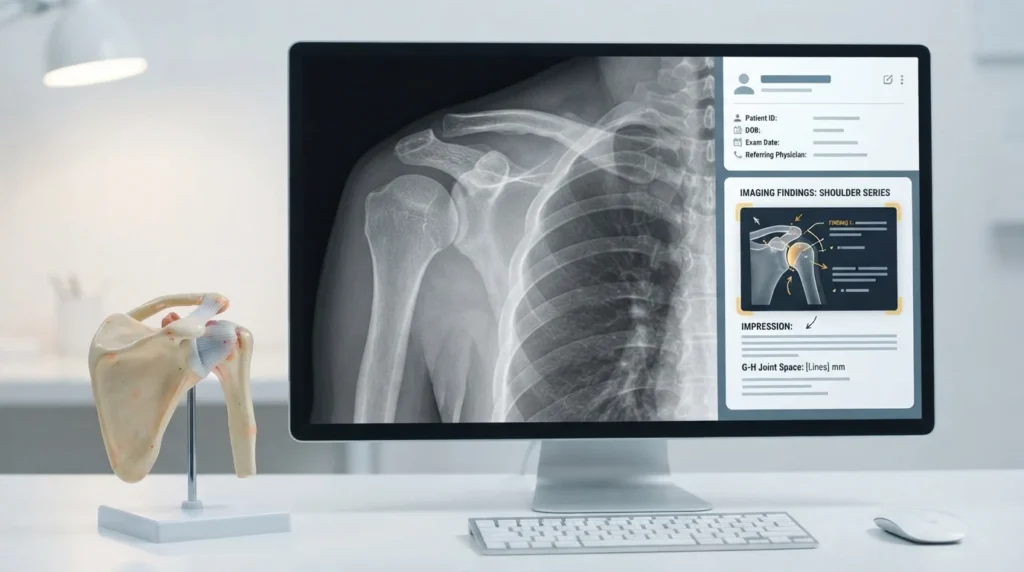
If your report says “subluxation,” it generally means that the examined structure has an abnormal relationship or partial displacement.
The words around it are extremely important.
For example:
- Anterior subluxation — movement toward the front.
- Posterior subluxation — movement toward the back.
- Cervical subluxation — involves the neck.
- Vertebral subluxation — involves spinal vertebral structures.
- Patellar subluxation — involves the kneecap.
- Facet subluxation — involves a facet joint.
- Dental subluxation — describes a specific traumatic tooth injury.
The word “subluxation” by itself does not tell you exactly how serious the finding is.
Your healthcare professional interprets it alongside the location, degree of displacement, symptoms, cause, and associated findings.
How Do You Fix a Subluxation?
There is no single treatment for every subluxation.
Depending on the cause and location, treatment may include:
- Activity modification
- Protection or temporary immobilization
- Pain management
- Physical therapy
- Rehabilitation
- Clinician-performed reduction when appropriate
- Treatment of an underlying condition
- Surgery in selected cases
Some subluxations may return toward normal alignment without formal reduction, while others require medical treatment.
Can You Fix a Subluxation Yourself?
Do not force an injured joint back into position yourself.
A suspected subluxation may occur alongside a fracture or injury to ligaments, nerves, or blood vessels.
A healthcare professional can determine whether reduction, immobilization, rehabilitation, imaging, or another treatment is appropriate.
When Should You See a Doctor?
Seek prompt medical evaluation after an injury if you experience:
- Severe or worsening pain
- Obvious deformity
- Significant swelling
- Inability to move the affected area normally
- Numbness or weakness
- Pale, blue, or unusually cold skin
- Persistent instability
- A suspected neck or spinal injury
Extra caution is especially important when a neck or spinal injury is suspected because serious injuries can involve the spinal cord.
Common Mistakes About Subluxation
Mistake 1: Thinking subluxation always means a minor injury
It doesn’t. The seriousness depends on the structure involved and whether other tissues are injured.
Mistake 2: Treating subluxation and dislocation as identical
They are related but different. Subluxation generally means partial displacement, while dislocation means complete separation.
Mistake 3: Assuming every subluxation has the same meaning
It doesn’t. Medical, orthopedic, dental, ophthalmologic, and chiropractic contexts can use the term differently.
Mistake 4: Assuming subluxation automatically means nerve damage
A subluxation does not automatically prove that a nerve has been injured. The actual diagnosis and clinical findings matter.
Mistake 5: Trying to manipulate the joint yourself
Forcing an injured joint can potentially worsen an associated fracture or soft-tissue injury.
Frequently Asked Questions About Subluxation
What is subluxation vs. dislocation?
Subluxation is partial displacement or separation, while dislocation is complete separation of the bones forming a joint. Both can vary in seriousness depending on the location and associated injuries.
What is another word for subluxation?
Depending on context, subluxation may be described as partial dislocation, partial displacement, or partial separation. However, “misalignment” is broader and is not always an exact synonym.
Can a subluxation heal on its own?
Some subluxations may return toward their normal position without formal reduction, but that does not necessarily mean the surrounding tissues are completely uninjured. Whether follow-up is needed depends on the location, cause, symptoms, and stability.
Is subluxation always serious?
No. Some cases may be relatively uncomplicated, while others can involve significant instability or associated injury. The body part involved makes a major difference.
What does shoulder subluxation mean?
It means the upper arm bone has partially moved out of its normal relationship with the shoulder socket. It is different from a complete shoulder dislocation.
What does patellar subluxation mean?
It means the kneecap has partially shifted from its normal tracking position rather than becoming completely dislocated.
What does subluxation mean in chiropractic?
In chiropractic practice, vertebral subluxation may describe a form of spinal dysfunction or positional abnormality. Its meaning should not automatically be equated with a medically confirmed partial dislocation or nerve injury.
What does subluxation mean in a tooth?
A dental subluxation is a traumatic tooth injury involving increased mobility or tenderness without displacement of the tooth from its normal position.
Can you fix a subluxation yourself?
It is safest not to force an injured joint back into place yourself. A healthcare professional should determine the appropriate treatment, particularly after trauma.
Final Takeaway: Subluxation Meaning in Simple Words
The simplest subluxation meaning is partial displacement or partial separation from a normal anatomical position.
For a joint, it generally means that the bones have moved partly out of their normal relationship, while a complete dislocation means the joint surfaces have completely separated.
But context matters.
A shoulder subluxation, hip subluxation, patellar subluxation, spinal subluxation, cervical subluxation, chiropractic vertebral subluxation, dental subluxation, and lens subluxation can describe very different situations.
If you see “subluxation” in a medical report, look at the body part, direction, degree of displacement, cause, symptoms, and associated findings rather than judging the seriousness from the word alone.
And if the term appeared after a significant injury—especially with severe pain, deformity, numbness, weakness, circulation changes, or suspected spinal injury—seek appropriate medical care rather than attempting to manipulate the affected area yourself.

Nora Ellison is a digital language writer specializing in emoji meanings, internet slang, symbols, and online communication, creating clear, accurate, and reader-friendly content.