
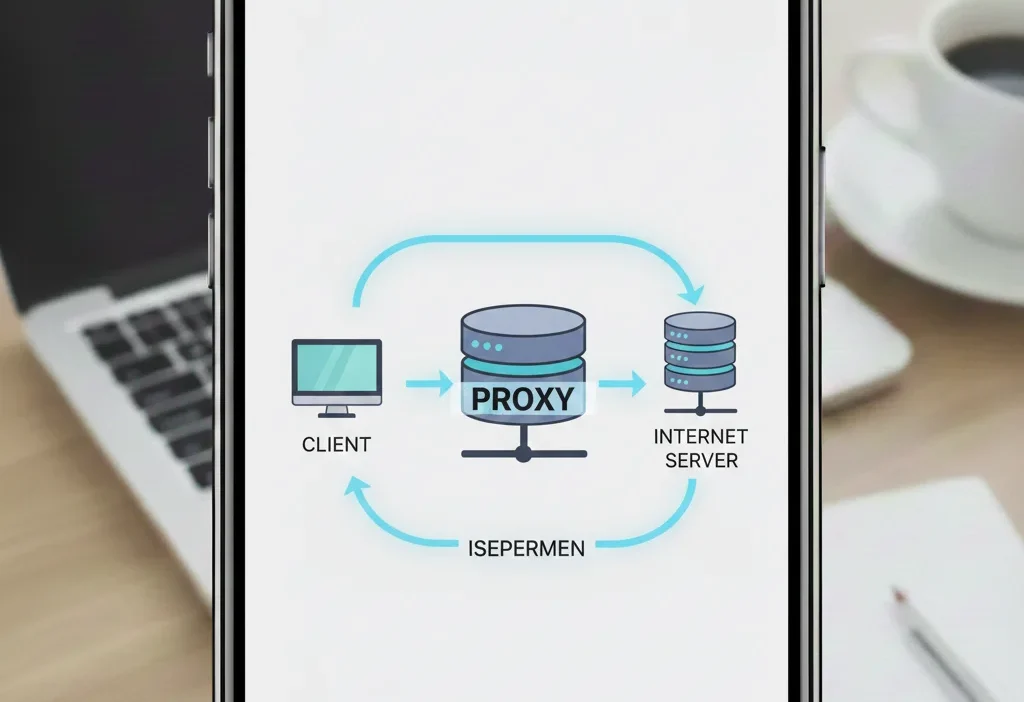
Ever heard someone say “I’m using a proxy” or “He voted by proxy” and wondered what proxy really means? 🤔 You’re not alone! The word proxy is common in technology, business, and even everyday language — but its meaning can change depending on context.
In this guide, you’ll learn:
✅ The definition of “proxy”
📜 Its origin and history
🌐 How it’s used in different contexts (internet, business, and communication)
💬 Examples to make it clear
⚡ Common mistakes and FAQs
By the end, you’ll easily understand when, why, and how to use the term “proxy” correctly.
💡 What Does Proxy Mean?
“Proxy” means someone or something that acts on behalf of another person or system.
It can be a noun (a person or server that represents another) or adjective (used to describe indirect actions, like “proxy vote”).
Example:
“She attended the meeting by proxy.”
“Your connection is going through a proxy server.”
🕰️ Origin and Popularity
The term proxy comes from the Middle English word “procuracie”, derived from the Latin procuratio, meaning “to manage or act for another.”
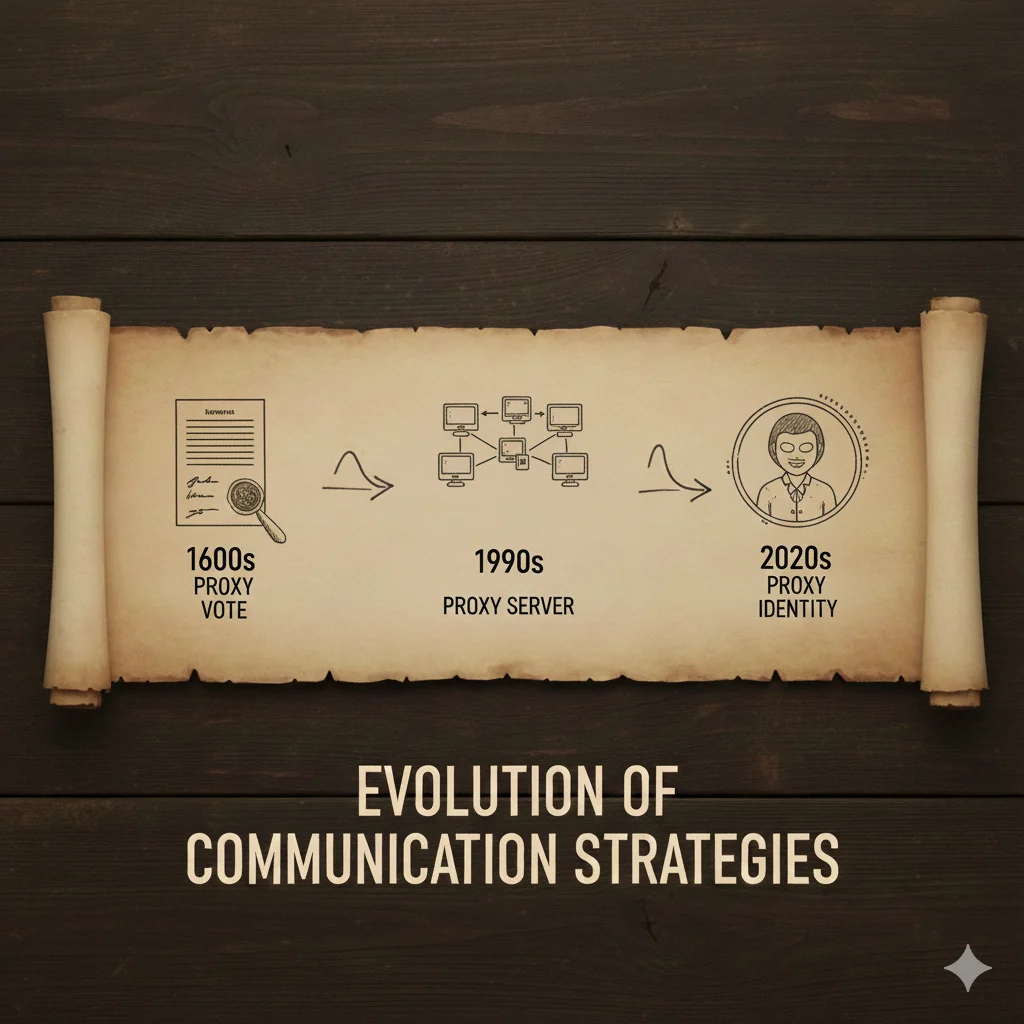
- 1600s: Used mainly in legal and political contexts (e.g., “a proxy vote”).
- 1900s–Present: Gained popularity in computing and the internet era, especially referring to proxy servers that handle data requests.
Today, it’s widely used across business, technology, and everyday speech, showing how one concept — representation — applies in multiple worlds. 🌍
🌐 Proxy Meaning in Different Contexts
💻 1. In Technology (Proxy Server)
A proxy server acts as an intermediary between a user’s device and the internet. It hides your real IP address and can enhance privacy, security, or access restricted websites.
Example:
“Using a proxy helps protect your online identity.”
| Type of Proxy | Purpose |
| HTTP Proxy | Used for web browsing |
| SOCKS Proxy | Handles all traffic, not just web |
| Transparent Proxy | Used by organizations for monitoring |
🗳️ 2. In Business or Legal Use (Proxy Vote)
In corporate or political contexts, proxy refers to a person authorized to act or vote on someone’s behalf.
Example:
“Shareholders can vote by proxy if they cannot attend the meeting.”
This ensures representation even when the person isn’t physically present — a fundamental idea in governance and decision-making.
💬 3. In Everyday Conversation
People use proxy informally to describe acting indirectly or through someone else.
Example:
“He apologized through his assistant — a proxy apology, really.”
Here, proxy conveys the idea of someone doing something in place of another.
💬 Examples of ‘Proxy’ in Sentences
Example 1:
“She authorized her lawyer to vote by proxy at the board meeting.”
Example 2:
“The company uses proxy servers to safeguard sensitive data.”
Example 3:
“I felt like a proxy parent while babysitting my nephew.”
Example 4 (Chat-style):
Friend 1: Why can’t you access that site?
Friend 2: I need a proxy — it’s blocked in my country. 🌍
🔁 Similar or Related Terms
| Term | Meaning | How It Differs from ‘Proxy’ |
| Delegate | A person authorized to represent others | More formal and human-specific |
| Agent | Someone who acts for another | Often used in business or law |
| Server | A computer providing services to others | Broader than proxy; doesn’t imply substitution |
| VPN (Virtual Private Network) | Encrypts data and hides IP address | Proxy reroutes data; VPN adds encryption |
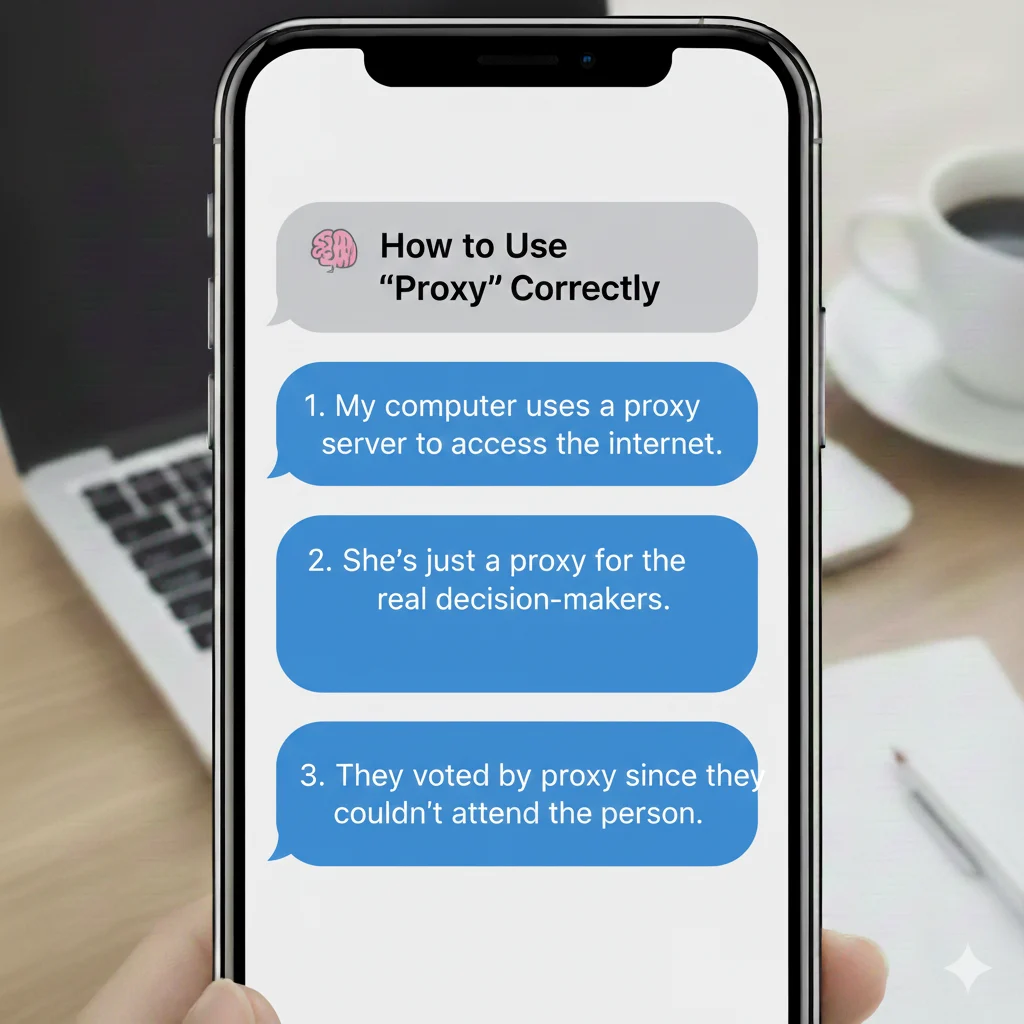
🧠 How to Use ‘Proxy’ Correctly
✅ Do’s:
- Use proxy to describe representation or substitution.
- Use it for both technical and non-technical contexts.
- Say “by proxy” when referring to acting indirectly.
❌ Don’ts:
- Don’t use it as slang — it’s a formal or technical term.
- Don’t confuse it with “VPN” — they work differently.
Examples:
✅ “He cast his vote by proxy.”
✅ “The connection runs through a proxy server.”
❌ “He’s a proxy friend.” (Incorrect usage)
⚠️ Common Mistakes or Misinterpretations
- Mixing up Proxy and VPN:
- A VPN encrypts data and hides your online identity.
- A Proxy simply routes your traffic through another server.
- A VPN encrypts data and hides your online identity.
- Thinking Proxy Always Means Technology:
- “Proxy” also applies to people, votes, or actions, not just computers.
- “Proxy” also applies to people, votes, or actions, not just computers.
- Using Proxy as a Verb Incorrectly:
- “To proxy” is uncommon; it’s mainly a noun or adjective.
- “To proxy” is uncommon; it’s mainly a noun or adjective.
❓ FAQ Section
1. What does ‘proxy’ mean in simple words?
A proxy is someone or something that acts for another. It can be a person who votes for someone else or a computer that connects to the internet on your behalf.
2. Is a proxy the same as a VPN?
No. A VPN encrypts your data and hides your IP, while a proxy only forwards your internet traffic through another server.
3. What does ‘vote by proxy’ mean?
It means assigning someone to vote or act for you in a meeting when you cannot attend personally.
4. Why do people use proxy servers?
People use proxies for privacy, security, and to access blocked websites. Companies also use them to monitor or control network usage.
5. Can proxy mean a person?
Yes! A proxy can be a representative — like an agent or delegate who acts on another’s behalf.
6. Is ‘proxy’ a formal term?
Yes. It’s commonly used in business, law, and technology, making it more formal than slang.
🏁 Conclusion
In short, “proxy” means acting on someone else’s behalf — whether that’s a person, a vote, or a server. Its roots go back centuries, but it’s still widely relevant today, especially in digital communication and corporate structures.
From proxy votes in boardrooms to proxy servers online, the concept centers on representation and substitution — letting one entity act for another.
Now that you know the real proxy meaning, you’ll never be confused again! Keep exploring our site for more simple explanations of complex terms.

Jon McGregor is a language and word-meaning expert at Meanovia.com. He specializes in explaining complex words, phrases, and modern language trends in a clear, approachable style. His mission is to help readers quickly grasp the true meaning behind every term, making language learning and understanding effortless and engaging.