
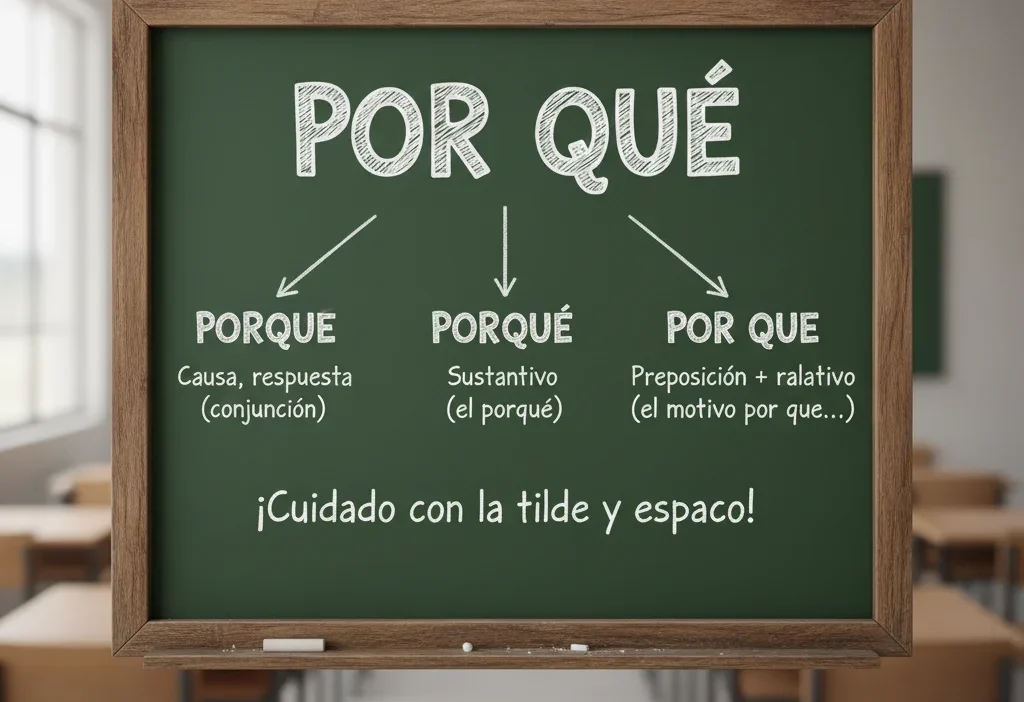
Ever seen someone write “por qué” and wondered what it really means? 🤔 If you’ve come across this phrase while learning Spanish, watching a show, or texting a Spanish-speaking friend, you might’ve noticed it looks simple — yet it’s often confusing for beginners.
The Spanish phrase “por qué” plays a key role in everyday conversation, but it can change meaning depending on how it’s written.
In this guide, we’ll cover:
✅ The definition of “por qué”
📜 Its origin and grammar
💬 Different meanings depending on accent and context
🗣️ Examples in conversation
🚫 Common mistakes learners make
and FAQs to help you master it confidently.
💡 What Does “Por Qué” Mean?
“Por qué” means “why” in English — used when asking a question or expressing a reason.
It’s a Spanish phrase made up of two words:
- “por” (by/for/because of)
- “qué” (what/why)
Together, they form the interrogative phrase “por qué,” used in both direct and indirect questions.
Example:
“¿Por qué estás triste?” → “Why are you sad?”
🕰️ Origin and Popularity
The phrase “por qué” originates from Classical Latin, where “por” comes from pro (meaning “for” or “by”) and “qué” derives from quid (meaning “what”).
As Spanish evolved from Latin, these two words combined to form various expressions that indicate cause, reason, or explanation.
Today, “por qué” is one of the most frequently used expressions in the Spanish language, found in texting, formal writing, and speech across all Spanish-speaking countries. 🌎
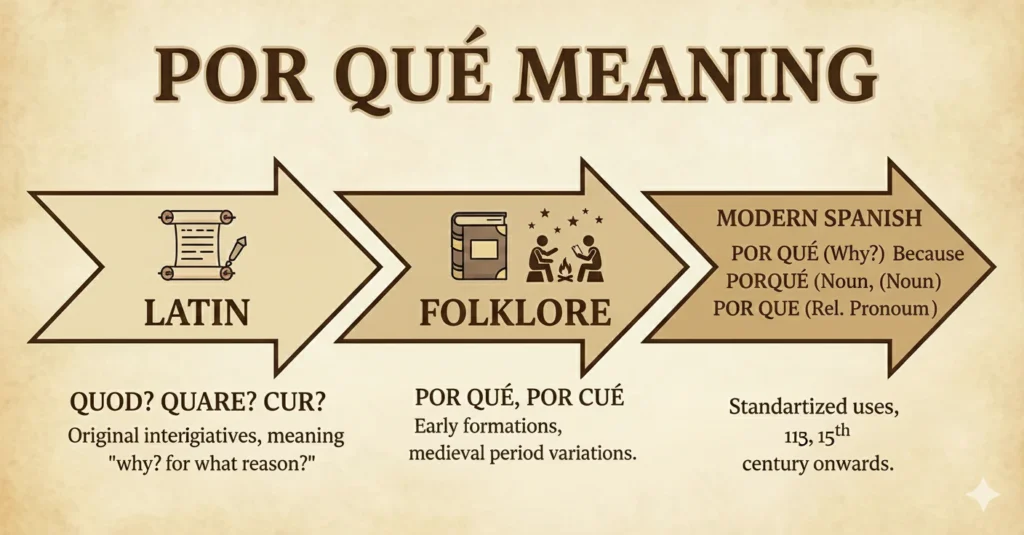
🗣️ Por Qué Meaning in Different Contexts
Spanish can be tricky because “por qué” changes meaning depending on spelling and accent. Let’s break it down:
1️⃣ Por qué (two words, accent on qué)
👉 Used in questions — means “why.”
- Example: “¿Por qué no viniste ayer?” → “Why didn’t you come yesterday?”
2️⃣ Porque (one word, no accent)
👉 Means “because.”
- Example: “No fui porque estaba cansado.” → “I didn’t go because I was tired.”
3️⃣ Porqué (one word, accent on é)
👉 A noun meaning “the reason” or “the cause.”
- Example: “No entiendo el porqué de su enojo.” → “I don’t understand the reason for his anger.”
4️⃣ Por que (two words, no accent)
👉 Less common; used when “por” + “que” appear together grammatically.
- Example: “Luchamos por que se haga justicia.” → “We fight so that justice is done.”
| Form | Meaning in English | Example |
| Por qué | Why | ¿Por qué lloras? → Why are you crying? |
| Porque | Because | No fui porque llovía. → I didn’t go because it rained. |
| Porqué | The reason | No sé el porqué. → I don’t know the reason. |
| Por que | For which / So that | Luchamos por que gane. → We fight so that he wins. |
💬 Examples of “Por Qué” in Conversations
Example 1:
A: ¿Por qué estás enojado?
B: Porque olvidaste mi cumpleaños. 😠
Example 2:
A: No entiendo el porqué de tu reacción.
B: Simplemente me sorprendió.
Example 3 (Formal):
“El juez explicó el porqué de su decisión en el informe.”
Example 4:
A: Luchamos por que todos tengan igualdad.
B: Totalmente de acuerdo. 🙌

🔤 Similar or Related Terms
Here are a few related Spanish expressions that learners often mix up with “por qué”:
| Term | Meaning | Used For |
| Para qué | For what / What for | To express purpose (“¿Para qué estudias?”) |
| De qué | Of what / About what | To indicate a topic (“¿De qué hablas?”) |
| Por eso | That’s why / Therefore | To give reasons (“Por eso llegué tarde.”) |
| Así que | So / Therefore | To connect ideas (“Estaba cansado, así que dormí.”) |
✅ How to Use “Por Qué” Correctly
Do’s:
- ✅ Use “por qué” when asking why.
- ✅ Use “porque” when giving an answer.
- ✅ Pay attention to accents — they change meaning completely!
Don’ts:
- ❌ Don’t use “porque” in a question.
- ❌ Don’t confuse “porqué” (noun) with “porque” (conjunction).
Example:
✅ “¿Por qué no fuiste?” → Correct (question)
✅ “No fui porque llovía.” → Correct (answer)
❌ “¿Porque no fuiste?” → Incorrect ❌
⚠️ Common Mistakes or Misinterpretations
- ❌ Mistake 1: Writing “porque” in questions.
➤ Always use “por qué” with an accent for questions. - ❌ Mistake 2: Forgetting the accent in “qué.”
➤ Without it, the meaning changes completely. - ❌ Mistake 3: Assuming all four versions mean the same thing.
➤ Each version — “por qué,” “porque,” “porqué,” and “por que” — serves a unique grammatical role.
❓ FAQ Section
1. What does “por qué” mean in English?
It means “why.” It’s used when asking about the reason or cause of something.
2. Is “por qué” the same as “porque”?
No. “Por qué” asks a question (“why”), while “porque” gives an answer (“because”).
3. How do you know when to use “porqué”?
Use “porqué” when it functions as a noun meaning “the reason.” Example: “No sé el porqué.”
4. Is “por qué” used in texting?
Yes, especially in Spanish conversations or casual messages: “¿Por qué no me contestas?” 📱
5. Why is the accent on “qué” important?
The accent distinguishes “qué” (what/why) from “que” (that/which) — changing meaning entirely.
6. When should you not use “por qué”?
Don’t use it when you’re explaining something — that’s when “porque” fits better.
🏁 Conclusion
To summarize, “por qué” means “why” and is used when asking questions in Spanish. It originated from Latin roots meaning “for what,” and its meaning changes slightly depending on spelling and context.
Understanding the difference between por qué, porque, porqué, and por que is key to sounding natural in Spanish. 🌎💬
Now that you know what “por qué” means, you’ll never be confused again! Keep exploring our site for more language tips and cultural insights to boost your Spanish fluency.

Patrick Gale is a word-meaning expert at Meanovia.com. He explains complex terms, definitions, and language trends with clarity and precision. His goal is to help readers understand the exact meaning behind every word they search.