
Have you ever read a news headline or legal report using the word “molested” and wondered what it truly means? 😔
It’s a serious term often used in discussions about personal safety, criminal behavior, or legal justice.
In this article, we’ll explain:
✅ The definition of molested
📜 Its origin and history
⚖️ Different contexts — legal, historical, and general usage
💬 Examples to understand tone and seriousness
🚫 Common mistakes and related terms
This guide aims to promote awareness, respect, and clarity, helping readers understand why this word must always be used carefully.
💡 What Does Molested Mean?
“Molested” means being disturbed, harassed, or subjected to unwanted and inappropriate physical contact or sexual behavior.
It’s a verb (past tense) of molest, and it’s mainly used in legal, social, or protective contexts to describe acts that violate someone’s personal boundaries or safety.
Example:
“The victim reported that she was molested by a neighbor when she was a child.”
This word carries serious emotional and legal weight, and should never be used casually or jokingly.
🕰️ Origin and History of the Word “Molested”
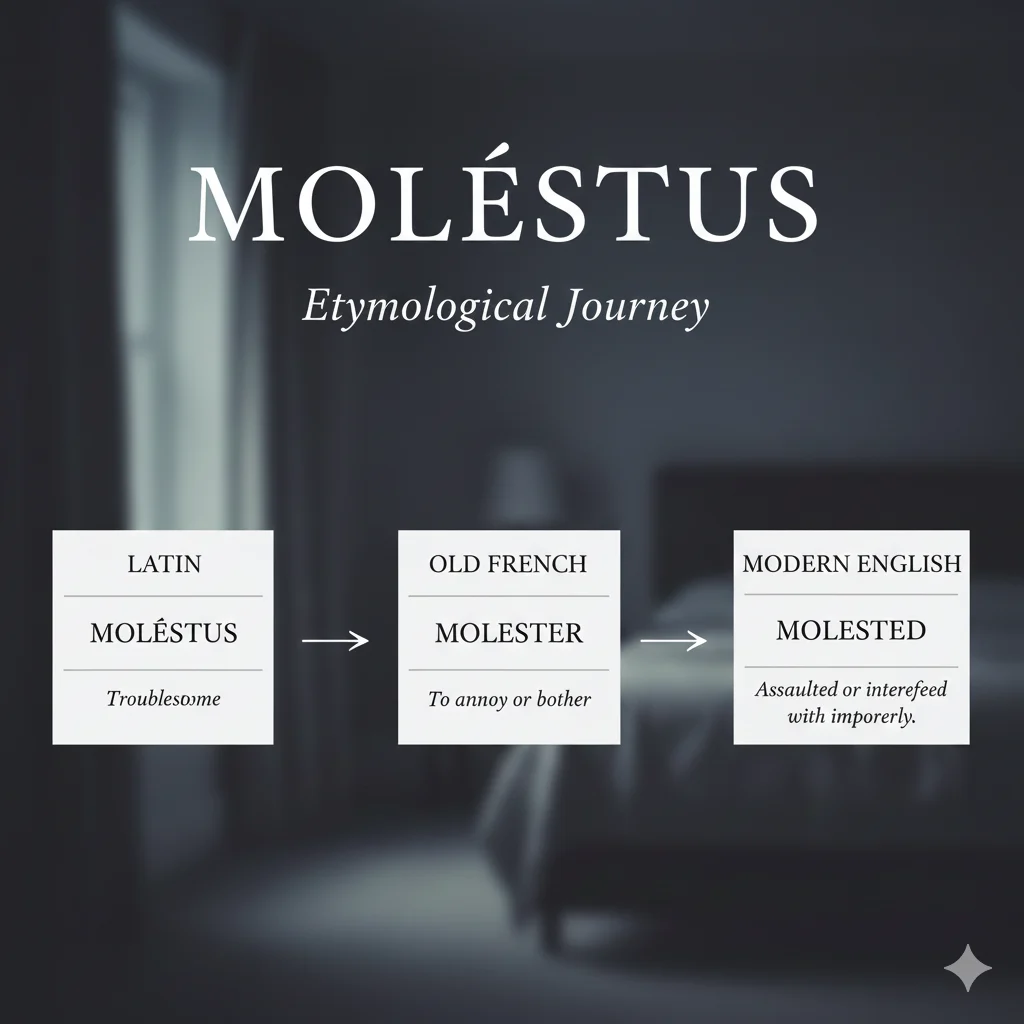
The term molest comes from the Latin word “molestus,” meaning troublesome or annoying.
- 14th century: It first appeared in Old French as molester, meaning to disturb or trouble someone.
- 16th–17th centuries: It evolved in English to mean to annoy or attack physically.
- 19th century onward: The word gained its modern and most serious meaning — to make unwanted or abusive physical or sexual contact with someone, especially a child.
Over time, “molested” became a strict legal and moral term, used primarily in law enforcement, news, and victim-advocacy contexts.
⚖️ Molested Meaning in Different Contexts
| Context | Meaning | Tone / Use |
| Legal / Criminal | Refers to unwanted physical or sexual contact violating someone’s safety or rights. | Formal, serious |
| Historical (Old Usage) | Meant to “harass, bother, or disturb” someone. | Archaic |
| Modern General Use | Rare outside of legal or protective discussions; avoided in casual talk. | Always sensitive |
⚖️ In Legal Contexts
The term is used to describe criminal acts involving harassment or assault, especially against minors or vulnerable people.
“He was charged with having molested a child.”
📚 In Older Texts or Literature
In earlier English writing, molested could mean “troubled” or “harassed.”
“The villagers were molested by invading soldiers.”
(This sense is now outdated.)
🗣️ In Modern Conversation
Today, people avoid using molested lightly because of its traumatic association. When discussing it, use respectful and factual language.
SRO Meaning: The Secret Behind Its Different Uses
💬 Examples of ‘Molested’ in Sentences
“The case involved several victims who said they had been molested as children.”
“In medieval times, the term ‘molested’ simply meant to trouble or attack.”
“She spoke courageously about being molested and encouraged others to seek help.”
🔍 Similar or Related Terms
| Word | Meaning | Context of Use |
| Harassed | To trouble, intimidate, or persistently annoy someone. | Workplace or social issues |
| Assaulted | To attack or physically harm someone. | Legal/criminal |
| Abused | To treat someone cruelly or violently, especially repeatedly. | Broad; emotional, physical, or sexual |
| Victimized | To make someone suffer unfair treatment or harm. | General term |
| Exploited | To take unfair advantage of someone. | Social or economic contexts |
Understanding these distinctions helps ensure that each term is used correctly and respectfully.
🧠 How to Use “Molested” Correctly
✅ Do’s:
- Use the word only in factual or legal discussions.
- Maintain a serious and respectful tone.
- Use it when accuracy and clarity are required (e.g., reporting, awareness writing).
❌ Don’ts:
- Never use “molested” in humor, casual chats, or as slang.
- Avoid it in metaphors or exaggerations (e.g., “the cat molested my food” — ❌ inappropriate).
Correct Example:
“The report confirmed that several children had been molested by the same individual.”
Incorrect Example:
“I was molested by all that paperwork.” (❌ Insensitive and offensive)
⚠️ Common Mistakes or Misinterpretations
- Using it casually — “Molested” is not interchangeable with “bothered” or “annoyed.”
- Confusing it with harassment — While both involve unwanted behavior, molestation generally refers to physical contact.
- Downplaying its seriousness — Always remember, this term relates to criminal behavior and personal trauma.
❓ FAQ Section
1. What does “molested” mean in law?
In legal terms, “molested” refers to being subjected to unwanted sexual or physical contact without consent. It’s considered a criminal act and taken very seriously by law.
2. Is “molested” the same as “harassed”?
No. Harassed can include verbal or emotional intimidation, while molested specifically implies physical or sexual contact that is unwanted.
3. Can “molested” mean “bothered” or “troubled”?
Historically, yes — centuries ago, it simply meant “to trouble.” But today, it is strictly used in serious legal and moral contexts.
4. Is “molested” a slang term?
Absolutely not. It is a formal, legal, and highly sensitive term, not used in casual or humorous ways.
5. When should you avoid using the word “molested”?
Avoid it in jokes, informal speech, or metaphorical expressions. Use it only when referring to verified events or awareness discussions.
6. What should someone do if they or someone they know has been molested?
They should seek help from trusted authorities, counselors, or helplines immediately. It’s important to ensure safety and get professional support.
🏁 Conclusion
In summary, the meaning of “molested” centers on unwanted or abusive physical contact, most often discussed in legal and protective contexts. Its origins trace back to older meanings of “trouble” or “disturb,” but today, it carries a grave and precise sense tied to justice and safety.
This word reminds us of the importance of speaking carefully, supporting survivors, and fostering awareness.
Now that you understand its true meaning, always use it with empathy and accuracy.

Jon McGregor is a language and word-meaning expert at Meanovia.com. He specializes in explaining complex words, phrases, and modern language trends in a clear, approachable style. His mission is to help readers quickly grasp the true meaning behind every term, making language learning and understanding effortless and engaging.