Ever read a sentence like “The design is intricate” and paused to ask yourself — what does “intricate” really mean? 🤔 You’re not alone! This word pops up everywhere — from art reviews and academic writing to daily conversations — yet its nuance often confuses people.
In this article, we’ll explore:
✅ The definition of intricate
📜 Its origin and history
💬 Meaning in different contexts
📚 Real-world examples
🔍 Related terms and FAQs
By the end, you’ll know how to use “intricate” confidently in writing, conversation, and creative expression.
💡 What Does Intricate Mean?
“Intricate” means something that is very detailed, complex, or made up of many connected parts.
It’s an adjective used to describe designs, ideas, or systems that are beautifully complicated or require careful attention to understand.
Example:
“The artist created an intricate pattern with hundreds of tiny details.”
🕰️ Origin and Popularity
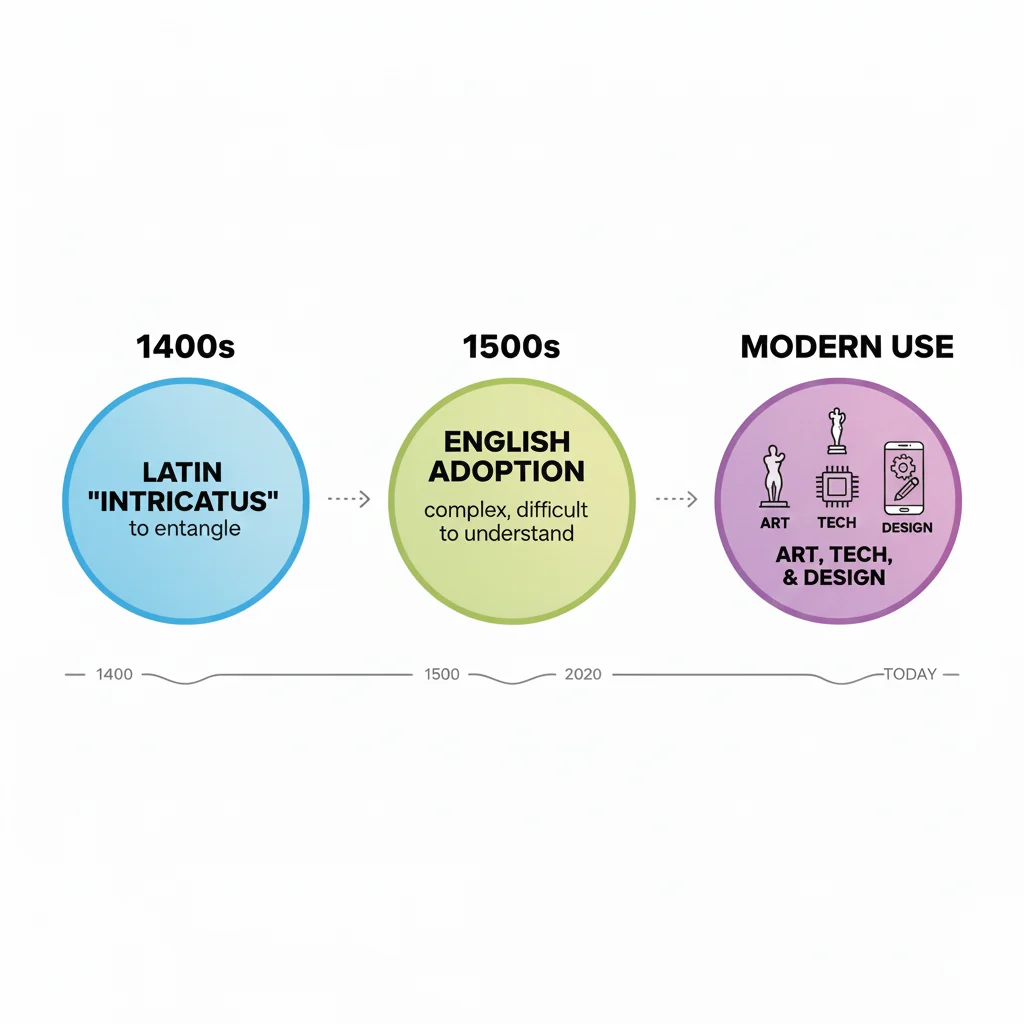
The word intricate comes from the Latin word intricatus, meaning “entangled” or “complicated.” It was first used in English during the 15th century to describe something hard to follow or understand — much like a maze.
Over time, “intricate” gained popularity in literature, art, and design, often symbolizing depth, sophistication, and careful craftsmanship.
It’s frequently used today in descriptions like:
- Intricate jewelry designs
- Intricate storytelling in movies
- Intricate algorithms in technology
🗣️ Intricate Meaning in Different Contexts
🎨 In Art and Design
Used to describe highly detailed or complex patterns and structures.
“The architecture of the mosque was intricate, with ornate carvings and patterns.”
💬 In Everyday Conversation
Refers to something complicated or hard to explain.
“The movie’s plot was so intricate that I had to watch it twice.”
💼 In Business or Technology
Describes complex systems, procedures, or data structures.
“The company’s financial network is intricate but efficient.”
| Context | Meaning of ‘Intricate’ | Tone |
| Art/Design | Full of detailed patterns | Positive |
| Conversation | Complicated or tricky | Neutral |
| Technology/Business | Complex and well-organized | Professional |
💬 Examples of ‘Intricate’ in Conversations
Example 1 (Casual):
Friend 1: That dress looks amazing!
Friend 2: Thanks! The embroidery is really intricate.
Example 2 (Academic):
“Shakespeare’s plays are known for their intricate themes and layered characters.”
Example 3 (Technical):
“The engineer built an intricate machine capable of detecting tiny movements.”
Example 4 (Creative):
Artist: My new piece explores intricate emotional patterns through abstract art.
🔍 Similar or Related Terms
Here are some related words that help deepen your understanding of intricate:
| Word | Meaning | How It Differs from ‘Intricate’ |
| Complex | Complicated and hard to understand | More neutral, not always detailed |
| Detailed | Having many small parts or elements | Focuses on precision, not difficulty |
| Elaborate | Carefully designed or decorated | Often implies beauty or luxury |
| Sophisticated | Refined, advanced, or cultured | Broader; can apply to people or ideas |
| Complicated | Difficult due to many elements | Sometimes has a negative tone |
🧠 How to Use ‘Intricate’ Correctly
✅ Do’s:
- Use intricate to describe something with many fine details or complex connections.
- Apply it when you want to highlight beauty in complexity.
❌ Don’ts:
- Don’t use it for something simple or straightforward.
- Avoid overusing it for general descriptions — save it for things that truly deserve the word.
Examples:
✅ “The tapestry has an intricate design woven by hand.”
❌ “He gave an intricate answer” (Better: “He gave a detailed answer”).
⚠️ Common Mistakes or Misinterpretations
- Mistake 1: Thinking intricate always means “confusing.”
→ Not always! Intricate can be beautifully complex, not just difficult. - Mistake 2: Using intricate for emotional or abstract ideas that don’t involve structure.
→ Example: Saying “intricate feelings” is acceptable in poetry, but not in formal writing. - Mistake 3: Confusing intricate with complicated.
→ Intricate adds the idea of detail and craftsmanship, while complicated often feels negative.
❓ FAQ Section
1. What does ‘intricate’ mean in simple terms?
It means something that has many small details or is carefully designed and complex — like a puzzle or a fine piece of art.
2. Is ‘intricate’ a positive or negative word?
Mostly positive. It highlights skill, detail, and sophistication, though in some contexts it can mean something is overly complex.
3. Is ‘intricate’ formal or casual?
It’s a formal English adjective, commonly used in academic, artistic, and professional settings.
4. What’s the difference between ‘intricate’ and ‘detailed’?
Detailed focuses on the small parts, while intricate emphasizes the complexity of how those parts connect.
5. Can you use ‘intricate’ to describe a person?
Rarely. It’s usually used for systems, patterns, or ideas — not people.
6. When should you not use ‘intricate’?
Avoid it for simple or everyday things. Don’t say “an intricate breakfast” — that sounds odd unless it’s a masterpiece of plating! 🍳
🏁 Conclusion
To wrap up, “intricate” means complex, detailed, and beautifully connected. Its roots in Latin remind us of something “entangled,” yet skillfully crafted. Whether it’s a painting, a story, or a system, intricate celebrates the beauty of detail and depth.
So next time you describe something that’s both complex and artful, you’ll know that intricate is the perfect word to use. Now that you know the intricate meaning, you can use it with confidence in your writing and speech! ✨🧵

Patrick Gale is a word-meaning expert at Meanovia.com. He explains complex terms, definitions, and language trends with clarity and precision. His goal is to help readers understand the exact meaning behind every word they search.