Ever seen someone text “IDM” and wondered what they meant? You’re not alone! This short abbreviation shows up in messages, comment sections, and even casual emails — and its meaning depends on how and where it’s used.
In this quick guide, we’ll cover:
What “IDM” means in text and chat
Its origin and popularity
How the meaning changes by context
Real-life examples and related terms
A quick FAQ section to clear up confusion
💡 What Does IDM Mean?
“IDM” stands for “I Don’t Mind.”
It’s a casual abbreviation used in texting, social media, and online chats to express that you’re okay with a suggestion, request, or idea.
For example:
“IDM where we eat — you pick!”
🧠 It’s a friendly and easy way to sound agreeable or flexible without typing a full sentence.
🕰️ Origin and Popularity
The phrase “I don’t mind” has been used in spoken English for centuries. The abbreviation IDM started appearing in online chats and text messages in the late 2000s, around the same time as other short forms like WYD (What You Doing) and LMK (Let Me Know).
It gained popularity as smartphones and instant messaging apps became mainstream — particularly among teens and Gen Z users who preferred faster texting.
By the early 2020s, “IDM” became a staple in casual digital communication across platforms like Snapchat, WhatsApp, Instagram DMs, and Twitter.
📱 IDM Meaning in Different Contexts
The meaning of “IDM” can slightly change depending on where it’s used. Let’s break it down:
💬 In Texting or Chat
Used to agree or show flexibility in casual conversations.
Example: “IDM going out tomorrow if you’re free.”
Tone: Polite, chill, and easygoing.
📸 On Instagram or TikTok
Used in captions or comments to show a laid-back attitude or agreement with someone’s opinion.
Example: “IDM staying in all weekend 😴”
Tone: Relaxed or humorous, depending on context.
💼 In Work or Formal Chats
While it’s not slang that belongs in official emails, it can appear in informal work chats (like Slack or Teams) between colleagues.
Example: “IDM switching the meeting to 3 PM.”
Tone: Professional-casual — fine for friendly workplace exchanges.
🎵 Bonus: IDM as a Music Genre
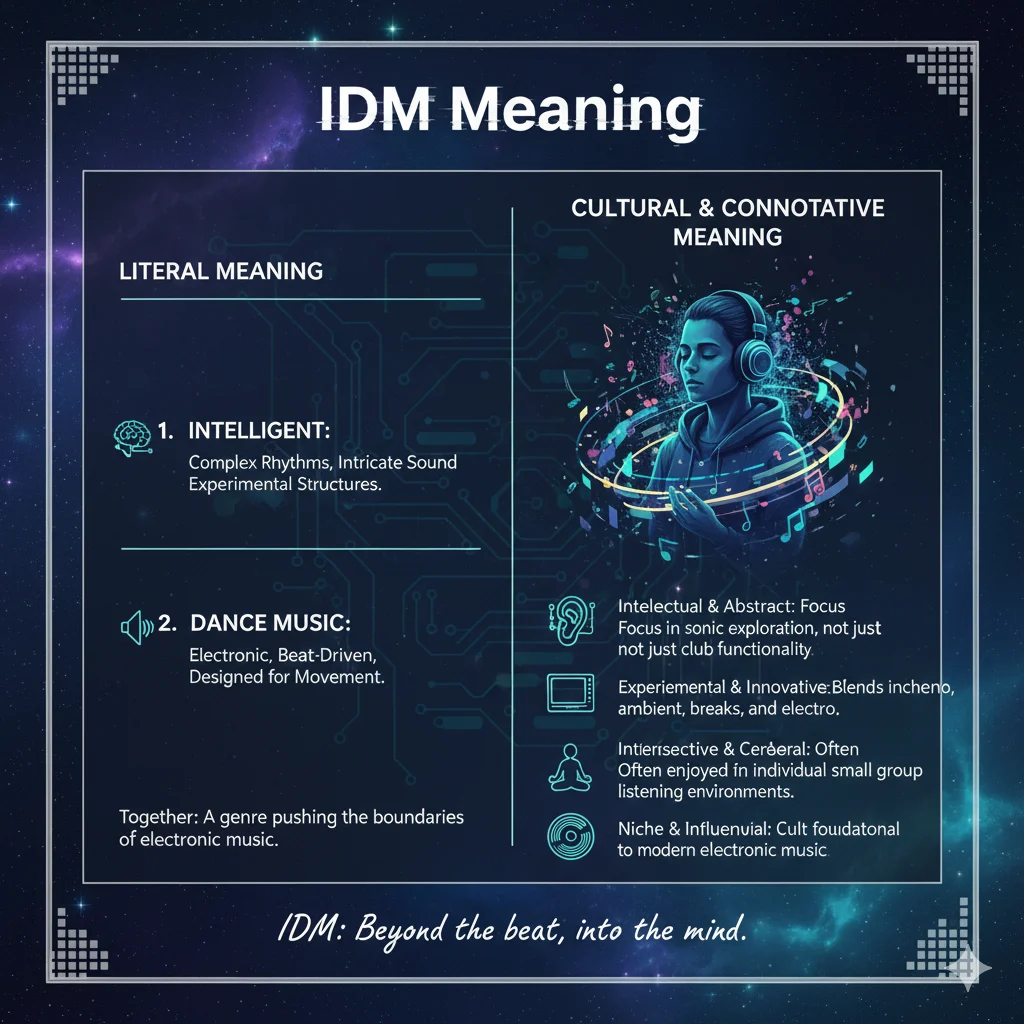
In a completely different context, IDM also stands for Intelligent Dance Music, a subgenre of electronic music known for its experimental sound.
However, when used in texting or chat, “IDM” almost always means “I Don’t Mind.”
| Context | Meaning | Tone |
| Texting | I Don’t Mind | Casual, friendly |
| Social Media | I Don’t Mind | Playful or humorous |
| Workplace Chats | I Don’t Mind | Polite, informal |
| Music Discussions | Intelligent Dance Music | Genre reference |
💬 Examples of IDM in Conversations
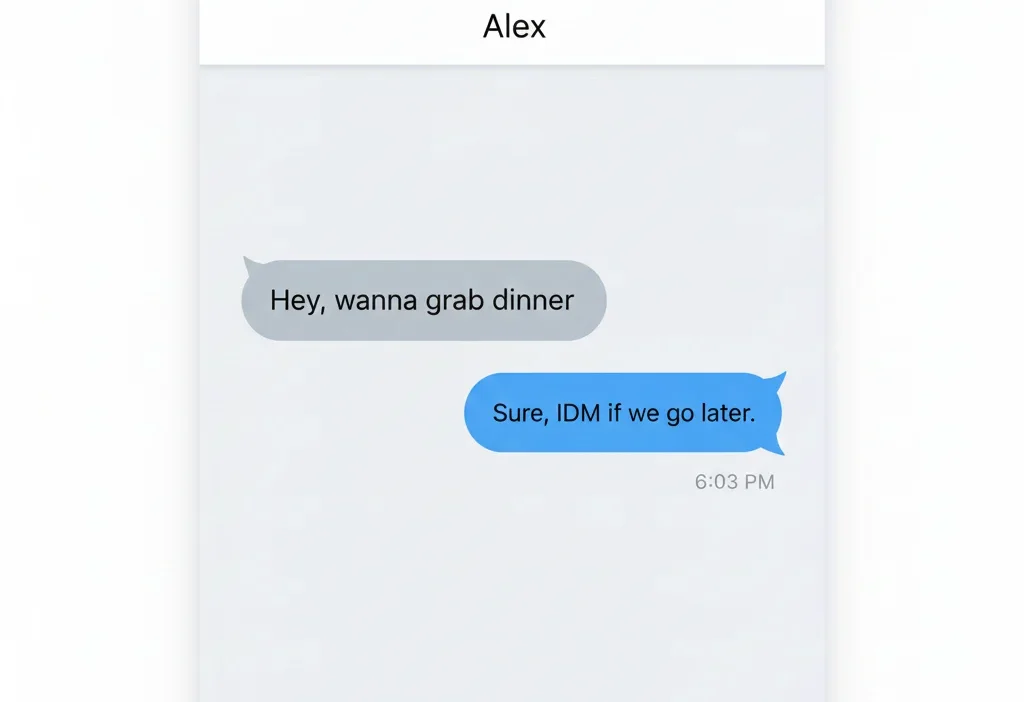
Example 1 (Texting):
Friend 1: Wanna grab pizza or burgers?
Friend 2: IDM, you choose! 🍕🍔
Example 2 (Group Chat):
Person 1: Should we meet at 8 or 9?
Person 2: IDM either way.
Example 3 (Work Chat):
Manager: Can we move tomorrow’s meeting to later in the afternoon?
Employee: Sure, IDM.
Example 4 (Social Media):
Comment: “IDM working weekends if I get Mondays off 😂”
🔁 Similar or Related Terms
Here are a few similar phrases and abbreviations often used in the same situations:
| Term | Meaning | Usage |
| IDC | I Don’t Care | More casual or dismissive |
| IMO | In My Opinion | Expressing personal thoughts |
| LMK | Let Me Know | Asking for someone’s decision |
| WYD | What You Doing | Starting a casual chat |
| TBH | To Be Honest | Used before giving opinions |
📝 While IDM is polite and neutral, IDC can sound negative — so use them carefully depending on tone and context.
✅ How to Use IDM Correctly
Here are a few quick do’s and don’ts:
Do’s
✅ Use it when you genuinely don’t have a preference.
✅ Keep it casual and friendly.
✅ Use it in texts, DMs, or group chats with friends or coworkers.
Don’ts
❌ Don’t use “IDM” in formal emails or professional documents.
❌ Avoid using it sarcastically unless you’re sure the other person will get the tone.
❌ Don’t confuse it with the music genre unless that’s the topic!
⚠️ Common Mistakes or Misinterpretations
- Mixing IDM and IDC:
- “IDM” = I don’t mind (positive).
- “IDC” = I don’t care (neutral or negative).
- “IDM” = I don’t mind (positive).
- Using it in formal writing:
- “IDM” is strictly for casual or digital conversation — not for business proposals or official reports.
- “IDM” is strictly for casual or digital conversation — not for business proposals or official reports.
- Confusing it with music:
- In music circles, “IDM” means “Intelligent Dance Music,” not “I don’t mind.”
- In music circles, “IDM” means “Intelligent Dance Music,” not “I don’t mind.”
❓ FAQ Section
1. What does IDM mean in texting?
In texting, “IDM” means “I Don’t Mind.” It’s used to show agreement, flexibility, or that you’re fine with someone else’s choice.
2. Is IDM slang or an acronym?
It’s an acronym and texting abbreviation, not slang. It shortens the phrase “I don’t mind” for faster typing.
3. What’s the difference between IDM and IDC?
“IDM” is neutral and polite, meaning you’re okay with something. “IDC” is more dismissive, meaning you don’t care either way.
4. How do you reply to IDM?
If someone says “IDM,” you can simply make the choice for them or say, “Okay, let’s do that then!”
5. Where is IDM most used?
It’s common in texting, social media DMs, and informal online chats like Discord or Messenger.
6. When should you not use IDM?
Avoid it in formal communication, emails, or serious discussions where full words show professionalism.
🧭 Conclusion
To sum up, IDM means “I Don’t Mind” — a friendly, casual way to say you’re fine with any choice. It’s widely used in texting, group chats, and social media to show flexibility or politeness.
Now that you know the IDM meaning, you’ll never have to wonder again when it pops up in your messages! Keep exploring our site to learn more about trending abbreviations, slang, and online lingo that help you stay fluent in digital conversation.

Claire Fuller is a word-meaning specialist at Meanovia.com. She explains complex words, phrases, and language trends in a clear, relatable way, helping readers quickly understand the exact meaning behind every term.