
Can one word describe elegance, intelligence, athletic skill, and even clever deception? Surprisingly, yes—and that’s exactly why so many people misunderstand the word finesse. If you’ve heard someone say, “She handled the situation with finesse,” “He finessed the defender,” or “They finessed the deal,” you may have wondered whether finesse is a compliment, a strategy, or slang for tricking someone.
The truth is that all of these meanings can be correct, depending on the context. Finesse (pronounced fi-NESS) is both a noun and a verb. Traditionally, it describes using exceptional skill, precision, elegance, and thoughtful judgment to achieve a result without relying on force. In modern slang, however, to finesse can also mean cleverly persuading, outsmarting, or sometimes deceiving someone to gain an advantage.
Understanding this difference is important because the same word can express admiration for remarkable ability in one conversation and criticism for manipulative behavior in another.
In simple terms, finesse means achieving success through skill, intelligence, technique, and subtle execution rather than strength or aggression. You might hear people talk about shooting with finesse in sports, handling negotiations with finesse in business, performing with finesse in music, or finessing someone in modern slang.
Each use reflects a different shade of the same idea—achieving a goal through smart, controlled action instead of brute force. Whether you’re reading a book, watching sports, scrolling through TikTok, listening to music, or chatting with friends, this guide explains the meaning of finesse, its pronunciation, origin, traditional and slang definitions, real-life examples, synonyms, antonyms, and exactly how to recognize which meaning applies so you can use the word naturally, accurately, and confidently in every situation.
At a Glance
| Feature | Explanation |
|---|---|
| Pronunciation | fi-NESS (/fɪˈnɛs/) |
| Part of Speech | Noun and Verb |
| Core Meaning | Skillful, tactful, and refined handling of a situation |
| Slang Meaning | Cleverly persuading, outsmarting, or gaining an advantage |
| Tone | Usually positive, but can be negative in some slang contexts |
| Common Uses | Business, sports, music, relationships, social media, and everyday English |
How to Pronounce “Finesse”
Many learners recognize the word in writing but hesitate when saying it aloud.
Pronunciation
fi-NESS
IPA
/fɪˈnɛs/
The stress falls on the second syllable, so the word sounds like:
fih-NESS
Words That Rhyme with Finesse
- confess
- impress
- success
Example
She handled the difficult interview with remarkable finesse.
Pronunciation Tip: Emphasize the second syllable rather than the first to sound more natural.
What Does “Finesse” Mean?
At its heart, finesse is about how something is done—not simply what is achieved.
Someone who acts with finesse doesn’t rely on force, pressure, or aggression. Instead, they succeed through careful judgment, refined skill, patience, confidence, and thoughtful communication. The word suggests that a person knows how to navigate a situation with precision and good timing, often making difficult tasks appear effortless.
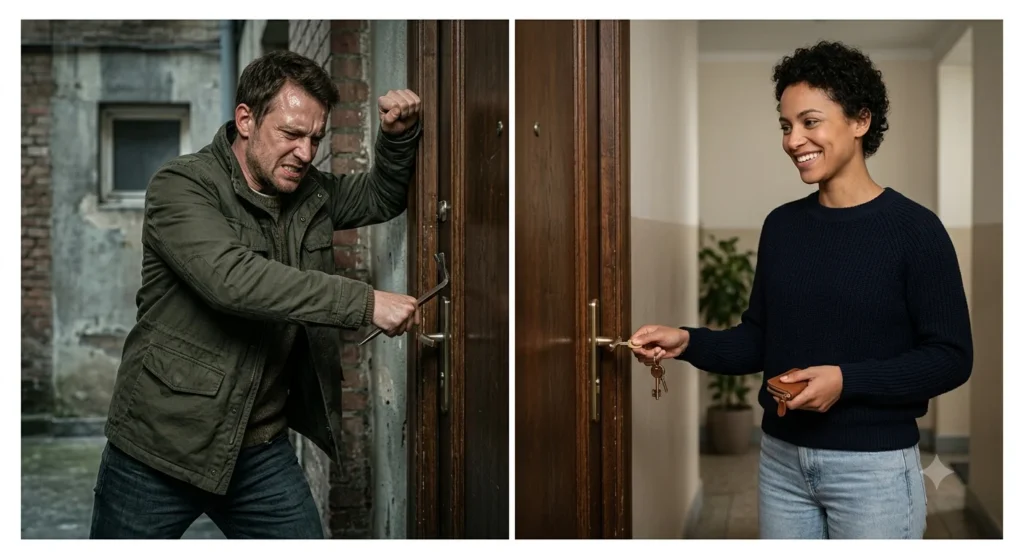
Imagine two people trying to solve the same problem. One argues loudly and pushes for their own way. The other listens carefully, understands different perspectives, and guides the conversation toward a solution everyone accepts. Both may achieve a result, but only the second person demonstrates finesse.
Because of this, the word is commonly associated with qualities such as:
- Diplomacy
- Tact
- Grace
- Precision
- Emotional intelligence
- Strategic thinking
- Composure
- Good judgment
These qualities explain why finesse is often viewed as a compliment in professional and personal settings.
Dictionary Definition of Finesse
In standard English, finesse refers to the ability to deal with people or situations in a delicate, skillful, and tactful manner. It also describes refined technique, graceful execution, or careful judgment.
As a verb, to finesse means to handle something with subtle skill or to solve a challenge through thoughtful strategy rather than force.
While dictionaries provide the foundation, everyday usage has broadened the word. Today, you might hear finesse in a boardroom, a football match, a classroom, or a viral social media video. Understanding the context is what allows you to interpret the intended meaning accurately.
Is Finesse a Noun or a Verb?
One reason this word is so versatile is that it functions as both a noun and a verb.
| Part of Speech | Meaning | Example |
|---|---|---|
| Noun | Refined skill, tact, or elegance | She handled the negotiation with finesse. |
| Verb | To deal with something skillfully or cleverly | He finessed the situation before it became a problem. |
Word Forms
| Word | Usage |
|---|---|
| finesse | noun / verb |
| finessed | past tense |
| finessing | present participle |
| finesses | third-person singular |
Learning these forms helps you recognize the word in conversations, articles, books, and social media posts.
Where Does the Word “Finesse” Come From?
The story of finesse began centuries before it became a modern slang term.
The word entered English during the 15th century, borrowed from the French word finesse, which referred to refinement, delicacy, elegance, and subtle skill. That French term comes from fin, meaning fine, refined, or excellent.
Originally, finesse was associated with craftsmanship, diplomacy, and graceful behavior. Writers used it to describe people who solved problems through intelligence and careful judgment rather than force.
As English evolved, the word expanded into fields such as business, politics, sports, and leadership. In the 21st century, social media, hip-hop, and popular culture introduced another layer of meaning, using finesse to describe someone who cleverly persuades others, navigates situations smoothly, or occasionally outsmarts someone.
Although these newer meanings differ slightly, they all share the same underlying idea:
Achieving a goal through skill, subtlety, and thoughtful action rather than brute force.
The Evolution of Finesse
| Time Period | How the Word Was Used |
|---|---|
| 1400s | Entered English from French, referring to refinement and delicate skill. |
| 1700s–1800s | Used in literature and diplomacy to describe elegance and careful judgment. |
| 1900s | Became common in sports, leadership, and business to describe technique and tact. |
| 2010s | Popularized by hip-hop, pop culture, and internet slang with broader meanings. |
| Today | Used in both formal English and everyday slang across business, sports, music, and social media. |
Why Is “Finesse” Often Misunderstood? ⭐
One reason finesse confuses so many people is that its traditional meaning and its slang meaning are both widely used today.
If you open a dictionary, you’ll find definitions focused on skill, diplomacy, elegance, and refined judgment. But if you browse TikTok, watch a rap video, or read online comments, you may see finesse used to describe cleverly getting something you want—or even tricking someone.
Neither meaning is automatically “wrong.” They simply belong to different contexts.
For example:
- “She handled the negotiations with finesse.” → Professional, respectful, and positive.
- “He finessed me out of fifty dollars.” → Slang with a negative meaning.
This is why memorizing one definition isn’t enough. To understand the word correctly, pay attention to who is speaking, where the conversation is happening, and what outcome they’re describing.
Language Tip: Native English speakers usually rely on context—not the dictionary alone—to understand whether finesse is being used as a compliment or a criticism.
Why Has Finesse Stayed Popular for Centuries?
Many words disappear over time, but finesse has remained relevant because it describes a timeless idea: solving problems with intelligence instead of force.
Whether you’re negotiating a contract, resolving a disagreement, scoring a goal, creating art, or giving a presentation, the ability to combine skill, confidence, and good judgment is valuable. That’s why the word continues to appear in professional writing, sports commentary, music, social media, and everyday conversation.
Its flexibility has allowed it to evolve while keeping its core meaning intact—making finesse one of the most versatile words in modern English.
Finesse Meaning in Slang
While finesse has been part of English for centuries, its slang meaning has become especially popular through hip-hop, social media, gaming, and everyday conversations. Today, many people encounter the word online long before they learn its traditional dictionary definition.
In slang, to finesse usually means using confidence, intelligence, charm, or clever strategy to get what you want. Sometimes that means negotiating a better deal, talking your way into an opportunity, or solving a problem creatively. In other situations, it can describe tricking or outsmarting someone.
Because of these different uses, the context completely changes the meaning.
Positive Slang Meaning
When used positively, finesse describes someone who succeeds through smart thinking rather than pressure or aggression.
For example:
- She finessed a better price on her new laptop.
- He finessed his way into a competitive internship by networking effectively.
- They finessed the project timeline without sacrificing quality.
In these examples, the word highlights resourcefulness, confidence, and strategic thinking—not dishonesty.

Negative Slang Meaning
In some conversations, finesse carries a more negative tone. It can suggest that someone gained an advantage through deception or manipulation.
Examples:
- He finessed his roommate into paying the entire rent.
- I got finessed when I bought fake concert tickets.
- The scammer finessed dozens of people online.
Here, the focus shifts from cleverness to taking unfair advantage of someone else.
Quick Rule: If everyone benefits or no one is harmed, finesse usually sounds positive. If someone is misled or exploited, it takes on a negative meaning.
What Does “Finessed” Mean?
Finessed is the past tense of finesse. Like the original word, its meaning depends on the situation.
In standard English, finessed means someone handled a challenge with skill, tact, or precision.
Examples:
- The lawyer finessed the agreement until both sides were satisfied.
- She finessed the difficult presentation with confidence.
In slang, however, finessed often means outsmarted, persuaded, or tricked.
Examples:
- I got finessed into paying for everyone’s lunch.
- He finessed me out of my old gaming console.
The key is to read the entire sentence before deciding which meaning is intended.
What Does “Getting Finessed” Mean?
One of the most searched questions online is:
“What does getting finessed mean?”
In modern slang, getting finessed usually means being cleverly persuaded, tricked, or outsmarted, often in a way that leaves you at a disadvantage.
People commonly use the phrase after realizing they:
- Paid too much for something.
- Trusted the wrong person.
- Missed important information.
- Were convinced to make a bad decision.
Examples
- I bought the shoes without checking the seller—I got finessed.
- He realized he had been finessed after reading the contract carefully.
- We all thought it was a great deal, but we got finessed.
Among close friends, the phrase is often used humorously.
You paid for everyone’s coffee again? You got finessed!
In this case, nobody is accusing anyone of a serious scam—it is simply playful teasing.
What Does It Mean to Finesse Someone?
Another common question is:
“What does it mean to finesse someone?”
The answer depends on how the person achieved their goal.
Sometimes, it simply means using patience, communication, and persuasion to influence someone respectfully.
Example:
The salesperson finessed the conversation by carefully explaining every option without putting pressure on the customer.
Here, the word describes professional communication, not manipulation.
In other situations, to finesse someone means taking advantage of their trust for personal benefit.
Example:
He finessed his friend into paying for everything.
This version clearly has a negative meaning.
Language Insight
Native English speakers often understand the intended meaning immediately because they focus on the result of the action.
- If both people benefit, finesse sounds positive.
- If one person is exploited, it sounds negative.
That’s why context is always more important than memorizing a single definition.
Is Finesse a Compliment?
Most of the time, yes.
If someone tells you that you have finesse, they’re usually complimenting your ability to handle situations with confidence, grace, and intelligence.
People with finesse are often seen as:
- Calm under pressure
- Excellent communicators
- Diplomatic
- Professional
- Creative problem-solvers
- Emotionally intelligent
For example:
She has the finesse to lead difficult conversations without creating conflict.
In this sentence, finesse is clearly praise.
However, if someone says,
“He finessed everyone,”
the tone depends on the surrounding context. It could describe brilliant negotiation—or dishonest behavior.
FR Meaning: What This Popular Text Slang Really Means
Finesse Meaning in Relationships
In relationships, finesse usually refers to handling emotions and communication with maturity and care.
A person with finesse knows how to:
- Listen before reacting.
- Resolve disagreements respectfully.
- Express difficult feelings calmly.
- Build trust through thoughtful communication.
- Balance honesty with kindness.
Example:
She handled the misunderstanding with patience and finesse.
This highlights emotional intelligence and respect.
Slang Meaning in Relationships
On social media, the word sometimes takes on a different meaning.
Someone may say:
He was just finessing her.
In this context, it often means:
- Leading someone on.
- Flirting without serious intentions.
- Using charm for personal gain.
Again, the surrounding situation determines whether the word sounds positive or negative.
Finesse Meaning in Business
Business professionals often use finesse in one of its most positive senses.
Rather than forcing decisions or creating unnecessary conflict, a leader with finesse solves problems through:

- Diplomacy
- Clear communication
- Strategic thinking
- Careful negotiation
- Mutual respect
Example:
The CEO handled the merger with remarkable finesse, earning the trust of both teams.
This doesn’t suggest manipulation. Instead, it highlights professional judgment and leadership.
Finesse Meaning in Sports
In sports, finesse describes athletes who rely on technique, timing, control, and precision instead of pure strength.
Examples include:
- A basketball player making a soft layup over a defender.
- A golfer executing a delicate chip shot.
- A soccer player curling the ball into the top corner.
- A tennis player winning points through placement rather than power.
Example:
She scored with finesse instead of brute force.
Sports commentators often use the word to praise athletes whose movements appear smooth, controlled, and effortless.
Finesse Meaning in Music
Music has introduced the word finesse to millions of listeners around the world.
In songs, the word often represents:
- Confidence
- Personal style
- Charisma
- Smooth success
- Self-belief
- Effortless excellence
Depending on the lyrics, it may also describe someone who confidently navigates life’s challenges through intelligence and determination.
Rather than having one fixed meaning, finesse adapts to the message the artist wants to express.

What Does Bruno Mars’ “Finesse” Mean?
Many people first hear the word through Bruno Mars’ hit song “Finesse.”
In the song, finesse celebrates confidence, chemistry, style, and effortless cool. The lyrics focus on the feeling of standing out naturally rather than trying too hard.
The famous phrase “drippin’ in finesse” suggests being surrounded by confidence, style, and positive energy. Here, the word doesn’t imply tricking anyone. Instead, it emphasizes self-expression and carrying yourself with effortless confidence.
Because of the song’s popularity, many younger English speakers now associate finesse with fashion, swagger, and charisma before learning its traditional dictionary meaning.
Finesse in Social Media and Everyday English
Today, you’ll regularly see finesse used on platforms like TikTok, Instagram, X, and YouTube.
People use it to describe:
- A clever solution.
- An impressive achievement.
- A stylish outfit.
- A smooth conversation.
- A smart negotiation.
- A creative success.
Examples:
- She absolutely finessed that outfit.
- He finessed the interview and got the job.
- That edit is pure finesse.
- We somehow finessed front-row seats.
In these examples, finesse expresses admiration for someone’s confidence, creativity, or ability to make success look effortless.
How to Use “Finesse” Correctly
Knowing the definition is helpful, but understanding how native English speakers naturally use the word is what truly builds confidence.
The word finesse isn’t used to describe every success. Instead, it emphasizes the method behind the success. When someone achieves a goal through patience, precision, diplomacy, or thoughtful strategy rather than force, that’s when finesse is the right choice.
For example, imagine two managers resolving the same workplace disagreement. One raises their voice and demands a solution. The other listens carefully, finds common ground, and helps both sides reach an agreement. Both managers solved the problem, but only the second did it with finesse.
That subtle difference is what makes the word unique.
Language Insight: Whenever you hear the word finesse, ask yourself, “Was this achieved through refined skill instead of pressure?” If the answer is yes, the word is probably being used correctly.
When Should You Use the Word “Finesse”?
Although finesse appears in many situations, it fits best when someone’s success comes from judgment, technique, communication, or subtle skill.
In Business
Use finesse when describing someone who negotiates, leads, or solves problems diplomatically.
Example
The project manager handled the disagreement with finesse, keeping both clients satisfied.
In Sports
Athletes often rely on finesse when technique matters more than strength.
Example
Instead of overpowering the goalkeeper, she placed the ball into the corner with finesse.
In Leadership
Strong leaders often use patience and emotional intelligence rather than authority alone.
Example
He guided the team through a difficult transition with remarkable finesse.

In Relationships
Relationships require thoughtful communication.
Example
She approached the sensitive conversation with honesty and finesse.
In Everyday Life
Sometimes the word simply describes handling an ordinary situation gracefully.
Example
He finessed the seating arrangements so every guest felt welcome.
Although the situations differ, the common idea remains the same:
Skillful handling creates better results than forceful action.
DP Meaning: What It Really Means in Different Contexts
When Should You Avoid Using “Finesse”?
This is where many learners make mistakes.
Finesse doesn’t fit every successful action.
Avoid using it when success depends only on:
- Physical strength
- Luck
- Speed
- Aggression
- Chance
Incorrect Examples
❌ He lifted the refrigerator with finesse.
(Lifting depends on strength, not finesse.)
❌ She guessed every answer with finesse.
(Guessing isn’t a refined skill.)
❌ The storm destroyed the town with finesse.
(The word doesn’t describe destructive natural events.)
Using finesse only when thoughtful skill is involved will make your English sound much more natural.
Formal vs. Informal Usage
One reason finesse has remained popular for centuries is its flexibility. It works in both formal and informal English, but the emphasis changes depending on the setting.
| Formal English | Informal or Slang |
|---|---|
| Diplomacy | Clever persuasion |
| Refined skill | Smooth talking |
| Professional judgment | Outsmarting someone |
| Graceful execution | Getting what you want cleverly |
| Strategic communication | Street-smart thinking |
Formal Example
The ambassador managed the negotiations with great finesse.
Informal Example
He somehow finessed his way into the sold-out concert.
Both sentences are correct, but they belong in different contexts.
Common Collocations with “Finesse”
Native speakers naturally pair finesse with certain words. Learning these combinations helps your writing and speaking sound more fluent.
Some of the most common collocations include:
- Handle with finesse
- Lead with finesse
- Negotiate with finesse
- Perform with finesse
- Solve with finesse
- Respond with finesse
- Execute with finesse
- Move with finesse
- Win with finesse
- Speak with finesse

Examples
- She handled the complaint with finesse.
- The athlete performed with incredible finesse.
- He negotiated the agreement with finesse.
- The designer executed every detail with finesse.
Real-Life Examples of “Finesse”
Seeing the word in different situations makes it much easier to remember.
Everyday Conversation
- She solved the disagreement with finesse.
- He answered every question calmly and confidently.
- They handled the unexpected problem with remarkable finesse.
- Her presentation showed both confidence and finesse.
- Experience taught him when finesse was better than force.
Text Messages and Social Media
- You really finessed that outfit.
- Bro, I think I got finessed.
- She finessed the trend better than everyone else.
- That video edit is pure finesse.
- He somehow finessed VIP tickets.
Workplace
- The consultant finessed the negotiations.
- She managed the difficult client with finesse.
- Good leaders often rely on communication rather than authority.
- They finessed the launch without delaying the deadline.
Relationships
- He handled the misunderstanding with maturity and finesse.
- She expressed her feelings honestly but respectfully.
- They rebuilt trust through patience and good communication.
School
- The teacher redirected the discussion with finesse.
- She explained the lesson so clearly that everyone understood.
- The principal handled the parents’ concerns with professionalism.
Customer Service
- The representative solved the complaint with finesse.
- He remained calm even when the customer became frustrated.
- Good service requires empathy, patience, and finesse.
Sports
- She scored with finesse instead of power.
- His passing showed remarkable touch and control.
- Timing and finesse won the match.
Gaming
- He finessed the final challenge without taking unnecessary risks.
- Their strategy relied on precision rather than speed.
- Smart players often succeed through finesse instead of brute force.
Finesse vs. Manipulation
These two words are often confused, but they describe very different ideas.
| Finesse | Manipulation |
|---|---|
| Usually honest | Often deceptive |
| Based on communication | Based on control |
| Builds trust | Can damage trust |
| Respects others | Often benefits one person unfairly |
| Uses tact and diplomacy | Uses pressure or dishonesty |
Example
Finesse
She listened to everyone’s concerns before suggesting a solution.
Manipulation
He intentionally hid important information to get what he wanted.
The difference isn’t intelligence—it’s integrity.
Finesse vs. Tact
Although these words are closely related, they aren’t identical.
| Finesse | Tact |
|---|---|
| Broader concept | More focused on communication |
| Includes strategy and execution | Focuses on avoiding offense |
| Can apply to sports, business, or art | Mostly applies to social interactions |
| Emphasizes refined skill | Emphasizes sensitivity |
Someone with tact chooses their words carefully.
Someone with finesse combines careful communication with skillful action.
Finesse vs. Skill
Every person with finesse has skill, but not every skilled person demonstrates finesse.
| Skill | Finesse |
|---|---|
| General ability | Refined application of ability |
| Can involve power | Usually emphasizes precision |
| Learned through practice | Combines experience, judgment, and timing |
| Focuses on competence | Focuses on elegance and effectiveness |
Think of it this way:
Skill helps you complete a task. Finesse helps you complete it thoughtfully, smoothly, and impressively.
Synonyms of Finesse
Depending on the context, these words express similar ideas:
- Tact
- Diplomacy
- Grace
- Elegance
- Refinement
- Precision
- Expertise
- Sophistication
- Savvy
- Strategy
- Charisma
- Judgment
Each has its own nuance, but all relate to careful, intelligent action.
Antonyms of Finesse
The opposite of finesse includes actions that lack care, precision, or good judgment.
Common antonyms include:
- Clumsiness
- Carelessness
- Awkwardness
- Aggression
- Forcefulness
- Bluntness
- Rashness
- Incompetence
- Insensitivity
Common Mistakes to Avoid
Even advanced English learners sometimes misunderstand this word.
Mistake 1: Thinking it always means cheating
No. Its original and most common meaning is skillful, tactful handling. The negative sense comes mainly from certain slang contexts.
Mistake 2: Using it for every success
Winning alone isn’t enough. Finesse describes how someone succeeds.
Mistake 3: Ignoring the context
The same word can be a compliment in a business meeting and a criticism in a casual conversation. Always pay attention to the situation.
Mistake 4: Confusing confidence with arrogance
People with finesse usually appear calm, respectful, and composed—not loud or boastful.
Mistake 5: Forgetting that it works as both a noun and a verb
Compare these:
- She has great finesse. ✅ (noun)
- She finessed the negotiation. ✅ (verb)
Understanding both forms helps you use the word more naturally.
Frequently Asked Questions
What does finesse mean in simple words?
In simple terms, finesse means handling a situation with skill, good judgment, and subtlety instead of relying on force. It often describes someone who solves problems calmly, communicates effectively, or performs a task with precision.
What does finesse mean in slang?
In modern slang, finesse usually means getting what you want through cleverness, confidence, or persuasion. Depending on the context, it can describe smart negotiation, smooth communication, or, in some cases, tricking someone for personal gain.
Is finesse a good thing?
Most of the time, yes.
Having finesse is generally seen as a positive quality because it suggests you are:
- Thoughtful
- Diplomatic
- Skilled
- Calm under pressure
- Respectful
- Strategic
However, when the word is used to describe deceiving or exploiting someone, it carries a negative meaning.
What does “you got finessed” mean?
When someone says, “You got finessed,” they usually mean you were cleverly outsmarted, persuaded, or taken advantage of.
For example:
I paid twice the normal price for those tickets.
You got finessed.
Among friends, the phrase is often used jokingly.
What does it mean to finesse someone?
To finesse someone means influencing or handling them through skillful communication, charm, or strategy.
Sometimes this is positive, such as resolving a disagreement diplomatically.
Other times, it refers to manipulating or deceiving someone for personal benefit.
The intended meaning depends on the context.
Is finesse a noun or a verb?
Both.
As a noun, it refers to refined skill or tact.
She handled the interview with finesse.
As a verb, it means to manage something skillfully.
He finessed the negotiation.
What is the difference between finesse and skill?
Skill is the ability to do something well.
Finesse is the ability to apply that skill with precision, judgment, and elegance.
In other words, finesse is how skill is expressed.
What is the difference between finesse and manipulation?
Although the words are sometimes confused, they are not the same.
Finesse usually involves tact, diplomacy, and respectful persuasion.
Manipulation usually involves dishonesty or unfair influence for personal benefit.
The key difference is intention.
What is a synonym for finesse?
Depending on the situation, common synonyms include:
- Tact
- Diplomacy
- Grace
- Precision
- Elegance
- Refinement
- Expertise
- Savvy
- Judgment
- Sophistication
Each synonym has a slightly different nuance, so choose the one that best fits the context.
What is the opposite of finesse?
Common antonyms include:
- Clumsiness
- Carelessness
- Awkwardness
- Forcefulness
- Aggression
- Bluntness
- Incompetence
These words describe actions that lack refinement or thoughtful execution.
What does finesse mean in business?
In business, finesse describes the ability to negotiate, lead, and solve problems with professionalism, diplomacy, and strategic thinking.
Leaders who act with finesse often build stronger relationships because they communicate clearly while respecting different perspectives.
What does finesse mean in relationships?
In relationships, finesse refers to handling conversations, disagreements, and emotions with patience, empathy, and emotional intelligence.
Rather than avoiding problems, a person with finesse addresses them respectfully and constructively.
What does “drippin’ in finesse” mean?
The phrase “drippin’ in finesse” became widely recognized through Bruno Mars’ song.
In that context, it expresses confidence, style, charisma, and effortless self-assurance—not deception.
Why is finesse so popular today?
The word has remained popular because it works in many different contexts, including business, sports, music, gaming, and social media.
Its flexibility allows it to describe everything from elegant problem-solving to modern slang expressions, making it relevant to a wide range of audiences.
How can I use finesse naturally?
A simple guideline is:
Use finesse whenever success comes from careful thinking, good communication, precision, or refined technique, rather than force or luck.
Remember This
If you only remember four ideas from this guide, make them these:
- Finesse emphasizes how something is achieved, not just the final result.
- In standard English, it highlights skill, tact, precision, and diplomacy.
- In slang, it may describe clever persuasion or, depending on the situation, deceiving someone.
- Context determines whether the word sounds positive, neutral, or negative.
Conclusion
Finesse is one of those rare English words that has successfully evolved without losing its original identity. For centuries, it has described the ability to achieve results through skill, tact, precision, and thoughtful judgment. More recently, it has also become a popular slang term that reflects confidence, cleverness, and strategic thinking in everyday conversations.
The key to understanding finesse is recognizing that its meaning depends on context. In professional settings, it often highlights diplomacy and refined communication. In sports, it emphasizes technique over strength. On social media and in modern slang, it can describe smooth persuasion, creative problem-solving, or—when used negatively—clever deception.
Rather than memorizing a single definition, focus on the underlying idea: finesse is about achieving results through intelligence, subtlety, and refined execution instead of force. Once you understand that principle, you’ll recognize the word naturally wherever you encounter it—and you’ll be able to use it confidently in your own writing and conversations.

Lucas Hayes is a content writer at Meanovia, specializing in slang, texting meanings, and internet phrases. He creates simple, clear, and engaging explanations of modern digital language 💬✨