Have you ever heard a company mention they’re “fully compliant” and wondered what that really means?
Whether you’re reading a corporate policy, working in finance, or scrolling through LinkedIn job descriptions, the word “compliance” pops up everywhere. But what exactly does it mean — and why is it so important in today’s business world?
In this guide, we’ll cover:
✅ The definition of compliance
✅ Its origin and evolution in business and law
✅ How it’s used in different industries
✅ Examples in everyday and corporate settings
✅ Related terms and common misconceptions
⚖️ What Does Compliance Mean?
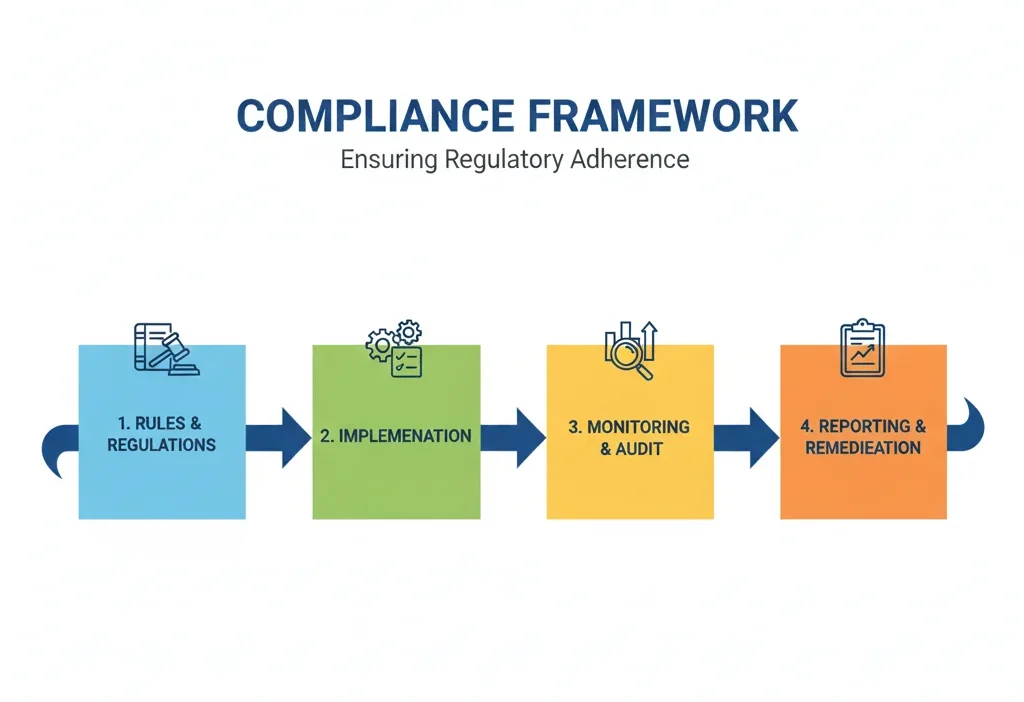
Compliance means following laws, rules, regulations, or established standards that govern an organization or individual’s actions.
In simple terms, it’s about doing what’s required or expected — whether by law, company policy, or ethical standards.
It’s a formal business term, most used in corporate, legal, and regulatory settings.
📚 Origin and Popularity
The term “compliance” comes from the Latin word “complere”, meaning “to fulfill or complete.”
It began gaining significance in the early 20th century, as governments and organizations created rules to regulate industries, protect consumers, and prevent fraud.
📈 Timeline Snapshot:
- 1900s: Early legal use in business and government regulations.
- 1970s–1990s: Rise of compliance departments in finance and healthcare sectors.
- 2000s–Present: Global compliance becomes vital due to digital privacy laws, ethics standards, and anti-corruption policies (like GDPR and SOX).
Today, compliance is more than just following rules — it’s about building trust, reducing risks, and ensuring ethical conduct across every industry.

🧭 Compliance Meaning in Different Contexts
The meaning of compliance can vary depending on the field or situation. Let’s break it down:
💼 In Business
Compliance means adhering to laws and company policies to ensure ethical and legal operations.
Example: “Our compliance team ensures we meet all financial reporting regulations.”
🏦 In Finance
Refers to following financial regulations such as anti-money laundering (AML), tax laws, and internal auditing standards.
Example: “Banks must maintain compliance with the SEC and local financial authorities.”
⚕️ In Healthcare
Means following medical laws, patient privacy standards (like HIPAA), and ethical practices.
Example: “Hospitals conduct compliance audits to protect patient data.”
🌐 In Technology or Data Privacy
Focuses on adhering to data protection laws like GDPR or CCPA, ensuring secure and transparent handling of personal information.
Example: “Tech companies invest heavily in compliance to protect user privacy.”
| Context | What Compliance Means | Example |
| Business | Following laws & company policies | Employee ethics training |
| Finance | Meeting regulatory standards | Anti-fraud reporting |
| Healthcare | Protecting patient rights | HIPAA audits |
| Technology | Data security and privacy laws | GDPR compliance |
💬 Examples of Compliance in Conversations
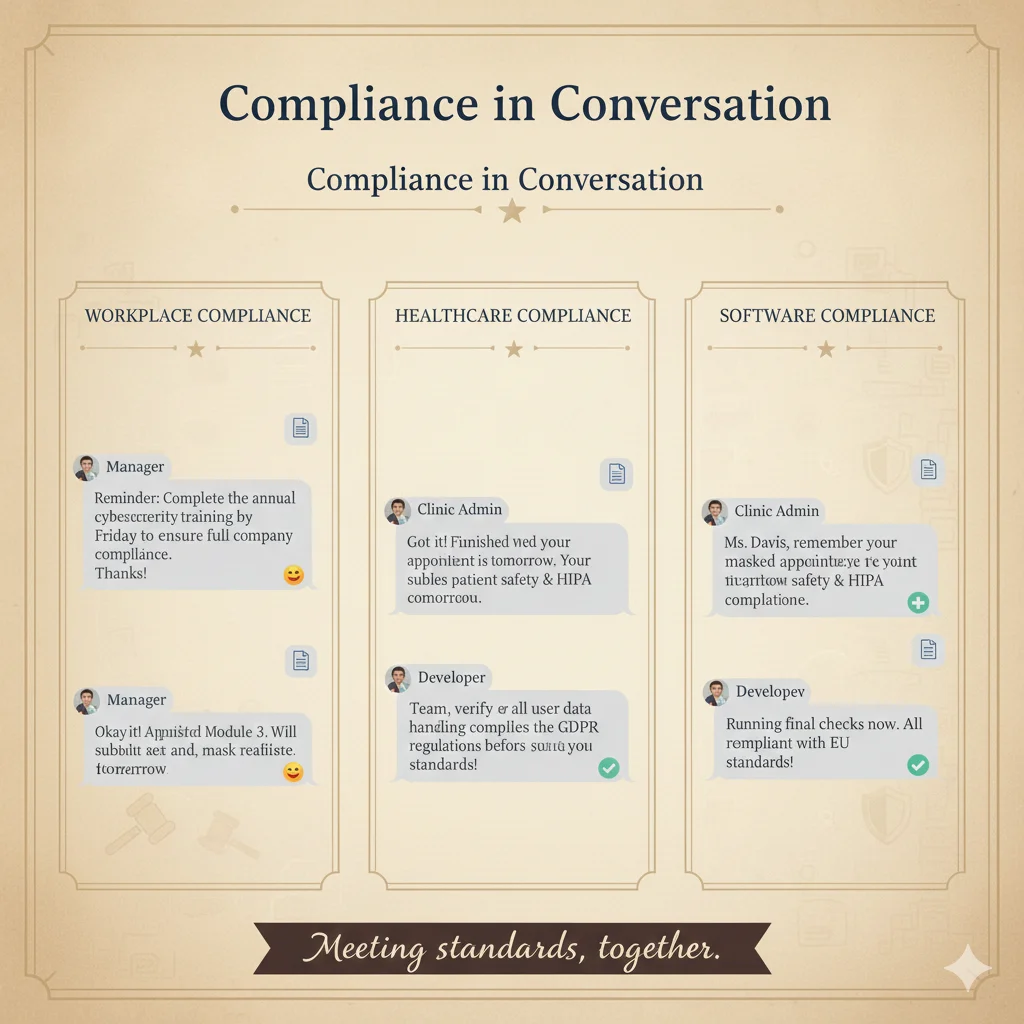
Example 1 (Business Context):
Manager: “We can’t launch until legal approves the campaign.”
Analyst: “Right, we need to make sure everything is compliance-ready.”
Example 2 (Corporate Email):
“Please review the updated compliance policy to align with new data protection guidelines.”
Example 3 (Training Scenario):
“Every employee must complete annual compliance training to ensure ethical workplace practices.”
Example 4 (Finance):
“Our compliance department monitors all transactions for suspicious activity.”
🔍 Similar or Related Terms
| Term | Meaning |
| Regulation | Official rules or directives made by authorities. |
| Governance | The way an organization is managed and controlled. |
| Ethics | Moral principles guiding behavior. |
| Audit | An official inspection of financial or regulatory practices. |
| Risk Management | Identifying and mitigating potential threats. |
These concepts often work together in corporate frameworks known as GRC (Governance, Risk, and Compliance).
✅ How to Use “Compliance” Correctly
Do’s:
- ✅ Use it in professional or business settings.
- ✅ Apply it to contexts involving rules, regulations, or ethical standards.
- ✅ Mention specific areas, e.g., “data compliance” or “regulatory compliance.”
Don’ts:
- ❌ Don’t use it in casual conversations like texting.
- ❌ Avoid saying “compliance” when you mean “agreement” — it’s more formal and specific.
- ❌ Don’t confuse it with “conformity” — compliance relates to official requirements, not just social expectations.
⚠️ Common Mistakes or Misinterpretations
- Confusing compliance with ethics:
Ethics are internal values; compliance is about external rules. - Assuming compliance equals perfection:
Being compliant doesn’t mean flawless — it means meeting set standards. - Thinking compliance is optional:
It’s often legally mandatory, especially in regulated industries. - Using it too broadly:
“Compliance” is specific — don’t apply it where “cooperation” or “approval” fits better.
❓ FAQ Section
1. What does “compliance” mean in simple terms?
Compliance means following rules or laws that guide how a business or person should act.
2. What is compliance in a company?
It’s the process of ensuring that all operations, employees, and decisions follow legal, ethical, and internal policies.
3. Why is compliance important?
Compliance prevents legal risks, builds public trust, and ensures a company operates ethically and safely.
4. What’s the difference between compliance and ethics?
Compliance is about obeying laws; ethics is about doing what’s morally right — even beyond what’s required.
5. What are examples of compliance?
Examples include data privacy policies, workplace safety standards, and financial audits.
6. Who is responsible for compliance in a company?
Typically, a Compliance Officer or department oversees it, but every employee plays a role in staying compliant.
🏁 Conclusion
In summary, compliance means adhering to laws, standards, and ethical rules that guide professional and organizational behavior.
It ensures companies act responsibly, avoid penalties, and build trust with customers and regulators alike.
Now that you know what compliance means and how it’s used, you’ll recognize why it’s more than a buzzword — it’s the backbone of ethical, sustainable business.
📚 Keep exploring our site for more clear explanations of essential business terms and professional jargon.