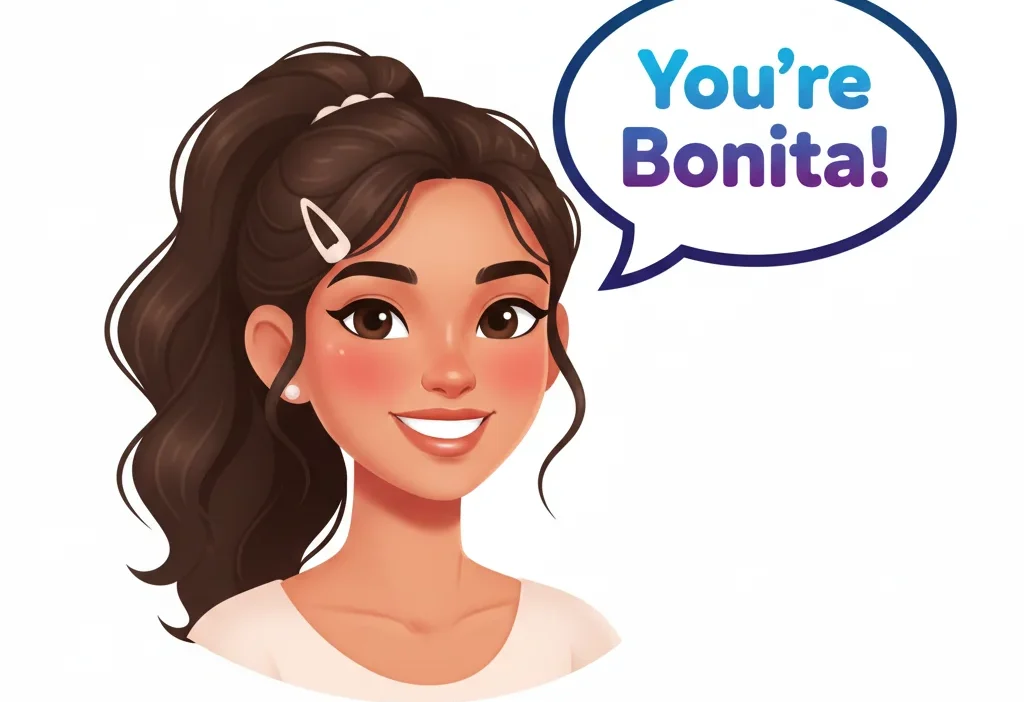
Ever heard someone call you “bonita” and wondered what it truly means? 💕 Whether it’s a compliment from a friend, a lyric in a Latin song, or a word you’ve seen on social media captions, bonita carries warmth and charm that transcends languages.
In this guide, we’ll explore:
✅ The definition of bonita
📜 Its origin and cultural background
💬 How it’s used in different contexts
🗣️ Real-life examples and conversation uses
💡 Related terms and common mistakes
By the end, you’ll understand exactly what bonita means — and when it’s the perfect word to use (or enjoy hearing).
💬 What Does Bonita Mean?
“Bonita” means “pretty” or “beautiful” in Spanish. 🌹
It’s an adjective used to describe someone (usually female) or something attractive, lovely, or pleasant. It’s a term of affection and admiration often heard in everyday conversation, songs, and social media captions.
Example:
“¡Eres muy bonita!” — “You are very pretty!”
🕰️ Origin and Popularity
The word bonita originates from the Spanish language, derived from “bonito,” which itself comes from “bueno” (meaning “good”). Over time, it evolved to express beauty and pleasantness — not just physical appearance but also charm and kindness.
Timeline Snapshot:
- 📖 Medieval Spanish: “Bonito/Bonita” evolved from bueno (good).
- 🎶 20th Century: Popularized through Latin music and movies.
- 📱 Modern Era: Widely used in social media and multicultural communities as a universal compliment.
Today, “bonita” isn’t just Spanish — it’s global. From Instagram captions like “Feeling bonita today 😘” to pop culture phrases like “Hey Bonita!”, the word is embraced across languages and generations.
🌍 Bonita Meaning in Different Contexts
💌 In Everyday Conversation
Used affectionately to compliment someone’s looks or personality.
“You look so bonita in that dress!”
📱 On Instagram / TikTok
Used as a caption or hashtag to express self-confidence or admiration.
“Just a girl feeling bonita 💋 #SelfLove”
💬 In Songs or Pop Culture
Appears frequently in Latin music and movies to describe beauty or attraction.
“Bonita Applebum” (A league Called Quest)
“Bonita” (J Balvin song)
💼 In Business or Formal Use
While “bonita” is generally informal, it might appear in brand names or product descriptions, especially in beauty or fashion industries.
“La Bonita Cosmetics” — suggesting elegance or prettiness.
| Context | Meaning | Tone |
| Texting | Flirty or friendly compliment | Positive 💖 |
| Social Media | Self-love, beauty, or empowerment | Playful 🌟 |
| Music/Pop Culture | Romantic or affectionate praise | Expressive 🎶 |
| Professional/Brand | Style or charm | Elegant 💅 |
🗣️ Examples of ‘Bonita’ in Conversations
Example 1:
Friend 1: Wow, you look amazing today!
Friend 2: Gracias! Feeling bonita! 💃
Example 2:
Guy: ¡Eres muy bonita!
Girl: Aww, gracias 😊
Example 3 (Social Media):
Caption: “Sunshine and smiles — feeling bonita inside and out ☀️💖”
Example 4 (Formal):
“The restaurant’s decor was simple yet bonita — warm and inviting.”
💞 Similar or Related Terms
Here are some other Spanish words and phrases related to bonita:
| Word | Meaning | Usage |
| Bella | Beautiful | More poetic or romantic |
| Linda | Cute, pretty | Softer and affectionate |
| Guapa | Attractive, good-looking | Often used for confidence or elegance |
| Hermosa | Gorgeous | Strong, emotional compliment |
| Chula | Cool or cute | Informal, trendy slang |
👉 Example Comparison:
- “Bonita” = Pretty or nice-looking.
- “Bella” = More elegant or stunning.
- “Linda” = Sweet or endearing.
🧠 How to Use ‘Bonita’ Correctly
✅ Do’s:
- Use bonita to compliment someone genuinely.
- Use it in friendly, flirty, or affectionate contexts.
- Use it in captions or songs to express confidence and positivity.
❌ Don’ts:
- Don’t use it sarcastically — it might sound rude.
- Don’t confuse bonita (feminine) with bonito (masculine).
- Avoid it in overly formal business communication.
Examples:
✅ “You’re looking so bonita today!”
❌ “Our quarterly results are bonita.” (Inappropriate for professional context.)
⚠️ Common Mistakes or Misinterpretations
- Mixing Gender Forms:
- Bonita = feminine (for women or feminine nouns)
- Bonito = masculine (for men or masculine nouns)
- Bonita = feminine (for women or feminine nouns)
- Using it for Non-Human Objects Incorrectly:
- Correct: “La casa es bonita.” (The house is pretty.)
- Incorrect: “El carro es bonita.” (Should be bonito.)
- Correct: “La casa es bonita.” (The house is pretty.)
- Assuming It’s Always Romantic:
- Bonita can be friendly, flirty, or neutral — context matters!
- Bonita can be friendly, flirty, or neutral — context matters!
❓ FAQ Section
1. What does ‘bonita’ mean in English?
“Bonita” means “pretty” or “beautiful.” It’s a Spanish adjective used to describe someone or something attractive or pleasant.
2. Is ‘bonita’ slang or formal?
It’s not slang — it’s standard Spanish. However, it’s used casually and warmly in most everyday situations.
3. Can you call a guy ‘bonita’?
No. The masculine form is “bonito.” For example, “Eres bonito” means “You are handsome.”
4. What’s the difference between ‘bonita’ and ‘bella’?
“Bonita” means pretty (simple and natural beauty), while “bella” means beautiful (more elegant or poetic).
5. How do you reply when someone calls you ‘bonita’?
You can say: “Gracias!” (Thank you!) or “¡Tú también!” (You too!) 😊
6. Where is ‘bonita’ most used?
It’s widely used in Spain, Mexico, and Latin America, and also popular in multicultural English-speaking communities worldwide.
🌷 Conclusion
To wrap it up, “bonita” means “pretty” or “beautiful” in Spanish — a sweet and timeless word used to express admiration, affection, or positivity. 🌹 Whether you’re hearing it in a song, a compliment, or an Instagram post, it always carries a touch of warmth and appreciation.
So next time someone calls you bonita, smile and say “gracias” — because you truly are! 💕✨
Keep exploring our site for more word meanings, language insights, and cultural expressions that make conversations richer and more beautiful. 🌎💬

Evie Wyld is a word-meaning specialist at Meanovia.com. She simplifies complex words, phrases, and language trends, helping readers quickly grasp the exact meaning behind every term in a clear and approachable way.