
The word barren may sound simple, but it carries deep meaning and emotion. You might see it in books, news, biology, or daily conversation—and wonder what it truly means in different situations.
Quick answer: Barren means unable to produce or support life, growth, or results. It can describe land, people, ideas, or situations, depending on context.
For example, barren land cannot grow crops. A barren tree has no fruit. In emotional or medical use, barren can describe a woman who cannot have children. It can also mean something feels empty, dry, or unproductive.
In 2026, people search for “barren meaning” to understand its literal and emotional uses, especially students, writers, and everyday English learners.
Next, we’ll explain all meanings of barren, real-life examples, synonyms, and how to use it correctly in sentences.
How to Pronounce Barren
Barren is pronounced as /ˈbær.ən/ (BAIR-uhn).
What Does Barren Mean?
“Barren” means unable to produce or sustain life, growth, or productivity.
It’s commonly used to describe land with no vegetation, a person unable to have children, or ideas that lack creativity or results.
In short:
“Barren” = unproductive, empty, or infertile.
Barren Meaning for Kids
For kids, barren means a place or thing where nothing can grow or live.
For example, a desert with no plants is barren. A tree with no fruit can also be called barren.
Origin and Popularity
The word “barren” comes from Middle English “barayn”, derived from Old French “baraigne”, meaning sterile or infertile. It first appeared in the 14th century and was often used in agricultural or biblical contexts to describe lifeless or unfruitful land.
Over time, “barren” evolved beyond its physical meaning to describe abstract emptiness, like “a barren mind” or “barren ideas.”
Timeline snapshot:
- 14th century: Used in medieval English to describe infertile land.
- 16th–18th centuries: Appeared in religious and poetic texts.
- Modern era: Common in literature, documentaries, and academic writing.
Barren Meaning in the Bible
In the Bible, barren often refers to women unable to have children and symbolizes testing, patience, or waiting for divine blessing.
The phrase “blessed are the barren” highlights spiritual reward rather than physical fertility. In Hebrew texts, barren conditions often represent hardship followed by faith and hope.
“Barren” Meaning in Different Contexts
“Barren” is versatile — its meaning changes slightly depending on the context:
🌍 In Geography or Nature
- Refers to land that cannot support life due to poor soil or lack of water.
- A barren place or barren land means land where crops or plants cannot grow due to poor soil, lack of water, or extreme climate.
Example: The barren desert stretched for miles without a single tree.
👩👧 In Biology or Human Context
- Describes a person (usually a woman) unable to conceive children.
Example: In ancient times, being called barren was considered a curse.
Barren Meaning for a Person or Woman
When used for a person, barren usually means unable to have children. The phrase barren woman or she is barren refers to infertility, especially in older or historical usage.
Today, this term is considered sensitive, and words like infertile or unable to conceive are preferred in respectful conversation.
💡 In Creativity or Thought
- Means lacking ideas, inspiration, or results.
Example: The writer faced a barren period with no new stories to tell.
🧠 In Emotions or Spirit
- Refers to a sense of emptiness or hopelessness.
Example: He felt emotionally barren after years of disappointment.
Emotionally or Morally Barren Meaning
Emotionally barren describes a person or situation lacking warmth, empathy, or emotional connection.
Morally barren refers to a lack of ethical values or compassion.
In literature, phrases like bitter and barren emphasize deep emotional emptiness or long-term disappointment.
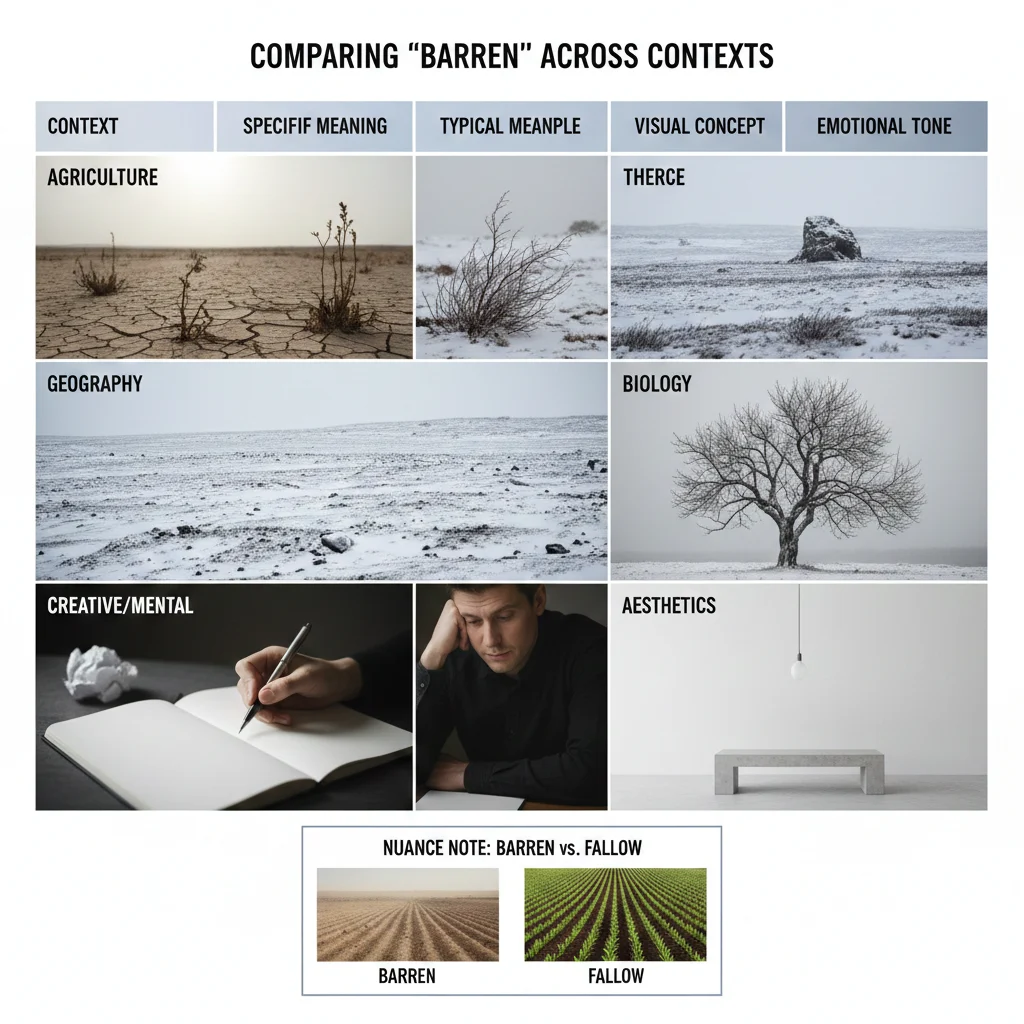
| Context | Meaning | Example |
| Geography | Lifeless or infertile land | The soil was too barren for farming. |
| Biology | Unable to have children | The queen was rumored to be barren. |
| Creativity | Lacking ideas or inspiration | A barren imagination limits growth. |
| Emotion | Empty or hopeless | Her heart felt barren after the loss. |
Examples of “Barren” in Sentences
Here are a few examples showing how “barren” fits naturally in speech and writing:
Example 1:
The once fertile field had turned barren after years of drought.
Example 2:
Their marriage was emotionally barren, lacking warmth or joy.
Example 3:
The artist struggled through a barren phase before creating her masterpiece.
Example 4 (literary):
“The barren winds swept across the lonely moor,” — a common phrase in classic poetry.
Similar or Related Terms
If you’re learning the meaning of “barren,” you’ll likely encounter similar or related words. Here’s how they differ:
Synonyms: infertile, arid, desolate, sterile
Antonyms: fertile, productive, lush, fruitful
| Word | Meaning | Difference from Barren |
| Infertile | Not capable of producing offspring or crops | More biological/scientific term |
| Desolate | Empty, abandoned, or joyless | Focuses on loneliness or emptiness |
| Sterile | Free from germs / unable to reproduce | Used in both medical and metaphorical contexts |
| Arid | Extremely dry | Commonly used for climate and land |
These words are close in meaning but vary in tone and usage.
Barren Meaning in Other Languages
- Urdu: بنجر، بے اولاد
- Arabic: قاحل أو عقيم
- Hebrew: עקר (Akar)
How to Use “Barren” Correctly
✅ Do use “barren” when:
- Describing lifeless or unproductive land.
- Referring to a lack of creativity or ideas.
- Writing literary or poetic descriptions.
❌ Avoid using “barren” when:
- Talking casually about people (it can sound harsh or insensitive).
- Referring to places that are temporarily empty — instead, use “quiet” or “unused.”
Tip: In formal writing, “barren” adds a descriptive, emotional depth — especially in essays or creative work.
Common Mistakes or Misinterpretations
- Mistake 1: Thinking “barren” only refers to women — it can describe land, ideas, or emotions too.
- Mistake 2: Using it interchangeably with “empty.”
- “Empty” is neutral, while “barren” suggests a lack of potential or fertility.
- “Empty” is neutral, while “barren” suggests a lack of potential or fertility.
- Mistake 3: Overusing it metaphorically — it’s best reserved for contexts implying long-term unproductivity or absence of life.
FAQ Section
1. What does “barren” mean in simple terms?
“Barren” means unable to produce life or results. It can describe land without plants, a person unable to have children, or situations lacking creativity.
2. Is “barren” a negative word?
Yes, it usually carries a negative tone, implying emptiness, lifelessness, or unproductiveness.
3. What’s the difference between “barren” and “infertile”?
“Infertile” is more scientific or medical, while “barren” has both emotional and poetic undertones.
4. Can “barren” describe feelings or ideas?
Absolutely. For example, “barren imagination” or “barren heart” means a lack of inspiration or emotional depth.
5. Is “barren” still used today?
Yes — though less common in conversation, it remains popular in literature, documentaries, and environmental discussions.
6. What is a barren land?
A barren land is a dry, lifeless area where plants cannot grow due to poor soil or harsh climate.
Conclusion
To sum it up, “barren” means lifeless, unproductive, or infertile — whether describing land, ideas, or emotions. Rooted in centuries-old English, it paints a vivid picture of emptiness or lack of growth.
Now that you know what “barren” means, you can use it more confidently in writing or conversation — and recognize its emotional weight when you read or hear it.
💬 Keep exploring our site for more meanings, origins, and real-world examples of interesting English words and slang!

Jon McGregor is a language and word-meaning expert at Meanovia.com. He specializes in explaining complex words, phrases, and modern language trends in a clear, approachable style. His mission is to help readers quickly grasp the true meaning behind every term, making language learning and understanding effortless and engaging.