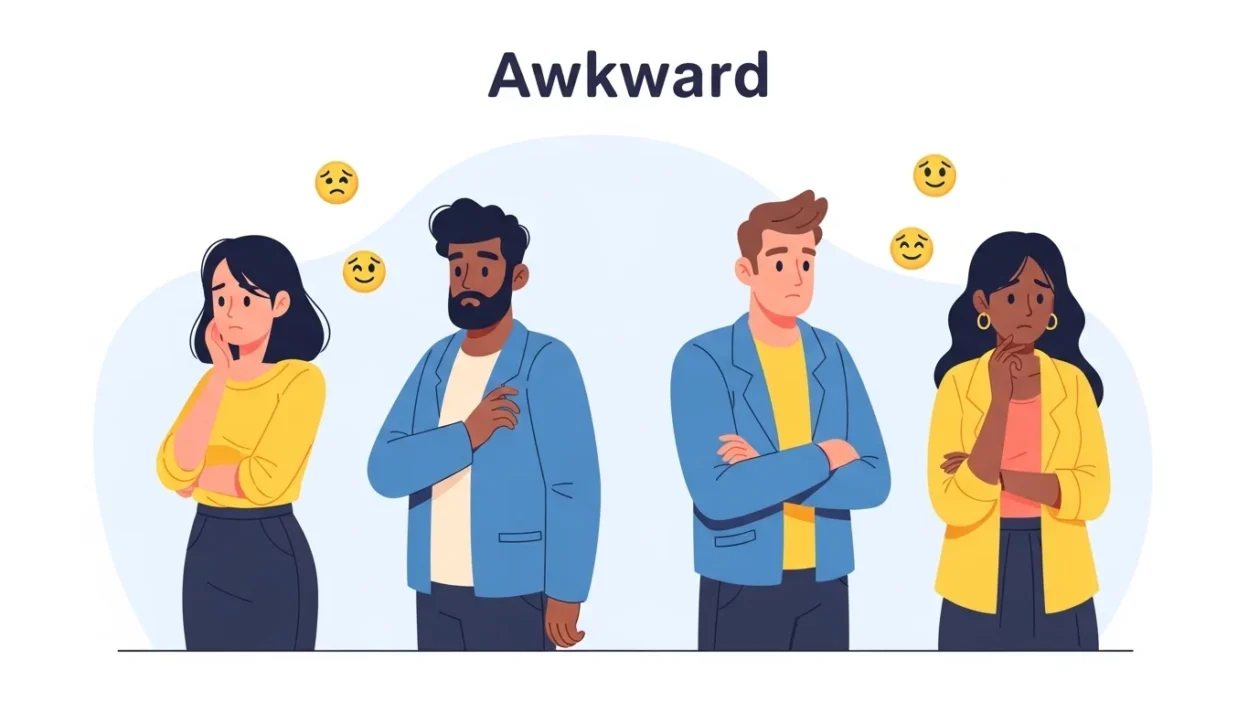
Have you ever been in a moment where no one knows what to say, everyone feels uncomfortable, and you just want it to end fast? That strange feeling is called awkward.
Quick answer: Awkward means uncomfortable, strange, or socially difficult, especially in conversations or situations.
An awkward moment can happen when there is silence, a misunderstanding, or something unexpected. A person can also be awkward if they feel shy, nervous, or unsure how to act around others.
In 2026, the word awkward is used everywhere—daily English, social media, memes, texting, and even workplaces. Students, bloggers, and everyday English users search this word to understand emotions, social behavior, and correct usage.
What does “I came, I saw, I made it awkward” mean?
It’s a humorous phrase used online to joke about accidentally making a situation uncomfortable or socially awkward. It plays on the famous quote “I came, I saw, I conquered,” but replaces success with embarrassment.
Next, let’s explore awkward examples, different types of awkward situations, synonyms, and how to use this word naturally in sentences.
🧠 What Does Awkward Mean?
“Awkward” means uncomfortable, embarrassing, or clumsy in a social situation or movement.
It’s a descriptive adjective often used to describe moments, interactions, or behavior that feels uneasy or off.
You’ll mostly see it used in texting, social media, and everyday conversations.
Example:
“That silence after my joke didn’t land was so awkward.” 😬
🕰️ Origin and Popularity
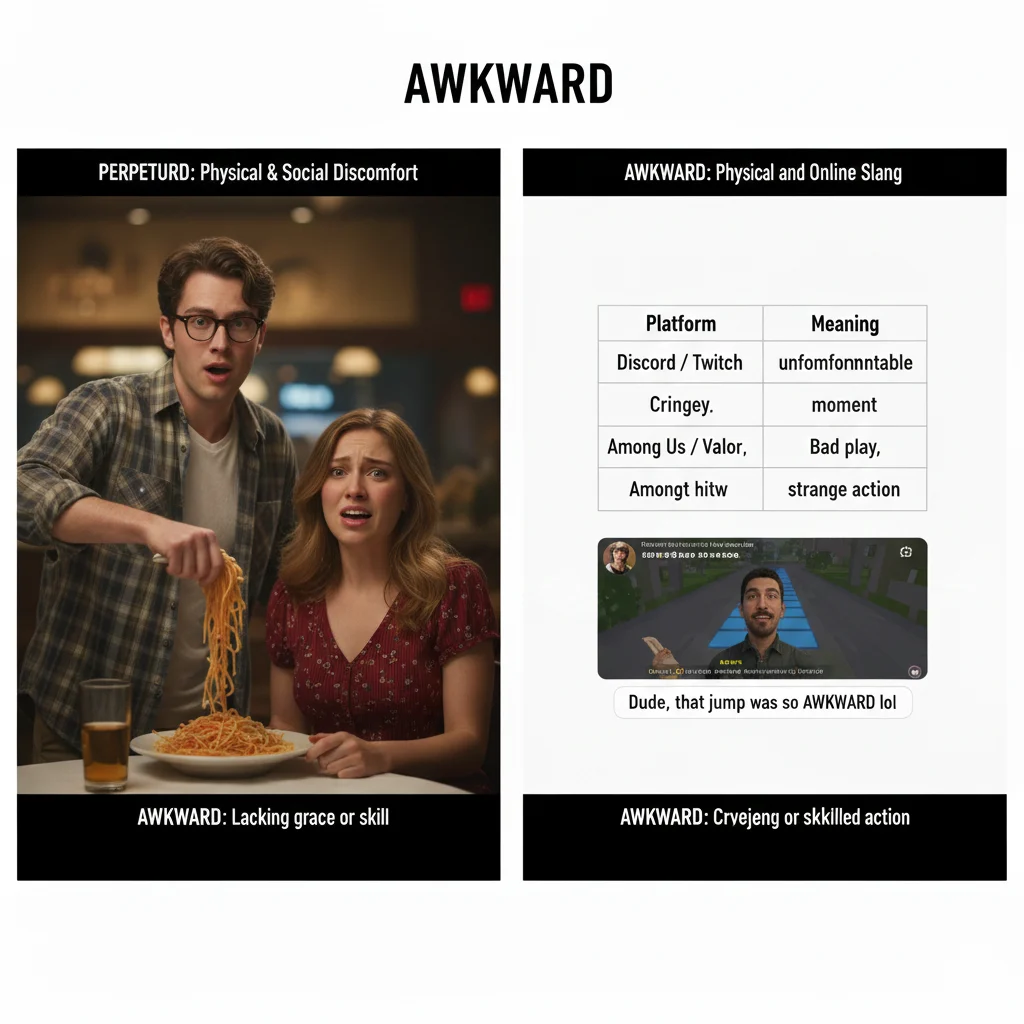
The word “awkward” comes from the Old Norse word afugr, meaning “turned the wrong way.” It entered Middle English around the 14th century, initially describing something clumsy or difficult to handle physically.
By the 17th century, its meaning expanded to include social discomfort — the kind we associate with embarrassing moments or tension in conversation.
Today, “awkward” is used widely in internet culture, often paired with GIFs, memes, or hashtags like #awkwardmoment to describe relatable situations.
Timeline Snapshot:
- 🏰 1300s: Physical clumsiness (“awkward hands”)
- 📚 1600s: Social unease or embarrassment
- 💬 2000s–Now: Everyday slang and meme culture

💬 “Awkward” Meaning in Different Contexts
Let’s look at how “awkward” shifts meaning slightly depending on where it’s used:
📱 In Texting or Chat
Used to describe uncomfortable or embarrassing situations, often humorously.
In chat and slang usage, “awkward” is often used casually to react to an uncomfortable or funny situation. It doesn’t mean serious embarrassment — it’s usually a light, humorous response to silence, confusion, or a weird moment.
“He called me by his ex’s name… awkward 😅”
📸 On Instagram / TikTok
Often used in captions or memes for relatable or cringe moments.
Caption: “When you wave at someone who wasn’t waving at you… #awkwardmoment”
Awkward Feeling Meaning
An awkward feeling is the sense of discomfort, tension, or unease you experience during a social situation. It often happens when something unexpected occurs, a conversation goes silent, or people don’t know how to react.
💼 In Business or Formal Conversations
Used more carefully to describe difficult or uncomfortable professional interactions.
“That meeting became awkward when no one agreed on the proposal.”
Socially Awkward Meaning
Socially awkward describes a person who feels uncomfortable or unsure in social situations. This can include difficulty starting conversations, responding naturally, or understanding social cues.
From a psychology perspective, being socially awkward is often linked to shyness, anxiety, or lack of social confidence — not rudeness or lack of intelligence.
Example:
He feels socially awkward at parties where he doesn’t know anyone.
Awkward Meaning in Other Languages
The word “awkward” does not always have a single direct translation in other languages. In Spanish, Hindi, Tamil, Bengali, and Punjabi, it is usually explained using phrases that mean uncomfortable, uneasy, or embarrassing rather than one exact word.
Awkward Meaning (English)
Awkward means uncomfortable, embarrassing, or not smooth/natural in behavior or situation.
Example:
👉 There was an awkward silence in the room.
Awkward Meaning in Spanish
Awkward = Incómodo / Torpe / Vergonzoso
Examples:
- It was an awkward moment. → Fue un momento incómodo.
- He felt awkward talking to strangers. → Se sintió torpe al hablar con extraños.
Awkward Meaning in Hindi
Awkward = अजीब / असहज / असुविधाजनक
Examples:
- The silence was awkward. → खामोशी असहज थी।
- I felt awkward there. → मुझे वहाँ अजीब लगा।
Awkward Meaning in Tamil
Awkward = சங்கடமான / அசௌகரியமான
Examples:
- That was an awkward situation. → அது ஒரு சங்கடமான சூழ்நிலை.
- He felt awkward speaking. → அவன் பேசும்போது அசௌகரியமாக உணர்ந்தான்.
Awkward Meaning in Bengali
Awkward = অস্বস্তিকর / বিব্রতকর
Examples:
- It became awkward. → পরিস্থিতি অস্বস্তিকর হয়ে উঠল।
- She felt awkward. → সে বিব্রত বোধ করল।
Awkward Meaning in Punjabi
Awkward = ਅਸਹਿਜ / ਔਖਾ / ਸ਼ਰਮਨਾਕ
Examples:
- That was awkward. → ਉਹ ਸਥਿਤੀ ਅਸਹਿਜ ਸੀ।
- He felt awkward talking. → ਉਹ ਗੱਲ ਕਰਦਿਆਂ ਔਖਾ ਮਹਿਸੂਸ ਕਰ ਰਿਹਾ ਸੀ।
| Platform | Example Use | Tone |
| Texting | “That was awkward 😅” | Casual, humorous |
| TikTok/Instagram | “#awkwardmoment” | Relatable, meme-style |
| Business | “The silence felt awkward.” | Neutral, polite |
💭 Examples of “Awkward” in Conversations
Here are some realistic examples to help you use it naturally:
Example 1 (Text Chat):
Friend 1: Did you see my ex at the party?
Friend 2: Yeah, it got so awkward when you two made eye contact 😬
Example 2 (Social Post):
“When you trip in front of your crush… awkward! 😂”
Example 3 (Work Chat):
Manager: That discussion with the client turned a bit awkward when pricing came up.
🔄 Similar or Related Terms
Awkwardly means doing something in an uncomfortable, clumsy, or socially uneasy way.
Less awkward means a situation feels more comfortable or easier than before.
Here are some related slang and synonyms often used in similar contexts:
| Term | Meaning | Use Example |
| Cringe | Something embarrassing or uncomfortable to watch | “That TikTok was so cringe.” |
| Uncomfortable | Feeling uneasy or tense | “That joke made everyone uncomfortable.” |
| Embarrassing | Causing shame or self-consciousness | “Forgetting his name was embarrassing.” |
| Weird | Strange or unusual | “That whole vibe was weird.” |
📝 How to Use “Awkward” Correctly
✅ Do’s:
- Use it casually in friendly chats or posts.
- Pair it with emojis to lighten the tone.
- Use it to describe both people and situations.
❌ Don’ts:
- Avoid overusing it in professional writing.
- Don’t use it to directly label someone negatively (“You’re awkward” can sound rude).
Example:
✅ “That silence was awkward.”
❌ “You’re so awkward.” (Too personal!)
🚫 Common Mistakes or Misinterpretations
Many people confuse “awkward” with “cringe” or “weird.”
While they overlap, “awkward” focuses more on social discomfort, while “cringe” means something so embarrassing it makes others react negatively.
“Akward,” “ackward,” and “akwward” are common misspellings of “awkward” and have the same meaning.
When someone says “I feel awkward,” it usually means they feel emotionally uncomfortable, self-conscious, or unsure how to act. In relationships, awkwardness often appears during misunderstandings, silence, or early stages of communication.
Sometimes people use “awkward” alongside compliments like “pretty” or “handsome” to describe someone who looks good but feels shy or socially uncomfortable.
Example:
- “That pause was awkward.” → Natural tension or silence.
- “That video was cringe.” → Embarrassing to watch.
❓ FAQ Section
1. What does “awkward” mean in texting?
In texting, “awkward” means uncomfortable or embarrassing, often said after a weird pause or message. Example: “You liked your ex’s photo? Awkward 😬”
2. Is “awkward” slang or formal?
“Awkward” isn’t slang — it’s a standard English adjective. However, it’s used casually in slang-like ways online.
3. What’s the difference between “awkward” and “cringe”?
“Awkward” is about social discomfort. “Cringe” is about secondhand embarrassment — when something feels painfully embarrassing to watch.
4. How do you reply to someone saying “awkward”?
You can laugh it off! Try: “Haha, yeah that was!” or “Let’s just pretend that didn’t happen 😅.”
5. When should you not use “awkward”?
Avoid calling people “awkward” directly — it can sound insulting. Use it for moments, not personalities.
6. Where is “awkward” most used?
It’s common in everyday speech, social media captions, memes, and casual texting.
7. What does “I came, I saw, I made it awkward” mean?
It’s a humorous phrase used online to joke about accidentally making a situation uncomfortable or socially awkward. It plays on the famous quote “I came, I saw, I conquered,” but replaces success with embarrassment.
8. what is the meaning of awkward in tagalog?
In Tagalog, “awkward” is often described using phrases that mean uncomfortable or uneasy, rather than a single direct translation.
9. What does sexually awkward mean?
Sexually awkward describes feeling uncomfortable or unsure in romantic or intimate situations, often due to inexperience, nervousness, or lack of confidence. It does not mean something is wrong — it’s a common feeling.
10. What does “Awkward” by SZA mean?
In SZA’s song “Awkward,” the word refers to emotional discomfort, mixed signals, and uncertainty in a romantic relationship. It reflects the uneasy feeling when communication and expectations don’t align.
🪞 Conclusion
Now you know exactly what “awkward” means — from its origins to modern-day use in memes, messages, and real-life conversations.
It describes those perfectly imperfect moments of discomfort that make life funny, relatable, and human. 😄
Next time you find yourself in an “awkward silence” or “awkward chat,” you’ll know exactly how to laugh it off — and how to use the word naturally.
✨ Now that you know the meaning of “awkward,” you’ll never be confused again! Keep exploring our site for more word meanings, internet slang, and trending phrases.