
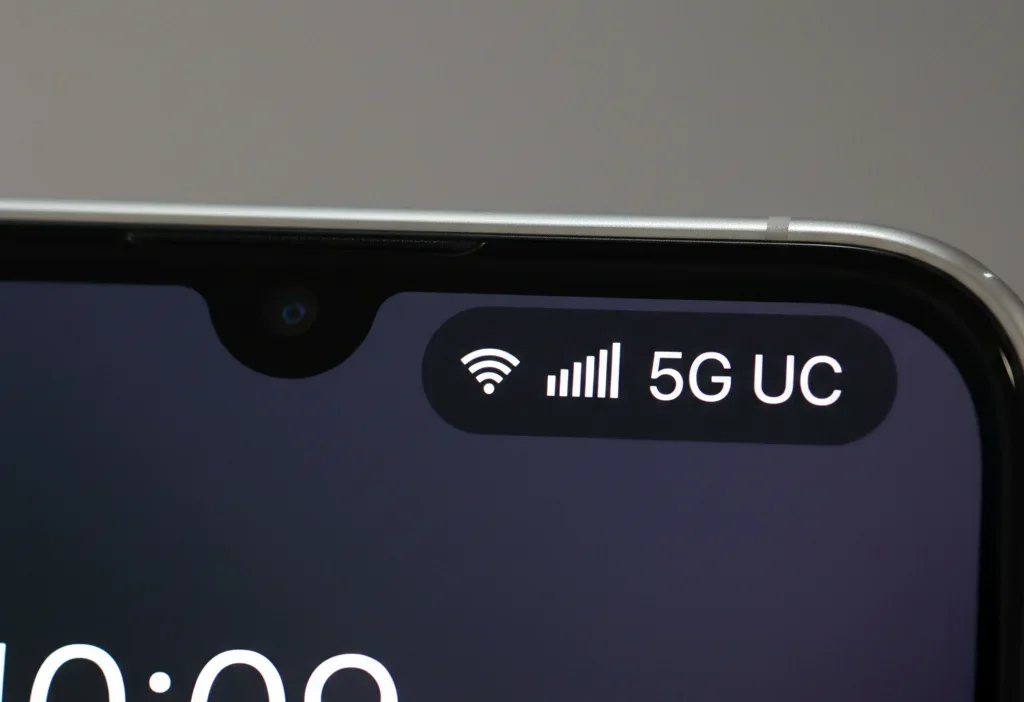
Have you ever noticed “5G UC” pop up on your phone screen and wondered what it means? You’re not alone. Many smartphone users see this mysterious label near their signal bars and instantly think it means “faster internet.” But what exactly does 5G UC stand for, and how is it different from regular 5G?
5G UC stands for “5G Ultra Capacity”, a high-speed 5G network that offers faster data, lower latency, and improved connectivity compared to standard 5G.
The term 5G UC is commonly seen on smartphones, network settings, and telecom advertisements, prompting people to search for its meaning. It refers to 5G Ultra Capacity, a network technology designed to provide faster download and upload speeds, smoother streaming, and better overall performance.
Understanding 5G UC helps users choose the right mobile plans, improve connectivity, and optimize device performance. Knowing the difference between standard 5G and 5G UC allows consumers to fully benefit from high-speed internet, low-latency gaming, and seamless streaming experiences on modern smartphones and devices.
What Does 5G UC Mean?
5G UC stands for 5G Ultra Capacity, a network label primarily used by T-Mobile to indicate a faster, mid-band or high-band 5G connection.
In simple terms:
5G UC means your phone is connected to T-Mobile’s high-speed 5G network, offering better performance than standard 5G Extended Range (5G XR).
It’s an abbreviation, not slang, and is mostly seen on smartphones’ network indicators.
Origin and Popularity
The term “5G UC” originated from T-Mobile USA around 2021, during the company’s national rollout of 5G technology.
- 5G refers to the fifth generation of mobile network technology.
- UC (Ultra Capacity) was introduced by T-Mobile to distinguish between its two 5G types:
- 5G Extended Range (low-band): Covers large areas with slower speeds.
- 5G Ultra Capacity (mid/high-band): Provides faster data but shorter range.
- 5G Extended Range (low-band): Covers large areas with slower speeds.
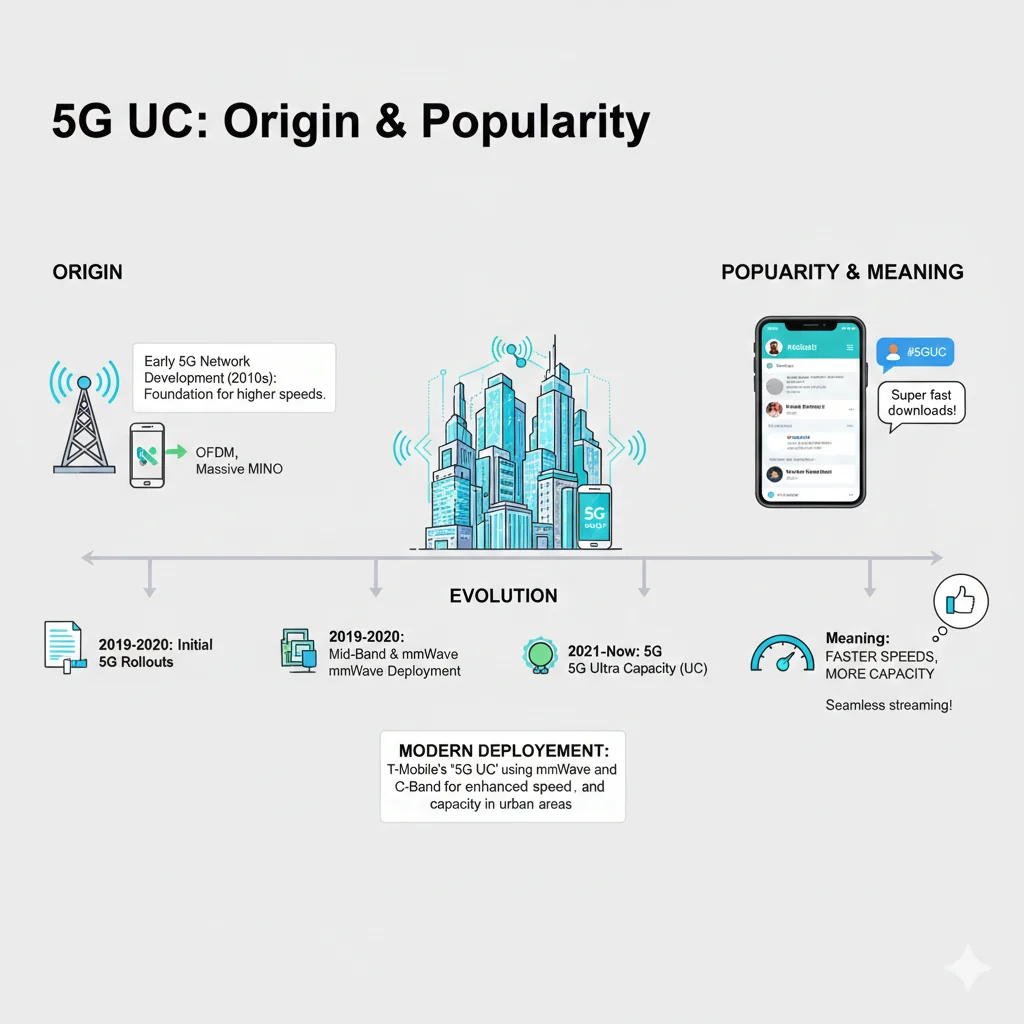
The “5G UC” label started appearing on iPhones with iOS 15 and on Android devices soon after, sparking widespread curiosity and even memes on social media as users compared speed tests.
Timeline Example:
- 2019: Early 5G rollout begins.
- 2021: T-Mobile introduces “5G UC.”
- 2022–2024: Label becomes standard on most T-Mobile devices.
5G UC Meaning in Different Contexts
On Smartphones
When you see 5G UC next to your signal bars, it means:
- You’re on T-Mobile’s Ultra Capacity 5G network.
- Expect higher speeds and lower latency.
- You’re likely in an area with mid-band or mmWave 5G coverage.
Across Different Carriers
- T-Mobile: Uses “5G UC” for Ultra Capacity.
- Verizon: Uses “5G UW” (Ultra Wideband) — similar meaning.
- AT&T: Uses “5G+” for faster 5G bands.
In Marketing and Tech Discussions
“5G UC” is often used by tech reviewers and consumers to describe premium 5G experiences, such as streaming 4K video, gaming, or fast file downloads.
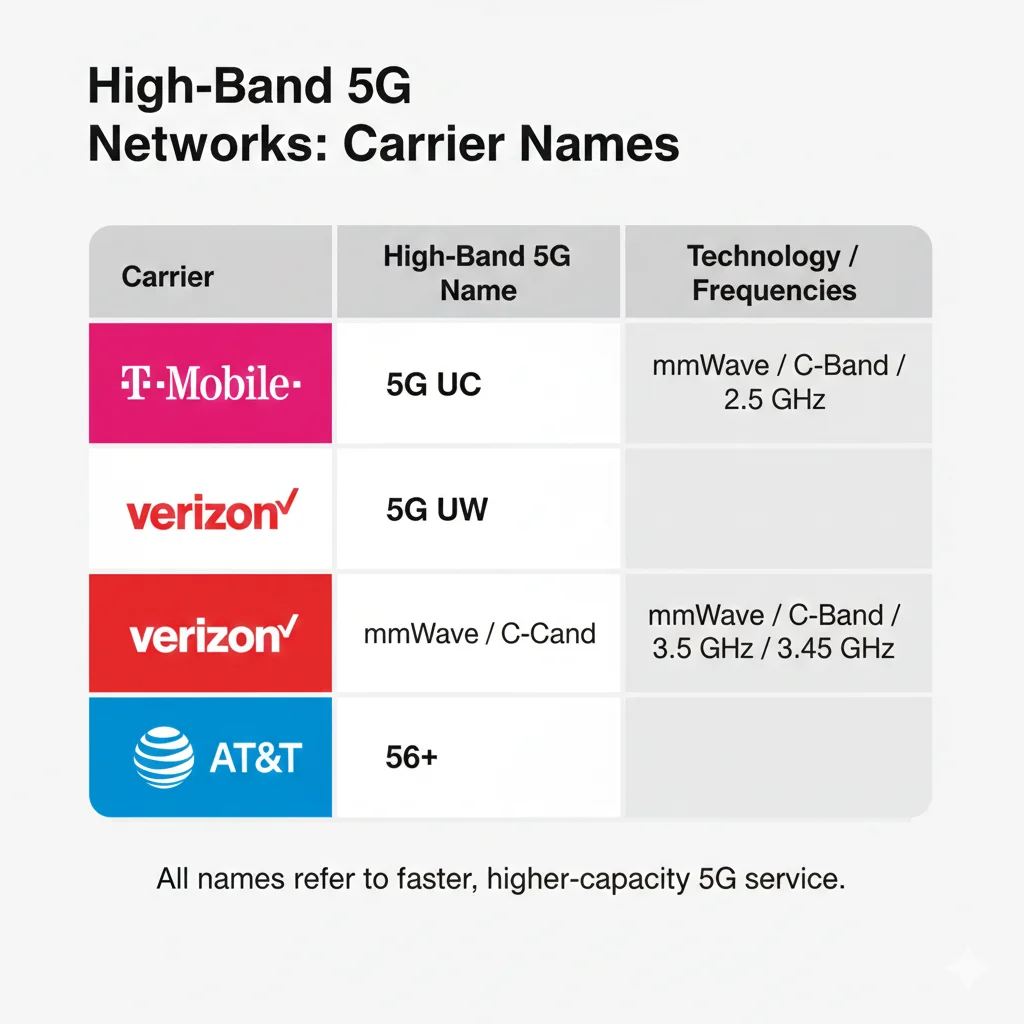
| Carrier | Label | Meaning | Speed Level |
| T-Mobile | 5G UC | Ultra Capacity | Fast |
| Verizon | 5G UW | Ultra Wideband | Fast |
| AT&T | 5G+ | High-Speed 5G | Fast |
Examples of 5G UC in Real Life
📱 Example 1 — Everyday Use:
You’re in a downtown area, and your phone suddenly switches from “5G” to “5G UC.” You notice your videos load instantly — that’s Ultra Capacity in action.
📱 Example 2 — Tech Review Context:
“When testing the new iPhone on T-Mobile’s 5G UC, we recorded download speeds of over 600 Mbps.”
📱 Example 3 — User Conversation:
User 1: Why does my phone say 5G UC now?
User 2: That means you’re on T-Mobile’s faster 5G network — enjoy the speed boost!
Similar or Related Terms
Here are a few related 5G terms to know:
| Term | Meaning | Used By |
| 5G UW | 5G Ultra Wideband | Verizon |
| 5G+ | AT&T’s name for high-band 5G | AT&T |
| 5G XR | 5G Extended Range | T-Mobile |
| mmWave | High-frequency 5G with ultra-fast speed | Multiple carriers |
These labels all indicate faster-than-average 5G connections, though names vary by carrier.
How to Use 5G UC Correctly
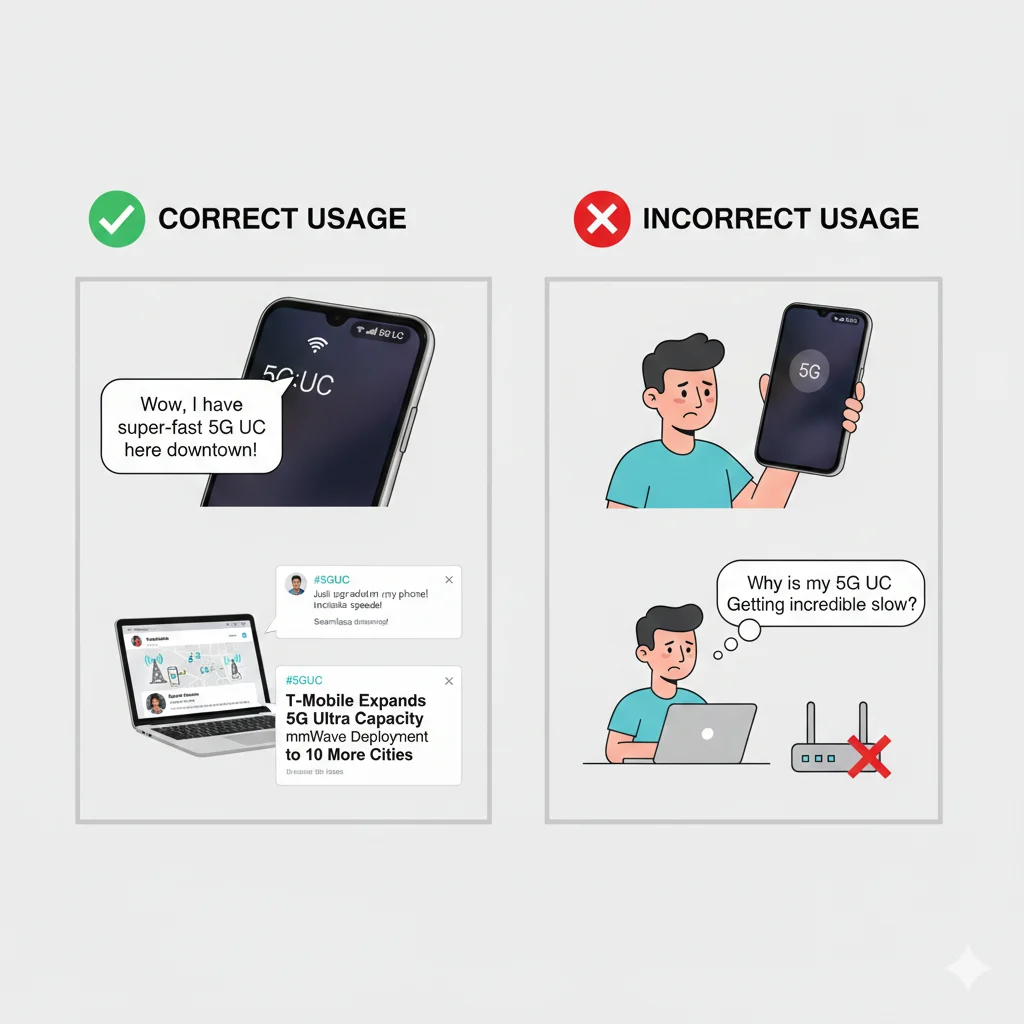
✅ Do’s:
- Use “5G UC” when referring to T-Mobile’s Ultra Capacity network.
- Mention it when discussing fast mobile speeds or network performance.
- Understand that “5G UC” is carrier-specific, not a universal term.
❌ Don’ts:
- Don’t assume “5G UC” means 5G everywhere is faster.
- Don’t confuse it with “Wi-Fi” or “mobile hotspot” strength — it’s only about cellular networks.
Common Mistakes or Misinterpretations
Many users believe 5G UC means they’ve connected to a special plan or paid feature — that’s not true. It’s simply a network indicator, showing you’re in a higher-speed 5G coverage zone.
Another common confusion is between 5G UC and 5G UW. While both mean enhanced 5G, UC belongs to T-Mobile, and UW belongs to Verizon.
Think of it like brand names for similar technology — different names, same idea.
FAQ Section
Q1: What does 5G UC mean on my phone?
It means your device is connected to T-Mobile’s high-speed Ultra Capacity 5G network, offering faster data and lower latency than standard 5G.
Q2: Is 5G UC faster than regular 5G?
Yes. 5G UC delivers mid-band or mmWave speeds, which are significantly faster than low-band 5G (Extended Range).
Q3: Why does my phone switch between 5G and 5G UC?
Your phone automatically switches depending on network availability — 5G UC in high-speed zones, 5G XR in broader coverage areas.
Q4: Is 5G UC only for T-Mobile?
Yes. Other carriers use their own labels, such as 5G UW (Verizon) and 5G+ (AT&T).
Q5: Does 5G UC use more battery?
Slightly, yes. Faster data connections can use more power, especially when downloading or streaming large files.
Q6: Can all phones access 5G UC?
Only 5G-capable devices that support T-Mobile’s bands can connect to 5G UC. Older phones won’t display this label.
Conclusion
Now you know the truth behind 5G UC — it’s not a mystery code or a premium feature, but simply T-Mobile’s name for its faster 5G network. When you see that symbol, it means you’re in a zone with enhanced speed, lower lag, and smoother streaming.
So the next time your phone flashes 5G UC, smile — you’ve just entered the fast lane of mobile internet!
Keep exploring our site for more easy-to-understand guides on internet terms, phone features, and tech slang.