
Have you ever heard someone say, “I’m feeling a bit under the weather today” — and wondered what that really means?
It doesn’t literally have anything to do with the weather outside! Instead, it’s a common English idiom used when someone is feeling slightly ill or unwell.
In this article, we’ll break down everything you need to know about the phrase “under the weather”, including:
✅ Its definition and everyday usage
✅ The origin and historical background
✅ How it’s used in different contexts
✅ Examples in conversation
✅ Similar expressions and FAQs
☁️ What Does “Under the Weather” Mean?
The phrase “under the weather” means feeling ill, unwell, or not in your usual good health.
It’s a common idiom used in everyday English conversations rather than a formal phrase. People use it when they feel sick — physically or emotionally — but not severely.
Example: “I’m feeling a bit under the weather today, so I’ll skip the party.”
🌍 Origin and Popularity
The phrase “under the weather” has its roots in nautical language from the 1800s.
- Sailors used the expression when they felt seasick or unwell due to rough weather while at sea.
- If a sailor became sick, they were often sent below deck — literally under the weather — to recover away from the harsh elements.
Over time, the expression moved from maritime slang to everyday English, describing anyone feeling unwell, not just sailors.
📜 Quick Timeline:
- 1800s: Originates in British nautical slang.
- 1900s: Commonly used in spoken English worldwide.
- Today: A standard idiom used in texts, chats, workplaces, and daily conversation.
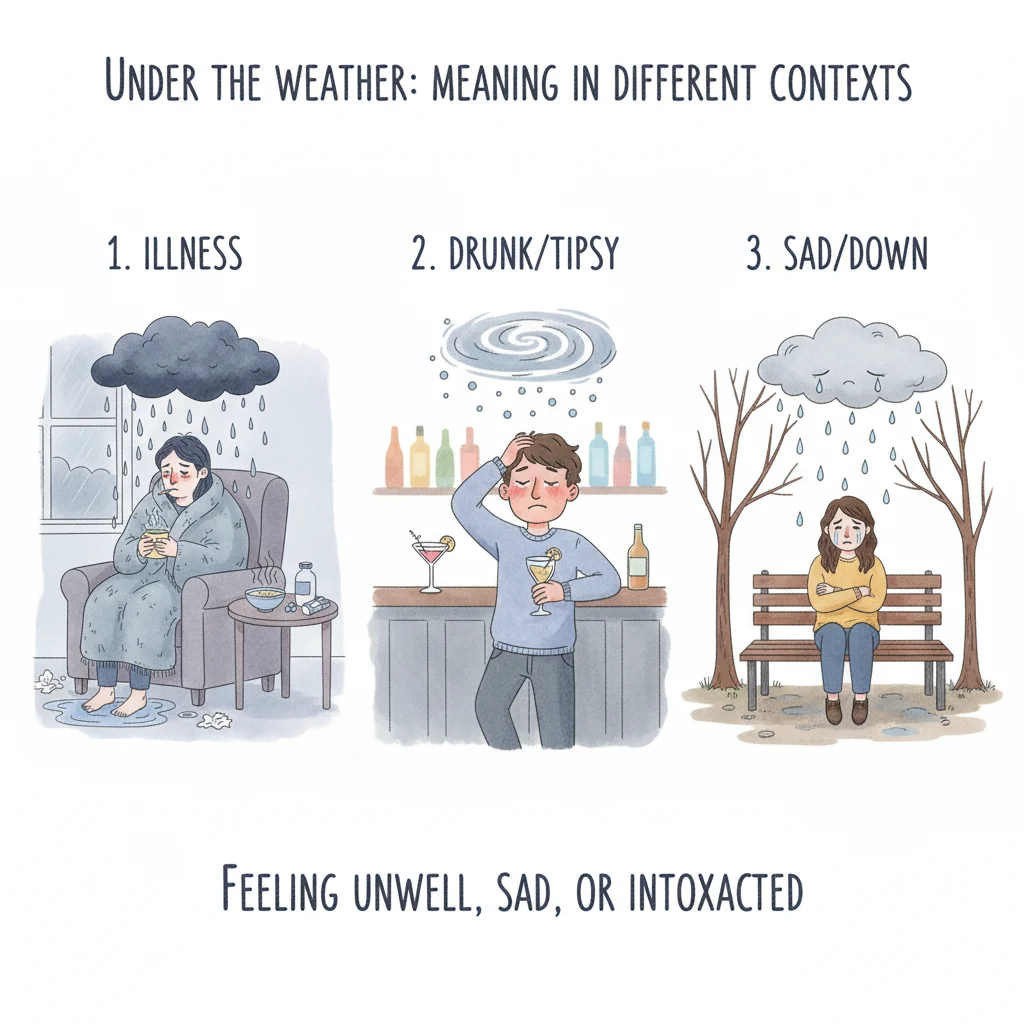
💬 “Under the Weather” Meaning in Different Contexts
While the meaning stays consistent, the tone and context can slightly differ based on how it’s used:
🗣️ In Everyday Conversation
Used casually to say someone feels a little sick.
“I think I’m coming down with a cold — I’m a bit under the weather.”
💻 In Texting or Online Chats
A polite way to say you’re not feeling great without oversharing details.
“Can’t make it to class today, feeling under the weather 😷.”
💼 In Work or Formal Settings
A professional and polite expression for informing colleagues or managers that you’re unwell.
“I’ll be working from home today as I’m feeling under the weather.”
| Context | Meaning | Formality |
| Texting | Feeling a bit sick | Informal |
| Conversation | Unwell or tired | Neutral |
| Workplace | Sick or taking a rest day | Formal/Polite |
💭 Examples of “Under the Weather” in Conversations
Here are some realistic examples of how people use this idiom in daily life:
Example 1:
Friend 1: You didn’t come to the gym today! Everything okay?
Friend 2: Yeah, just feeling under the weather. I think I caught something.
Example 2:
Colleague: Are you joining the meeting later?
You: Might skip it — been a bit under the weather since morning.
Example 3:
Text: “Sorry for the late reply, I’ve been under the weather the past few days.”
Example 4 (formal):
“Due to feeling under the weather, I’ll be unable to attend today’s event.”
🔄 Similar or Related Terms
Here are a few phrases that carry a similar meaning to “under the weather”:
| Phrase | Meaning |
| Feeling off | Not feeling quite right or slightly unwell |
| Down with something | Sick with an illness, like a cold or flu |
| Not feeling myself | Feeling unwell, tired, or emotionally off |
| Sick as a dog | Very sick (more intense version) |
| Out of sorts | Feeling unwell or out of balance |
These idioms are great for variety in conversation, depending on how serious or casual you want to sound.
✍️ How to Use “Under the Weather” Correctly
✅ Do’s
- Use it to describe mild illness or temporary unwellness.
- It’s perfect for casual or polite communication.
- Works well in texts, emails, and everyday conversations.
❌ Don’ts
- Don’t use it for serious or long-term illness (e.g., hospitalization).
- Don’t confuse it with mood-related terms like “under pressure” or “feeling blue.”
✅ “I’m a bit under the weather.”
❌ “She’s hospitalized — she’s under the weather.” (Too serious)
⚠️ Common Mistakes or Misinterpretations
- Taking it literally
→ It doesn’t mean being outside in bad weather! It’s an idiom about feeling unwell. - Using it for serious illness
→ It’s best for mild sickness like a cold or fatigue, not major conditions. - Mixing it with emotional sadness
→ “Under the weather” relates more to physical than emotional discomfort.
❓ FAQ Section
1. What does “under the weather” mean in texting?
It means the person feels a little sick or tired. It’s a polite, casual way to explain you’re not feeling well.
2. Is “under the weather” slang or formal?
It’s an idiom — common in both casual and formal English. You can use it with friends or in workplace communication.
3. What’s the difference between “under the weather” and “feeling blue”?
“Under the weather” means physically unwell, while “feeling blue” means emotionally sad or depressed.
4. Can “under the weather” refer to mental health?
Not directly. It’s mostly used for physical sickness, though some use it loosely for exhaustion or burnout.
5. Where is “under the weather” most used?
It’s popular in British, American, and Australian English, used in conversations, work emails, and social media.
6. How do you reply to someone who says they’re under the weather?
A polite response could be:
“I’m sorry to hear that! Hope you feel better soon.”
🌤️ Conclusion
To sum it up, “under the weather” means feeling slightly unwell or sick, not necessarily due to the weather itself.
The phrase originated from old maritime traditions and has become a staple in modern English idioms — used in everything from casual texts to office emails.
Now that you know what “under the weather” means, you can use it confidently the next time you’re not feeling your best — or when someone else is. Stay healthy, stay warm, and keep exploring more idioms to sound natural and fluent in English!

Patrick Gale is a word-meaning expert at Meanovia.com. He explains complex terms, definitions, and language trends with clarity and precision. His goal is to help readers understand the exact meaning behind every word they search.