You may have heard the phrase “tramp stamp” used in pop culture or online discussions — but what does it actually mean?
Quick answer: Tramp stamp meaning refers to a slang term for a lower-back tattoo, most commonly associated with early 2000s fashion trends. While originally used in a derogatory way, the term has evolved and is now often reclaimed as self-expression.
The term became popular in the late 1990s and early 2000s, when lower-back tattoos were a fashion trend. While some people use the phrase casually, others view it as disrespectful because of its judgmental tone.
People often search for “tramp stamp meaning” after hearing the term in movies, social media, or conversations and wanting to understand whether it is offensive, what it refers to, and how it should be used.
🩵 What Does Tramp Stamp Mean?
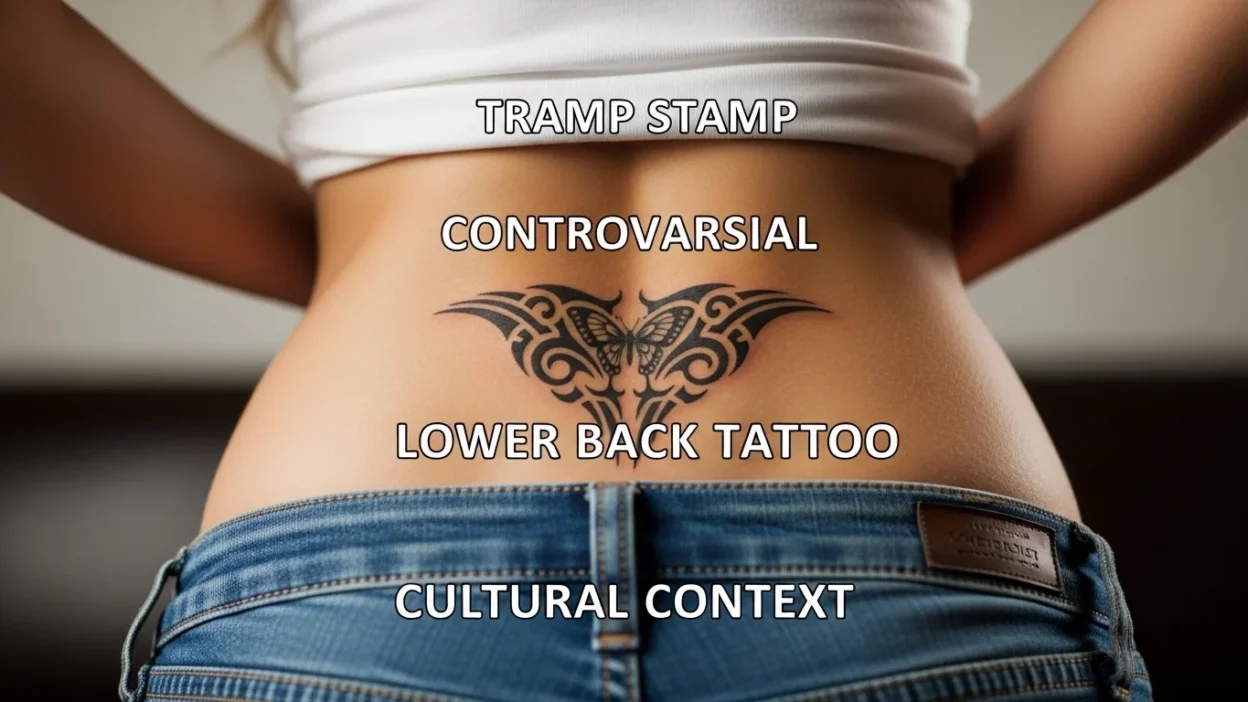
A “tramp stamp” is a slang term for a tattoo placed on the lower back, usually just above the hips.
It’s commonly used to describe tattoos on women, though the phrase carries a mix of humor, stigma, and evolving acceptance.
While originally derogatory, today many embrace their “tramp stamp” as a symbol of self-expression and body art.
What Is a Tramp Stamp?
A tramp stamp is a slang term for a tattoo located on the lower back, typically centered just above the hips.
When people ask what is considered a tramp stamp, they usually mean any tattoo placed in that specific lower-back location, regardless of design.
A tramp stamp location is specifically the lower back area, just above the waistband or hips.
🌸 Origin and Popularity
The term “tramp stamp” gained popularity in the late 1990s and early 2000s, when lower-back tattoos became a major fashion trend.
- Origin: The word “tramp” was slang for a promiscuous woman, and “stamp” implied a label — combining to form a judgmental nickname for the tattoo’s placement.
- Pop culture influence: Celebrities like Britney Spears, Christina Aguilera, and Pamela Anderson sported lower-back tattoos, making them widely popular in the Y2K era.
- Media portrayal: TV shows and movies often used the phrase to joke about femininity or rebellion.
Over time, as tattoo culture evolved, the term became more ironic — with many reclaiming it proudly as a badge of empowerment.
Why Is It Called a Tramp Stamp?
The phrase originated from early 2000s slang, combining “tramp” (a derogatory term for a promiscuous woman) and “stamp” (a visible mark). The name reflected stereotypes about lower-back tattoos at the time. Over time, many people have challenged or reclaimed the term, shifting its meaning away from judgment.
💬 “Tramp Stamp” Meaning in Different Contexts
🗨️ In Pop Culture
In the early 2000s, “tramp stamp” appeared in comedy shows and films to poke fun at “party girl” stereotypes.
Today, it’s often referenced playfully or nostalgically, especially in Y2K revival trends on TikTok and Instagram.
Tramp Stamp Meaning in Slang
In slang usage, tramp stamp is often used humorously or ironically, especially on platforms like Reddit or Urban Dictionary. While originally derogatory, modern slang sometimes uses it in a nostalgic or empowering way, depending on tone and context.
💉 In Tattoo Culture
Tattoo artists simply refer to it as a lower back tattoo — avoiding the slang.
Modern tattoo enthusiasts use the phrase jokingly or ironically, often embracing it as part of tattoo history.
🌐 On Social Media
On platforms like TikTok, Instagram, and Reddit, “tramp stamp” has taken on a self-aware and empowering tone.
People share glow-up transformations, lower-back tattoo designs, and captions like:
“Reclaiming my tramp stamp era ✨💪”
| Platform | Common Meaning | Tone |
| TikTok | Empowerment, nostalgia | Playful |
| Fashion & tattoo trend | Aesthetic | |
| Tattoo placement discussion | Neutral | |
| Twitter/X | Meme or ironic usage | Humorous |
💬 Examples of “Tramp Stamp” in Conversations
Example 1 (Casual):
Friend 1: “Thinking about getting a tattoo.”
Friend 2: “Go for a classic tramp stamp — bring back the 2000s vibe!”
Example 2 (Online Caption):
“My tramp stamp is older than half of TikTok 😂 #Y2Ktattoo #nostalgia”
Example 3 (Neutral/Professional Context):
“Lower-back tattoos, often called ‘tramp stamps,’ gained popularity in the early 2000s and have since evolved in cultural meaning.”
🔍 Similar or Related Terms
Tramp Stamp Tattoo Meaning
When people search for tramp stamp tattoo meaning, they are often asking about the symbolism of specific designs. A butterfly tramp stamp meaning may symbolize transformation or femininity.
A star tramp stamp meaning can represent ambition or guidance. A reverse or front tramp stamp refers to similar tattoo placement concepts but positioned on the front of the body.
The meaning ultimately depends on the design — the term itself refers to placement, not symbolism.
| Term | Meaning | Usage |
| Lower Back Tattoo | The neutral term for tattoos placed on the lower back. | Professional / descriptive |
| Tattoo Slang | Informal phrases describing tattoo placements or styles. | Casual |
| Ink | Slang for tattoo in general. | Everyday / casual |
| Body Art | A broad term covering tattoos and piercings. | Neutral / artistic |
These related expressions help describe tattoo culture without the gendered undertones of “tramp stamp.”
✨ How to Use “Tramp Stamp” Correctly
✅ Do:
- Use it casually or humorously when referring to your own tattoo.
- Acknowledge its cultural roots if discussing it in a serious or artistic context.
- Use quotation marks (“tramp stamp”) when writing to show awareness of the slang tone.
❌ Don’t:
- Use it to insult or stereotype someone.
- Assume every lower-back tattoo is a “tramp stamp.”
- Use it in formal or professional settings.
Example: “I’m reclaiming my tramp stamp” ✅
“She’s got a tramp stamp, so she must be wild” ❌
🚫 Common Mistakes or Misinterpretations
Tramp Stamp Meaning on a Woman vs. a Man
Traditionally, the term “tramp stamp” was used to refer to women’s lower-back tattoos due to early stereotypes.
However, men also get lower-back tattoos. When discussing male tramp stamp meaning, it simply refers to the same tattoo placement, though the slang term is less commonly applied.
🔎 Spelling Variations
Common misspellings include “trampstamp,” “tramp stp,” or similar variations. Regardless of spelling, the term refers to the same lower-back tattoo placement.
- Assuming it’s always derogatory: While originally negative, the meaning has evolved. Many people now use it proudly or ironically.
- Thinking only women have them: Lower-back tattoos are gender-neutral — men also get them, though the slang rarely applies.
- Confusing placement vs. meaning: The term refers to the placement, not the design or intent of the tattoo.
❓ FAQ: Tramp Stamp Meaning Explained
1. What does “tramp stamp” mean?
“Tramp stamp” is a slang term for a lower-back tattoo, originally used to stereotype women but now often reclaimed as a symbol of confidence or nostalgia.
2. Is “tramp stamp” slang or formal?
It’s slang, not formal. The professional term is “lower-back tattoo.”
3. What’s the difference between a tramp stamp and a lower-back tattoo?
They refer to the same placement. The difference lies in tone — “tramp stamp” is informal or humorous, while “lower-back tattoo” is neutral.
4. Is the term offensive?
It can be, depending on context and intent. When used jokingly or self-referentially, it’s often acceptable. Avoid using it to label others.
5. Why was it called a tramp stamp?
The phrase combines “tramp” (a derogatory term for a promiscuous woman) and “stamp” (a mark or label), reflecting early 2000s stereotypes.
6. Are tramp stamps coming back?
Yes! The Y2K trend revival has made lower-back tattoos fashionable again, with new minimalist and symbolic designs gaining popularity on social media.
🪶 Conclusion
The term “tramp stamp” may have started as a joke or judgment, but its meaning has evolved. Once a pop-culture punchline, it’s now part of tattoo history — and even a symbol of confidence, nostalgia, and personal style.
Now that you know what a tramp stamp really means, you’ll never see it the same way again. Whether you’re getting inked or just curious, it’s all about owning your body art with pride.
✨ Keep exploring our site for more deep dives into slang, pop culture, and modern expressions.

Evie Wyld is a word-meaning specialist at Meanovia.com. She simplifies complex words, phrases, and language trends, helping readers quickly grasp the exact meaning behind every term in a clear and approachable way.