
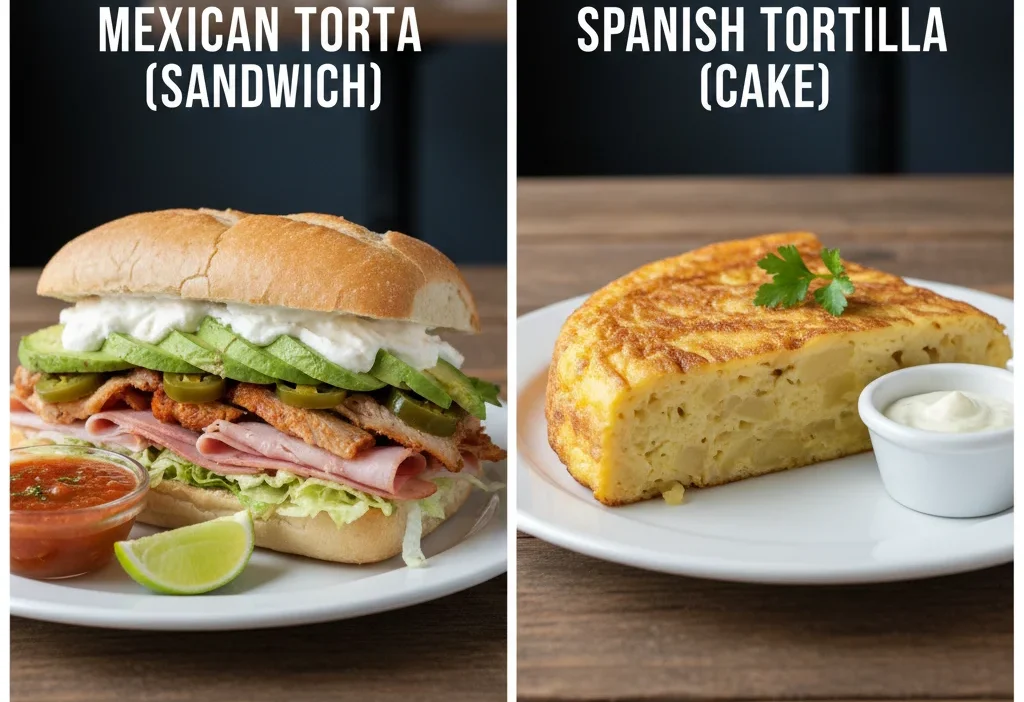
Ever ordered a “torta” and wondered what exactly it means? You’re not alone! The word torta might sound simple, but its meaning changes drastically depending on where you are — Mexico, Spain, or even the Philippines. From a savory sandwich to a sweet cake, torta has deliciously diverse interpretations around the world.
A torta is a Spanish word that commonly means a sandwich in Mexico or a cake in Spain and some Latin countries, depending on context and region.
People search for “torta meaning” when they see the word in menus, conversations, or online videos and feel unsure what it refers to. The meaning of torta changes by culture, which often causes confusion. In Mexico, a torta is a stuffed sandwich made with bread like bolillo or telera, filled with meat, beans, cheese, and sauces. In Spain and other regions, torta usually refers to a cake or flatbread.
Understanding the correct meaning helps avoid misunderstandings when ordering food, traveling, or learning Spanish, making the word easier to recognize and use correctly in real life.
🧠 What Does “Torta” Mean?
“Torta” is a Spanish word that generally means “cake,” but in Mexico and parts of Latin America, it refers to a type of sandwich made with crusty bread and fillings like meat, cheese, and avocado.
It’s not slang — it’s a culinary term that has adapted over time based on local traditions and language evolution.
🌎 Origin and Popularity of “Torta”
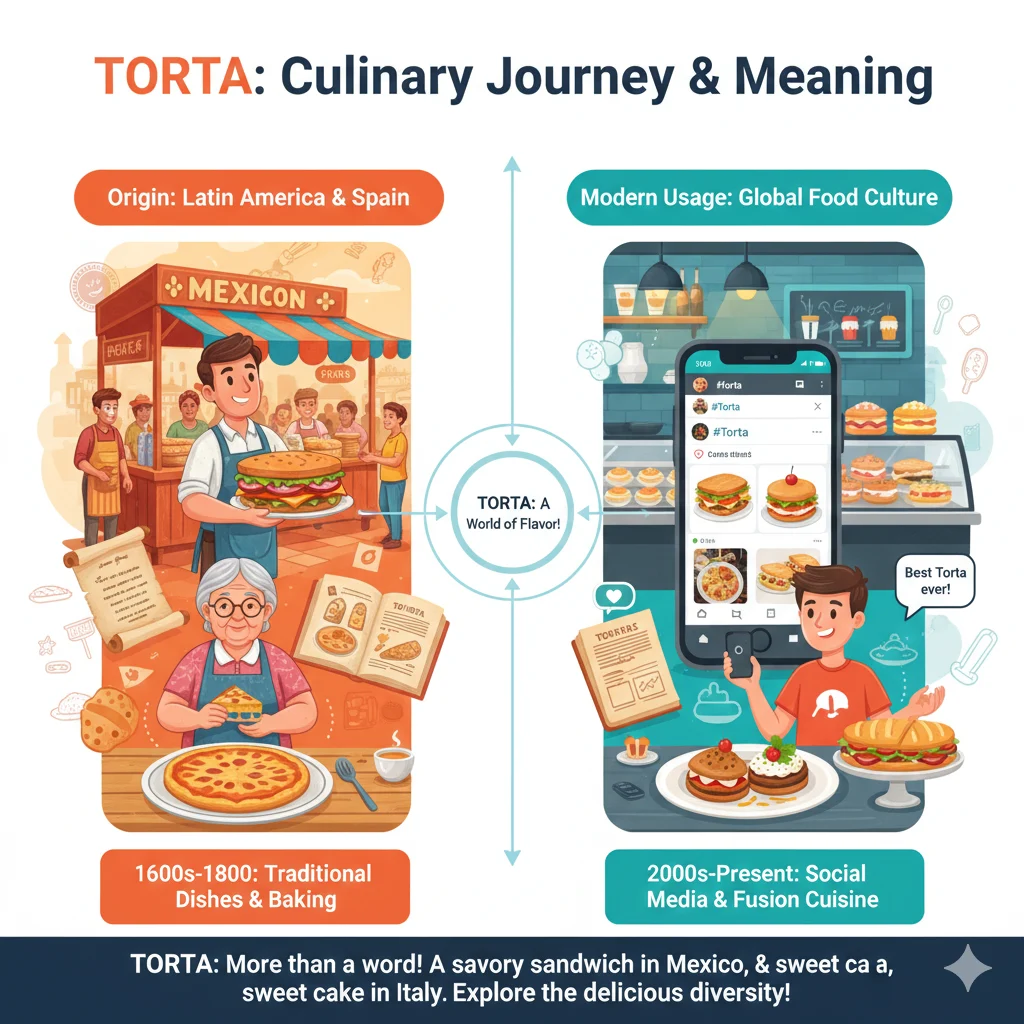
The word torta comes from the Latin word torta panis, meaning “round bread.” Over centuries, the term spread across Spanish-speaking countries and took on new meanings shaped by regional cuisines.
Here’s how torta evolved globally:
- Spain (Middle Ages): Originally referred to a round, flat cake made of wheat or eggs.
- Mexico (19th century): Became synonymous with a hearty sandwich made using a bolillo or telera roll.
- Philippines (Spanish colonial era): Adopted from Spanish, but transformed into either a sponge cake (torta de Cebu) or an egg-based omelet, depending on the region.
🍞 Fun fact: The Mexican torta became widely popular during the early 1900s as a street food for workers — affordable, filling, and customizable.
💬 “Torta” Meaning in Different Contexts
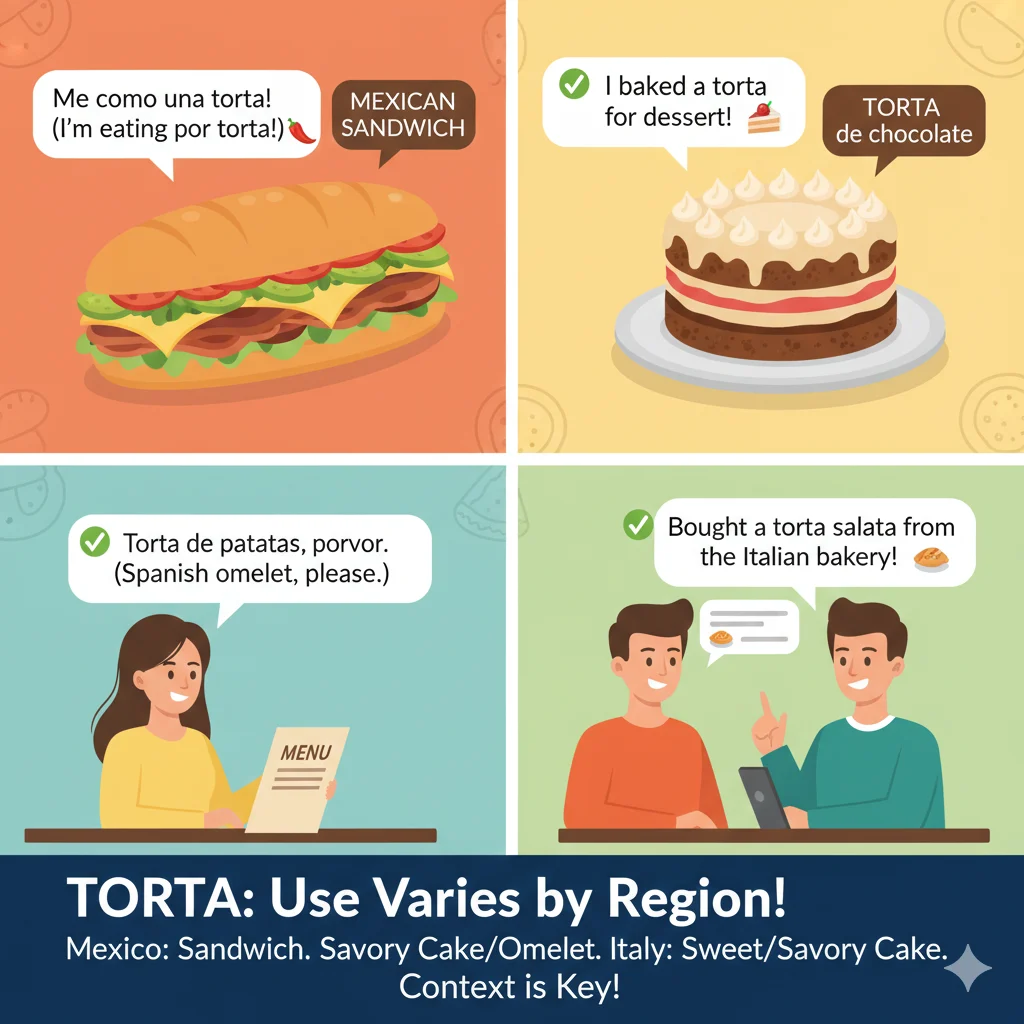
Because torta varies so much by region, here’s how it’s commonly used in different contexts:
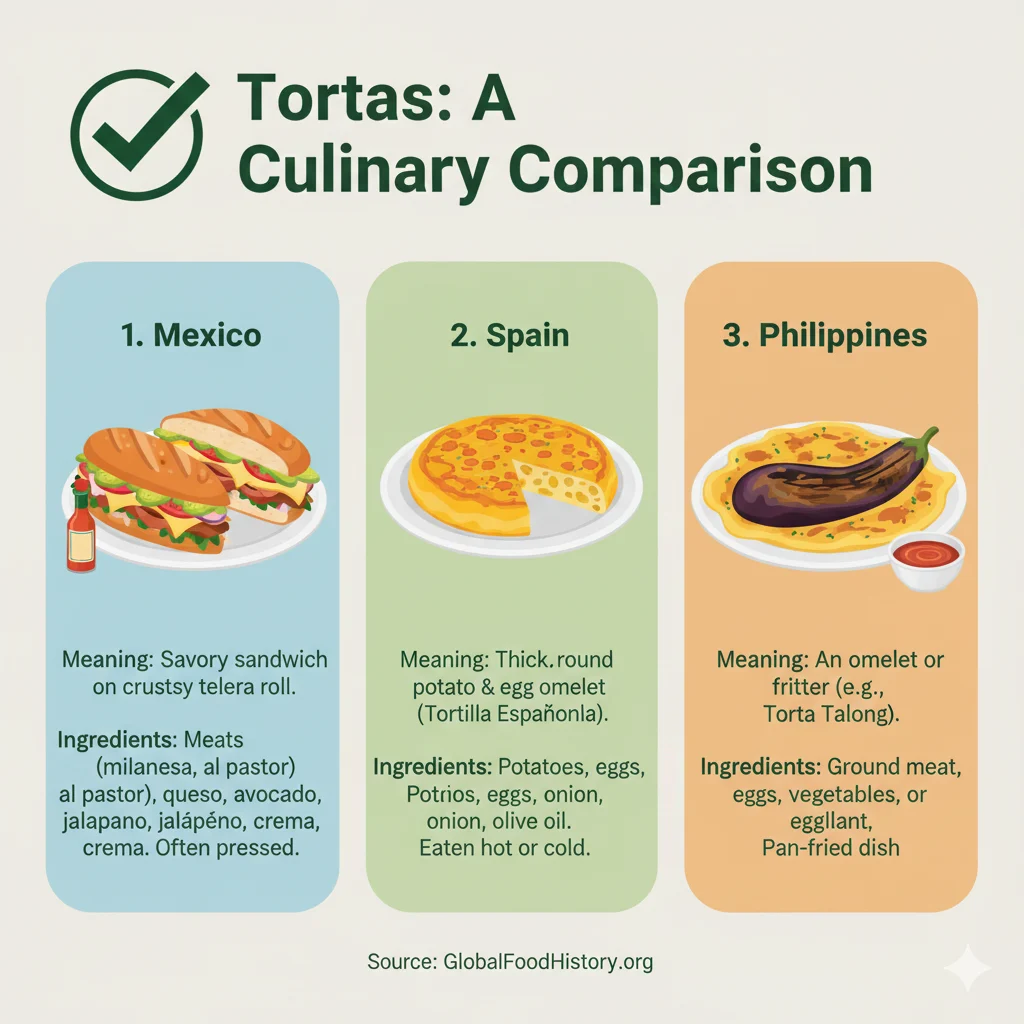
| Country / Context | Meaning of “Torta” | Example |
| Mexico | A sandwich made with crusty bread and fillings like meat, beans, and avocado. | “Voy a comprar una torta de jamón.” (I’m going to buy a ham sandwich.) |
| Spain | A sweet or savory cake or pastry. | “La torta de almendras está deliciosa.” (The almond cake is delicious.) |
| Philippines | Can mean sponge cake (torta de Cebu) or omelet. | “I made torta with minced pork and eggs.” |
| Argentina / Chile | Often refers to a layered cake, similar to a torte. | “Le hice una torta de cumpleaños.” (I made a birthday cake.) |
🗣️ Examples of “Torta” in Conversation
Here are a few examples showing how torta is used naturally in different regions:
In Mexico 🇲🇽
Person 1: Tengo hambre, ¿qué comemos?
Person 2: Vamos por unas tortas ahogadas.
(I’m hungry, what should we eat? / Let’s go get some “drowned” tortas — a Mexican specialty.)
In Spain 🇪🇸
Person 1: ¿Trajiste la torta para el postre?
Person 2: Sí, es de chocolate.
(Did you bring the cake for dessert? / Yes, it’s chocolate.)
In the Philippines 🇵🇭
Person 1: Nanay made torta for breakfast!
Person 2: Is it the egg one or the sweet one?
🔍 Similar or Related Terms
Here are a few related culinary terms and their meanings:
| Term | Meaning |
| Bocadillo | Spanish sandwich made with baguette-style bread. |
| Emparedado | Another Spanish word for “sandwich,” used in formal contexts. |
| Torte | A rich, layered cake common in European desserts. |
| Panecillo / Bolillo | Bread rolls often used to make tortas in Mexico. |
✅ How to Use “Torta” Correctly
Using torta properly depends on where you are and who you’re talking to:
Do’s:
✅ Use torta to order sandwiches in Mexico.
✅ Use torta for cakes in Spain or Argentina.
✅ Clarify context when speaking internationally to avoid confusion.
Don’ts:
❌ Don’t assume torta always means “cake.”
❌ Avoid using it in slang contexts unless referring to food (in some countries, it can be humorous slang).
⚠️ Common Mistakes or Misinterpretations
- Mistake #1: Thinking torta only means “cake.”
→ In Mexico, you might get a sandwich instead of dessert! - Mistake #2: Assuming it’s slang or informal.
→ Torta is a standard word, but its meaning is context-dependent. - Mistake #3: Using torta in translation apps without regional awareness.
→ Always specify the country when translating.
❓FAQ: “Torta” Meaning Explained
1. What does “torta” mean in Spanish?
In general Spanish, torta means “cake.” However, in Mexico and some Latin American countries, it refers to a type of sandwich made with a bread roll.
2. Is “torta” slang?
No, torta is not slang. It’s a proper Spanish word with regional culinary meanings.
3. What’s the difference between a torta and a sandwich?
A torta is a Mexican-style sandwich made with specific bread (bolillo or telera), while “sandwich” usually refers to soft sliced bread.
4. How do you pronounce “torta”?
It’s pronounced [TOR-tah], with a rolled “r.”
5. Where is the word “torta” most commonly used?
You’ll hear torta in Spanish-speaking countries — most notably Mexico, Spain, Argentina, and the Philippines.
6. When should you not use “torta”?
Avoid using torta casually online if you’re unsure of the regional context — it could mean “cake,” “sandwich,” or even have a funny double meaning in slang.
🧾 Conclusion
The word “torta” perfectly shows how language and culture blend through food. Whether it’s a mouthwatering Mexican sandwich, a sweet Spanish cake, or a Filipino breakfast omelet, torta represents comfort, flavor, and local identity.
Now that you know what torta really means, you’ll never be surprised by what arrives at your table again! 🍰🥪
Keep exploring our site for more fun word meanings and cultural insights.

Patrick Gale is a word-meaning expert at Meanovia.com. He explains complex terms, definitions, and language trends with clarity and precision. His goal is to help readers understand the exact meaning behind every word they search.