
Have you ever heard your chiropractor mention the term “subluxation” and wondered what it actually means? Or maybe you saw it in a medical report and felt confused? You’re not alone.
In this article, we’ll break down what subluxation means, where the term comes from, how it’s used in medical and chiropractic contexts, and what makes it different from a full dislocation. You’ll also see real-life examples, related terms, and FAQs to help you fully understand the concept.
🧠 What Does “Subluxation” Mean?
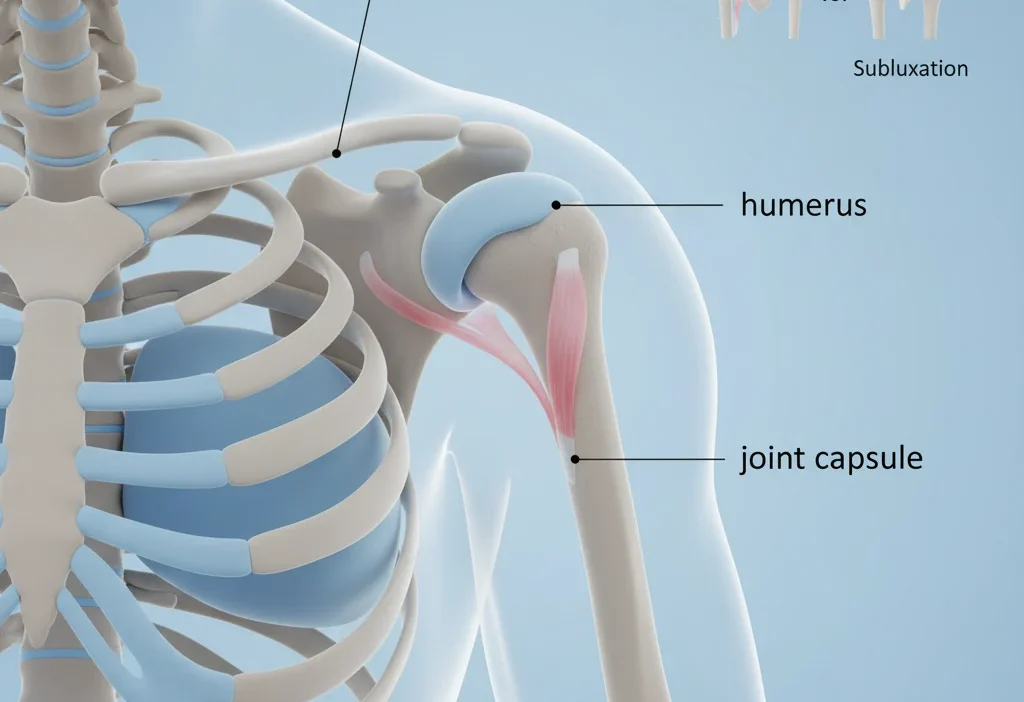
Subluxation means a partial or incomplete dislocation of a joint, where the bones move out of their normal position but not completely separated.
It’s a medical term, often used in orthopedics, radiology, and chiropractic care, to describe joint misalignment that may cause pain, stiffness, or nerve pressure.

✅ Snippet-optimized definition (under 50 words):
Subluxation refers to a partial joint dislocation where bones lose normal alignment but remain partially connected — a condition causing limited movement or discomfort.
📜 Origin and Popularity of the Term “Subluxation”
The term subluxation originates from Latin, combining sub- (“under” or “slightly”) and luxare (“to dislocate”).
It first appeared in medical literature in the 1600s, describing minor joint displacements that didn’t require full reset like complete dislocations.
Over time, chiropractic professionals adopted the term to describe spinal misalignments that might affect nerve flow and body function. This usage became especially popular in the 20th century as chiropractic care gained mainstream attention.
🌐 “Subluxation” Meaning in Different Contexts
🏥 In Medical Terms
- Refers to a partial dislocation seen in X-rays or MRI scans.
- Common in joints like the shoulder, knee, or vertebrae.
- Usually caused by trauma, overuse, or connective tissue weakness.
💆 In Chiropractic Use
- Refers to a vertebral misalignment believed to affect nerve signals.
- Chiropractors correct subluxations through spinal adjustments to restore proper alignment and relieve tension.
🧑⚕️ In Radiology
- A radiologist might describe “mild anterior subluxation” when one bone slightly shifts forward relative to another in imaging results.
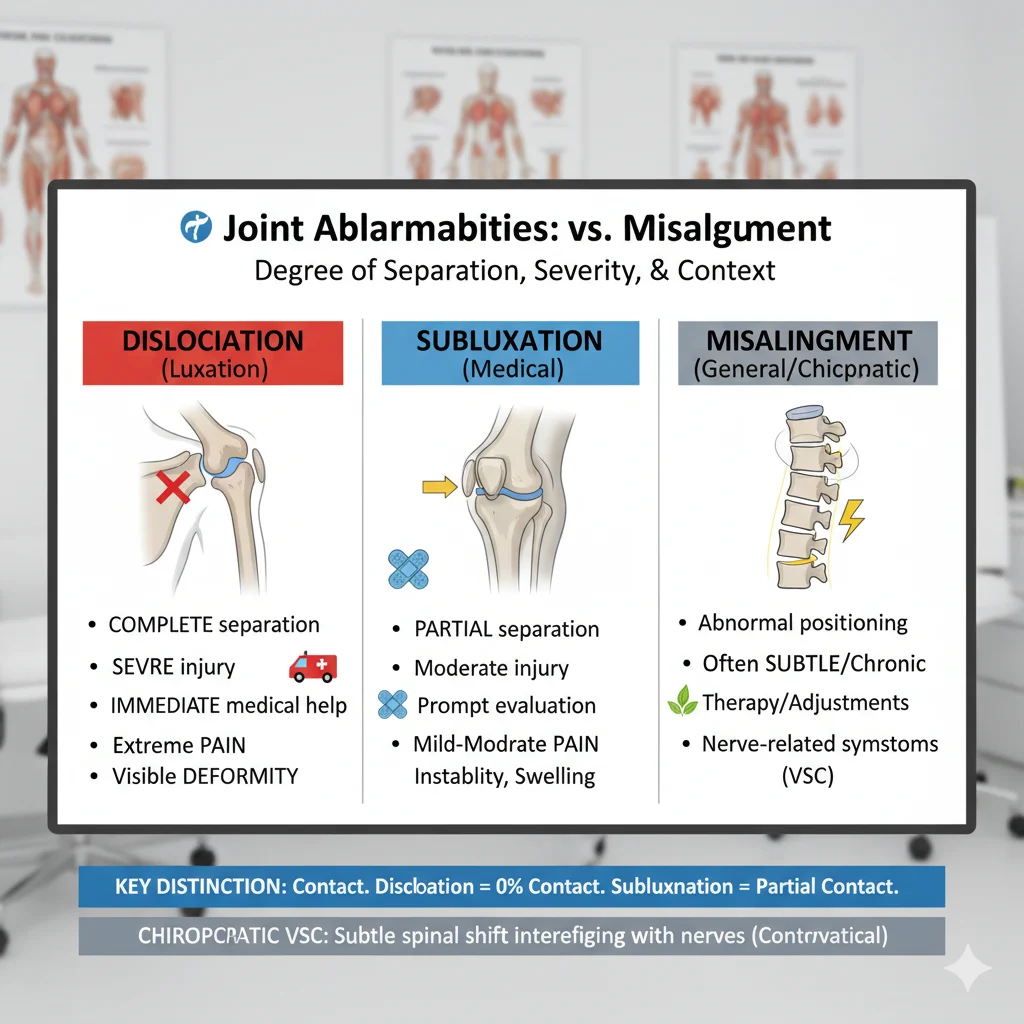
| Term | Description | Severity | Common Treatment |
|---|---|---|---|
| Subluxation | Partial joint dislocation | Mild–Moderate | Rest, rehab, or chiropractic care |
| Dislocation | Full separation of bones | Severe | Medical reduction and immobilization |
| Misalignment | Minor shift without separation | Mild | Postural correction or exercise |
💬 Examples of “Subluxation” in Real Situations
Here are some everyday and medical examples showing how “subluxation” is used:
Example 1 (Medical):
“The X-ray shows a shoulder subluxation — the bone isn’t fully dislocated, but it’s shifted slightly.”
Example 2 (Chiropractic):
“Your neck subluxation might be pressing on nerves, causing those headaches.”
Example 3 (Sports):
“The athlete suffered a knee subluxation during the match but returned after physiotherapy.”
Example 4 (Casual):
“I didn’t dislocate my shoulder, just a small subluxation, thankfully.”
🔍 Similar or Related Terms
| Term | Meaning | Field |
|---|---|---|
| Dislocation | Complete separation of bones in a joint | Orthopedics |
| Misalignment | Minor positional shift, not necessarily joint-related | Chiropractic / Postural Health |
| Spinal Subluxation | Vertebral joint misalignment affecting nerves | Chiropractic |
| Luxation | Another word for complete dislocation | Medical / Veterinary |
These related terms are often used interchangeably but have different clinical meanings — understanding the distinction helps you communicate better with healthcare professionals.
✅ How to Use “Subluxation” Correctly
When using “subluxation”, keep context in mind:
Do’s:
- ✅ Use it when describing a partial joint displacement.
- ✅ Appropriate in medical, physiotherapy, and chiropractic discussions.
- ✅ Use it formally in reports or professional communication.
Don’ts:
- ❌ Avoid calling every joint pain a “subluxation.”
- ❌ Don’t use it as casual slang — it’s a technical term.
⚠️ Common Mistakes or Misinterpretations
- ❌ Confusing Subluxation with Dislocation:
A dislocation is complete separation — much more severe. - ❌ Thinking All Chiropractors Mean the Same Thing:
In chiropractic care, “subluxation” may refer to spinal nerve interference, not just bone position. - ❌ Assuming It’s Always Serious:
Some subluxations self-correct or cause minimal symptoms.
❓ FAQs About Subluxation
1. What does subluxation mean in medical terms?
It means a partial dislocation of a joint where the bones are still in partial contact, often seen in shoulders, knees, or vertebrae.
2. Is subluxation the same as dislocation?
No. Dislocation is a full separation of the joint, while subluxation is only partial.
3. Can subluxation heal on its own?
Minor subluxations sometimes realign naturally, but recurring ones may need rehabilitation or chiropractic adjustments.
4. What causes subluxation?
It can result from injury, repetitive stress, muscle weakness, or ligament laxity.
5. How do chiropractors treat subluxation?
They perform spinal manipulations or adjustments to restore normal alignment and relieve nerve pressure.
6. When should you see a doctor for subluxation?
If you experience persistent pain, swelling, or joint instability, seek medical evaluation immediately.
🩺 Conclusion
Now you know that subluxation refers to a partial dislocation — not quite a full break, but enough to cause discomfort or limited movement.
Whether you encounter it in medical imaging or chiropractic sessions, understanding the term helps you communicate effectively and make informed health choices.
So next time someone mentions “subluxation,” you’ll know exactly what it means — and how serious (or not) it might be.
👉 Keep exploring our site for more clear, expert explanations of medical and slang terms you hear every day!