
Ever heard someone mention “SRO approval,” “SRO notification,” or “SRO room” and wondered what it actually means? 🤔 You’re not alone! The term SRO can pop up in government documents, business settings, or even housing discussions — and it can mean different things depending on where it’s used.
In this article, we’ll explain:
✅ The meaning of SRO
📜 Its origin and usage
💬 How it differs across business, government, and everyday contexts
📚 Real-life examples
🔄 Similar terms and FAQs
By the end, you’ll know exactly what SRO stands for and how to use it confidently — whether in a professional meeting or casual discussion.
📖 What Does SRO Mean?
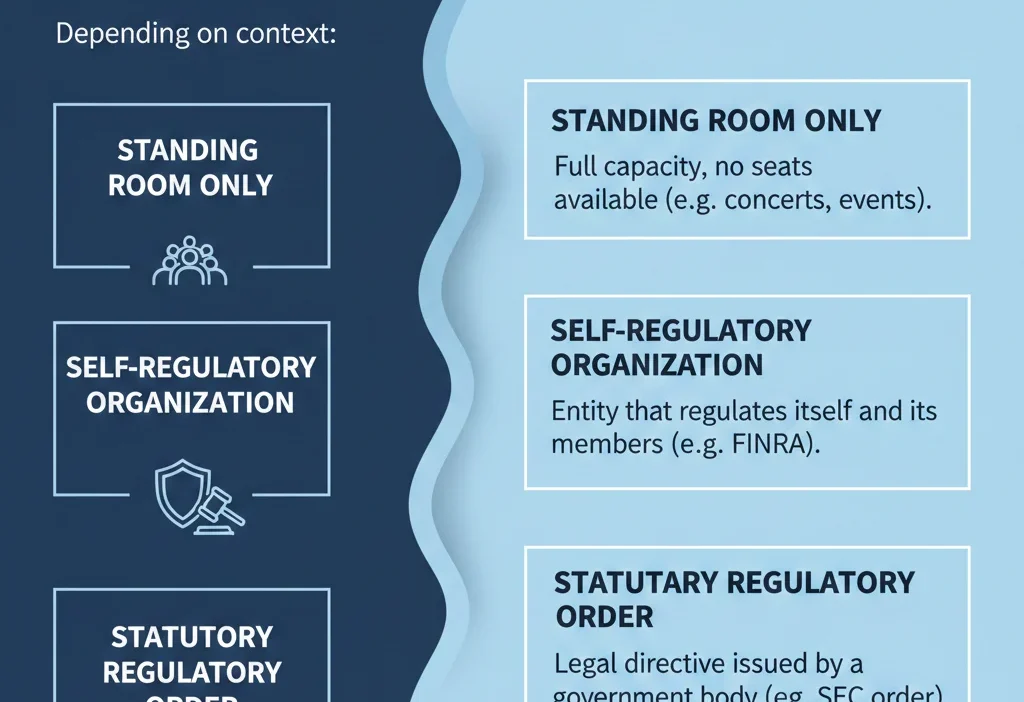
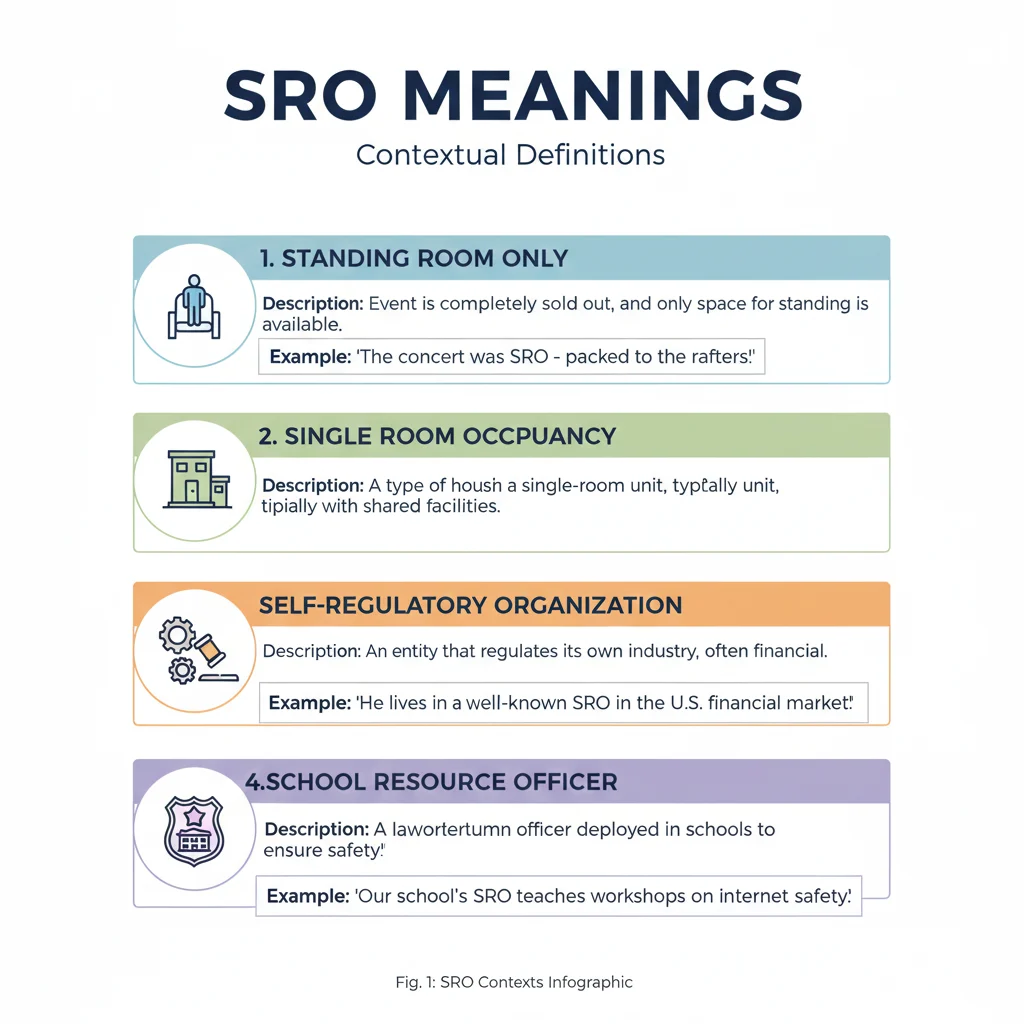
“SRO” is an abbreviation that can stand for multiple meanings depending on context — most commonly “Standing Room Only,” “Self-Regulatory Organization,” or “Statutory Regulatory Order.”
Each version of SRO is used in a different field — entertainment, finance, or government — so understanding context is key.
🕰️ Origin and Popularity
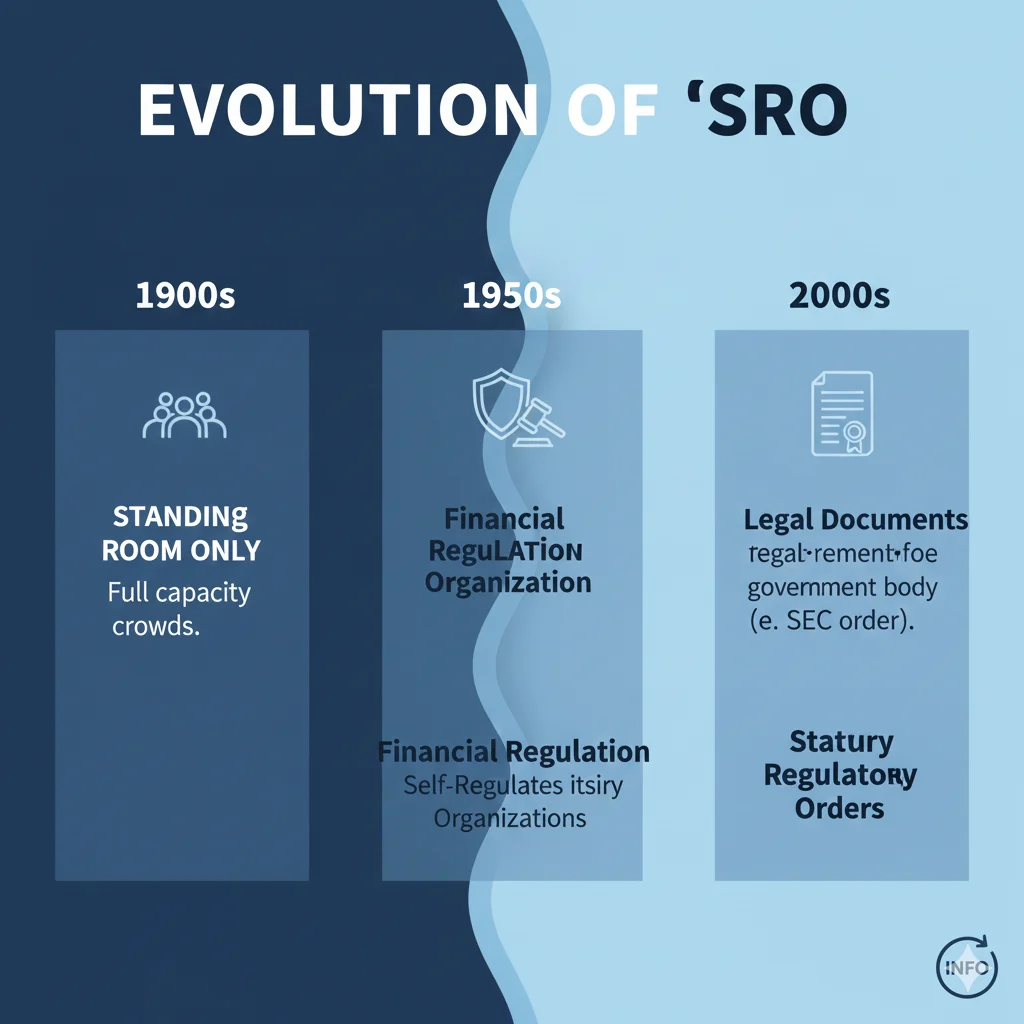
The abbreviation SRO has existed since the early 20th century, but its meanings evolved in different sectors:
- Standing Room Only (Entertainment): Used by theaters and venues in the early 1900s to indicate that all seats were sold out — only standing tickets remained.
- Self-Regulatory Organization (Finance): Originated in the mid-20th century, referring to financial industry bodies that regulate members under government oversight.
- Statutory Regulatory Order (Government): Gained prominence in countries like Pakistan, India, and the UK, referring to legal notifications issued by government departments under specific laws.
🌐 SRO Meaning in Different Contexts
🎭 In Entertainment and Events (Standing Room Only)
In concerts, plays, or sports events, SRO means “Standing Room Only” — all seats are filled, and only standing space is available.
Example: “The concert was so popular, it was SRO by 7 PM!”
Tone: Positive — shows an event’s popularity or success.
💼 In Business and Finance (Self-Regulatory Organization)
In the business or finance world, SRO refers to a Self-Regulatory Organization — an entity that creates and enforces rules for its industry under government supervision.
Example: “FINRA is an SRO that oversees brokerage firms in the U.S.”
Tone: Formal and regulatory — related to compliance and ethics.
🏛️ In Government and Law (Statutory Regulatory Order)
In countries like Pakistan and India, SRO stands for Statutory Regulatory Order — a legal document or notification issued by a government ministry or department. It usually amends or explains a law or tax rule.
Example: “The Ministry of Finance issued an SRO reducing import duties on essential goods.”
Tone: Official and administrative — used in legal and policy contexts.
| Context | Full Form of SRO | Used By | Meaning / Purpose |
| Entertainment | Standing Room Only | Event organizers, theaters | Indicates no seats left |
| Finance / Business | Self-Regulatory Organization | Financial institutions | Industry self-regulation |
| Government / Law | Statutory Regulatory Order | Ministries, legal bodies | Official rule or notification |
💬 Examples of ‘SRO’ in Conversations
Example 1 (Entertainment):
Person A: Did you get tickets to the show?
Person B: Nope! It’s SRO already — completely packed! 🎟️
Example 2 (Business):
Manager: Make sure we comply with all SRO guidelines before the audit.
Example 3 (Government):
Reporter: The finance ministry released a new SRO changing tax rates for exporters.
🧩 Similar or Related Terms
| Term | Meaning | Related To |
| Notification | Official government order or announcement | Legal context |
| Circular | Directive issued to departments or companies | Administrative communication |
| Regulation | Rule made by an authority | Governance |
| Advisory | Official recommendation or warning | Policy / Public safety |
🧠 How to Use ‘SRO’ Correctly
✅ Do’s:
- Use SRO according to the relevant context (entertainment, finance, or government).
- Clarify the meaning if your audience might misunderstand.
- Use it confidently in professional communication when referring to formal orders or organizations.
❌ Don’ts:
- Don’t assume SRO has one fixed meaning everywhere.
- Avoid using it in casual texts unless it’s about events (Standing Room Only).
Example:
✅ “The new SRO will impact import taxes this year.”
❌ “That was such an SRO speech!” (Incorrect context)
⚠️ Common Mistakes or Misinterpretations
- Mistake 1: Thinking SRO only means Standing Room Only.
→ It can also refer to legal or financial institutions. - Mistake 2: Using SRO casually in professional emails without clarification.
→ Always spell it out the first time in formal writing. - Mistake 3: Mixing up SRO with SOR (Schedule of Rates) or SOP (Standard Operating Procedure).
→ These are entirely different terms used in government and business.
❓ FAQ Section
1. What does SRO mean in government documents?
In government and legal contexts, SRO stands for Statutory Regulatory Order, an official notification issued by a ministry to change or enforce specific regulations.
2. What does SRO mean in finance?
In finance, SRO refers to a Self-Regulatory Organization, which monitors and regulates industry practices to ensure compliance and integrity.
3. What does SRO mean in entertainment?
In events or shows, SRO means Standing Room Only — all seats are taken, and only standing spaces remain.
4. Is SRO slang or formal?
It’s a formal abbreviation, used in professional, legal, and official communication — not casual slang.
5. How do you use SRO in a sentence?
“The SRO issued last week outlines new tax exemptions for small businesses.”
6. Where is SRO most commonly used?
You’ll see it most in government notifications, finance regulations, and event ticketing systems.
🏁 Conclusion
To sum up, SRO is a versatile abbreviation that can mean Standing Room Only, Self-Regulatory Organization, or Statutory Regulatory Order depending on context. Whether it’s describing a sold-out concert, a finance regulator, or a legal directive — SRO reflects authority, regulation, or exclusivity.
Now that you understand the SRO meaning, you can use it accurately in conversations, business meetings, or while reading official documents. 💼📜🎟️
Keep exploring our site for more term explanations, abbreviations, and modern lingo made simple!

Evie Wyld is a word-meaning specialist at Meanovia.com. She simplifies complex words, phrases, and language trends, helping readers quickly grasp the exact meaning behind every term in a clear and approachable way.