In a martial arts dojo, students bow and say “Sensei” before training begins. But what does this word actually mean — and is it limited to martial arts?
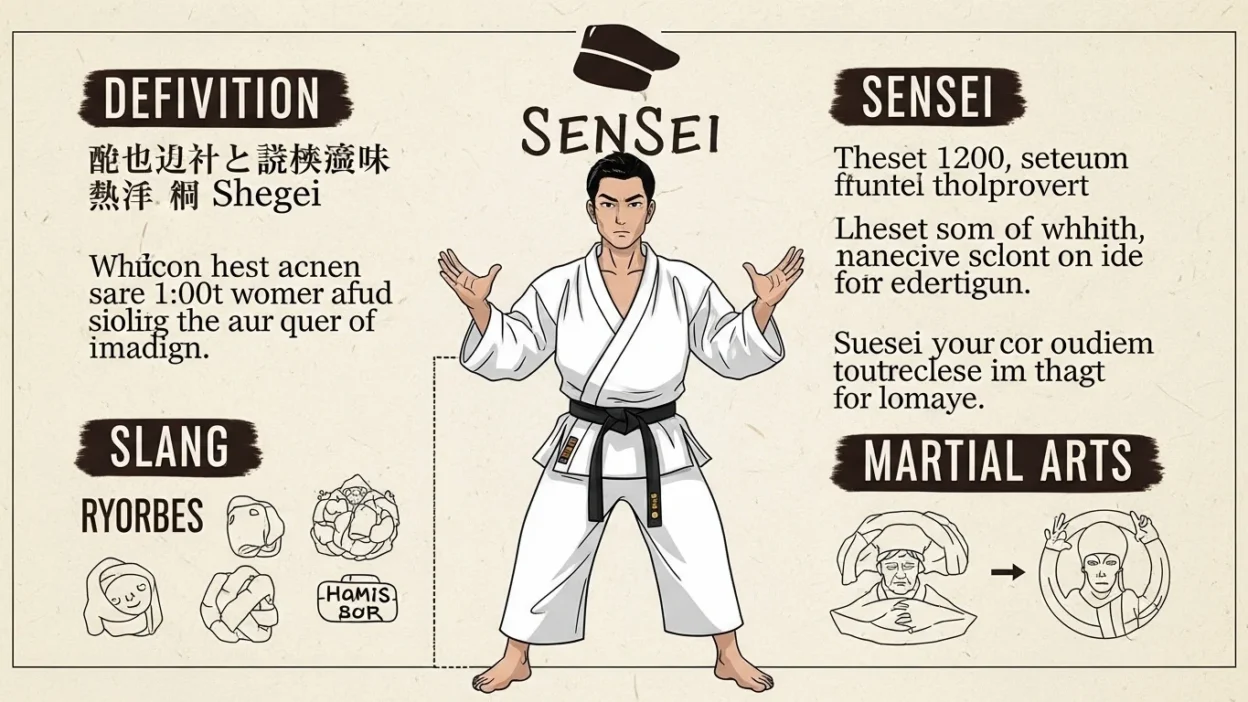
Quick answer: Sensei is a Japanese honorific title meaning “teacher” or “one who has gone before.” It is used to show respect for someone with knowledge, experience, or authority.
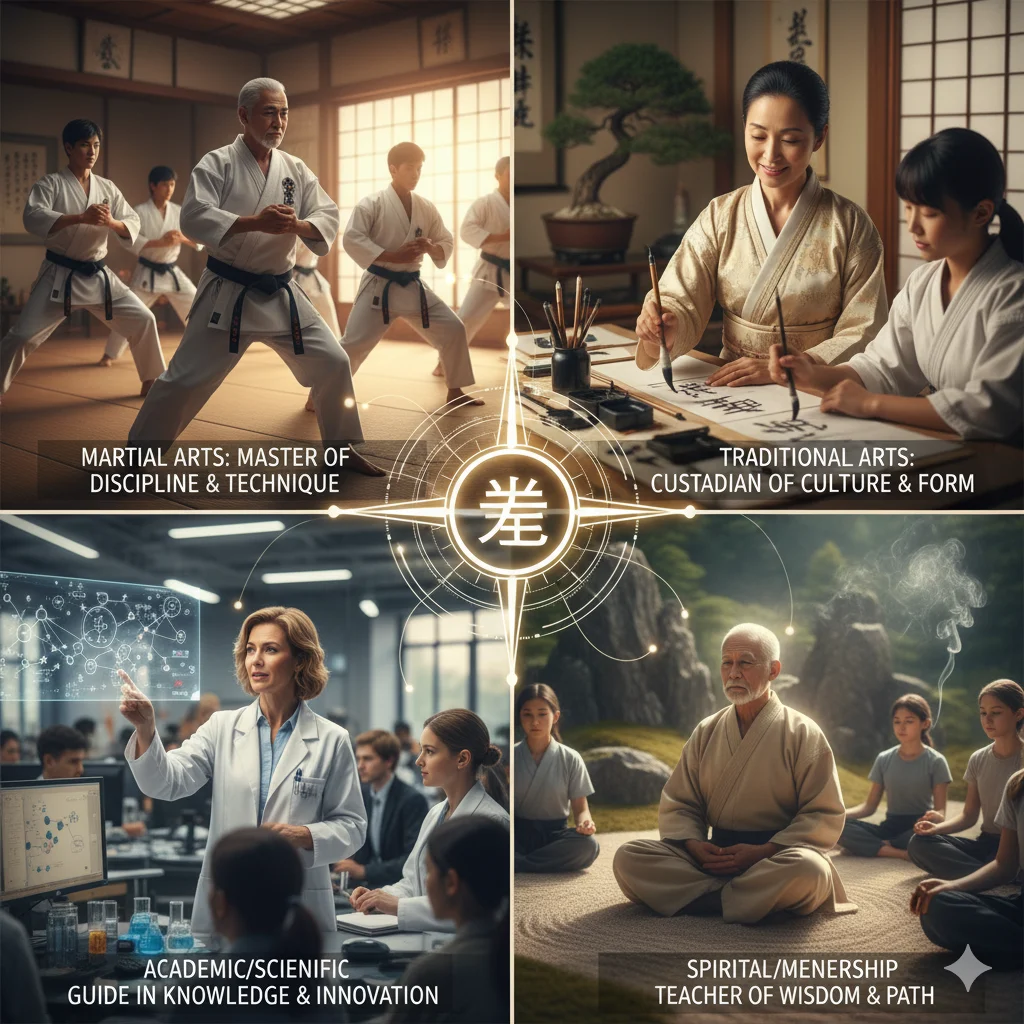
In Japan, the term extends far beyond karate or judo. School teachers, university professors, doctors, artists, and even politicians are addressed as sensei.
The word combines the characters sen (before) and sei (born), reflecting the idea of someone who has gained wisdom through experience.
If you searched for “sensei meaning,” you may be wondering whether it simply means teacher, how it’s used in Japan, or whether it’s appropriate to use outside Japanese culture. Below, you’ll find a clear explanation of its definition, pronunciation, cultural significance, and common misunderstandings.
Sensei is a Japanese word meaning “teacher” or “one who has gone before.” The definition of sensei refers to someone respected for knowledge, skill, or experience. In English, sensei means a teacher, mentor, or professional authority figure.
🈶 What Does “Sensei” Mean?
“Sensei” (先生) is a Japanese honorific term that means “teacher” or “master.”
It’s used to respectfully address someone who has mastered a skill or profession — such as a teacher, doctor, martial arts instructor, or mentor.
It’s not slang but a formal title deeply rooted in Japanese culture, often used in schools, dojos, and workplaces.
🇯🇵 What Does Sensei Mean in Japanese?
In Japanese, sensei (先生) literally means “one who was born before.” The Japanese word sensei is used to address teachers, doctors, lawyers, artists, and other respected professionals. It is not limited to martial arts and is a common title in everyday Japanese life.
🌸 Origin and Popularity
The word “Sensei” comes from two Japanese kanji:
- 先 (sen) — meaning before or ahead
- 生 (sei) — meaning life or born
Together, they literally mean “one who was born before” — symbolizing someone who has gone ahead in knowledge or experience.
📜 Historical Roots
“Sensei” dates back centuries in Japan, where it was used to honor scholars, monks, and teachers.
It evolved into a respectful title for anyone who guides others — whether in academics, arts, or combat.
🌍 Modern Popularity
The term gained global recognition through:
- Martial arts like karate, judo, and aikido
- Anime and manga, where characters address mentors as “Sensei”
- Pop culture and online communities, where fans sometimes jokingly call influencers or experts “Sensei”
🕰️ Timeline Snapshot:
- 1600s: Used for scholars and monks in Japan
- 1900s: Adopted in martial arts and education globally
- 2000s–2020s: Popularized in anime, gaming, and internet culture
🧭 Sensei Meaning in Different Contexts
🏫 In Japanese Culture
In Japan, “Sensei” is a title of respect used for professionals such as:
- Teachers and professors
- Doctors and lawyers
- Artists, writers, and political figures
Example: “Tanaka Sensei teaches mathematics at Kyoto University.”
🥋 In Martial Arts
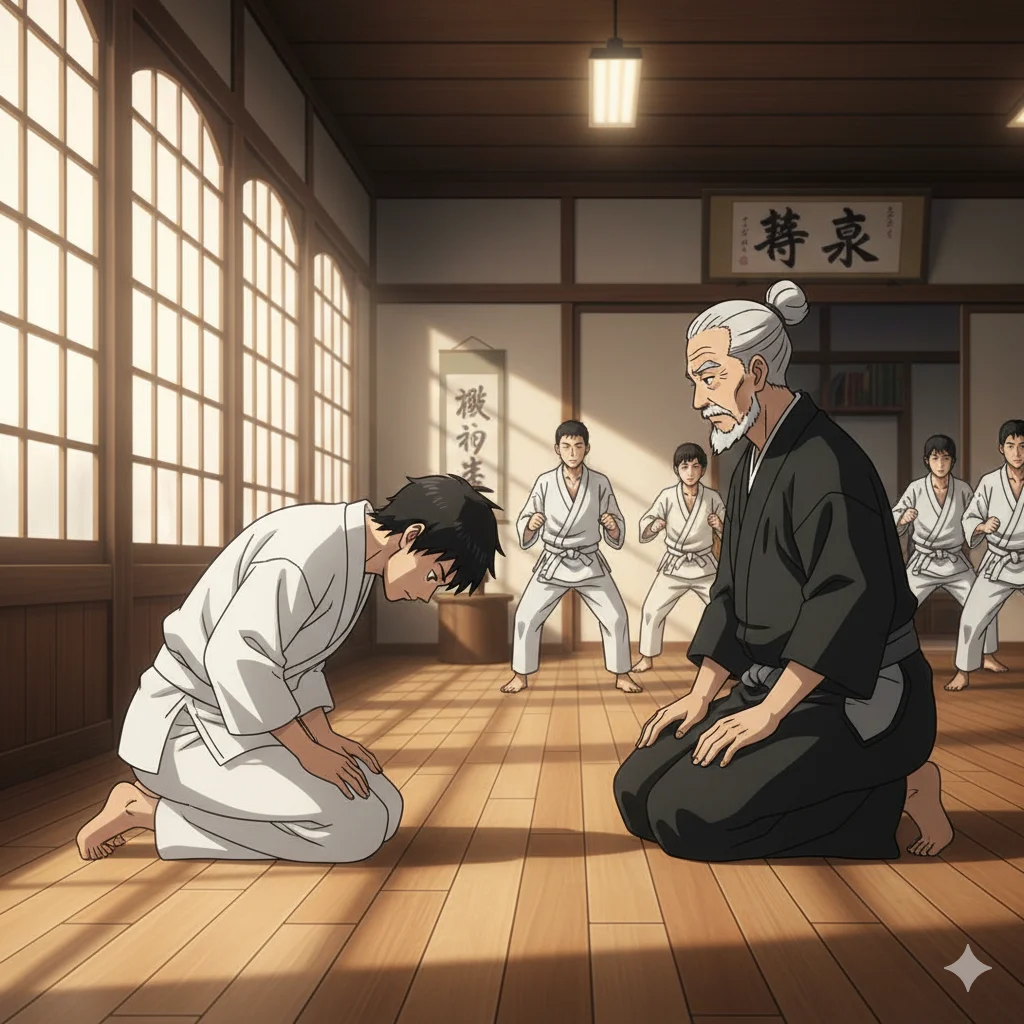
In karate, judo, or kendo, “Sensei” refers to the instructor or master who guides students in technique, discipline, and philosophy.
Example: “Thank you, Sensei, for today’s training.”
🥋 What Is a Sensei in Martial Arts?
In karate and other martial arts, a sensei is the instructor who teaches technique, discipline, and philosophy. The karate sensei meaning refers specifically to the head teacher of a dojo. In this context, sensei represents both technical mastery and moral guidance.
🎌 In Anime and Pop Culture
Anime and manga use “Sensei” to denote a mentor figure — often wise, skilled, or mysterious.
🎥 Sensei Meaning in Anime
In anime, sensei is used to address mentor figures, teachers, or skilled characters. For example, “Kakashi Sensei” in Naruto simply means “Teacher Kakashi.” Manga creators (mangakas) are also called sensei in Japan as a sign of respect for their creative authority.
Example: “Kakashi Sensei” from Naruto or “Gojo Sensei” from Jujutsu Kaisen.
💻 In Internet or Slang Use
Online, “Sensei” can be used playfully or ironically to address someone skilled at something.
Example: “Teach me your editing tricks, Photoshop Sensei!”
💬 Sensei Meaning in Slang and Chat
In slang or online chat, sensei is often used humorously to refer to someone skilled or impressive. Phrases like “Teach me your ways, Sensei” jokingly praise someone’s expertise. Saying “Yes, Sensei” can imply playful respect or acknowledgment, especially in gaming or meme culture.
| Context | Meaning | Formality | Example Use |
| Japanese School | Teacher | Formal | “Suzuki Sensei, please check my homework.” |
| Martial Arts | Instructor | Formal | “Bow to your Sensei.” |
| Anime / Pop Culture | Mentor figure | Neutral | “Gojo Sensei is so powerful!” |
| Internet Slang | Skilled person or expert | Casual | “Coding Sensei, help me debug this!” |
🗣️ Examples of “Sensei” in Conversations
Example 1 (Formal):
Student: Thank you for your lesson, Sensei.
Teacher: You’re welcome. Keep practicing!
Example 2 (Martial Arts):
“Sensei taught us not only how to fight, but how to think with discipline.”
Example 3 (Anime Reference):
“Naruto’s bond with his Sensei is what makes the story so emotional.”
Example 4 (Online Slang):
Friend 1: How do you edit so fast?
Friend 2: I learned from the Photoshop Sensei himself!
🔍 Similar or Related Terms
Here are some related Japanese honorifics and terms often compared to “Sensei”:
| Term | Meaning | Usage Context |
| Senpai (先輩) | Senior or mentor | Used for someone older or more experienced in a group |
| Shishō (師匠) | Master or mentor (especially in arts or crafts) | Used for teachers of traditional skills |
| Sensei (先生) | Teacher or instructor | Used for professionals, educators, or experts |
| Hakase (博士) | Doctor or scholar | Refers to people with doctoral degrees or researchers |
🧠 How to Use “Sensei” Correctly
✅ Do’s:
- Use it after a person’s name (e.g., “Yamada Sensei”).
- Use it to show respect toward teachers or experts.
- Use it in formal or cultural contexts like martial arts or education.
❌ Don’ts:
- Don’t use it for yourself — it’s only used when referring to others.
- Don’t use it casually with strangers — it may sound sarcastic or mocking.
- Avoid using it incorrectly in business if not part of Japanese etiquette.
⚠️ Common Mistakes or Misinterpretations
🔎 Spelling of Sensei
The correct spelling is “sensei.” Common misspellings include “sensai,” “sensay,” or “sinsay.” Despite these variations, they all refer to the same Japanese honorific meaning teacher or mentor.
- Myth: “Sensei” only means martial arts teacher.
→ Truth: It’s also used for teachers, doctors, and professionals in Japan. - Myth: It’s an anime-only term.
→ Truth: It’s a real Japanese title of respect used in everyday life. - Myth: You can call yourself a Sensei.
→ Truth: In Japanese culture, doing so would be seen as boastful.
❓ FAQ Section
1. What does “Sensei” mean in Japanese?
“Sensei” means “teacher” or “master,” showing respect for someone knowledgeable or experienced.
2. Is “Sensei” only for martial arts?
No. It’s used for teachers, doctors, lawyers, and mentors — not just martial arts instructors.
3. How do you properly address someone as Sensei?
Place it after their name, like “Takeda Sensei.” Never use it before their name or by itself in formal speech.
4. What’s the difference between “Sensei” and “Senpai”?
“Sensei” means teacher or professional expert, while “Senpai” refers to a senior or mentor within a group.
5. Can I use “Sensei” jokingly online?
Yes — in memes or casual chats, people use “Sensei” humorously for skilled friends or creators.
6. Is “Sensei” a title or a name?
It’s an honorific title, not a name. You attach it to someone’s name to show respect.
7. Does sensei mean master?
Not exactly. While sensei can refer to someone highly skilled, it primarily means “teacher.” The word “master” implies ownership or ultimate authority, which is not the literal meaning of sensei in Japanese.
🏁 Conclusion
In short, “Sensei” means teacher, mentor, or master — a title rooted in respect and tradition.
From Japanese schools and martial arts dojos to anime fandoms and the internet, “Sensei” has become a universal word for wisdom, guidance, and skill.
👋 Now that you know the real Sensei meaning, you’ll never misuse it again!
Keep exploring our site for more cultural terms and trending phrases explained clearly and simply.

Jon McGregor is a language and word-meaning expert at Meanovia.com. He specializes in explaining complex words, phrases, and modern language trends in a clear, approachable style. His mission is to help readers quickly grasp the true meaning behind every term, making language learning and understanding effortless and engaging.