
Ever heard the term “POTUS” on the news or social media and wondered what it actually means?
You’re not alone. This acronym pops up everywhere — from presidential tweets to global headlines — but many people don’t realize where it came from or how it’s used today.
In this article, we’ll break down:
The definition of POTUS
Its origin and historical background
How it’s used in media, politics, and online platforms
Examples in real-life contexts
Related terms like FLOTUS and SCOTUS
FAQs for quick answers
🏛️ What Does POTUS Mean?
POTUS stands for “President of the United States.”
It’s an acronym used to refer to the sitting U.S. president, especially in official communication, journalism, and online discussions.
Originally used by telegraph operators in the 19th century, POTUS has become a staple in political and media language.
🕰️ Origin and Popularity
The term POTUS dates back to the 1890s, when telegraph operators and government officials needed short codes to communicate efficiently.
- Late 19th century: “POTUS” and similar acronyms like “FLOTUS” (First Lady of the United States) and “SCOTUS” (Supreme Court of the United States) were used in military and government messages.
- 20th century: The acronym appeared in printed political reports and later in broadcast journalism.
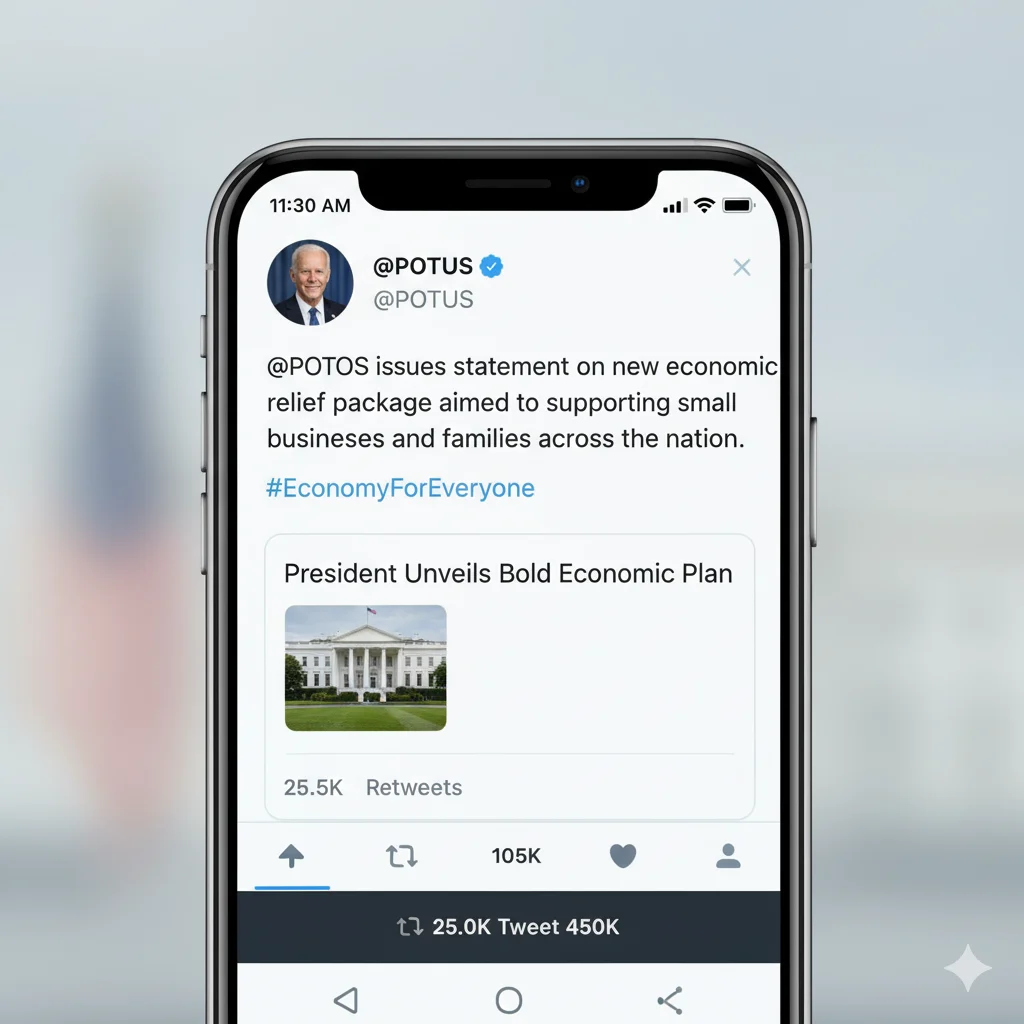
- 21st century: It gained new life on social media when @POTUS became the official Twitter handle for the U.S. president in 2015.
📊 Fun Fact: “POTUS” entered mainstream pop culture through TV shows like The West Wing and House of Cards, where characters casually referred to the president as “POTUS.”
🌐 POTUS Meaning in Different Contexts
📰 In News and Media
“POTUS” is commonly used by journalists, news anchors, and official press releases when referring to the current President of the United States.
Example: “POTUS will address the nation tonight at 8 PM.”
💬 On Social Media
It often appears in posts or tweets to tag or discuss presidential actions.
Example: “@POTUS just signed a new climate bill.”
🏢 In Government and Politics
Used in formal communication, memos, and briefings among U.S. officials.
Example: “Meeting scheduled with POTUS and the Cabinet at 3 PM.”
| Platform / Context | Meaning of POTUS | Formality Level |
| News Headlines | Refers to the U.S. President | High |
| Twitter / Social Media | Tag or discussion about the president | Medium |
| Government Documents | Official designation | Very High |
💬 Examples of POTUS in Conversations
Example 1 (Newsroom):
Reporter 1: POTUS just landed in New York for the UN Summit.
Reporter 2: Got it — I’ll update the live blog.
Example 2 (Online):
Tweet: “Big move by @POTUS on student loan forgiveness today.”
Example 3 (Formal Setting):
“The Vice President will join POTUS for the economic roundtable.”
Example 4 (Pop Culture):
“In The West Wing, everyone referred to the president simply as POTUS — it became iconic.”
🔍 Similar or Related Terms
| Term | Full Form | Meaning / Usage |
| FLOTUS | First Lady of the United States | Refers to the president’s spouse. |
| SCOTUS | Supreme Court of the United States | Refers to the highest federal court. |
| VPOTUS | Vice President of the United States | Refers to the vice president. |
| PRES | President | Informal or shorthand version used in documents. |
These acronyms are part of U.S. political and government shorthand, often used in journalism and official briefings.
🧠 How to Use “POTUS” Correctly
✅ Do’s
- Use it when referring to the current U.S. president.
- Use it in formal, political, or journalistic contexts.
- Tag @POTUS when referring to the official presidential account online.
❌ Don’ts
- Don’t use it to refer to past presidents unless clarified (e.g., “former POTUS Barack Obama”).
- Don’t confuse it with “FLOTUS” or “SCOTUS.”
- Avoid using it humorously in serious political discussions.
⚠️ Common Mistakes or Misinterpretations
- Mistake: Thinking “POTUS” is a name or title.
→ Correction: It’s an acronym, not a formal title. - Mistake: Using “POTUS” for all world leaders.
→ Correction: It’s specific to the President of the United States only. - Mistake: Writing it as “Potus” or “potus.”
→ Correction: It’s always written in all caps (POTUS) as an acronym.
❓ FAQ Section
1. What does POTUS stand for?
POTUS means “President of the United States.” It’s an acronym used to refer to the sitting U.S. president in media, politics, and official communication.
2. Is POTUS a slang or official term?
POTUS isn’t slang — it’s an official acronym originally used for telegraphic and governmental shorthand.
3. What’s the difference between POTUS and FLOTUS?
POTUS refers to the President of the United States, while FLOTUS refers to the First Lady of the United States.
4. Who uses the @POTUS account?
The official @POTUS handle is managed by the White House and transferred to each new president after inauguration.
5. Can you call a former president “POTUS”?
Not usually. The correct phrasing is “former POTUS” or simply “former president.”
6. Where is POTUS most used?
You’ll find “POTUS” most often in news reports, political discussions, Twitter posts, and official government communications.
🏁 Conclusion
In short, POTUS stands for President of the United States — a historic acronym that evolved from old telegraph codes into a global term recognized by everyone.
Whether you see it on the news or social media, “POTUS” instantly identifies the leader of one of the most powerful nations in the world.
🇺🇸 Now that you know what POTUS means and how to use it correctly, you’ll never be puzzled again when it pops up in political headlines or online debates! Keep exploring our site for more clear explanations of popular acronyms and trending terms.

Jon McGregor is a language and word-meaning expert at Meanovia.com. He specializes in explaining complex words, phrases, and modern language trends in a clear, approachable style. His mission is to help readers quickly grasp the true meaning behind every term, making language learning and understanding effortless and engaging.