

Ever heard your favorite K-pop idol or a character in a Korean drama say “Oppa!” and wondered what it really means?
If you’ve spent time in K-drama or K-pop circles, chances are you’ve heard this word countless times — often shouted with affection, excitement, or even a little flirtation.
In this guide, we’ll break down everything you need to know about the meaning of “Oppa” — including its definition, origin, cultural context, real-life examples, and how to use it properly (so you don’t make an awkward mistake!).
💬 What Does “Oppa” Mean?
“Oppa” (오빠) is a Korean term used by women to refer to an older brother or older male friend, and it can also express affection toward a boyfriend or romantic partner.
It’s a Korean honorific, not a slang word — but its emotional tone changes depending on who says it and to whom.
🕰️ Origin and Popularity of “Oppa”
The word “Oppa” originates from the Korean language, where it literally means older brother when spoken by a female. It has existed in Korean family and social hierarchies for centuries, reflecting the country’s Confucian traditions of respect and age-based honorifics.
However, the global popularity of “Oppa” skyrocketed with the Hallyu Wave (Korean Wave) in the early 2000s. Songs like “Gangnam Style” by PSY (2012) — with the famous line “Oppa Gangnam Style” — introduced the word to international audiences.
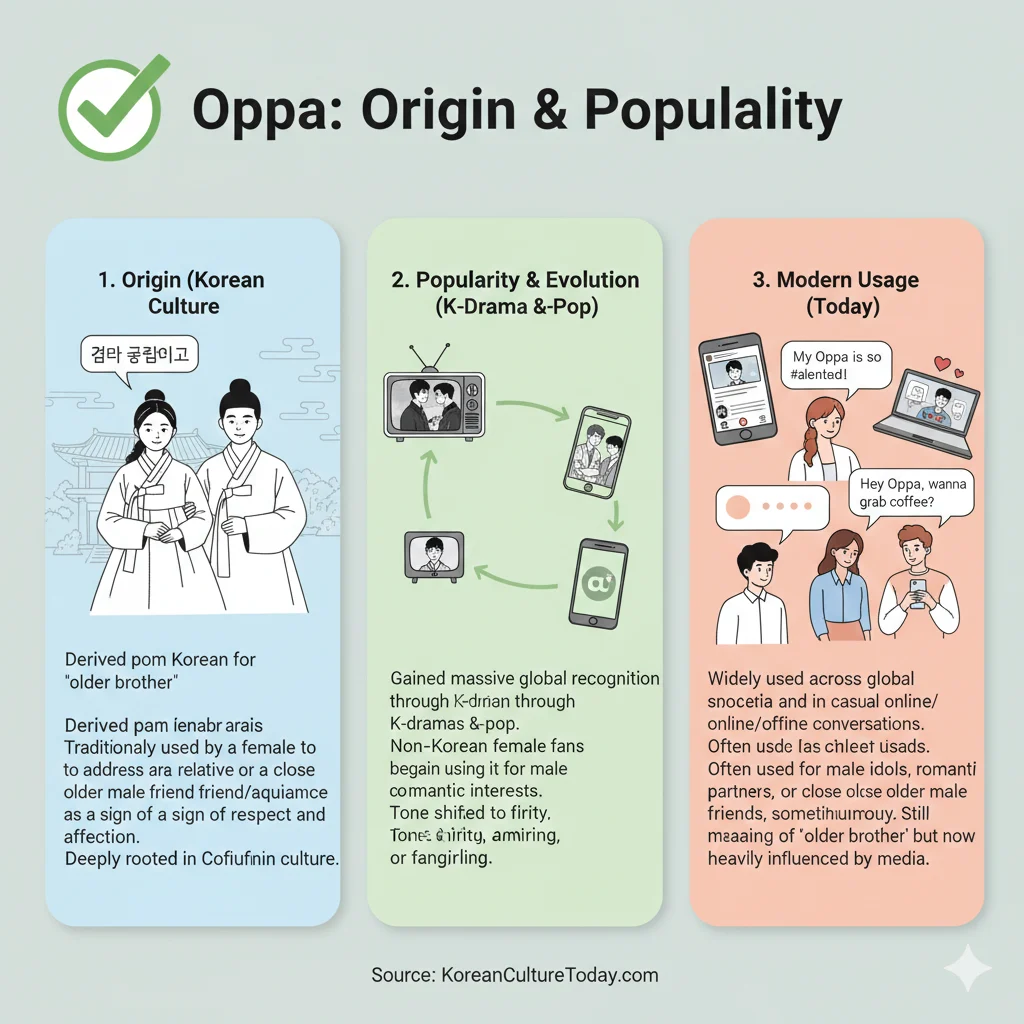
By the mid-2010s, with the global rise of K-pop groups like BTS, EXO, and Blackpink, “Oppa” became a familiar and beloved expression across social media platforms, fan forums, and memes.
🗓️ Timeline Highlight:
- Pre-2000s: Traditional family use
- 2000s: Popularized through K-dramas
- 2010s-2020s: Global spread via K-pop and online fandom culture
🌐 “Oppa” Meaning in Different Contexts
| Context | Meaning / Tone | Example Use |
| In Family / Friends | A younger sister calling her older brother or male friend | “Oppa, can you help me with homework?” |
| In Dating / Romantic Context | A girlfriend addressing her boyfriend lovingly | “Oppa, you’re so sweet!” |
| In K-Pop / Fandom | Fans referring to male idols affectionately | “Jungkook oppa looked amazing on stage!” |
| In Pop Culture / Internet Slang | Sometimes used playfully or flirtatiously, even by non-Koreans | “Omg, that actor is total oppa material!” |
💭 Examples of “Oppa” in Conversations
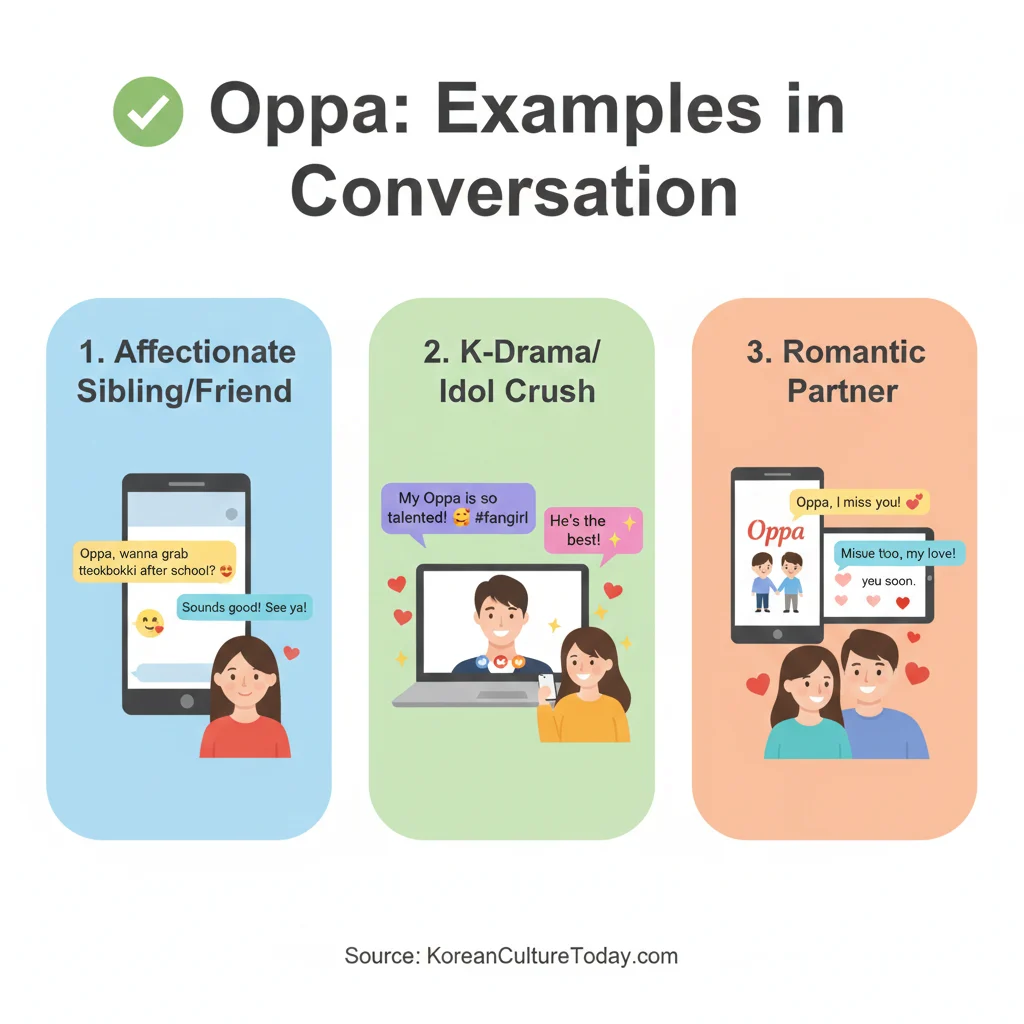
Here are some realistic examples showing how “Oppa” is used in different contexts:
Example 1 – Family:
👧 Younger sister: “Oppa, are you coming home for dinner?”
👦 Brother: “Yes, I’ll be there soon.”
Example 2 – Romantic:
💬 Girlfriend: “Oppa, you’re the best!”
💬 Boyfriend: “Haha, stop teasing me!”
Example 3 – Fan Culture:
🎤 Fan on Twitter/X: “Taehyung oppa just smiled, and I forgot how to breathe 😭💜”
🧩 Similar or Related Terms
Here are some related Korean honorifics you might encounter:
| Term | Who Uses It | Meaning |
| Hyung (형) | Male → older male | Older brother or male friend |
| Unnie (언니) | Female → older female | Older sister or close female friend |
| Noona (누나) | Male → older female | Older sister or close female friend |
| Sunbae (선배) | Junior → senior | Senior or mentor at work/school |
| Oppa (오빠) | Female → older male | Older brother, boyfriend, or affectionate male |
These terms are central to Korean communication — showing respect, affection, and social hierarchy.
✅ How to Use “Oppa” Correctly
Here’s how to use “Oppa” without sounding awkward or disrespectful:
Do’s:
- ✅ Use it if you’re female addressing an older male (by a few years).
- ✅ Use it affectionately with someone close — brother, boyfriend, or trusted friend.
- ✅ Say it naturally if speaking Korean — pronunciation is oh-ppa (오빠).
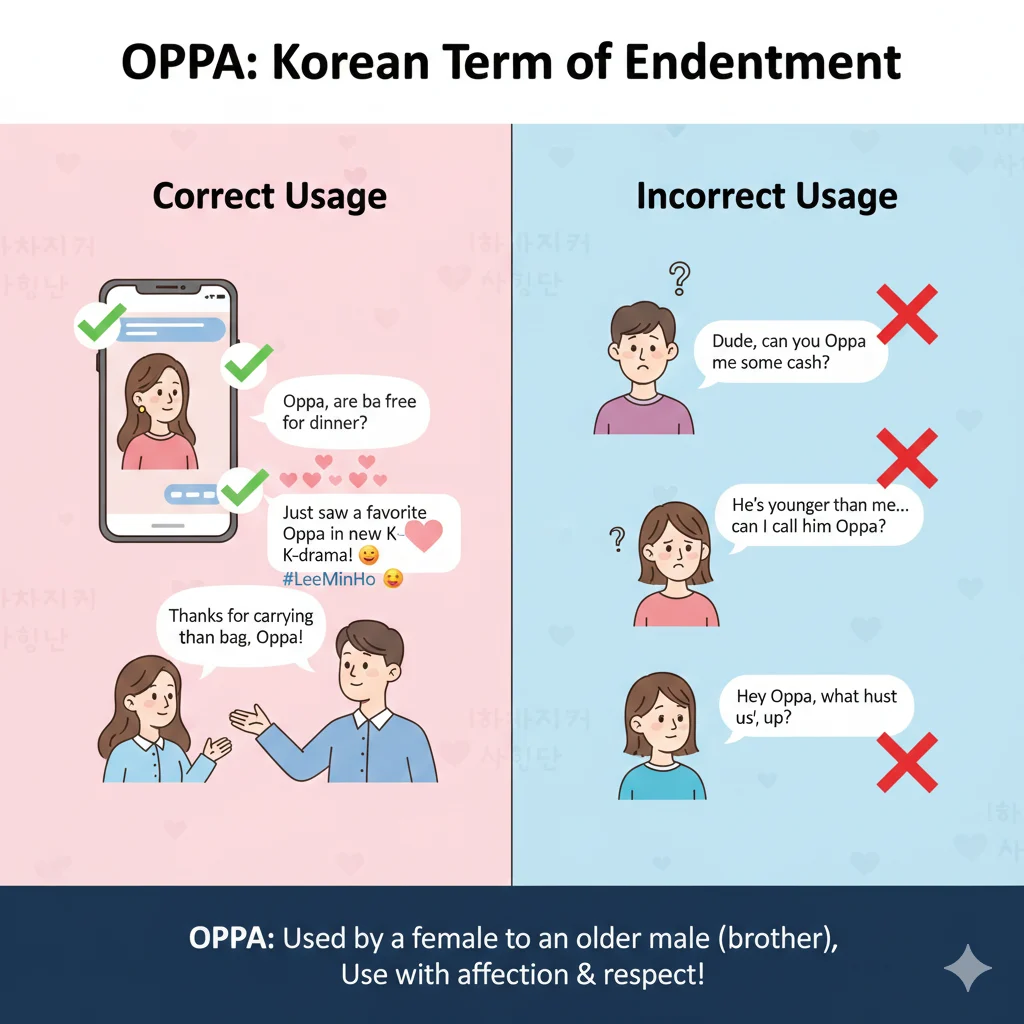
Don’ts:
- ❌ Don’t call every Korean man “Oppa” — it can sound flirty or awkward out of context.
- ❌ Avoid using it in formal situations or professional settings.
- ❌ Don’t use it if you’re male — the male equivalent is “Hyung.”
⚠️ Common Mistakes or Misinterpretations
Many non-Koreans misunderstand “Oppa” as just “boyfriend” — but that’s only one of its meanings.
- ❌ Myth: “Oppa” means boyfriend only.
✅ Truth: It means “older brother” or “older male” depending on context. - ❌ Mistake: Using “Oppa” to sound cute in any situation.
✅ Better: Use it only when the relationship fits — otherwise, it might come off as forced or inappropriate.
❓ FAQ
1. What does “Oppa” mean in Korean culture?
“Oppa” (오빠) means older brother when spoken by a woman, but it can also refer to a boyfriend or older male friend in an affectionate way.
2. Is “Oppa” slang or formal?
“Oppa” is not slang — it’s an honorific term rooted in Korean culture. However, its tone can be informal and affectionate in casual or romantic settings.
3. What’s the difference between “Oppa” and “Hyung”?
Both mean “older brother,” but “Oppa” is used by women, while “Hyung” is used by men.
4. How do you reply to someone calling you “Oppa”?
If you’re the older male, you can reply naturally or tease playfully — it’s often used affectionately, so the tone depends on your relationship.
5. Where is “Oppa” most used?
It’s commonly used in South Korea, especially in K-dramas, daily speech, and K-pop fandoms worldwide.
6. When should you not use “Oppa”?
Avoid using “Oppa” in workplaces, professional settings, or with strangers, as it implies closeness or affection.
🏁 Conclusion
Now you know that “Oppa” isn’t just a cute word from K-dramas — it’s a meaningful Korean honorific showing respect, affection, and closeness between a younger woman and an older man.
Whether you’re a K-drama lover, K-pop fan, or just learning Korean, understanding how to use “Oppa” correctly helps you connect more authentically with Korean culture.
💬 Now that you know what “Oppa” means, you’ll never be confused again! Keep exploring our site for more Korean slang and trending cultural terms.

Evie Wyld is a word-meaning specialist at Meanovia.com. She simplifies complex words, phrases, and language trends, helping readers quickly grasp the exact meaning behind every term in a clear and approachable way.