
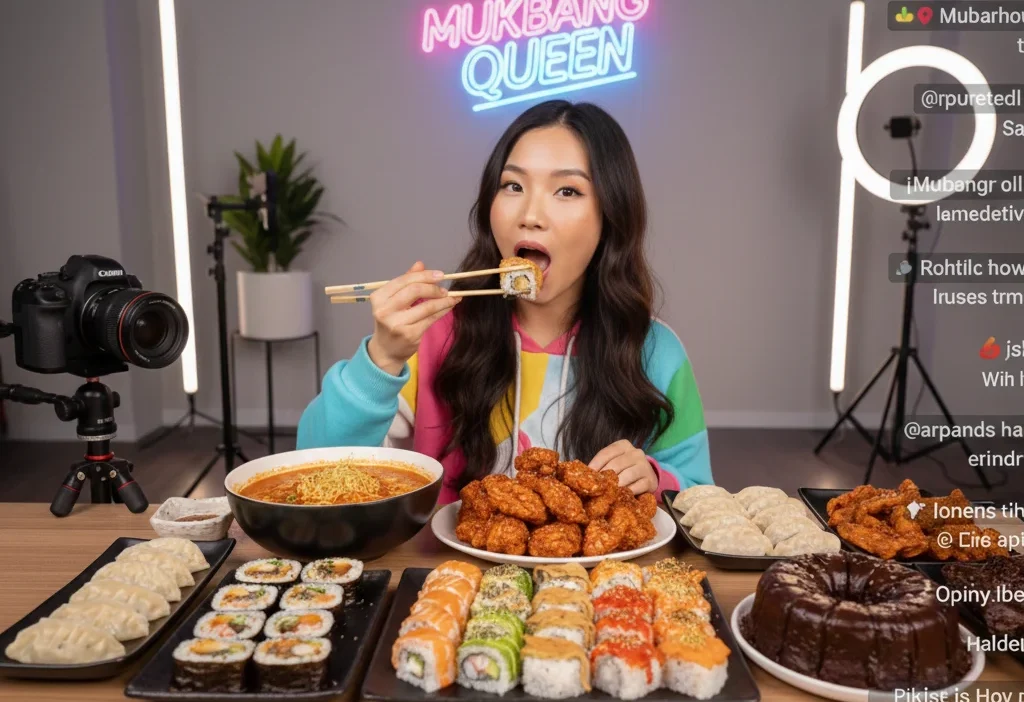
Ever scrolled through YouTube or TikTok and seen someone eating massive amounts of food while chatting with viewers? If so, you’ve stumbled upon a mukbang.
The word “mukbang” has become a viral internet phenomenon — blending food, entertainment, and connection into one unique format.
In this guide, we’ll cover:
- The meaning of “mukbang”
- Its Korean origin and global popularity
- How it’s used across YouTube, TikTok, and live streaming platforms
- Real-life examples and related terms
- FAQs about this viral eating trend
🥢 What Does Mukbang Mean?
“Mukbang” (먹방) is a Korean word that combines “muk-da” (to eat) and “bang-song” (broadcast).
In short, mukbang means “eating broadcast.”
It refers to videos or livestreams where a host eats large quantities of food while interacting with their audience — often on platforms like YouTube, Twitch, or TikTok.
📈 Origin and Popularity of Mukbang
Mukbang originated in South Korea around 2010, when live-streaming platforms like AfreecaTV became popular.
Streamers began filming themselves eating big meals to connect with lonely viewers who wanted the feeling of sharing a meal virtually.
By the mid-2010s, mukbang had gone global — thanks to platforms like YouTube. Influencers such as Nikocado Avocado and Stephanie Soo helped shape it into a worldwide entertainment genre.
Timeline Snapshot:
- 2010: Mukbang emerges in South Korea.
- 2014–2016: Goes viral internationally on YouTube.
- 2020s: Adapts into ASMR and short-form TikTok videos.
Today, mukbangs are a mix of food challenges, storytelling, and sensory entertainment.
🍱 Mukbang Meaning in Different Contexts
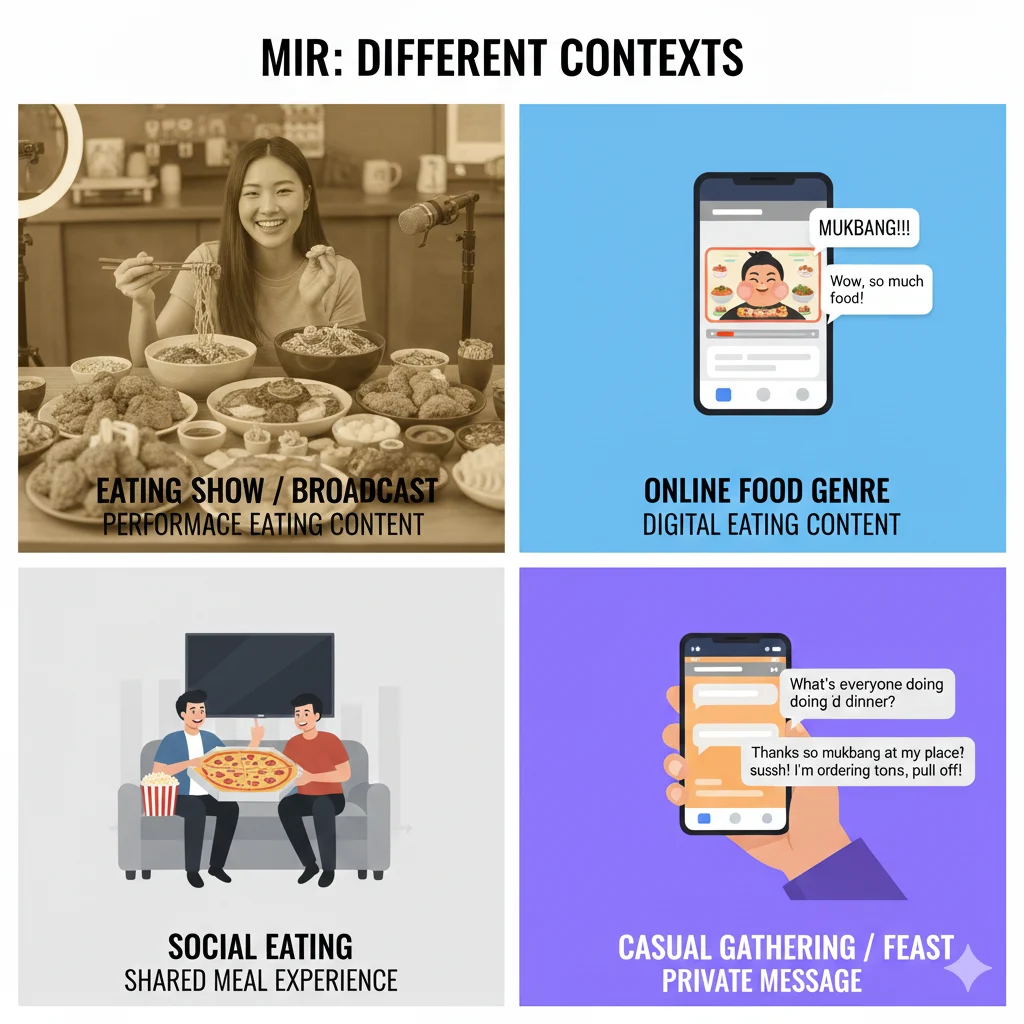
1. On YouTube
Mukbangs are long-form videos where creators eat elaborate meals — seafood boils, spicy noodles, or fast-food spreads — while sharing personal stories or engaging with fans.
👉 Tone: Relaxed, intimate, and often ASMR-focused.
2. On TikTok
Short-form “mini mukbangs” show fast-paced bites, close-ups, and exaggerated food sounds.
👉 Tone: Fun, dramatic, and visual — meant for quick entertainment.
3. On Live Streaming Platforms
In real-time mukbangs, hosts eat while chatting directly with viewers through comments.
👉 Tone: Interactive and community-driven.
| Platform | Typical Length | Tone | Interaction Style |
| YouTube | 10–60 mins | Relaxed, story-driven | Comment section |
| TikTok | 15–60 secs | Visual, dramatic | Quick reactions |
| Twitch / AfreecaTV | 1–2 hrs | Interactive | Live chat |
🍔 Examples of Mukbang in Conversations
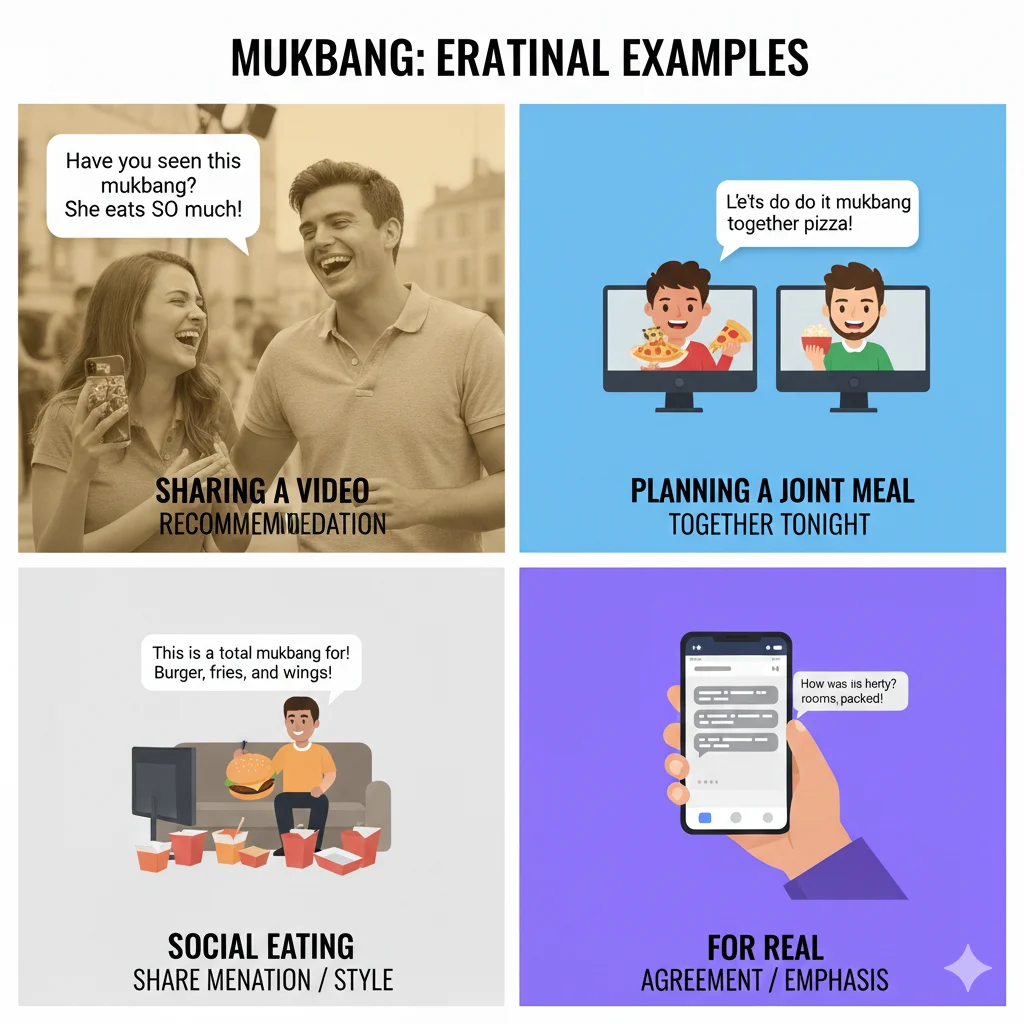
Example 1
Friend 1: “I’m starving!”
Friend 2: “Let’s do a mini mukbang and try all the new snacks on camera!”
Example 2
Viewer comment: “I love watching your mukbangs — they make me feel like I’m eating with you!”
Example 3 (formal context)
“The influencer’s mukbang video gained millions of views, making it a viral marketing tool for food brands.”
🔍 Similar or Related Terms
| Term | Meaning | Context |
| ASMR | Autonomous Sensory Meridian Response — relaxing sound-based content | Often combined with mukbang |
| Food Challenge | Eating competition or large-portion challenge | Similar visual appeal |
| Eatcast | A casual live eating chat | Emerging subgenre |
| Vlog | Video blog or personal diary-style video | Mukbangs often include vlog elements |
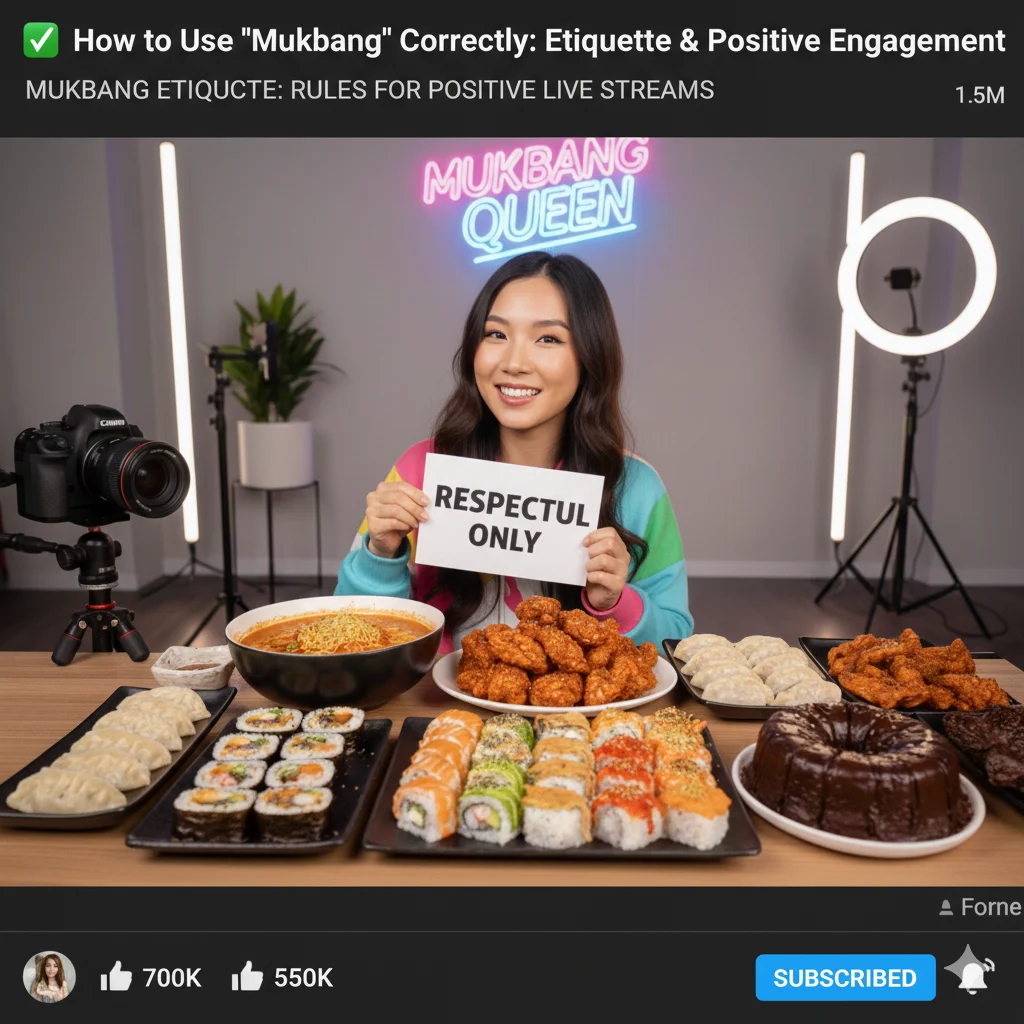
✅ How to Use “Mukbang” Correctly
Do’s:
- ✅ Use “mukbang” when referring to eating videos or streams.
- ✅ Use it casually in social media, content discussions, or pop culture.
- ✅ Appreciate its cultural roots — it began in South Korea.
Don’ts:
- ❌ Don’t confuse it with food reviews or cooking videos — mukbang focuses on eating, not cooking.
- ❌ Avoid using it in unrelated contexts like texting (“Let’s mukbang” only makes sense if you’re eating together on camera).
⚠️ Common Mistakes or Misinterpretations
- Mistake 1: Thinking “mukbang” means overeating.
➤ While some creators eat large amounts, the original intent was social connection, not gluttony. - Mistake 2: Using it to describe any food content.
➤ A true mukbang includes live or recorded eating and interaction with the audience. - Mistake 3: Ignoring its cultural context.
➤ Mukbang is part of Korean internet culture and reflects communal dining traditions.
❓ FAQ Section
1. What does “mukbang” mean in English?
Mukbang literally means “eating broadcast” — videos where hosts eat while interacting with their audience.
2. Is “mukbang” slang or an official word?
It began as Korean internet slang but is now widely recognized and included in many online dictionaries.
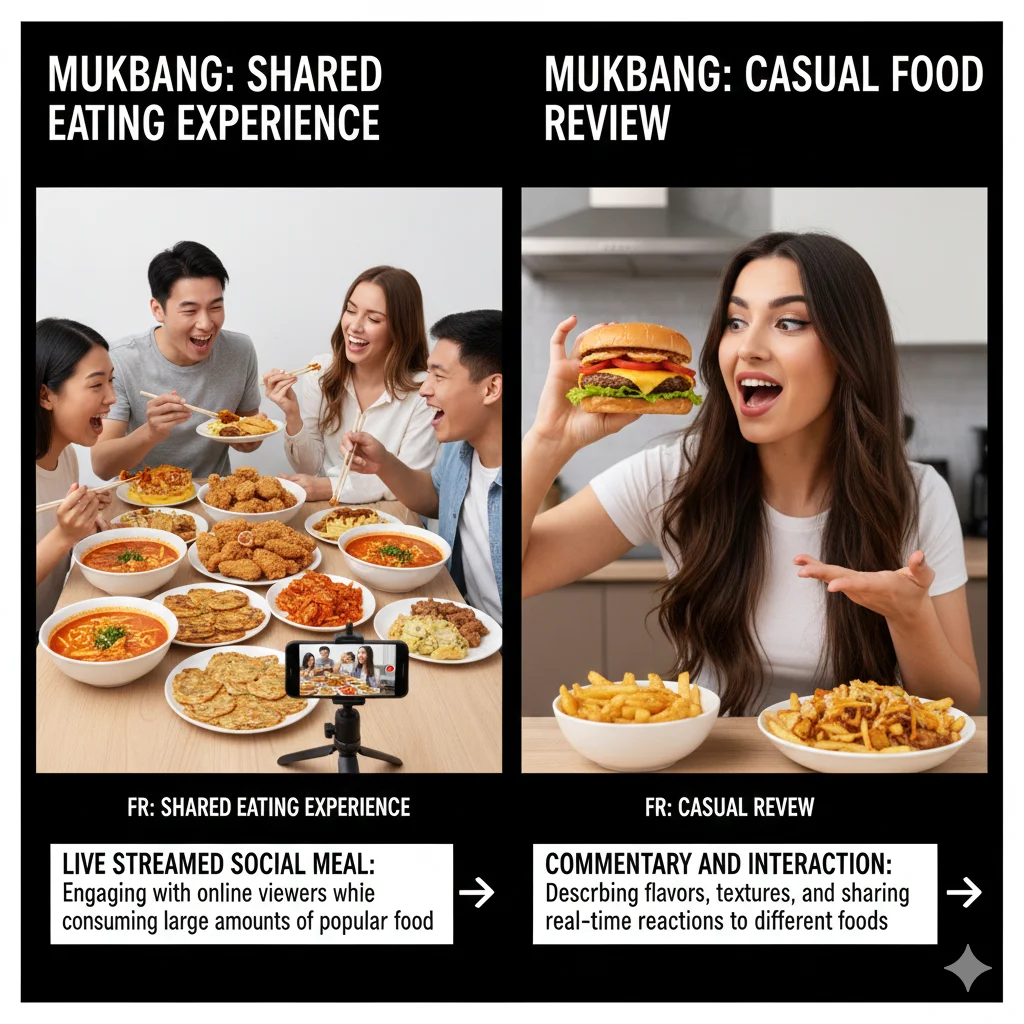
3. What’s the difference between a mukbang and a food review?
A food review focuses on taste and critique, while a mukbang emphasizes the eating experience and viewer connection.
4. How do you pronounce “mukbang”?
It’s pronounced “mook-bahng” (closer to the Korean 먹방 pronunciation).
5. Where is mukbang most popular?
Mukbang content thrives on YouTube, TikTok, and AfreecaTV, with creators worldwide adapting the trend.
6. Is mukbang healthy?
Not always — some videos involve overeating, but many creators now promote balanced meals or mindful eating versions of mukbangs.
🧭 Conclusion
So, what does “mukbang” really mean?
At its core, mukbang is about connection, culture, and comfort — sharing a virtual meal that feels social, satisfying, and entertaining.
From Korean livestreams to global TikTok trends, mukbangs have evolved into a symbol of how food brings people together, even through a screen.
🍜 Now that you know what mukbang means, you’ll never scroll past one without understanding its story! Keep exploring our site for more viral internet terms and cultural trends.

Evie Wyld is a word-meaning specialist at Meanovia.com. She simplifies complex words, phrases, and language trends, helping readers quickly grasp the exact meaning behind every term in a clear and approachable way.