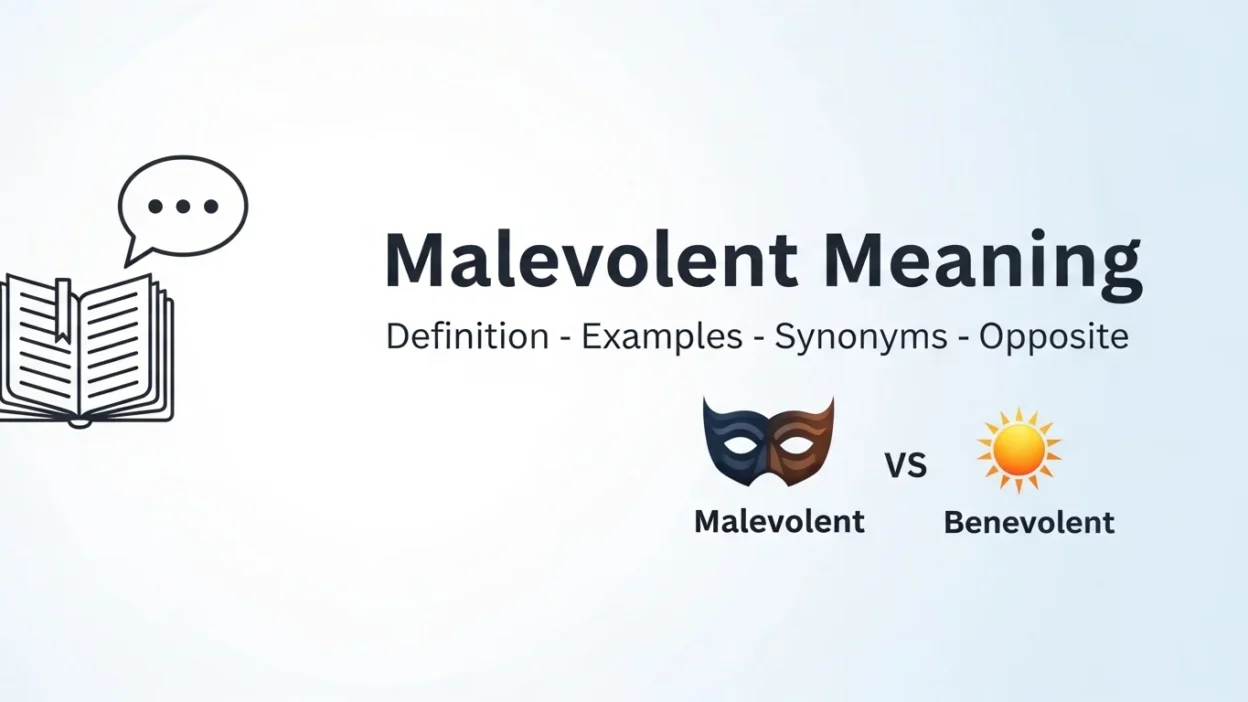
If you have ever watched a movie villain smile while doing something harmful, you have already seen the idea of malevolent in action. People search malevolent meaning when they meet this word in a story, in a news headline, or in a school lesson and they want a clear answer: Is malevolent just “bad,” or is it something more?
Malevolent means having evil intentions or wanting to harm someone. It describes a person, feeling, plan, or action that is not only bad, but harmful on purpose.
Example:
- “He gave a malevolent smile before trying to ruin her reputation.”
Here’s the key: malevolent is not just “unpleasant.” It is a strong word. It describes a person, action, or intention that has a wish to harm or a desire to do evil.
Malevolent Meaning in Simple English
Malevolent (adjective)
Malevolent means:
- evil-minded
- harmful
- wishing bad things for others
- wanting to cause pain, trouble, or damage
A quick way to remember:
- Malevolent = bad + intention to harm
It’s a strong word. You do not use it for small rude behavior like cutting in line. You use it for behavior that feels cruel, harmful, or evil.
Malevolent Definition (Easy, Clear)
Malevolent definition:
A person or thing is malevolent if it shows hostility and wants to cause harm.
You can use the word for:
- A person: “a malevolent leader”
- A look or smile: “a malevolent grin”
- A plan: “a malevolent plan”
- An intention: “malevolent intent”
- A force or spirit in stories: “a malevolent spirit”
How to Pronounce Malevolent (US & UK)
Simple pronunciation (easy)
muh-LEV-uh-lent
Break it like this:
- ma (soft “muh”)
- LE (strong “lev”)
- vo (uh)
- lent (lent)
Many people say it slightly differently, but this guide version is perfect for everyday use.
What Does Malevolent Mean? (Deeper Meaning)
Sometimes people think malevolent means only “angry” or “not nice.” But the deeper idea is harmful intention.
Malevolent is about “intent”
When something is malevolent, it often includes:
- planning harm
- enjoying harm
- wishing harm
- choosing harm
That is why malevolent is common in:
- stories about villains
- serious news topics
- psychology and behavior discussions
- law and ethics conversations
Malevolent Meaning in a Real-Life Way (Relatable)
Imagine you have two classmates:
- One classmate is rude sometimes because they are stressed.
- Another classmate spreads lies on purpose to destroy someone’s friendships.
The first behavior is unpleasant or unkind.
The second behavior is closer to malevolent because it has harmful intent.
So if you want to describe evil intention, malevolent fits.
Malevolent Meaning for Kids (Very Simple)
If you are explaining malevolent meaning for kids, use this:
Malevolent means “wanting to hurt someone on purpose.”
It is like a bully who enjoys making others sad.
Kid-friendly examples
- “The malevolent character wanted to harm the hero.”
- “A malevolent plan is a plan to cause trouble.”
Kid-friendly opposite
- Benevolent = kind and helpful
- Malevolent = harmful and cruel
Malevolent and Examples (10 Easy Sentences)
Here are malevolent meaning and examples you can use in writing:
- The villain had a malevolent smile that scared everyone.
- She felt a malevolent desire to ruin his success.
- His malevolent rumors damaged her reputation.
- The story described a malevolent spirit in the old house.
- A malevolent leader can create fear and suffering.
- Their malevolent plan failed because people noticed the lies.
- He looked at them with malevolent eyes.
- The hacker’s actions were malevolent, not accidental.
- The film showed a malevolent force controlling the town.
- The teacher said bullying is a form of malevolent behavior.
How to Use “Malevolent” Correctly
Common patterns
- malevolent intent (very common)
- malevolent behavior
- malevolent actions
- malevolent force
- malevolent smile / grin
- malevolent presence
- malevolent nature
Tone: formal and serious
“Malevolent” is more formal than words like “mean” or “rude.”
It fits well in:
- essays
- stories
- news-style writing
- serious conversations
Malevolent Intent Meaning
When people search “malevolent intent,” they mean:
Malevolent intent = a desire to cause harm on purpose.
Example:
- “The investigation found malevolent intent behind the attack.”
This phrase is powerful because it explains not only what happened, but why it happened.
Malevolent Spirit Meaning (Stories & Religion)
In horror stories, fantasy novels, or religious conversations, you may see:
malevolent spirit = a spirit believed to be harmful, evil, or dangerous.
Important note: In real life, people may use this phrase as a belief or a metaphor. In fiction, it’s used to create fear.
Malevolent Pleasure Meaning (Rare but Interesting)
You might see “malevolent pleasure” in advanced writing. It means:
malevolent pleasure = enjoyment that comes from seeing someone else suffer.
Example:
- “He spoke with malevolent pleasure as he watched them fail.”
This is a serious phrase, often used in psychological or literary writing.
Malevolent Root Word (Easy Explanation)
Many learners also search “malevolent root word.”
A simple way to understand:
- male- often means bad or evil
- -volent relates to wishing / willing
So malevolent roughly points to:
wishing bad things.
This helps you remember the meaning quickly.
Malevolence Meaning (Noun Form)
People also search “definition for malevolence” and “malevolence used in a sentence.”
Malevolence (noun)
Malevolence means:
- the state of being malevolent
- ill will
- a desire to harm others
Examples:
- “His malevolence was clear in the way he spoke.”
- “The character’s malevolence grew stronger with power.”
Non-Malevolent Meaning (and Non Malevolent Meaning)
Many people search:
- “non-malevolent meaning”
- “non malevolent meaning”
Non-malevolent means:
- not malevolent
- not intended to harm
- without evil intent
Example:
- “His comment was non-malevolent; it was a misunderstanding.”
This phrase is common in formal writing when someone wants to clarify:
“Yes, something happened—but it was not done to harm.”
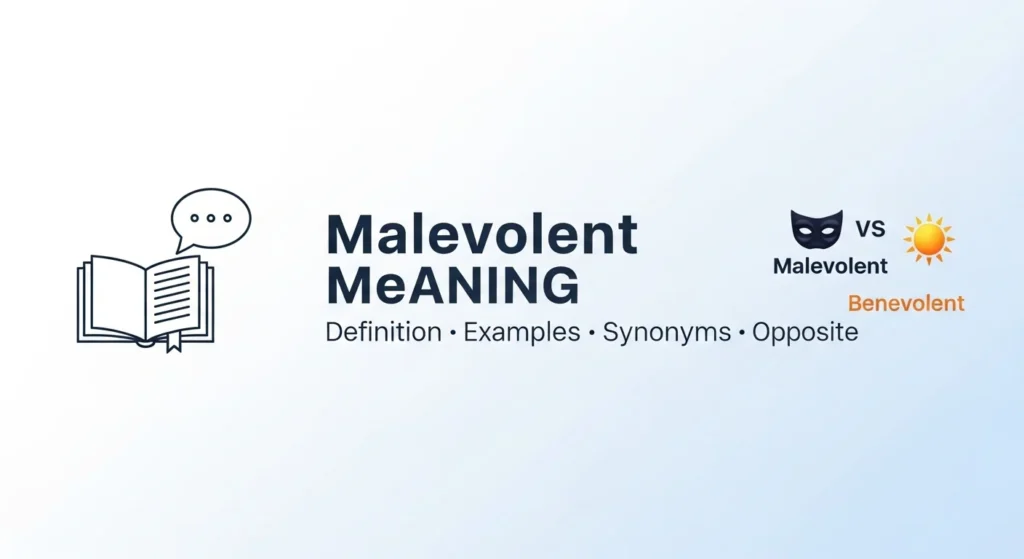
Benevolent and Malevolent Meaning
This is one of the biggest related queries:
- benevolent and malevolent meaning
- benevolent vs malevolent meaning
- difference between benevolent and malevolent
Let’s make it super clear.
Benevolent Meaning
Benevolent means kind, helpful, and wanting good for others.
Examples:
- “A benevolent teacher supports students.”
- “A benevolent person helps without expecting rewards.”
Malevolent Meaning
Malevolent means cruel, harmful, and wanting bad for others.
Examples:
- “A malevolent person enjoys causing pain.”
- “A malevolent plan is designed to hurt someone.”
Benevolent vs Malevolent
1) Intention
- Benevolent: wants to help
- Malevolent: wants to harm
2) Feelings toward others
- Benevolent: goodwill
- Malevolent: ill will
3) Common use
- Benevolent: charities, kindness, leadership
- Malevolent: villains, cruelty, harmful acts
4) Impact
- Benevolent: comfort, growth, safety
- Malevolent: fear, damage, pain
Easy memory trick
- Bene sounds like benefit (good)
- Male in this word signals bad intent
Difference Between Benevolent and Malevolent
| Feature | Benevolent | Malevolent |
|---|---|---|
| Intention | Good | Harmful |
| Nature | Kind, helpful | Cruel, evil-minded |
| Result | Support, care | Damage, suffering |
| Example | helping others | harming on purpose |
Malevolent vs Malicious Meaning (Common Confusion)
People also search:
- “difference between malevolent and malicious”
- “difference between malicious and malevolent”
Both are negative, but not always the same.
Malicious Meaning (Quick)
Malicious means:
- intentionally harmful, often with spite
- sometimes focused on causing damage or revenge
Example:
- “He made a malicious comment to embarrass her.”
- “Malicious software is designed to harm computers.”
Malevolent Meaning
Malevolent means:
- more “evil” in nature
- suggests a deeper desire to harm, sometimes long-term
- common in literature and serious descriptions
Example:
- “A malevolent ruler enjoyed hurting people.”
Malevolent vs Malicious
Malevolent = evil intention (deep, character-based)
- often describes a person’s nature or a force
- can feel “villain-like”
- broader and more dramatic
Malicious = harmful intention (specific, action-based)
- often describes actions, comments, or attacks
- can be legal/technical (malicious intent, malicious prosecution, malware)
Easy tip:
If you are talking about a person’s overall nature, “malevolent” fits well.
If you are talking about a specific harmful act, “malicious” often fits better.
Examples: Malevolent vs Malicious
- Malevolent: “The villain was malevolent and enjoyed suffering.”
- Malicious: “The email was malicious and tried to steal passwords.”
- Malevolent: “A malevolent spirit haunted the village.”
- Malicious: “A malicious rumor spread quickly.”
Malevolent Synonyms and Antonyms
Many users search:
- “malevolent meaning synonyms”
- “malevolent meaning synonyms and antonyms”
Synonyms of Malevolent (with small notes)
- evil (general)
- wicked (moral badness)
- spiteful (hurtful because of anger)
- malicious (harmful on purpose)
- cruel (enjoying pain)
- vile (very disgusting + hateful)
- hostile (unfriendly, aggressive)
- venomous (very bitter, poisonous words)
- sinister (suggesting evil, mysterious)
- malevolent (strong: wishes harm)
Antonyms of Malevolent
- benevolent
- kind
- good-natured
- friendly
- compassionate
- harmless
Malevolent Meaning in One Word
If someone asks “malevolent meaning in one word,” the closest simple answers are:
- evil
- harmful
- cruel
But remember: malevolent usually implies evil intent, not just bad behavior.
Malevolent Meaning in English
If your readers want “malevolent meaning in English,” use this clean definition:
Malevolent (adjective) means wishing to do evil or wanting to harm others.
Example:
- “He had a malevolent look in his eyes.”
Malevolent Meaning in Urdu (آسان معنی)
Malevolent meaning in Urdu:
- بد نیت
- بدخواہ
- شر پسند
- دوسروں کا برا چاہنے والا
- نقصان پہنچانے کی نیت رکھنے والا
Example (Urdu + English style):
- “وہ بد نیت تھا، اسی لیے لوگوں کو نقصان پہنچانے کی کوشش کرتا تھا۔”
Malevolent Meaning in Hindi (सरल अर्थ)
Malevolent meaning in Hindi:
- दुष्ट
- बुरी नीयत वाला
- दुर्भावनापूर्ण
- हानि पहुँचाने वाला
- बुरा चाहने वाला
Example:
- “उसकी दुष्ट नीयत सबको दिखाई दे रही थी।”
Malevolent Meaning in Bengali (সহজ অর্থ)
Malevolent meaning in Bengali:
- দুষ্ট
- অশুভ মনোভাবযুক্ত
- ক্ষতি করার ইচ্ছা আছে এমন
- অকল্যাণকামী
Example:
- “তার দুষ্ট মনোভাব সবার জন্য বিপদ ডেকে আনল।”
Malevolent Meaning in Tamil (எளிய அர்த்தம்)
Malevolent meaning in Tamil:
- தீய நோக்கம் கொண்ட
- தீய மனப்பான்மை உடைய
- கேடு செய்ய விரும்பும்
- தீயவர்
Example:
- “அவன் தீய நோக்கம் கொண்டவன் போல நடந்தான்.”
Malevolent Meaning in Telugu (సులభ అర్థం)
Malevolent meaning in Telugu:
- దుష్ట ఉద్దేశ్యం ఉన్న
- చెడును కోరుకునే
- హాని చేయాలనుకునే
- కీడు చేసే స్వభావం
Example:
- “ఆమెకు దుష్ట ఉద్దేశ్యం ఉందని అందరూ అనుకున్నారు.”
Malevolent Meaning in Malayalam (ലളിതമായ അർത്ഥം)
Malevolent meaning in Malayalam:
- ദുഷ്ട ഉദ്ദേശമുള്ള
- കേട് ചെയ്യാൻ ആഗ്രഹിക്കുന്ന
- ദുഷ്ട സ്വഭാവമുള്ള
- ഹാനി വരുത്താൻ ശ്രമിക്കുന്ന
Example:
- “അവന്റെ ദുഷ്ട ഉദ്ദേശം എല്ലാവർക്കും മനസ്സിലായി.”
Malevolent Meaning in Kannada (ಸರಳ ಅರ್ಥ)
Malevolent meaning in Kannada:
- ದುಷ್ಟ ಉದ್ದೇಶ ಹೊಂದಿರುವ
- ಹಾನಿ ಮಾಡಲು ಬಯಸುವ
- ಕೆಟ್ಟ ಮನಸ್ಸಿನ
- ದುರುದ್ದೇಶಪೂರ್ಣ
Example:
- “ಅವನ ದುಷ್ಟ ಉದ್ದೇಶ ಎಲ್ಲರಿಗೂ ಗೋಚರವಾಗಿತ್ತು.”
Malevolent Meaning in Marathi (सोप्या अर्थाने)
Malevolent meaning in Marathi:
- दुष्ट
- वाईट हेतू असलेला
- अपाय करण्याची इच्छा असलेला
- दुर्भावनायुक्त
Example:
- “त्याचा वाईट हेतू सर्वांना समजला.”
Malevolent Meaning in Farsi (فارسی معنی)
Malevolent meaning in Farsi:
- بدخواه
- بدنیت
- کینهتوز
- شرور
- آسیبرسان
Example:
- “او آدمی بدخواه است و قصد آسیب رساندن دارد.”
Note About Translations
These translations are common and easy. Different regions may use slightly different words, but the meaning stays the same: harmful intent.
Define Malevolent vs “Mean” vs “Evil” (Quick Guide)
A lot of learners use “malevolent” when they mean only “mean.” Here is the difference:
- Mean: rude, unkind (can be temporary)
- Evil: morally very bad (broad)
- Malevolent: evil intention + wants to harm (strong + specific)
Example:
- “He was mean today.” (small)
- “He is malevolent.” (serious and dangerous)
Sentences With Malevolent (More Practice)
Here are more “sentences with malevolent” style examples, good for school:
- The malevolent character tried to break the hero’s confidence.
- Her malevolent words made the room silent.
- The detective believed the crime was malevolent, not accidental.
- The bully showed malevolent pleasure when others cried.
- They felt a malevolent presence in the abandoned place.
- He made a malevolent plan to sabotage the project.
- The queen in the story was malevolent and power-hungry.
- His malevolent jokes crossed the line and became cruelty.
- The community stood together against malevolent actions.
- The author used “malevolent” to show deep hatred.
Why People Confuse “Malevolent” (Common Mistakes)
This section is important for ranking because users search many variations.
1) Using malevolent for small negativity
Mistake:
- “The weather is malevolent.” (too dramatic)
Better:
- “The weather is unpleasant.”
Use “malevolent” for intentional harm, not natural problems.
2) Confusing malevolent with malicious
Both are harmful, but:
- malevolent = evil nature / intention
- malicious = harmful action / spite
3) Spelling mistakes people type
Common misspellings:
- malevolant
- malevalent
- malevolence (noun confusion)
- malevolent def / malevolent define (search shortcuts)
4) Confusing malevolent with “benevolent”
They look similar but are opposites.
Malevolent vs Benevolent (More Examples)
To make it crystal clear, here are paired examples:
Benevolent examples
- A benevolent neighbor brings food when you are sick.
- A benevolent boss protects workers during hard times.
Malevolent examples
- A malevolent person spreads lies to destroy someone’s life.
- A malevolent group harms others for power.
“What Does Malevolent Mean in English?” (Short Answer Section)
If you want one clean line for students:
Malevolent means wanting to do harm or evil.
It describes cruel intentions, not just a bad mood.
Malevolence Used in a Sentence (Noun Examples)
Here are noun examples for “malevolence used in a sentence”:
- His malevolence shocked the entire community.
- The story shows the malevolence of the villain.
- She sensed malevolence behind his friendly words.
- The leader’s malevolence created fear in the city.
- They worked to stop the malevolence spreading online.
Malevolent Meaning and Examples (Short “Copy Block”)
If you want a quick paste section inside your article:
Malevolent meaning: having a desire to harm; showing evil intentions.
Examples: malevolent intent, malevolent grin, malevolent plan, malevolent spirit.
FAQs: Malevolent Meaning
1) What does malevolent mean?
Malevolent means having evil intentions or wanting to harm someone on purpose.
2) What is the meaning of malevolent in simple words?
It means bad and harmful on purpose.
3) Is malevolent the same as malicious?
Not always. Malevolent often describes an evil nature or deep harmful intent, while malicious often describes a specific harmful act done with spite.
4) What is the difference between benevolent and malevolent?
Benevolent means kind and helpful. Malevolent means cruel and wanting to harm.
5) What part of speech is malevolent?
Malevolent is an adjective.
6) What is malevolence?
Malevolence is the noun form. It means ill will or a desire to harm.
7) What does non-malevolent mean?
Non-malevolent means not intended to harm or without evil intent.
8) How do you use malevolent in a sentence?
Example: “He acted with malevolent intent to damage her career.”
9) What are synonyms of malevolent?
Common synonyms include evil, malicious, cruel, spiteful, wicked, hostile, sinister.
10) What are antonyms of malevolent?
Common antonyms include benevolent, kind, compassionate, friendly, harmless.
11) What does malevolent mean for kids?
For kids: Malevolent means wanting to hurt someone on purpose.
12) What is malevolent spirit meaning?
It means a spirit believed (especially in stories) to be harmful or evil.
Conclusion
The malevolent meaning is simple but strong: it describes evil intention—a desire to cause harm, pain, or trouble on purpose. This is why the word is used for villains, cruel plans, harmful actions, and sometimes scary forces in stories. If you remember one thing, remember this: malevolent is not just “bad,” it is “harmful with intent.”
If you want to write naturally, use common phrases like malevolent intent, malevolent behavior, and malevolent grin, and avoid using it for small everyday problems. And if you ever confuse it with its opposite, remember: benevolent helps, malevolent harms.

Jon McGregor is a language and word-meaning expert at Meanovia.com. He specializes in explaining complex words, phrases, and modern language trends in a clear, approachable style. His mission is to help readers quickly grasp the true meaning behind every term, making language learning and understanding effortless and engaging.