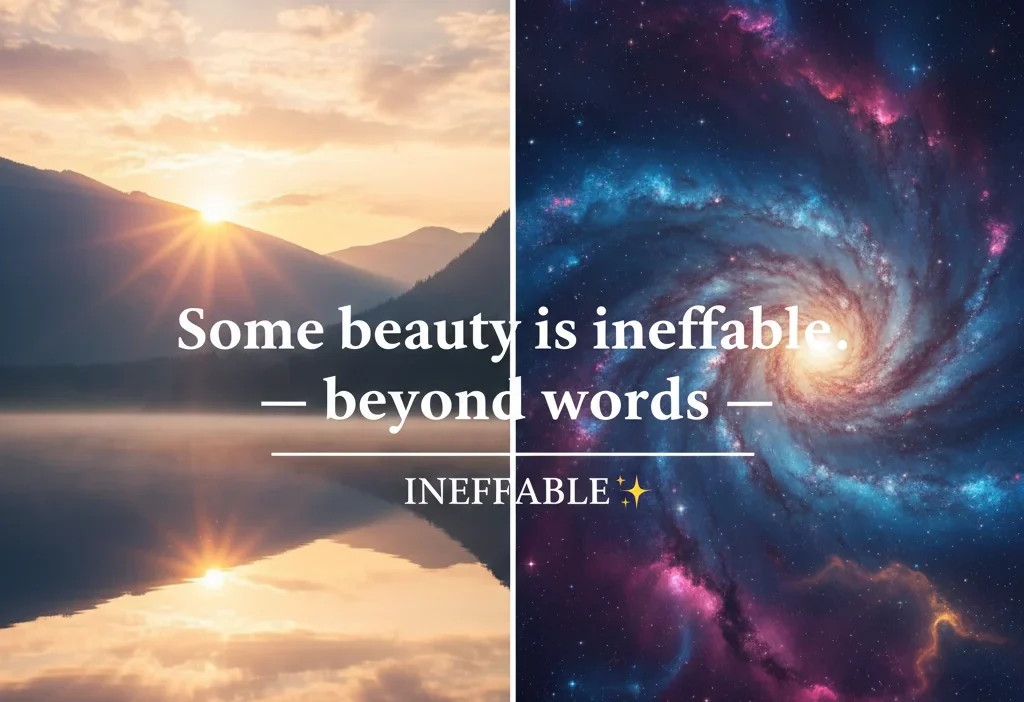
Ever struggled to find the right words to describe something truly beautiful, overwhelming, or divine? That feeling of being speechless or beyond expression — that’s what the word “ineffable” captures perfectly.
Ineffable means too great, powerful, or beautiful to be described in words.
People search for “ineffable meaning” when they come across the word in books, poems, songs, or deep conversations and want to understand it clearly. Ineffable is used to describe emotions, experiences, or qualities that go beyond language, such as deep love, spiritual moments, or overwhelming beauty.
Understanding this word helps readers grasp the emotional depth behind the text and use it correctly in their own writing or speech. Whether describing a life-changing experience, divine presence, or intense feeling, ineffable adds depth and intensity where ordinary words fall short, making communication more expressive and meaningful.
What Does Ineffable Mean?
“Ineffable” means something too great, extreme, or beautiful to be expressed or described in words.
It’s an adjective often used in literature, philosophy, and poetry to describe emotions, experiences, or qualities that transcend language — things you can feel but can’t quite explain.
✅ Type: Vocabulary word (adjective)
✅ Used in: Writing, conversation, and spiritual or emotional contexts
Origin and Popularity
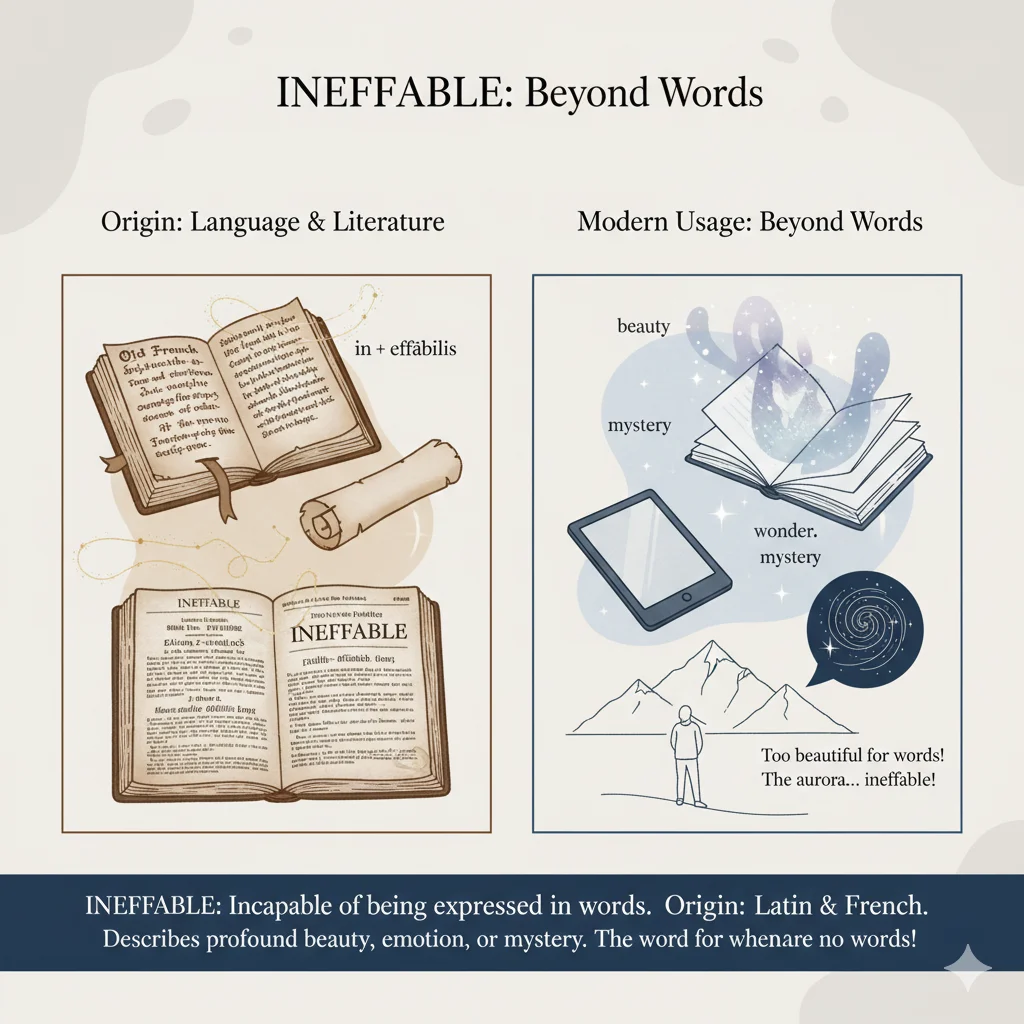
The term “ineffable” comes from the Latin word ineffabilis, meaning “not utterable” or “unspeakable.” It combines in- (not) + effari (to speak).
It dates back to the 14th century, originally used in religious and poetic writings to describe the divine or sacred — something beyond human comprehension or speech.
Over time, “ineffable” has become a timeless word, used to describe everything from breathtaking love to profound beauty and even grief.
🕰️ Timeline Snapshot:
- 1300s: First used in theological texts.
- 1800s: Adopted in romantic literature and poetry.
- 2000s–Today: Popular in spiritual writing and expressive media.
Ineffable Meaning in Different Contexts
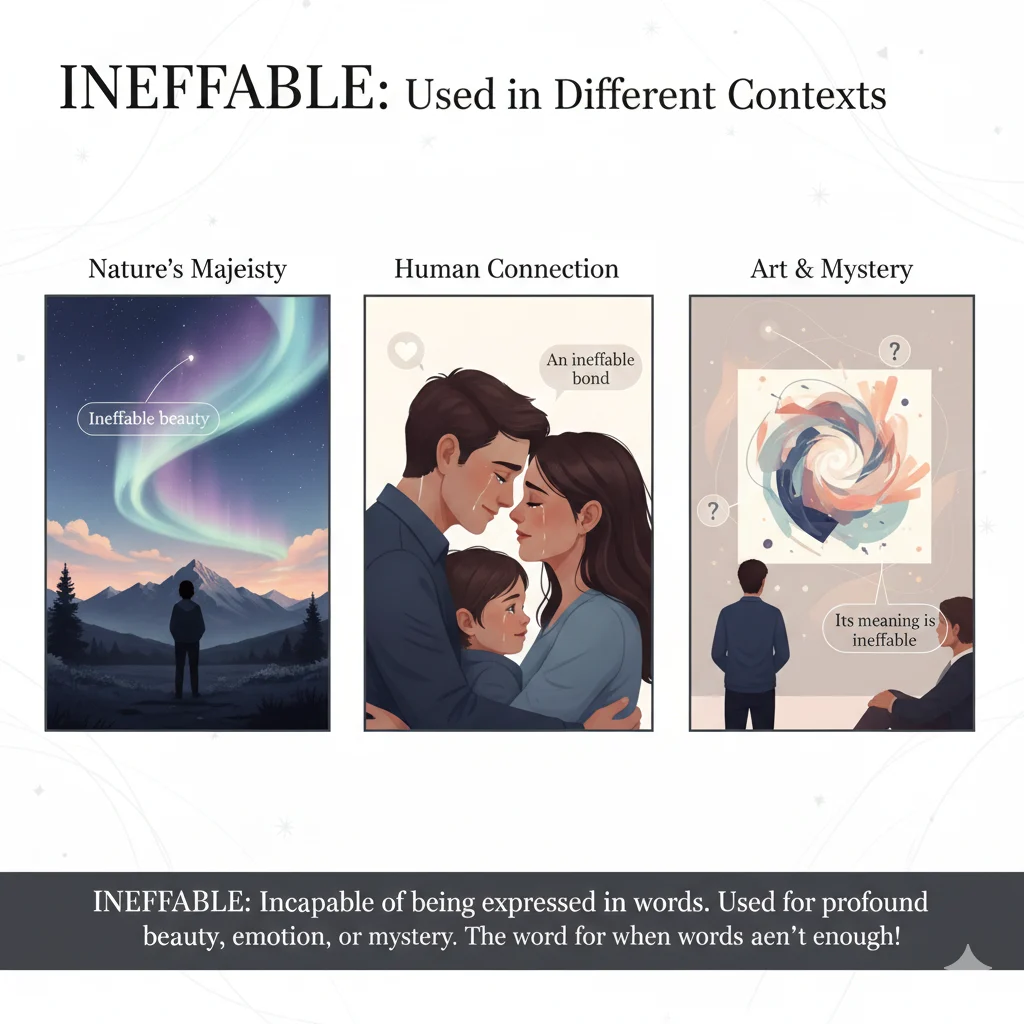
The word’s versatility allows it to fit in various contexts. Here’s how it’s used today:
1. In Literature and Poetry
Writers use ineffable to describe feelings or moments that words can’t capture.
“Her beauty had an ineffable quality, beyond the power of description.”
2. In Spiritual or Religious Contexts
Used to express the divine or sacred:
“The ineffable presence of God filled the temple.”
3. In Everyday Conversation
Although less common in casual speech, it can express deep emotion:
“The happiness I felt seeing my child was ineffable.”
4. In Philosophy and Art
Philosophers and artists use the term to discuss abstract or transcendent ideas.
“True art captures the ineffable essence of human emotion.”
| Context | Meaning | Example |
| Literature | Beyond words or description | “An ineffable sadness filled the air.” |
| Religion | Too sacred to express | “Ineffable mysteries of faith.” |
| Conversation | Deep emotion | “Her joy was ineffable.” |
| Art/Philosophy | Transcendent experience | “The ineffable beauty of creation.” |
Examples of Ineffable in Sentences
Here are a few examples to see “ineffable” in action:
💬 Examples:
- “The sunset over the mountains was of ineffable beauty.”
- “They shared an ineffable bond that no one else understood.”
- “There are ineffable truths that reason cannot grasp.”
- “The ineffable calm of the forest left her speechless.”
Similar or Related Terms
Here are some words and phrases that share a similar vibe or meaning to ineffable:
| Word | Meaning |
| Indescribable | Cannot be adequately described |
| Inexpressible | Too strong to be expressed |
| Unutterable | Too extreme to speak of |
| Transcendent | Beyond ordinary experience |
| Sublime | Awe-inspiring beauty or grandeur |
💡 Tip: You can often replace “ineffable” with these words when writing or speaking — but “ineffable” carries a more poetic and emotional tone.
How to Use Ineffable Correctly
Here’s how to make your language more expressive with “ineffable”:
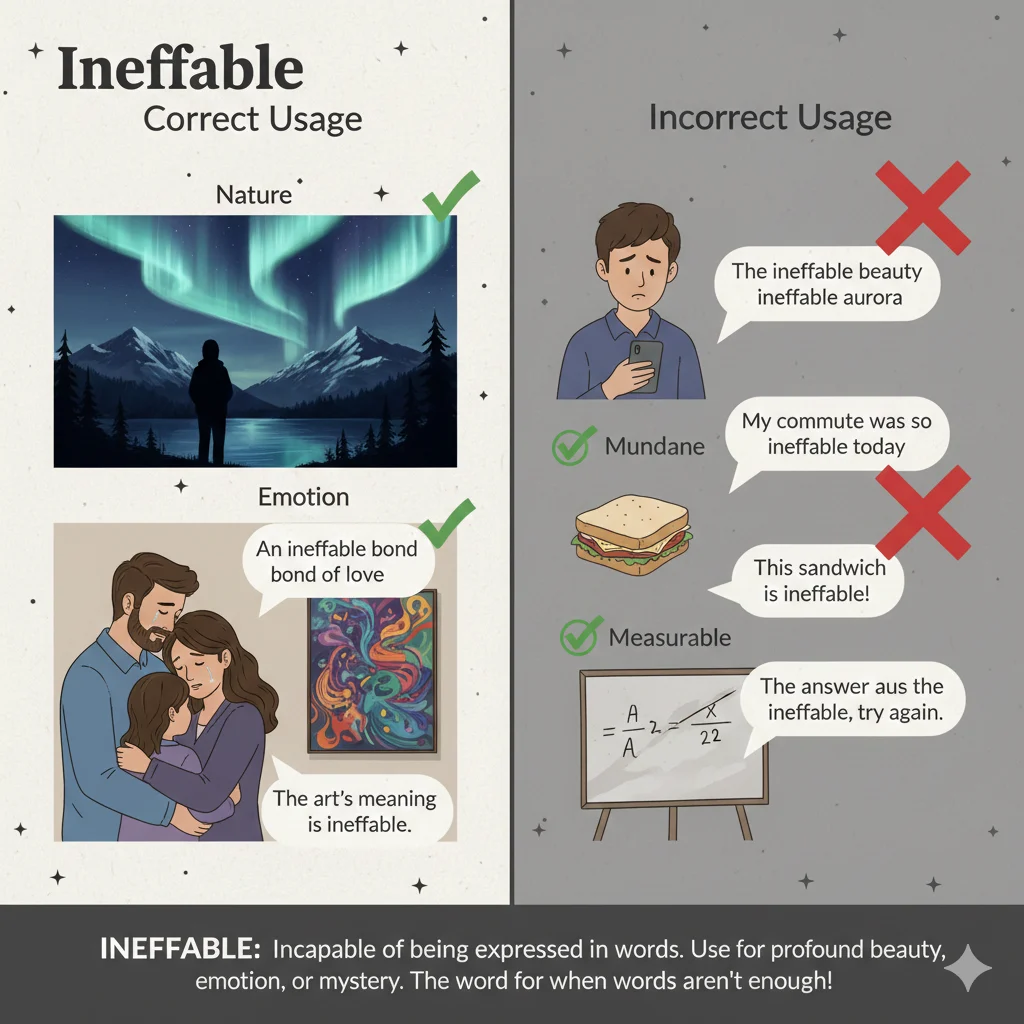
✅ Do:
- Use it to describe emotions, beauty, or spiritual experiences.
- Include it in writing to add depth and elegance.
❌ Don’t:
- Use it casually in everyday chat (e.g., “That sandwich was ineffable” doesn’t sound natural).
- Confuse it with “ineffective” — they’re totally different!
Common Mistakes or Misinterpretations
Many people mix up “ineffable” with similar-sounding words. Here’s what to watch for:
🚫 Mistake 1: Thinking it means “ineffective” or “unable.”
✔️ Correction: “Ineffable” is about being beyond expression, not lack of ability.
🚫 Mistake 2: Overusing it in simple situations.
✔️ Use it thoughtfully for powerful emotions or experiences — that’s when it shines.
FAQs About Ineffable
1. What does ineffable mean in simple terms?
It means something too amazing or emotional to describe in words — like a breathtaking view or a profound feeling.
2. Is ineffable a positive or negative word?
Usually positive, but it depends on context. It can describe ineffable joy or ineffable sadness — both deep emotions.
3. How do you pronounce ineffable?
It’s pronounced in-EF-uh-buhl (rhymes with “incredible”).
4. Is ineffable slang or formal?
It’s a formal literary word, not slang. You’ll see it in books, poetry, and thoughtful conversation.
5. Can you use ineffable in daily life?
Yes — but sparingly. Use it when ordinary words can’t capture what you feel.
6. What’s the difference between ineffable and indescribable?
“Ineffable” is more poetic and spiritual, while “indescribable” is broader and more casual.
Conclusion
The word “ineffable” beautifully captures the indescribable — those rare feelings, sights, or moments that go beyond what language can express. Rooted in centuries-old language, it remains one of the most elegant and timeless words in English.
Now that you know the ineffable meaning, try using it the next time words fall short — whether it’s describing a sunset, a deep connection, or an unforgettable moment.
✨ Keep exploring more word meanings and modern slang on our site to enrich your vocabulary!