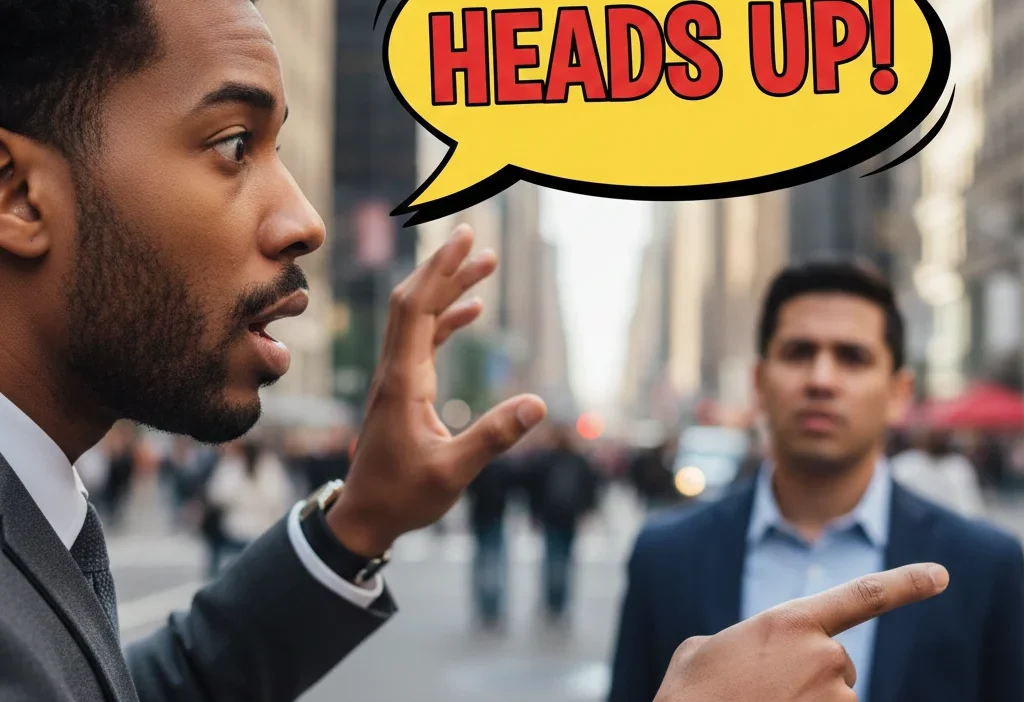
Have you ever heard someone say, “Just a heads up!” and wondered what it really means? 🤔 You’ve probably seen or heard this phrase everywhere — in text messages, work emails, or casual conversations
But what does “heads up” actually mean, and where did it come from?
In this guide, we’ll break it down clearly and simply. You’ll learn:
✅ The definition of “heads up”
📜 Its origin and popularity
💬 How it’s used across different platforms and settings
💡 Real-life examples and related expressions
🚫 Common mistakes to avoid
By the end, you’ll know how to use “heads up” naturally — whether in a friendly chat or a professional email.
💡 What Does Heads Up Mean?
“Heads up” means a warning or notice to prepare for something that’s about to happen.
It’s an idiomatic phrase used in everyday English to alert someone or draw attention to an upcoming event, change, or potential issue.
Example:
“Just a heads up — the meeting has been moved to 3 PM.”
It’s commonly used in texts, workplace communication, and casual talk to politely warn or inform someone.
🕰️ Origin and Popularity
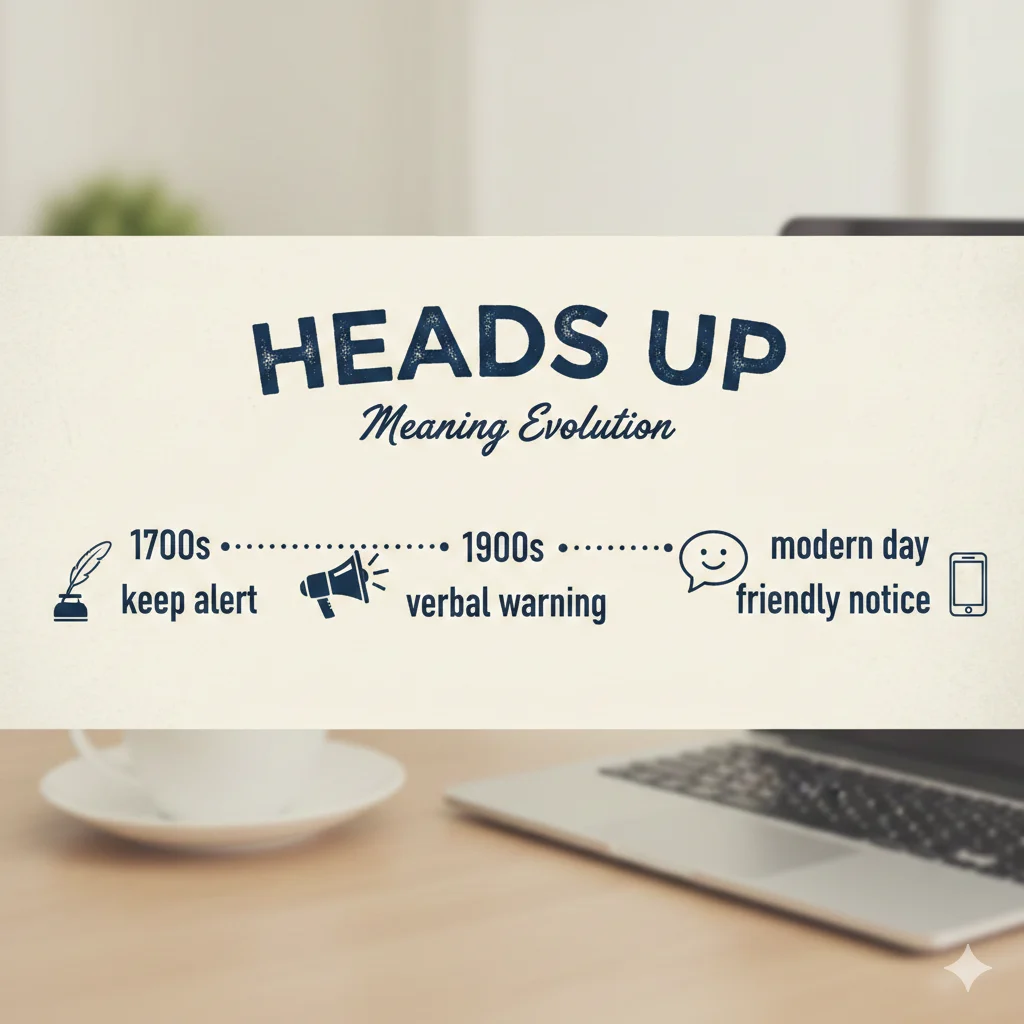
The phrase “heads up” first appeared in the 18th century, originally as a command meaning “keep your head up” — often used by soldiers or sailors as a call to stay alert.
By the 20th century, it evolved into a warning or alert expression, commonly used in sports and everyday speech. Baseball players would shout “heads up!” to warn others of a flying ball ⚾ — a usage that made its way into general English.
Today, it’s widely used across American and British English, both in spoken and digital communication.
🗣️ Heads Up Meaning in Different Contexts
💬 In Texting or Chat
In casual conversations, “heads up” means a friendly warning or reminder.
“Hey, just a heads up — Mom’s coming home early!”
It’s a polite and casual way to give someone notice before something happens.
💼 In Business or Formal Communication
In professional settings, it’s used to politely inform colleagues of upcoming updates or issues.
“Heads up — the client will join the call five minutes late.”
It shows consideration and helps prepare others for changes.
📱 On Social Media
Influencers or content creators might use “heads up” in captions or stories to alert followers.
“Heads up, everyone! Our new collection drops tomorrow!”
| Context | Meaning of ‘Heads Up’ | Tone |
| Texting | Friendly alert or reminder | Casual |
| Business | Polite notice or warning | Formal/Neutral |
| Social Media | Announcement or promo cue | Energetic/Informal |
💬 Examples of ‘Heads Up’ in Conversations
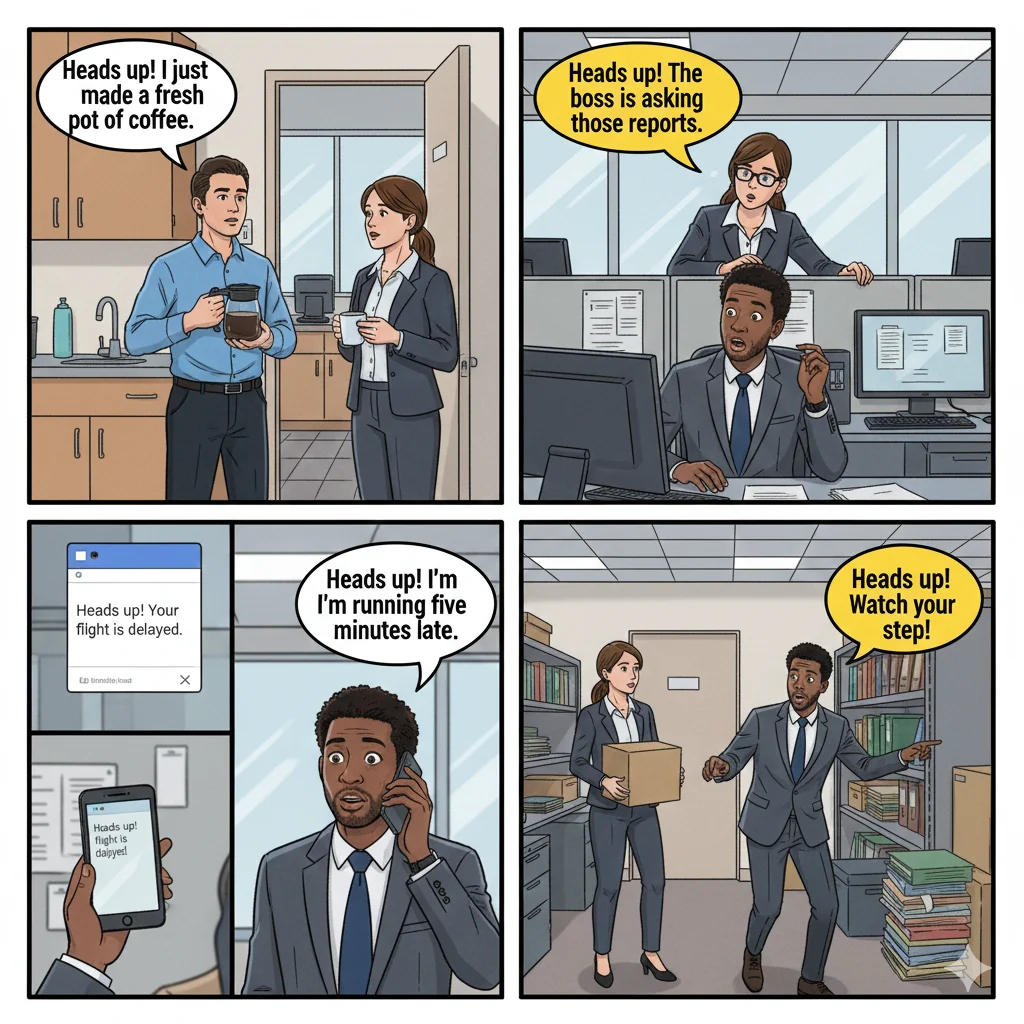
Example 1:
Friend 1: Heads up, it might rain later.
Friend 2: Thanks! I’ll grab an umbrella. ☔
Example 2 (Workplace):
Manager: Just a heads up — the report deadline’s been moved to Thursday.
Example 3 (Social Media):
“Heads up! We’re dropping our new podcast episode tonight. 🎧”
Example 4 (Warning):
Coach: Heads up! The ball’s coming your way! ⚽
🔍 Similar or Related Terms
Here are a few expressions that share a similar meaning or tone with “heads up.”
| Phrase | Meaning | When to Use It |
| FYI (For Your Information) | Sharing helpful info, not always urgent | Emails, formal chats |
| Just so you know | Mild, casual alert | Texting or friendly talk |
| Watch out | Urgent warning | Physical or immediate danger |
| Reminder | Scheduled or planned alert | Business or school contexts |
🧠 How to Use ‘Heads Up’ Correctly
✅ Do’s:
- Use it to prepare or warn someone kindly.
- Add it before important updates or schedule changes.
- Use it to sound considerate and proactive.
❌ Don’ts:
- Don’t overuse it in formal writing; it’s still informal.
- Don’t confuse it with a greeting — it’s not “hello.”
- Avoid using it sarcastically; it can sound rude if mistimed.
Example:
✅ “Heads up — your package might arrive a day late.”
❌ “Heads up, you messed up again.” (Too harsh or accusatory)
⚠️ Common Mistakes or Misinterpretations
- Mistake 1: Thinking it’s slang.
→ “Heads up” is an idiom, not slang — suitable for both casual and semi-formal communication. - Mistake 2: Using it as a noun incorrectly.
→ “Give me a heads up” ✅ (correct)
→ “Give me heads up” ❌ (incorrect) - Mistake 3: Using it too formally.
→ In professional documents or reports, use alternatives like “Please note” or “For your awareness.”
❓ FAQ Section
1. What does ‘heads up’ mean in texting?
It’s a friendly way to warn or inform someone about something coming soon. For example, “Heads up — I’ll be late tonight.”
2. Is ‘heads up’ formal or informal?
It’s mostly informal, but acceptable in semi-professional communication, like quick workplace messages.
3. Can I say ‘thanks for the heads up’?
Yes! That’s a common and polite way to thank someone for the warning or reminder.
4. What’s the difference between ‘heads up’ and ‘FYI’?
Heads up is a warning or alert, while FYI just shares information without urgency.
5. How do you reply to ‘heads up’?
You can respond with gratitude or acknowledgment, like:
“Thanks for the heads up!” or “Appreciate it!”
6. When should you not use ‘heads up’?
Avoid it in formal writing (like reports or legal documents). Use “please be advised” instead.
🏁 Conclusion
To wrap it up, “heads up” means giving someone a friendly warning or notice about something that’s about to happen. It began as a literal call for alertness in the 1700s and evolved into a common phrase in both casual and professional English.
Whether you’re texting a friend, emailing a coworker, or posting online, “heads up” shows politeness and awareness.
Now that you know the real heads up meaning, you’ll never be caught off guard again! Keep exploring our site for more practical word guides and modern English tips.

Patrick Gale is a word-meaning expert at Meanovia.com. He explains complex terms, definitions, and language trends with clarity and precision. His goal is to help readers understand the exact meaning behind every word they search.