
Ever heard someone say “I really appreciate the comradery here” and wondered what they meant?
This word often pops up in workplaces, sports teams, or even military settings—but what does comradery truly mean, and how is it different from camaraderie?
Comradery (also spelled camaraderie) means a spirit of friendship, trust, and mutual support among people, often shared in groups or teams.
The word comradery is often used in workplaces, sports teams, military units, and social groups to describe the bond that develops through shared experiences and cooperation. People search for its meaning to understand how it differs from casual friendship—comradery emphasizes loyalty, teamwork, and solidarity.
Understanding comradery helps in building strong relationships, improving teamwork, and fostering a sense of belonging.
🧩 What Does Comradery Mean?
Comradery means the spirit of friendship, trust, and loyalty shared among people with a common goal or experience.
It’s often used to describe the bond between teammates, colleagues, or soldiers, highlighting mutual respect and support.
👉 Type: Noun
👉 Used in: Everyday English, workplaces, military, and team environments
Example:
“The comradery among the volunteers made the hard work enjoyable.”
📜 Origin and Popularity
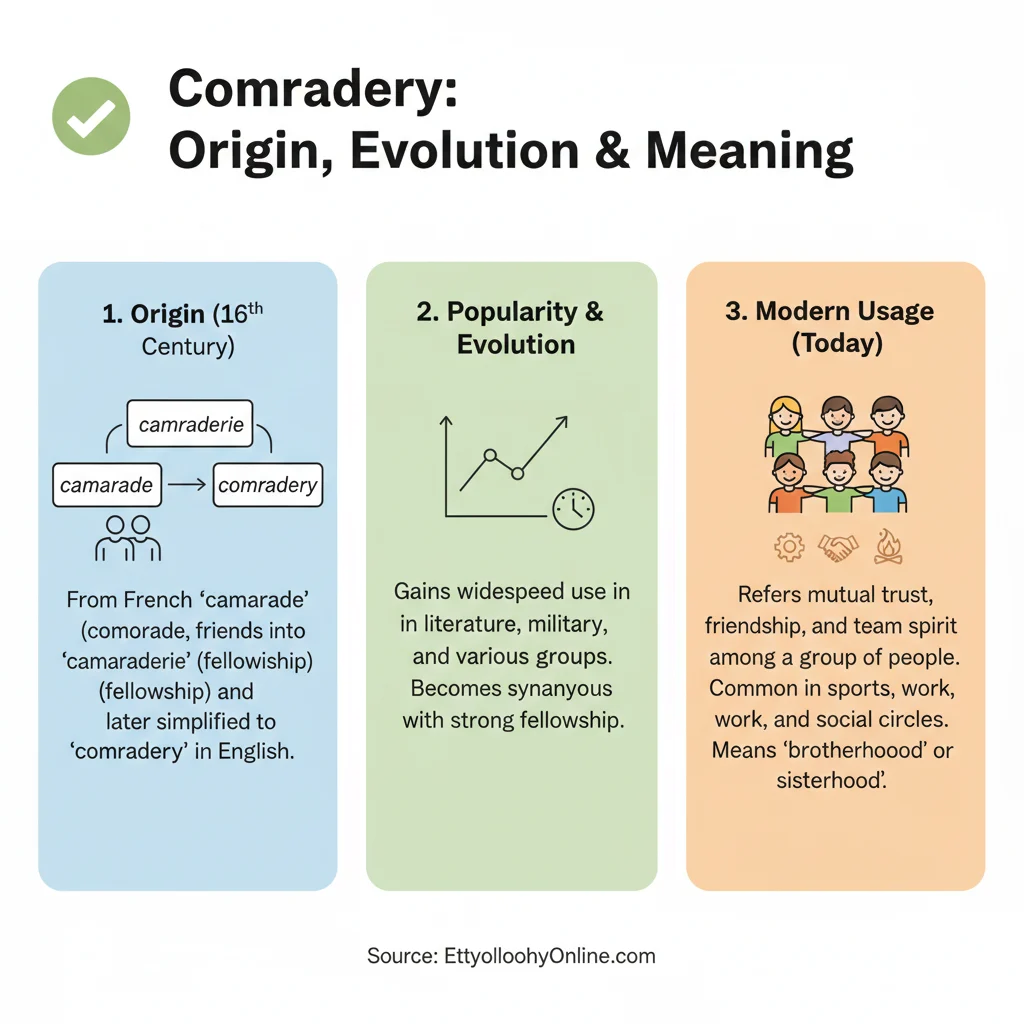
The term “comradery” is actually a variant spelling of “camaraderie,” both tracing back to the French word camarade, meaning “companion” or “roommate.”
- 16th century (French): Camarade → meaning a companion.
- 19th century (English): Camaraderie adopted into English, symbolizing fellowship.
- Modern American English: Comradery emerged as a simplified spelling, widely accepted in the U.S.
Although camaraderie is considered more formal, comradery is equally correct and commonly used, especially in American English.
💬 Comradery Meaning in Different Contexts
🗣️ In Everyday Conversation
Used to express friendly bonds in casual or shared experiences.
“There’s great comradery among the gym members.”
💼 In the Workplace
Refers to team spirit, collaboration, and mutual respect among coworkers.
“Good comradery helps teams overcome challenges together.”
🪖 In the Military or Sports
Symbolizes deep trust, loyalty, and unity developed through shared hardships or goals.
“The soldiers’ comradery kept them strong during difficult missions.”
| Context | Meaning of Comradery | Example |
| Casual | Friendly bond | “I love the comradery at our game nights.” |
| Workplace | Team collaboration | “Comradery boosts office morale.” |
| Military | Brotherhood & loyalty | “Comradery is what keeps the unit together.” |
💭 Examples of Comradery in Conversations
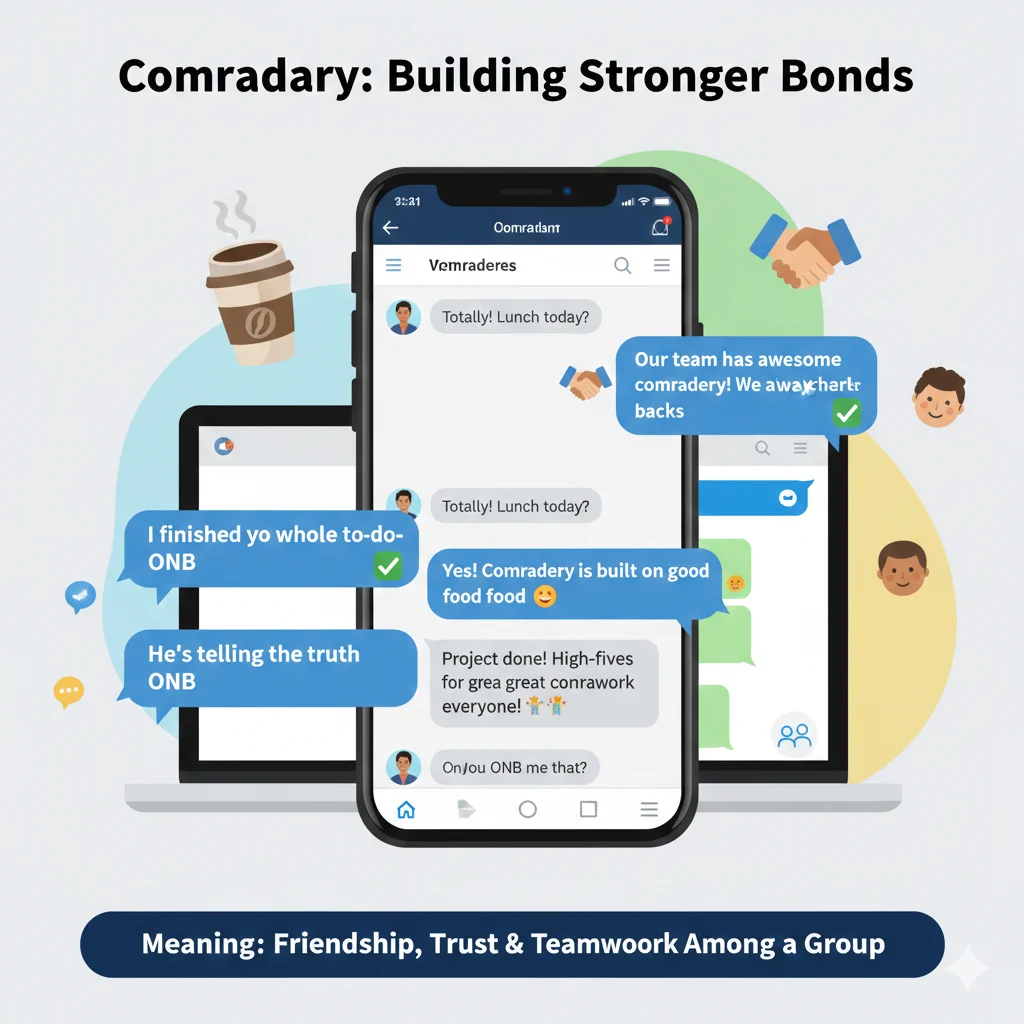
Example 1 (Work Setting):
Manager: “I really appreciate the comradery on this project.”
Employee: “It’s what makes working here so rewarding.”
Example 2 (Friends):
Friend 1: “Our hiking group has the best comradery!”
Friend 2: “Totally! It’s like we’ve known each other for years.”
Example 3 (Sports Team):
Coach: “Your comradery is what won this game.”
Formal Example:
“The CEO highlighted comradery as a cornerstone of company culture.”
🔗 Similar or Related Terms
Here are some terms often associated with or confused with comradery:
| Term | Meaning | Usage Context |
| Camaraderie | The original French form meaning friendship or trust among people | More formal or literary |
| Brotherhood / Sisterhood | Deep emotional or spiritual connection | Military, activism |
| Team Spirit | Enthusiasm and loyalty within a group | Workplaces, sports |
| Fellowship | Friendly association with shared interests | Academic or religious groups |
🧠 How to Use Comradery Correctly
✅ Do’s:
- Use it to describe friendly unity or shared trust.
- Use it in team-based or group contexts.
- Accept both spellings (comradery and camaraderie) in American English.
❌ Don’ts:
- Don’t use it to describe romantic relationships.
- Avoid mixing it up with “comrade” (which means companion or fellow member).
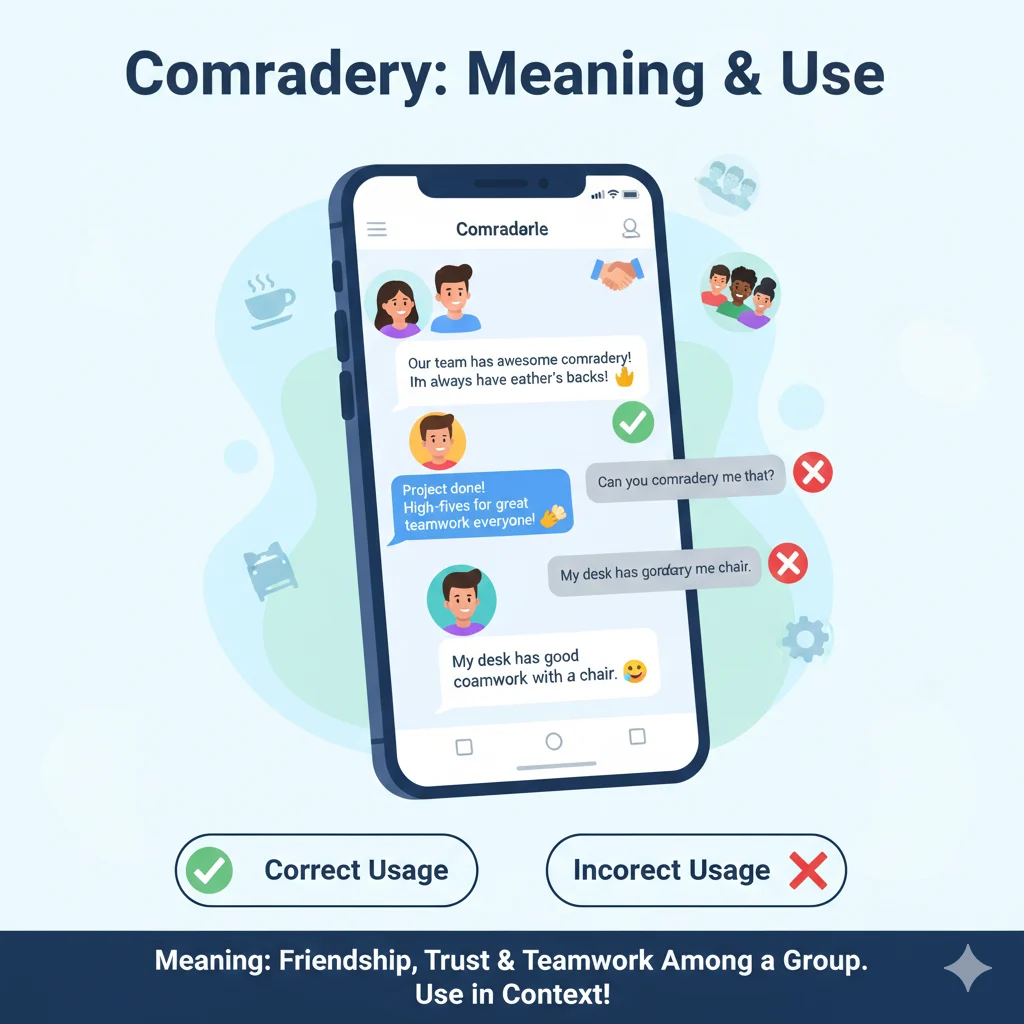
Example:
✅ “Our comradery kept the team motivated.”
❌ “Their comradery as a couple was adorable.” (Use “chemistry” instead.)
⚠️ Common Mistakes or Misinterpretations
- Confusing Comradery with Comrade:
- Comrade = individual companion or ally.
- Comradery = shared sense of friendship among a group.
- Comrade = individual companion or ally.
- Thinking One Is Incorrect:
- Both comradery and camaraderie are correct.
- Camaraderie is more common internationally; comradery is U.S. preferred.
- Both comradery and camaraderie are correct.
- Using It for One-on-One Situations:
- It refers to group dynamics, not personal relationships.
- It refers to group dynamics, not personal relationships.
❓ FAQ Section
1. What does comradery mean in simple terms?
It means friendly trust and loyalty among people who work or spend time together—like the bond between teammates or coworkers.
2. Is comradery the same as camaraderie?
Yes. Both mean the same thing. Camaraderie is the traditional French spelling, while comradery is the simplified American English version.
3. Is comradery a positive word?
Absolutely. It conveys team spirit, unity, and friendship, often in a positive, encouraging tone.
4. Where is comradery most used?
It’s common in workplaces, sports, volunteer organizations, and the military—anywhere teamwork matters.
5. How do you use comradery in a sentence?
“The comradery between the players made training more enjoyable.”
6. When should you not use comradery?
Avoid it in formal writing like academic essays or legal documents—use camaraderie instead for a more polished tone.
🏁 Conclusion
To sum it up, comradery means mutual trust, friendship, and loyalty among people with shared experiences or goals.
Whether it’s a group of friends, coworkers, or teammates, comradery captures the essence of togetherness and support.
Now that you know what comradery means—and how to use it—you’ll recognize it everywhere! Keep exploring our site for more guides on everyday words, idioms, and modern expressions that bring language to life.

Jon McGregor is a language and word-meaning expert at Meanovia.com. He specializes in explaining complex words, phrases, and modern language trends in a clear, approachable style. His mission is to help readers quickly grasp the true meaning behind every term, making language learning and understanding effortless and engaging.