Quick Answer (Featured Snippet):
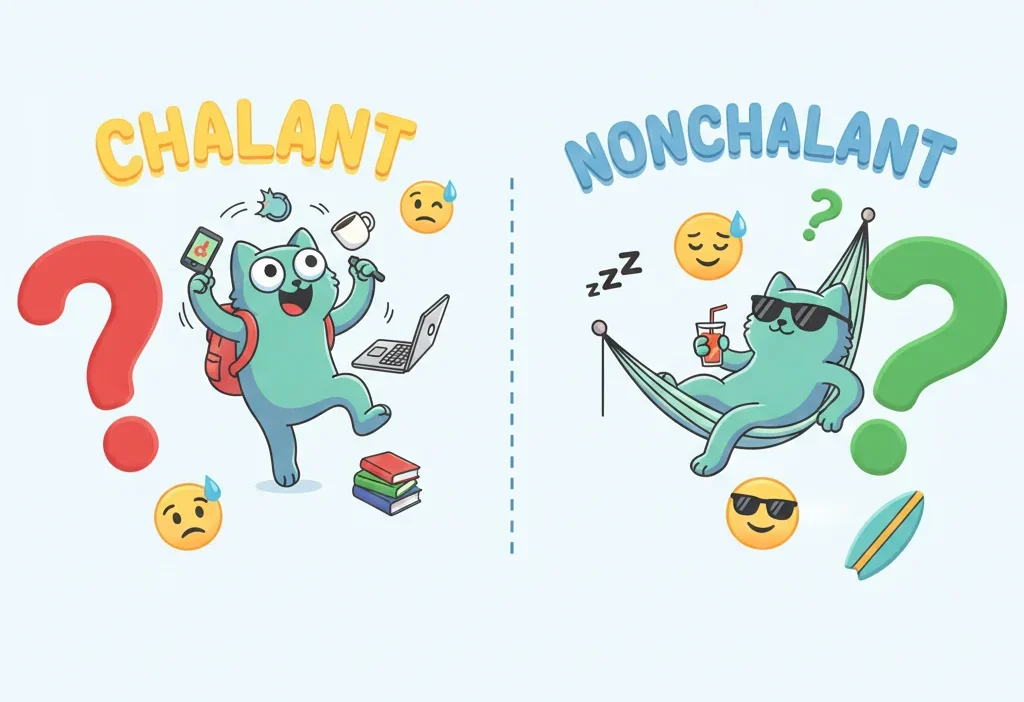
Chalant means showing interest, concern, or enthusiasm—the opposite of nonchalant.
People search for “chalant meaning” because the word sounds unusual and is rarely used on its own. Chalant comes from the same root as nonchalant, but unlike its popular counterpart, chalant describes someone who is engaged, attentive, or clearly interested in what’s happening.
While it is a real word, it’s considered uncommon and somewhat informal, often used playfully or humorously in modern English.
You might see it in casual writing or online posts to emphasize that someone does care or is actively involved. Understanding chalant helps clarify its contrast with nonchalant and avoids confusion when encountering it in conversation or text.
💡 What Does “Chalant” Mean?
Here’s the short answer:
“Chalant” isn’t an official English word.
It’s a humorous back-formation from the word nonchalant, which means calm, relaxed, or unconcerned. People jokingly use chalant to mean the opposite — someone who is concerned or attentive.
Example:
“She wasn’t nonchalant at all — she was totally chalant about it!” 😂
🕰️ Origin and Popularity
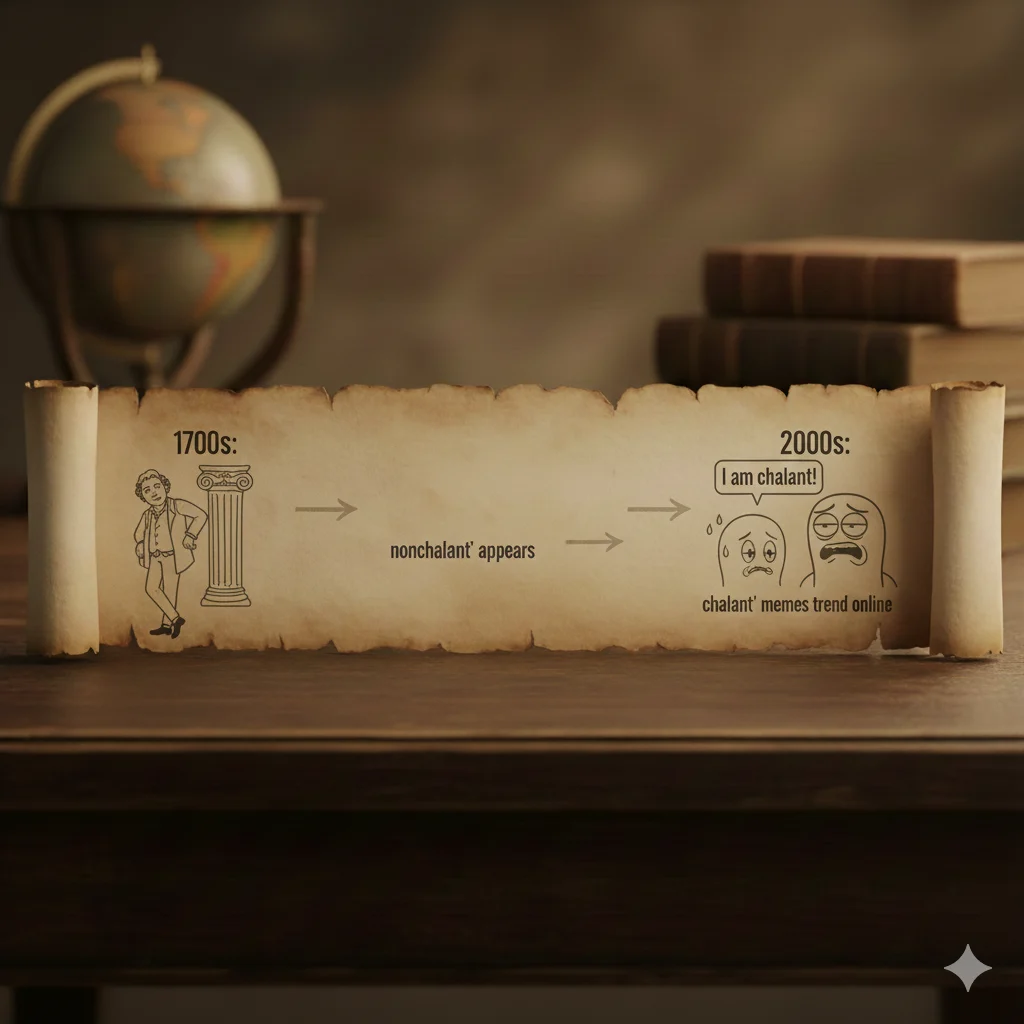
The word nonchalant comes from the French verb “chaloir”, meaning “to concern” or “to care.” The English form appeared in the 18th century and has always existed with the prefix “non-,” meaning “not concerned.”
Interestingly, “chalant” never actually existed in proper English — it’s a made-up word created by people who play with language logic. As the internet grew, social media users, comedians, and meme pages started using chalant as a funny fake word, often to mock formal grammar.
🗣️ Chalant Meaning in Different Contexts
Even though it’s not a real word, chalant pops up in different online settings:
💬 In Texting or Chat
Used playfully to sound clever or ironic.
“I’m not nonchalant — I’m very chalant about this date tonight!” 😏
📱 On Instagram / TikTok
Creators often use chalant in captions, memes, or jokes to poke fun at overreactions.
“Trying to act nonchalant but I’m actually chalant AF.”
💼 In Formal or Work Contexts
Not used — chalant is too informal and humorous for professional settings.
You wouldn’t say “chalant” in an email or report. Stick to concerned, focused, or attentive.
| Platform | Meaning of “Chalant” | Tone/Use |
| Texting | Jokingly concerned or expressive | Funny / Casual |
| TikTok / Memes | Irony, exaggeration | Playful |
| Business | ❌ Not appropriate | Informal joke |
💬 Examples of “Chalant” in Conversations
Example 1:
Friend 1: You seemed worried about the exam.
Friend 2: Of course I was! I’m very chalant about my grades. 😅
Example 2:
Text Message:
“I’m trying to stay calm, but honestly, I’m feeling super chalant right now.”
Example 3 (Funny Caption):
“Nonchalant? Me? Nah, I’m 100% chalant.” 😂
Chalant Meaning on Instagram
On Instagram, chalant is often used humorously or ironically to mean someone who does care or is paying attention. It’s usually said as the opposite of nonchalant. When someone comments “very chalant,” they mean the person is clearly interested, emotional, or reacting strongly.
Gen Z uses chalant jokingly in captions, comments, or memes to highlight obvious excitement, concern, or overreaction.
In short: on Instagram, chalant = openly caring or reacting a lot (often sarcastic).
Chalant Meaning in Hindi
Chalant (चैलंट) आमतौर पर “परवाह करने वाला / ध्यान देने वाला” के रूप में इस्तेमाल होता है। यह शब्द अक्सर nonchalant (बेखबर / फिक्रमंद नहीं) का उल्टा मतलब दर्शाने के लिए प्रयोग किया जाता है।
Example / उदाहरण:
- English: “He is very chalant about the results.”
- Hindi: “वह परिणामों को लेकर बहुत ध्यान देता/परवाह करता है।”
Quick Meaning: Chalant = परवाह करने वाला, ध्यान देने वाला, या इमोशन दिखाने वाला।
Chalant Meaning Gen Z
For Gen Z, chalant is often used jokingly or sarcastically to mean someone actually cares or is paying attention—the opposite of nonchalant. It’s popular in memes, captions, and texts to highlight obvious reactions, interest, or excitement.
Example:
- “She’s so chalant about the party 😆” → She clearly cares and is excited about it.
Quick Meaning: In Gen Z slang, chalant = openly caring, reactive, or emotionally involved, often used humorously.
Chalant Meaning in Chat
In chats, chalant is used to show that someone actually cares or is paying attention, often jokingly or sarcastically. It’s the opposite of nonchalant, which means indifferent or relaxed.
Example in chat:
- Friend 1: “Did you see her reply?”
- Friend 2: “Yeah, she’s so chalant 😆” → She clearly cares.
Quick Meaning: In chat slang, chalant = showing interest, attention, or emotion, usually in a playful or sarcastic way.
🔍 Similar or Related Terms
Here are some words that are real and share a similar tone or meaning:
| Word | Meaning | Relation to “Chalant” |
| Concerned | Worried or interested | Real equivalent of “chalant” |
| Attentive | Focused or observant | Positive version |
| Nonchalant | Calm, unconcerned | Opposite of “chalant” |
| Carefree | Relaxed, not worried | Synonym of “nonchalant” |
🧠 How to Use “Chalant” Correctly
✅ Do’s:
- Use chalant ironically or humorously in casual chats.
- Great for memes, captions, and tweets.
- Use it to sound witty or sarcastic.
❌ Don’ts:
- Don’t use chalant in formal writing or academic work.
- Don’t assume it’s a real dictionary word.
Example:
✅ “I’m feeling quite chalant about the weekend plans.”
❌ “The manager was chalant in his approach.” (Incorrect/too informal)
⚠️ Common Mistakes or Misinterpretations
- Mistake 1: Thinking chalant is a real opposite of nonchalant.
→ It’s not officially recognized in English. - Mistake 2: Using chalant seriously in writing.
→ It should only be used jokingly or sarcastically. - Mistake 3: Believing it’s a new Gen Z slang.
→ It’s actually a long-running language joke — not a trend word.
❓ FAQ
1. What does “chalant” mean?
“Chalant” is a humorous, made-up word meant to sound like the opposite of “nonchalant.” It playfully means “very concerned” or “attentive.”
2. Is “chalant” a real English word?
No. “Chalant” isn’t recognized in dictionaries — it’s a joke or parody term that people use for fun.
3. Where did “chalant” come from?
It’s a back-formation of “nonchalant,” inspired by the French root chaloir (“to care”). English speakers added chalant for humor.
4. Can I use “chalant” in an essay or business email?
Definitely not. Use “concerned,” “attentive,” or “focused” instead — those are real and professional.
5. Why do people use “chalant” online?
Because it’s funny! It highlights how some words don’t have logical opposites, making it a popular meme or witty comeback.
6. What’s the opposite of “nonchalant” then?
While “chalant” isn’t real, the proper opposites include concerned, worried, or anxious.
🏁 Conclusion
To wrap it up, “chalant” isn’t an actual English word, but rather a clever, humorous twist born from nonchalant. It’s widely used online in memes, jokes, and sarcastic captions to mean “concerned” or “overly attentive.”
So the next time someone says they’re “chalant,” you’ll know they’re just being playful — and definitely not using a dictionary-approved term. 😉
Now that you know the chalant meaning, you’ll never be tricked by this funny word again! Keep exploring our site for more fascinating slang, word origins, and modern language trends. ✨📖

Jon McGregor is a language and word-meaning expert at Meanovia.com. He specializes in explaining complex words, phrases, and modern language trends in a clear, approachable style. His mission is to help readers quickly grasp the true meaning behind every term, making language learning and understanding effortless and engaging.