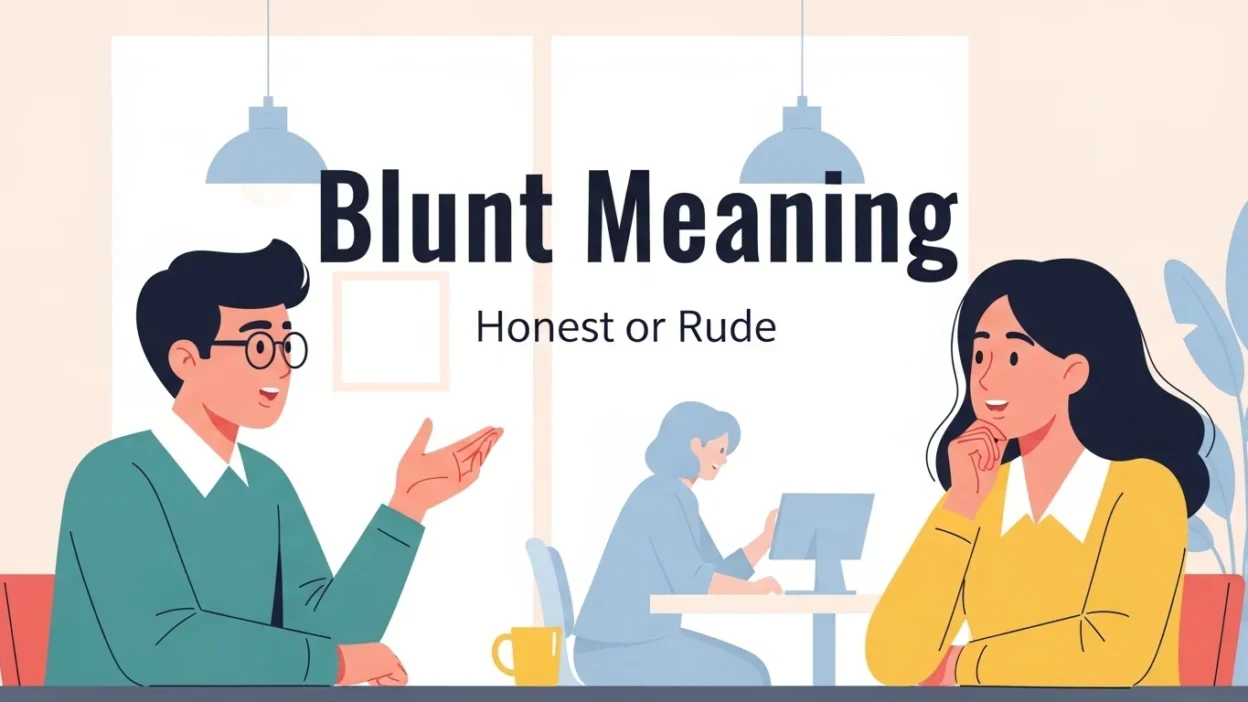
You’ve probably heard someone say, “He’s very blunt,” and wondered—is that rude or honest? In 2026, this word is common in conversations, social media, and even workplace talk, but many people misunderstand it.
Quick answer: Blunt means speaking in a very direct and honest way, without trying to soften words or hide the truth.
A blunt person says exactly what they think. They don’t use sugar-coated language. Sometimes this feels refreshing and honest. Other times, it can sound rude or harsh. The meaning depends on tone, situation, and culture.
Students, bloggers, and everyday English users search this term to understand whether blunt is a good or bad trait, and how to use it correctly in sentences.
Next, we’ll explain different meanings of blunt, real-life examples, slang usage, and when being blunt is okay—and when it’s not.
What Does Blunt Mean?
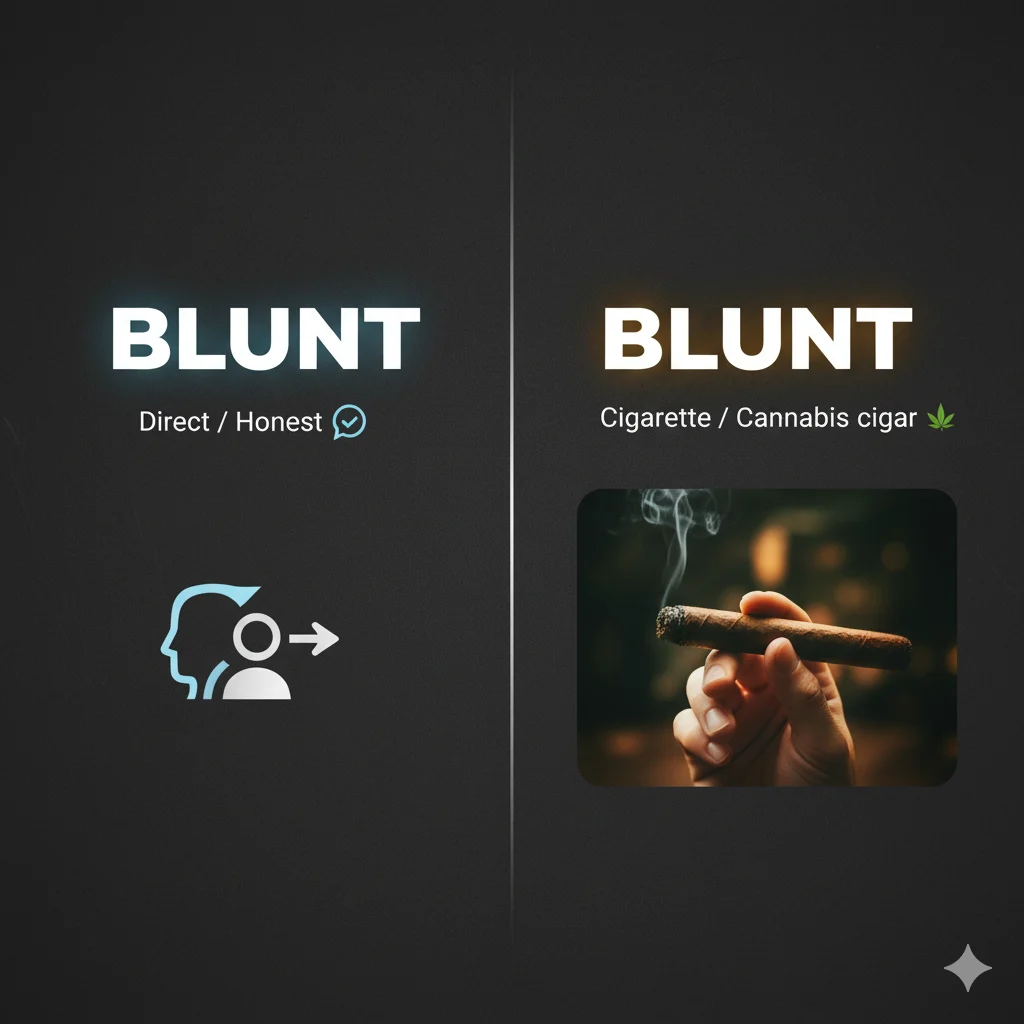
Blunt means speaking in a direct, straightforward way, often without softening your words. It can also refer to a hollowed-out cigar filled with cannabis. The meaning depends on the conversation context — either communication style or smoking culture.
To Be Blunt Meaning
To be blunt means to speak very honestly and directly, without softening your words. When someone says they are being blunt, they are preparing the listener for a clear opinion that may sound harsh.
Being blunt means focusing on truth rather than politeness. Whether it feels helpful or rude depends on tone, timing, and relationship.
Common Phrases Using “Blunt”
People often use phrases like:
- “I’ll be blunt” / “I will be blunt” – a warning before giving an honest opinion
- “Let me be blunt” – asking permission to speak frankly
- “Can I be blunt?” – a polite way to prepare the listener
- “I’m blunt” – describing one’s natural communication style
- “So blunt” – describing speech that feels very direct
These phrases signal honesty, not necessarily rudeness.
Origin and Popularity
The word blunt has existed in English since the 13th century, originally meaning dull or not sharp — referring to weapons or tools. Over time, it evolved to describe speech that isn’t polished, meaning someone speaks plainly and directly.
The smoking-related meaning came later, tied to a cigar brand called “Phillies Blunt.” People began hollowing out these cigars and filling them with cannabis, leading to the slang term “blunt.”
Popularity Timeline
| Year/Period | Development |
|---|---|
| 1200s | Blunt meant dull or not sharp (physical objects). |
| 1800s | Transitioned to describe a person’s direct speech. |
| 1980s–1990s | Became slang for cannabis cigars in hip-hop and street culture. |
| 2010s–Now | Widely used in texting, memes, and social media. |
Blunt Meaning in Different Contexts
1. In Everyday Conversation
If someone is described as blunt, it means they say the truth plainly, often without sugarcoating.
It can come across as:
- Honest ✅
- Harsh or rude ❌ — depending on tone
Example:
“She’s a nice person, but she can be blunt when she speaks.”
2. In Texting & Social Media
In chats, being blunt usually means not filtering your opinion.
Example Text:
“Not gonna lie, I’ll be blunt — that outfit doesn’t match.”
Tone can be casual, slightly confrontational, or straightforward.
3. In Cannabis Culture
A blunt refers to a cigar wrapper filled with cannabis, usually larger than a joint and burns slower.
Often seen in:
- Hip-hop lyrics
- Lifestyle content
- Casual conversation between smokers
Example:
“We smoked a blunt at the party.”
Blunt Communication Meaning
Blunt communication means delivering a message clearly and directly, without emotional padding. A blunt tone can feel efficient or uncomfortable depending on the situation.
A blunt statement, blunt reply, or blunt answer focuses on facts rather than feelings. A blunt warning is used to clearly alert someone about risks or consequences.
Quick Comparison Table
| Meaning Type | Definition | Example Use | Appropriate Context |
|---|---|---|---|
| Speech / Personality | Direct, honest, unfiltered communication | “He was blunt about his opinion.” | Everyday conversations |
| Cannabis Slang | Cigar wrapper filled with weed | “Let’s roll a blunt.” | Informal / recreational |
Examples of “Blunt” in Conversations
Personality / Speech Examples
Friend 1: Be honest — how was my presentation?
Friend 2: I’ll be blunt: you need more eye contact.
Coworker: I don’t mean to offend, but I’m going to be blunt — this report needs revision.
Cannabis-Related Example (Informal)
Person: We can smoke a blunt later if you want to chill.
Formal Tone Example
“The manager delivered a blunt evaluation of the project, highlighting issues without hesitation.”
Blunt Meaning in Slang and Weed Culture
In slang, especially cannabis culture, a blunt means a cigar wrapper filled with cannabis.
- Roll a blunt / rolling a blunt – preparing cannabis in a cigar wrap
- Smoke a blunt – consuming cannabis
- Blunts meaning slang – plural form of blunt
- Pearl a blunt / pearled blunt – rolling a perfectly shaped blunt
- Drop the blunt / dropped the blunt – accidentally dropping it
- I need a blunt – slang expression for wanting to smoke
This meaning is informal and unrelated to communication style.
Similar or Related Terms
| Term | Meaning | Usage Type |
|---|---|---|
| Direct | Straightforward but not necessarily harsh | Neutral |
| Honest | Truthful, sometimes gentle | Positive |
| Blunt | Honest without softening the impact | Neutral → Harsh |
| Rude | Disrespectful in tone or words | Negative |
| Harsh | Very strong criticism | Negative |
Key Difference:
Being blunt is not automatically rude — the tone and situation determine how others perceive it.
How to Use “Blunt” Correctly
✅ Do
- Use when you want to express clear, direct honesty
- Use when describing someone’s communication style
- Use casually in texting or conversations
❌ Don’t
- Use when speaking to someone who may be sensitive
- Use in formal work emails unless tone is softened
- Confuse it with rudeness — tone matters
Common Mistakes & Misinterpretations
| Common Confusion | Clarification |
|---|---|
| Blunt = Mean | Not always — it can simply mean honest. |
| Blunt = Joint | Incorrect. A joint uses rolling paper; a blunt uses a cigar wrapper. |
| Blunt = Aggressive | Depends on tone and wording. |
Important:
Being blunt is about direct speech, not insulting someone.
Blunt taste means a reduced or dull sense of taste, often used in medical or descriptive contexts. In medicine, blunt can also describe injuries or sensations that are not sharp.
Blunt Meaning in Other Languages
- Urdu: صاف گو، بے لاگ
- Farsi: صریح، رک و سادہ
FAQ (People Also Ask)
1. What does blunt mean in texting?
In texting, blunt means being direct and straightforward without softening your words. If someone says “I’ll be blunt,” they’re warning you that they’re about to say something honest and possibly harsh.
2. Is being blunt rude?
Not necessarily. Being blunt can be seen as honest, but if the tone is harsh, it may come across as rude. Context, delivery, and relationship matter.
3. What is the difference between blunt and honest?
Honest means telling the truth.
Blunt means telling the truth without sugarcoating it, even if it hurts.
4. What does blunt mean in smoking?
In smoking culture, a blunt is a hollowed cigar filled with cannabis. It is larger and burns longer than a joint.
5. When should I avoid being blunt?
Avoid being blunt in formal settings, during emotional conversations, or when sensitivity is needed.
6. Is blunt a bad word?
No. Blunt is not a bad word. It describes direct communication, though tone can make it sound rude.
7. Does blunt mean rude?
Not always. Blunt means honest and direct, but if delivered harshly, it may feel rude.
8. What is a blunt lie?
A blunt lie refers to a lie told very directly, without subtlety or softness.
Conclusion
The word “blunt” has two major meanings:
It can describe a straightforward communication style, and it can also refer to a cannabis-filled cigar. Understanding the context is key to interpreting it correctly. When used wisely, being blunt can mean honest and efficient communication, but when used carelessly, it can feel harsh or insensitive. Now that you know the full meaning, origins, and usage of blunt, you can recognize it instantly in conversations and use it appropriately.
Keep exploring our site for more simple explanations of trending words and internet slang!

Jon McGregor is a language and word-meaning expert at Meanovia.com. He specializes in explaining complex words, phrases, and modern language trends in a clear, approachable style. His mission is to help readers quickly grasp the true meaning behind every term, making language learning and understanding effortless and engaging.