Ever noticed someone use the term “alias” in a movie, legal document, or online profile and wondered what it really means? You’re not alone! The word alias is one of those terms that appear across many contexts—from technology to pop culture.
In this article, we’ll break down:
- The definition of alias
- Its origin and popularity
- Different meanings in various contexts (tech, law, entertainment)
- Examples of how it’s used
- Common mistakes, related terms, and FAQs
Whether you’ve seen “aka” (also known as) in a report or noticed gamers using aliases online, this guide will help you fully understand it.
What Does Alias Mean?
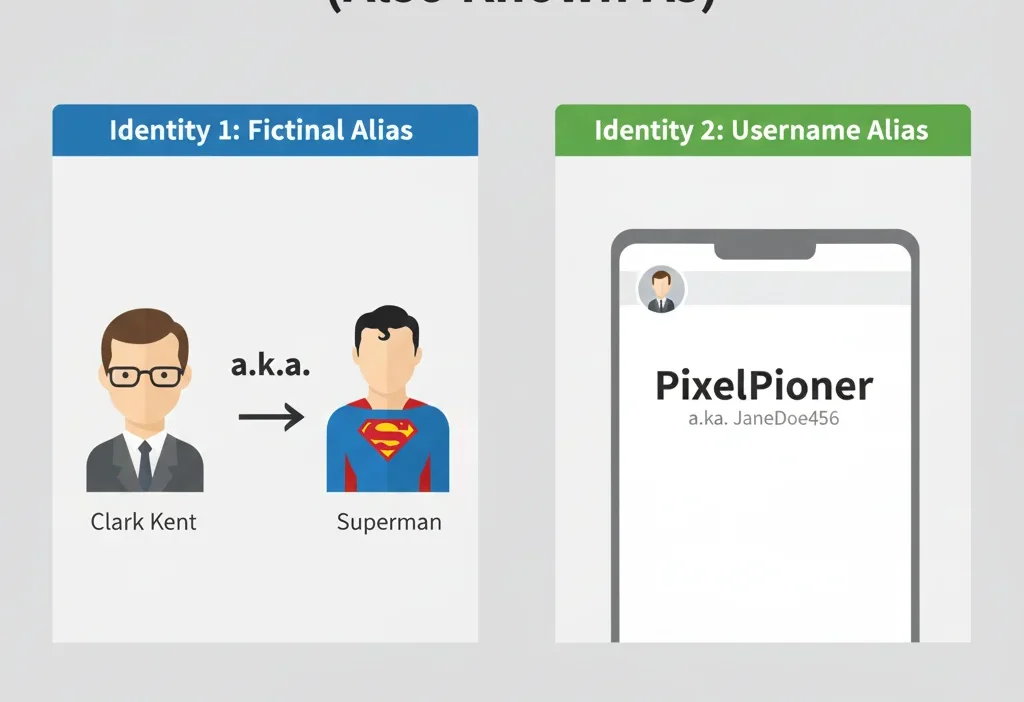
An alias means a false or alternative name used by a person or entity. It’s often used to conceal identity, for privacy, or for creative purposes.
It can appear in legal, online, or entertainment contexts, and is sometimes written as “aka” — short for “also known as.”
Origin and Popularity
The term alias comes from Latin, where “alias” means “otherwise” or “at another time.”
It first appeared in legal language during the 14th century, where it referred to someone known by another name (e.g., “John Smith, alias Jack Jones”). Over time, it became widely used in pop culture, technology, and online identity spaces.
Timeline of Popularity:
- 1300s: Used in legal English to refer to alternate identities.
- 1900s: Gained popularity in literature and detective stories.
- 2000s–Present: Common in online gaming, email, cybersecurity, and social media.
Alias Meaning in Different Contexts
1. In Legal Documents
In legal terms, alias refers to a person known by another name.
Example: “The defendant, alias John Doe, was charged with…”
It indicates someone’s alternative or previous identity, often for record accuracy.
2. In Technology and Email
In tech, an alias is a secondary name or shortcut for an account, command, or email address.
Example: You can set up an email alias like “support@company.com” that forwards to your main inbox.
3. In Entertainment and Pop Culture
Artists, writers, and actors often use stage names or pen names as aliases.
Example: Stefani Germanotta is better known by her alias — Lady Gaga.
4. In Online Gaming and Social Media
Here, an alias is your username or handle. It helps protect identity and create a recognizable persona.
Example: @ShadowStrike or @PixelQueen as gaming aliases.
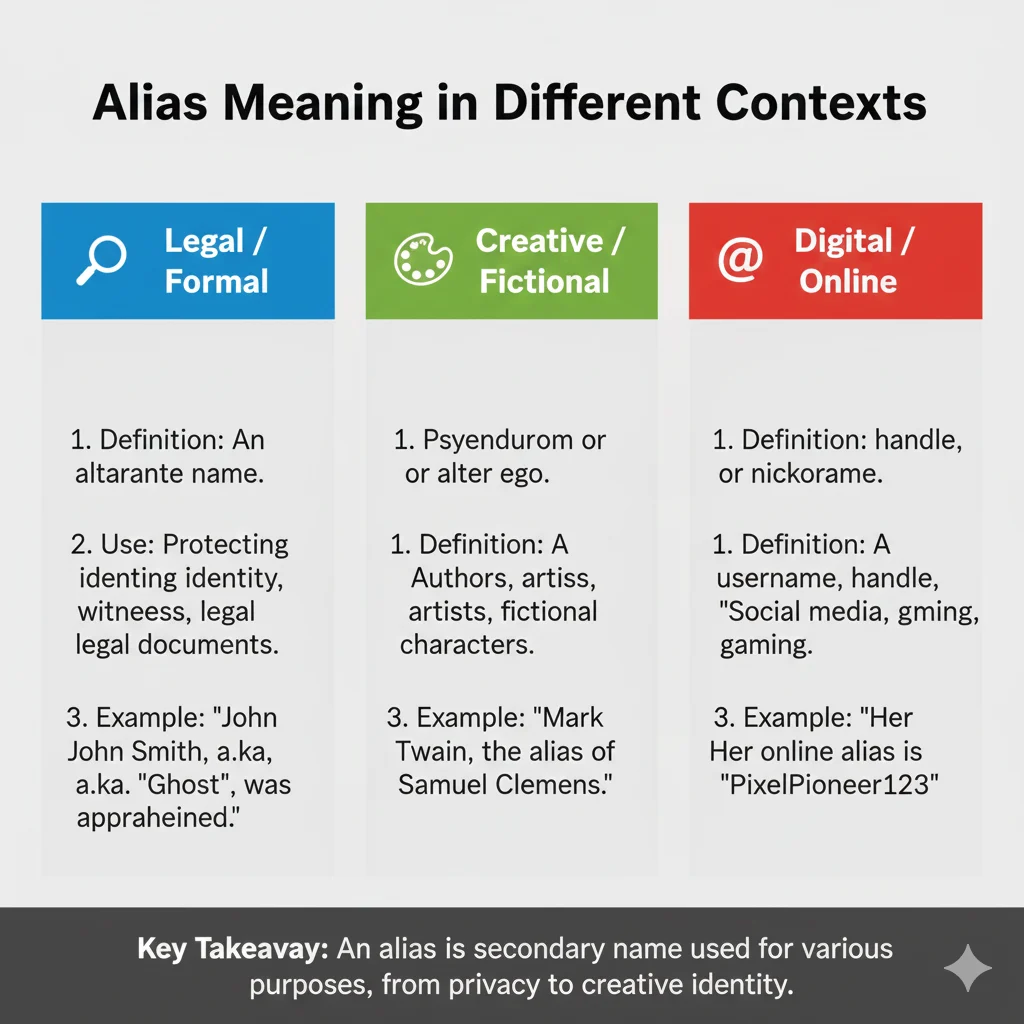
| Context | Meaning of Alias | Example |
| Legal | Alternative or fake name | “Jane Doe alias Mary Smith” |
| Technology | Secondary email/command name | “git alias” or “email alias” |
| Entertainment | Stage or pen name | “Drake” (alias of Aubrey Graham) |
| Social Media | Username or handle | “@GamerPro_21” |
Examples of Alias in Conversations
💬 Example 1 (Legal Context)
Lawyer: The suspect, alias Robert Kane, was last seen downtown.
Reporter: So he’s been using a fake identity?
💬 Example 2 (Technology)
IT Admin: I created an alias for customer support. All messages go to the main inbox.
💬 Example 3 (Casual / Pop Culture)
Friend 1: Did you know The Weeknd’s real name is Abel Tesfaye?
Friend 2: Oh! That’s his alias then?
💬 Example 4 (Online Gaming)
Player 1: What’s your alias in Call of Duty?
Player 2: I go by “IronFist21.”
Similar or Related Terms
Here are a few terms closely related to alias for better understanding:
| Term | Meaning | Example Use |
| Aka (Also Known As) | Short form used in legal or casual mentions | “Dwayne Johnson aka The Rock” |
| Pseudonym | False name used by writers or artists | “George Orwell” is a pseudonym of Eric Blair |
| Nickname | Informal name given by friends or family | “Mike” for “Michael” |
| Handle | Online identity or username | “@StarCoder” on X or TikTok |
How to Use Alias Correctly
✅ Do’s:
- Use alias when referring to an alternative or assumed name.
- Apply it in legal, online, or creative contexts.
- Use “aka” for informal or compact mentions (e.g., “Eminem aka Slim Shady”).
❌ Don’ts:
- Don’t confuse alias with nickname—an alias often implies anonymity or formality.
- Avoid using it where identity clarity is required (like official records without consent).
Common Mistakes or Misinterpretations
- Alias ≠ Nickname:
While a nickname is friendly and informal, an alias is often used for privacy, art, or legality. - Alias ≠ Pseudonym (Always):
A pseudonym is a creative or literary alias—but not every alias is a pseudonym. - Assuming Alias Always Means “Fake”:
Not all aliases are for deception—many are simply for branding or privacy.
FAQ Section
1. What does alias mean in simple terms?
Alias means a different name a person or entity goes by, either for privacy, formality, or creativity.
2. Is alias slang or formal?
It’s a formal term, not slang. It’s widely used in law, tech, and entertainment.
3. What’s the difference between alias and aka?
Alias is the full word, while “aka” (also known as) is the abbreviation commonly used in writing or speech.
4. Can I use an alias online?
Yes! Many people use aliases as usernames or handles on social media and gaming platforms for privacy and creativity.
5. Is using an alias illegal?
No—using an alias is legal unless it’s for fraud or identity theft purposes.
6. Where is alias most used?
Commonly in law enforcement, technology, entertainment, and social media.
Conclusion
To sum it up, an alias is a name someone uses instead of their real one, often for privacy, creativity, or identity management. From legal documents to online profiles, it serves as a powerful tool for self-expression or protection.
Now that you know what alias means and how to use it, you’ll never be confused again! Keep exploring our site for more word meanings, internet slang, and trending expressions.

Claire Fuller is a word-meaning specialist at Meanovia.com. She explains complex words, phrases, and language trends in a clear, relatable way, helping readers quickly understand the exact meaning behind every term.