
You’ve probably seen the word via in emails, directions, or travel routes — but what does it actually mean?
Quick answer: Via is a preposition that means “by way of,” “through,” or “using.” It shows the route, method, or person through which something happens.
Via full form: “via” does not have a full form. It is a Latin word that means “through” or “by way of.”
The word comes from Latin, where via means “road” or “way.” In everyday English, it’s commonly used in directions (“We flew to Paris via Dubai”), emails (“Sent via Gmail”), and communication (“He heard the news via a friend”).
What Is the Full Form of Via?
Via is not an acronym and has no full form. It comes directly from Latin, meaning “road” or “way.” Searches like “via full form,” “via stands for,” or “what does via stand for in texting” refer to this common misunderstanding.
How to Pronounce “Via”
Via is pronounced VY-uh or VEE-uh, depending on accent. Both pronunciations are correct in English.
In technical contexts, especially electronics, via can also refer to a small connection hole that links layers of a circuit board.
People often search for “via meaning” after seeing it in emails, travel plans, or messages and wanting to understand exactly how the word is used.
Via means “by way of,” “through,” or “using.” In texting, “sent via WhatsApp” means sent through WhatsApp. In travel, it shows a route (“fly via Dubai”). In electronics, a via connects layers of a circuit board.
🧠 What Does “Via” Mean?
“Via” means ‘by way of’ or ‘through.’
It’s a preposition used to show the method, route, or medium through which something happens.
👉 Example:
- “We sent the message via WhatsApp.” → means “through WhatsApp.”
- “They traveled via Dubai.” → means “passing through Dubai.”
It’s commonly used in texting, emails, business writing, and everyday speech to specify how or by what means something is done.
📜 Origin and Popularity of “Via”
The word “via” comes from Latin, meaning “road” or “way.”
It entered the English language around the 18th century, originally referring to routes or paths used for travel.
Over time, “via” expanded to digital and communication contexts:
- In the 20th century, it was widely used in logistics and travel (“sent via post,” “flew via London”).
- In the 21st century, it became common in digital communication (“message sent via Instagram”).
Today, it’s part of everyday English across the globe — a small word with huge versatility.
🕓 Quick Timeline:
- 1700s: Adopted from Latin “way” or “road.”
- 1900s: Used for travel and mailing.
- 2000s: Expanded to tech, internet, and chat contexts.
💬 “Via” Meaning in Different Contexts
“Via” changes slightly in tone depending on where it’s used. Here’s how it applies in different situations:
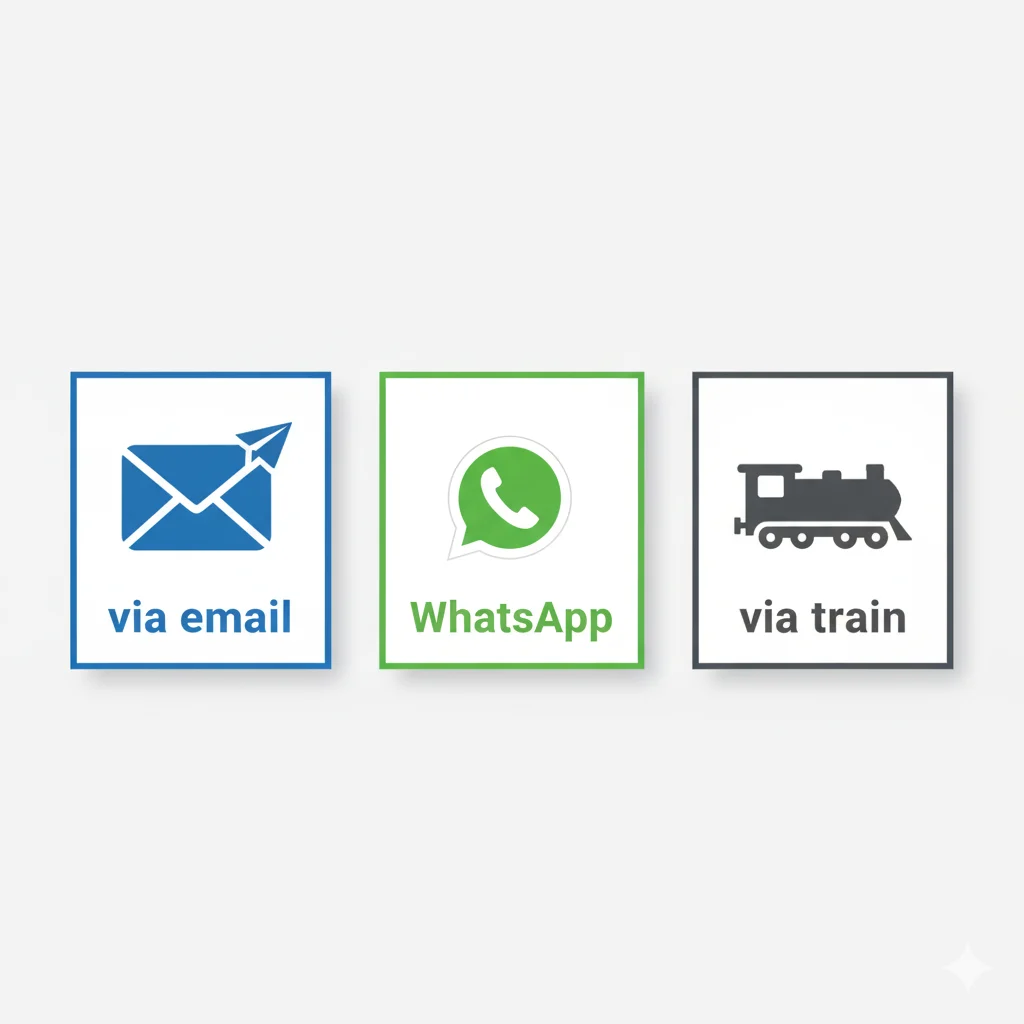
🗨️ In Texting or Chat
In messages or DMs, “via” simply means “through” or “using.”
- “I’ll send you the file via WhatsApp.”
- “Contact me via DM if you have questions.”
Tone: Casual but clear — suitable for friendly or semi-formal chats.
💼 In Emails or Business Communication
In professional settings, “via” helps keep your writing concise and formal.
- “Please send your documents via email.”
- “The payment was processed via PayPal.”
Tone: Polished, professional, and grammatically correct.
Via Meaning in Shipping or Logistics
In shipping, via shows the route or method used for delivery. For example, “Ship via air” means deliver by air transport. Searches like “ship via meaning” or “via post meaning” refer to this usage.
Via meaning in email: “via” means “through” or “by”, so “via email” means “through email / by email.”
Via Meaning in Text Messages and Emails
In texting, via simply means “through” or “using.” For example, “sent via WhatsApp” or “sent via email” shows the platform used. Searches like “via text meaning,” “via message meaning,” and “what does via text message mean” refer to this usage. Whats via text: “via text” means through a text message / by SMS.
What is a via email?
A “via email meaning “through email” or “by email.”
So if someone says, “Send it via email,” they mean send it using email (not WhatsApp, not SMS, not paper).
Common examples
- “Please confirm via email.” = confirm by email
- “I’ll share the details via email.” = I’ll send the details through email
- “We received your documents via email.” = we got them through email
Quick tip (more natural English)
- by email = most common
- via email = a bit more formal/professional
🚗 In Travel or Directions
“Via” shows the route or pathway taken to reach a place.
- “We’re flying to Paris via Dubai.”
- “He drove to New York via Route 66.”
Tone: Informational — often used in travel guides, maps, and itineraries.
Via Meaning in Addresses
In addresses, via indicates the street or route used. For example, “Via Roma” in Italian addresses means “Rome Street.” Searches like “via in address means” or “via meaning in address” refer to this usage.
📱 On Social Media
You might see “via” in captions or credits to show source or platform.
- “Posted via Instagram Stories.”
- “Photo by @john, shared via Unsplash.”
Tone: Attribution or credit-giving — common in content sharing.
What Does Via Mean in Social Media?
On social media, via is used to give credit to a source. For example, “Photo via @john” means the image came through or was shared from John. Searches like “what does via mean in social media” usually refer to attribution or crediting content creators.
🧾 Quick Reference Table
| Context | Meaning of “Via” | Example |
|---|---|---|
| Texting | Through / using | “Message sent via WhatsApp.” |
| Business Email | By means of | “Submit report via email.” |
| Travel | Passing through | “Flight to London via Doha.” |
| Social Media | Posted or shared through | “Shared via Instagram.” |
💬 Examples of “Via” in Conversations
Let’s look at how “via” appears naturally in both casual and formal conversations.
Example 1 – Text Message:
A: Can you send me the pics?
B: Sure, I’ll share them via WhatsApp.
Example 2 – Email:
“Please send all invoices via email by Friday.”
Example 3 – Travel Talk:
“We’re going to Rome via Milan. It’s cheaper that way!”
Example 4 – Social Media:
“New post coming soon — edited via CapCut 🎬.”
🔍 Similar or Related Terms
Here are a few words that convey similar meanings to “via” and when to use them:
| Term | Meaning | Example |
|---|---|---|
| Through | Movement or medium | “Sent through WhatsApp.” |
| By | Method or action | “Delivered by courier.” |
| Using | Tool or medium | “Edited using Photoshop.” |
| From | Source of something | “Message from John.” |
💡 Tip:
Use “via” for clarity and brevity, especially in formal or semi-formal communication.
✍️ How to Use “Via” Correctly
✅ Do’s:
- Use “via” to indicate method, route, or platform.
- Great for business, emails, and formal writing.
- Perfect for travel or digital communication contexts.
❌ Don’ts:
- Don’t use it excessively in casual talk (sounds too formal in text).
- Don’t confuse it with “by” when referring to the doer of an action.
- ❌ “Made via John.”
- ✅ “Made by John.”
Grammar Note:
“Via” is a preposition — it’s always followed by a noun (e.g., via bus, via email, via route).
Is “Via” Formal or Slang?
Via is not slang — it is a standard English preposition used in both formal and professional writing. Searches like “is via professional,” “is via formal,” and “is via slang” usually come from people unsure about its tone. In reality, via is perfectly acceptable in emails, business writing, and academic contexts.
⚠️ Common Mistakes or Misinterpretations
Here are a few misunderstandings to avoid:
- Confusing “via” with “by.”
- “Delivered by DHL” (who did it).
- “Delivered via DHL” (through which service).
- Using it redundantly.
- ❌ “Sent it via through email.”
- ✅ “Sent it via email.”
- Overusing it in speech.
In conversation, “by” or “through” often sounds more natural.
💋 210+ Lascivious Meaning Explained in Simple Words 😏 | 2025
❓ FAQ Section
1. What does “via” mean in texting?
In texting, “via” means “through” or “using.” For example, “I’ll send it via WhatsApp” means “I’ll send it using WhatsApp.”
2. Is “via” slang or formal?
“Via” is not slang — it’s a standard English preposition. However, it fits perfectly in both formal emails and everyday chat.
3. What’s the difference between “via” and “by”?
“Via” refers to the medium or route, while “by” indicates the doer or method.
Example: “Delivered via courier” vs. “Delivered by John.”
4. How do you use “via” in a sentence?
Simply replace “through” or “by means of.”
Example: “She connected with clients via LinkedIn.”
5. Where is “via” most commonly used?
You’ll see it in emails, texts, social media, business reports, and travel itineraries — almost everywhere!
6. When should you not use “via”?
Avoid it when casual alternatives like “by” or “through” sound more natural in speech. “Via” is more suited for written or digital communication.
🧩 Conclusion
The word “via” may be short, but it plays a big role in communication — connecting actions, people, and platforms.
From emails (“send via Gmail”) to travel (“fly via Doha”), it shows how or through what route something happens.
Now that you know what “via” means, where it comes from, and how to use it correctly, you’ll never misuse it again!
✨ Keep exploring our site for more guides on internet terms, phrases, and modern English expressions.