
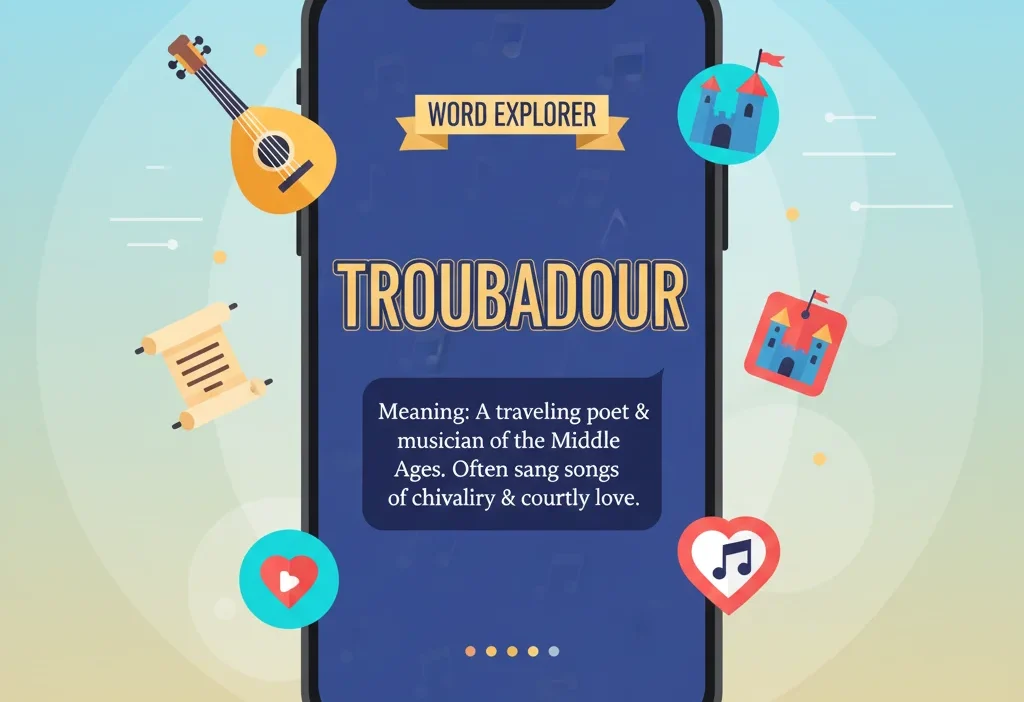
When I was a child, my grandfather loved old country songs. One day he played a song by George Strait and said, “He is a real troubadour.” I asked, “What is troubadour meaning?” He smiled and told me a beautiful story about old singers who traveled from town to town, singing songs and telling stories.
Troubadour means a traveling singer or poet who sings songs and tells stories, usually about love, life, or heroes. The word comes from old France, where singers traveled from town to town to perform music.
Many students today search troubadour meaning, troubadour meaning in music, troubadour meaning George Strait, or young troubadour meaning because they hear this word in songs, movies, and books. Some people also ask what is a troubadour meaning in simple English.
Entity of the Word “Troubadour”
The word troubadour is an English noun. It is a historical and musical word. It is not slang in normal use.
Entity details:
• Type: Noun
• Category: Music and history word
• Origin: Old French language
• Use: Music, poetry, country songs, storytelling
What Does Troubadour Mean?
A troubadour is a traveling singer or poet who sings songs and tells stories. In old times, troubadours moved from town to town and sang about love, kings, heroes, and adventures.
Example:
• A singer with guitar traveling city to city is like a modern troubadour.
• A poet who sings stories is also called a troubadour.
So troubadour meaning in English is simple: a singing storyteller.
Troubadour Meaning in History
Troubadours were real people in medieval France about 800 years ago. They wrote poems and songs about love and brave heroes. They played instruments like harp and lute.
They traveled to castles and towns. Kings and queens listened to them. People loved their stories because they were like movies of old times.
These singers helped spread music and poetry across Europe. That is why the word troubadour is still famous today.
Troubadour Meaning in Music Today
Today, troubadour meaning in music is a singer who writes emotional songs and tells stories with music. Many country and folk singers are called troubadours.
Example:
• Bob Dylan is called a folk troubadour.
• George Strait is called a country troubadour.
This means they sing songs about life, love, and feelings.
Troubadour Meaning in George Strait Song
In the famous country song “Troubadour,” George Strait sings about a singer growing older but still loving music. He says he was a young troubadour and still sings today.
Young troubadour meaning = a young singer who loves music and dreams big.
The song tells about life journey, memories, and passion for music.
Young Troubadour Meaning
Young troubadour means a young person who sings songs, writes poems, or loves storytelling. It can be a student learning guitar or a child singing songs.
Example:
• A boy singing in school show is a young troubadour.
• A girl writing songs is a young troubadour.
This phrase shows hope and talent.
Bard vs Troubadour Meaning
Bard and troubadour are similar words.
Bard = poet singer in old Celtic culture.
Troubadour = singer poet in old France.
Both tell stories with music.
Example:
• Shakespeare is called a bard.
• Old French singers were troubadours.
Troubadour Meaning in Country Music
Country singers who travel and sing about life are called troubadours. They sing about love, farms, friends, and memories.
Country music uses storytelling. That is why country singers are often called troubadours.
Troubadour Meaning Slang or Modern Use
In slang, troubadour can mean a romantic singer or traveler with guitar. It is not a bad slang. It is a beautiful word.
Example:
• Street singer with guitar = modern troubadour.
40 Easy Sentences Using Troubadour
- The troubadour sang a love song.
- The young troubadour played guitar.
- The town loved the troubadour.
- The troubadour told stories.
- The singer was a modern troubadour.
- The troubadour traveled far.
- The king liked the troubadour.
- The troubadour sang about heroes.
- The troubadour wrote poems.
- The child dreamed to be troubadour.
Why People Search Troubadour Meaning
People search because they hear the word in songs, movies, books, and history lessons. They want simple explanation.
Synonyms of Troubadour
• Singer
• Poet
• Storyteller
• Bard
• Folk singer
• Musician
Antonyms of Troubadour
• Listener
• Audience
• Silent person
Parents Guide
Parents can explain history words like troubadour using songs and stories. Children learn faster with music.
Teachers Guide
Teachers can show medieval music videos and explain poetry history. Students enjoy learning culture.
FAQs About Troubadour Meaning
What is troubadour meaning?
A traveling singer storyteller.
What is young troubadour meaning?
A young singer storyteller.
What is troubadour meaning in music?
Singer who tells stories through songs.
⭐ Troubadour vs Bard – Deep Comparison Table
| Feature | Troubadour | Bard |
|---|---|---|
| Origin | Old France | Celtic lands (Ireland & Scotland) |
| Time Period | Medieval Europe | Ancient Celtic times |
| Work | Sang love songs & poems | Told hero stories & poems |
| Language | Old French | Celtic languages |
| Music Style | Romantic & court songs | Heroic & history songs |
| Audience | Kings & nobles | Tribes & kings |
| Modern Example | Country singer | Famous poet like William Shakespeare |
| Meaning Today | Traveling singer | Storytelling poet |
👉 Simple difference:
Troubadour = Romantic singer
Bard = Hero storyteller poet
⭐ Real Song Lyric Explanation Section
Many people search troubadour meaning George Strait.
In the song “Troubadour” by George Strait, he sings about life journey.
When he says “I was a young troubadour”, it means:
👉 He was a young singer with dreams
👉 He traveled and sang songs
👉 He loved music all his life
The song talks about getting older but still loving music. It shows memories, passion, and respect for country music.
So in country songs, troubadour means a singer who tells real life stories through music.
⭐ Medieval History Timeline of Troubadours
1100 AD – France
First troubadours sang in southern France.
1200 AD – Europe
Troubadour songs spread to Italy and Spain.
1300 AD – Castles & Courts
Kings invited troubadours to sing love poems.
1400 AD – Decline
New music styles came, troubadours became fewer.
1800–Today – Modern Use
Folk and country singers are called troubadours.
👉 This shows troubadour is a history + music word.
Conclusion
Troubadour meaning is a traveling singer or poet who tells stories with music. The word comes from old France but is still used today in country and folk music. Learning this word helps you understand song