
Ever scrolled through a long post or article and seen someone write “TL;DR”? 🤔 You’re not alone! This abbreviation is one of the internet’s favorite shortcuts — and understanding it can make your online reading and writing smoother.
In this guide, we’ll cover:
✅ The definition of TL;DR
📜 Its origin and rise in internet culture
💻 Meanings across platforms
💬 Examples in real-life use
⚡ Related terms and FAQs
By the end, you’ll know exactly when to use (and when to avoid) TL;DR in chats, emails, and social posts.
💡 What Does TL;DR Mean?
“TL;DR” stands for “Too Long; Didn’t Read.”
It’s an internet slang acronym used to summarize long text or admit you didn’t read something fully. You’ll often see it on Reddit, X (Twitter), emails, and forums.
Example:
“TL;DR: It’s basically a quick summary of a long explanation.”
🕰️ Origin and Popularity
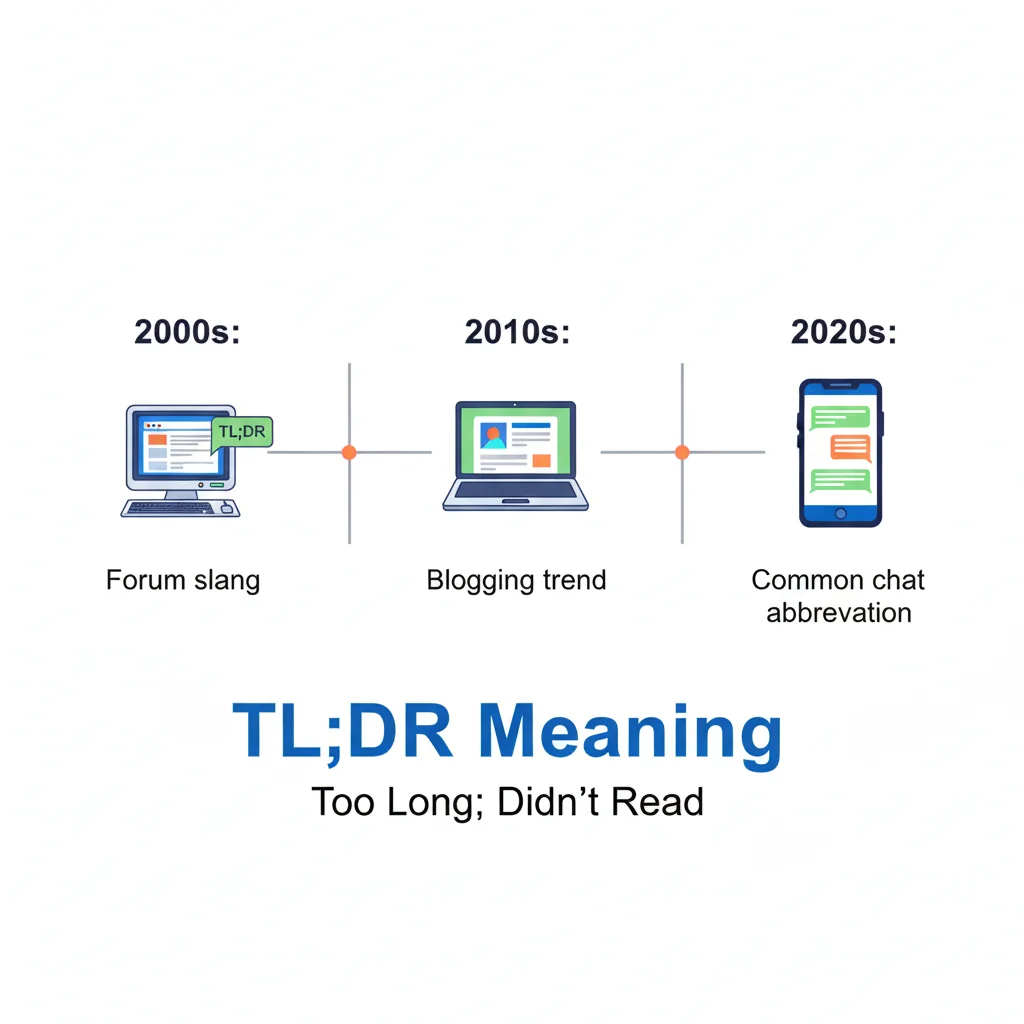
The term TL;DR first appeared on online forums in the early 2000s, especially on Reddit and Usenet. It was a humorous way to summarize long posts for readers with limited time (or patience 😅).
By the 2010s, it became a universal internet shorthand for “summary ahead.” Many bloggers and journalists even started adding TL;DR sections at the end of their articles to help readers grasp the main point quickly.
Today, TL;DR is a staple in digital communication, from memes to business emails, embodying the fast-paced nature of modern reading.
💻 TL;DR Meaning in Different Contexts
📱 In Texting or Chatting
Used to summarize long messages or admit you skipped reading something.
“TL;DR: The party was wild, and we got home late.”
📸 On Social Media (Reddit, TikTok, X)
Creators and commenters use it to share summaries or conclusions for long posts or stories.
“TL;DR: Don’t buy that gadget — total waste of money.”
💼 In Business or Academic Writing
Professionals use it to summarize reports or discussions efficiently. It adds clarity and saves time.
“TL;DR: The campaign increased engagement by 25%.”
| Platform/Context | Meaning of TL;DR | Tone/Use |
| Texting | “Didn’t read all of it” or short summary | Informal |
| Reddit / Social Media | Summary or key takeaway | Casual |
| Business / Work | Executive summary | Formal |
💬 Examples of TL;DR in Conversations
Example 1 (Texting):
Alex: I sent you my essay, can you read it?
Jamie: TL;DR please 😅 — what’s it about?
Example 2 (Social Media):
“I tried every coffee shop in town this week. TL;DR: Bean Bar is still the best.”
Example 3 (Professional):
“TL;DR: Our Q4 sales increased 18% thanks to the new marketing strategy.”
Example 4 (Funny):
“TL;DR: Don’t date your roommate. Ever.” 😂
🔍 Similar or Related Terms
Here are some commonly related abbreviations and internet terms:
| Term | Full Form | Meaning / Use |
| ICYMI | In Case You Missed It | Used to share highlights or updates |
| FYI | For Your Information | Adds helpful info or context |
| IMO / IMHO | In My (Humble) Opinion | Expresses personal views |
| ETA | Edited To Add | Adds new info after a post |
| BRB | Be Right Back | Temporary pause in conversation |
These are often used with TL;DR in social posts or comments to keep communication short and clear.
🧠 How to Use TL;DR Correctly
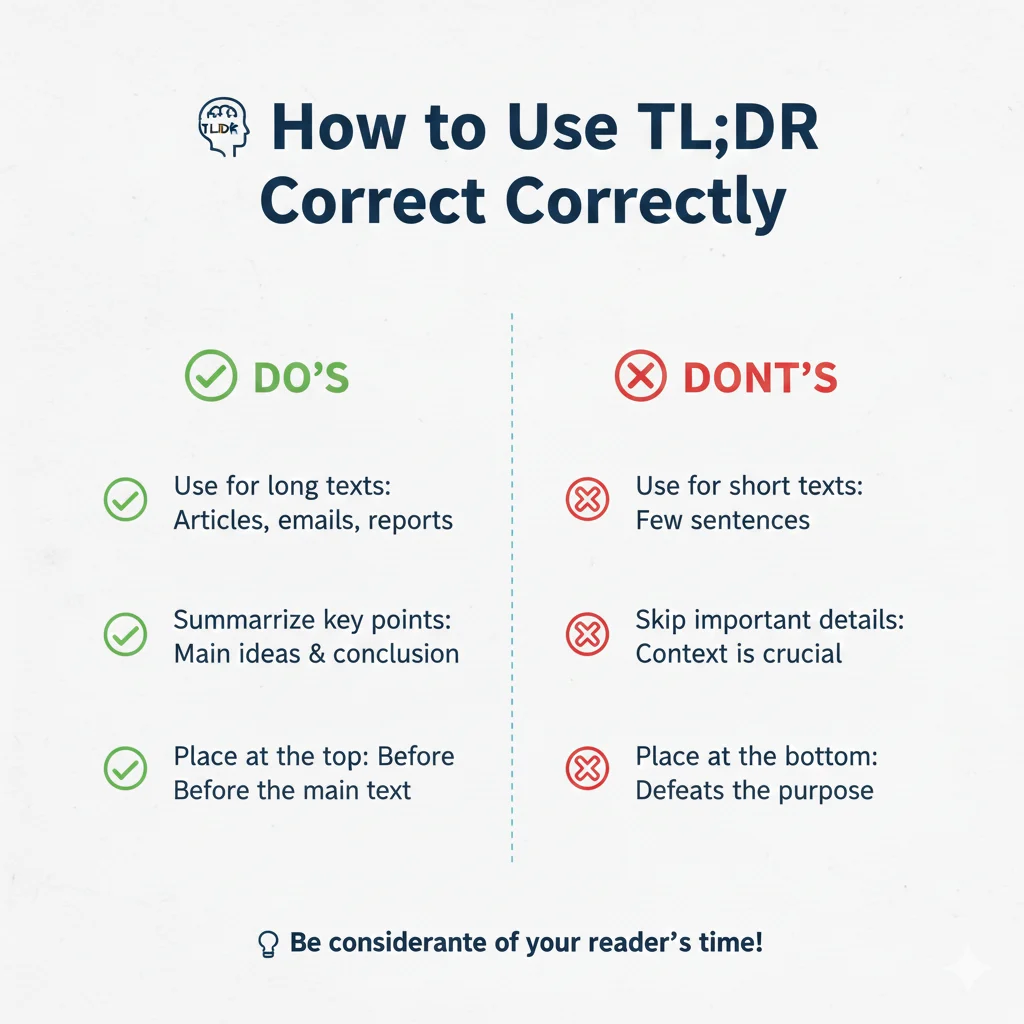
✅ Do’s:
- Use TL;DR when summarizing long content.
- Place it at the end (to summarize) or at the beginning (to warn of length).
- Keep your TL;DR clear and concise — 1–2 sentences max.
❌ Don’ts:
- Don’t use it to dismiss someone rudely (“TL;DR, didn’t care”).
- Avoid it in formal reports or academic papers unless used creatively.
Example:
✅ “TL;DR: We should focus on user retention next quarter.”
❌ “TL;DR: Your email was boring.” (Disrespectful)
⚠️ Common Mistakes or Misinterpretations
- Mistake 1: Thinking TL;DR is an insult.
→ It can be, but not always! When used politely, it’s just a summary cue. - Mistake 2: Using it without context.
→ Always follow TL;DR with a short summary or key point. - Mistake 3: Believing it’s new slang.
→ It’s been around for decades — just more visible now thanks to social media.
❓ FAQ Section
1. What does TL;DR mean in texting?
It means “Too Long; Didn’t Read.” It’s used to summarize something lengthy or to admit skipping a long message.
2. Is TL;DR rude?
It depends on context. It can sound dismissive if used sarcastically, but when followed by a quick summary, it’s perfectly polite.
3. Where is TL;DR most used?
It’s most popular on Reddit, X (Twitter), and texting platforms, but it’s also used in blogs and emails for summaries.
4. Is TL;DR slang or an acronym?
It’s an internet acronym, not traditional slang. It falls under online shorthand or digital communication terms.
5. What’s the difference between TL;DR and summary?
A summary is formal and detailed, while TL;DR is casual, short, and usually follows a long post.
6. How do you reply to TL;DR?
You can thank the person for summarizing or respond to the key point they shared. Example: “Got it, thanks for the TL;DR!”
🏁 Conclusion
In short, “TL;DR” means “Too Long; Didn’t Read.” It’s a quick and witty way to summarize lengthy content or signal that you’ve made something easier to digest.
From online debates to corporate summaries, TL;DR reflects our fast-paced digital world — where brevity rules!
Now that you know the full TL;DR meaning, you can use it confidently wherever you write or chat online. 🚀💬

Claire Fuller is a word-meaning specialist at Meanovia.com. She explains complex words, phrases, and language trends in a clear, relatable way, helping readers quickly understand the exact meaning behind every term.