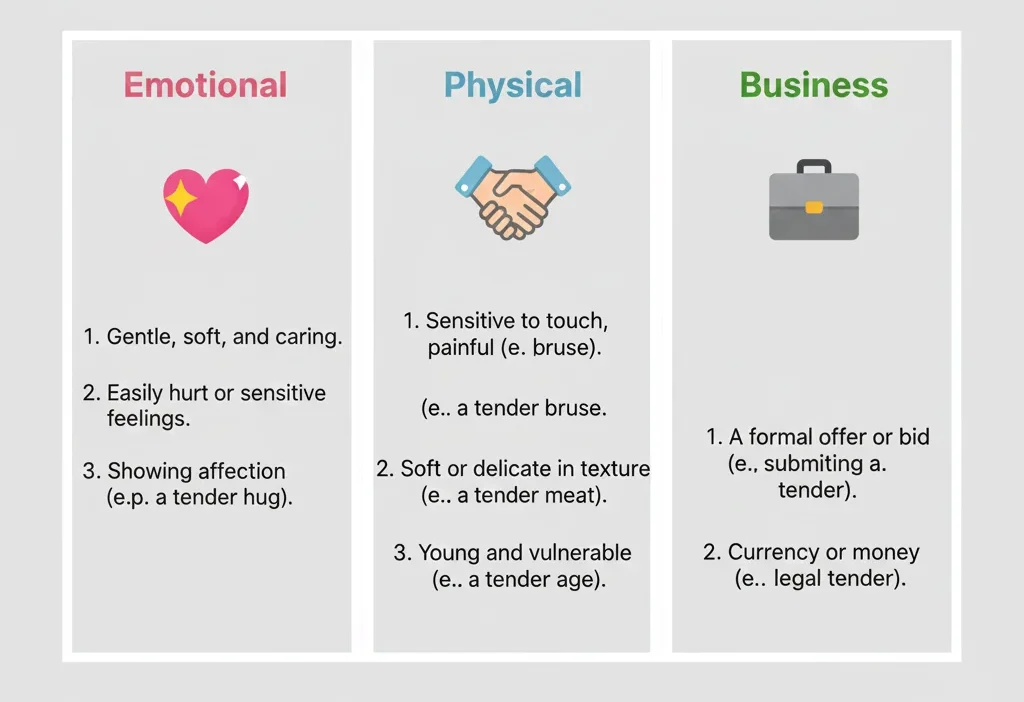
Tender means soft, gentle, or sensitive, and can describe feelings, physical touch, food, or behavior that is kind and caring.
The word tender is often used in conversations, writing, and media, and people search for its meaning to understand both literal and figurative uses. Tender can describe emotional sensitivity, such as a gentle heart or affectionate behavior, as well as physical softness, like tender meat or a delicate touch. It can also refer to actions that are careful, considerate, or nurturing.
Understanding the meaning of tender helps readers or speakers interpret context accurately, whether it’s in describing people, feelings, or objects. The word is versatile, commonly used in literature, daily conversation, and emotional expression, making it important to grasp both its literal and metaphorical senses.
💬 What Does Tender Mean?
Tender means showing gentleness, care, or sensitivity — often used to describe emotions, actions, or even certain foods.
It can also mean a formal offer or proposal, especially in business or finance.
So, depending on context, “tender” can be both an adjective (kind/gentle) or a noun/verb (offer/propose).
📜 Origin and Popularity
The word “tender” comes from the Old French tendre and Latin tener, meaning “soft” or “delicate.”
It’s been used in English since the 14th century, initially describing soft physical texture — like tender meat — before expanding to emotions and kindness.
In modern usage:
- The emotional sense (gentle, caring) appears in daily conversation and media.
- The financial sense (formal offer or bid) is common in business and government contexts.
🕰️ Timeline Snapshot
- 1300s: “Tender” means soft or delicate.
- 1600s: Becomes associated with affection (“tender feelings”).
- 1800s–present: Gains business meaning (“tender a bid”).
🌐 Tender Meaning in Different Contexts
Because tender is a versatile term, its meaning shifts across different areas.
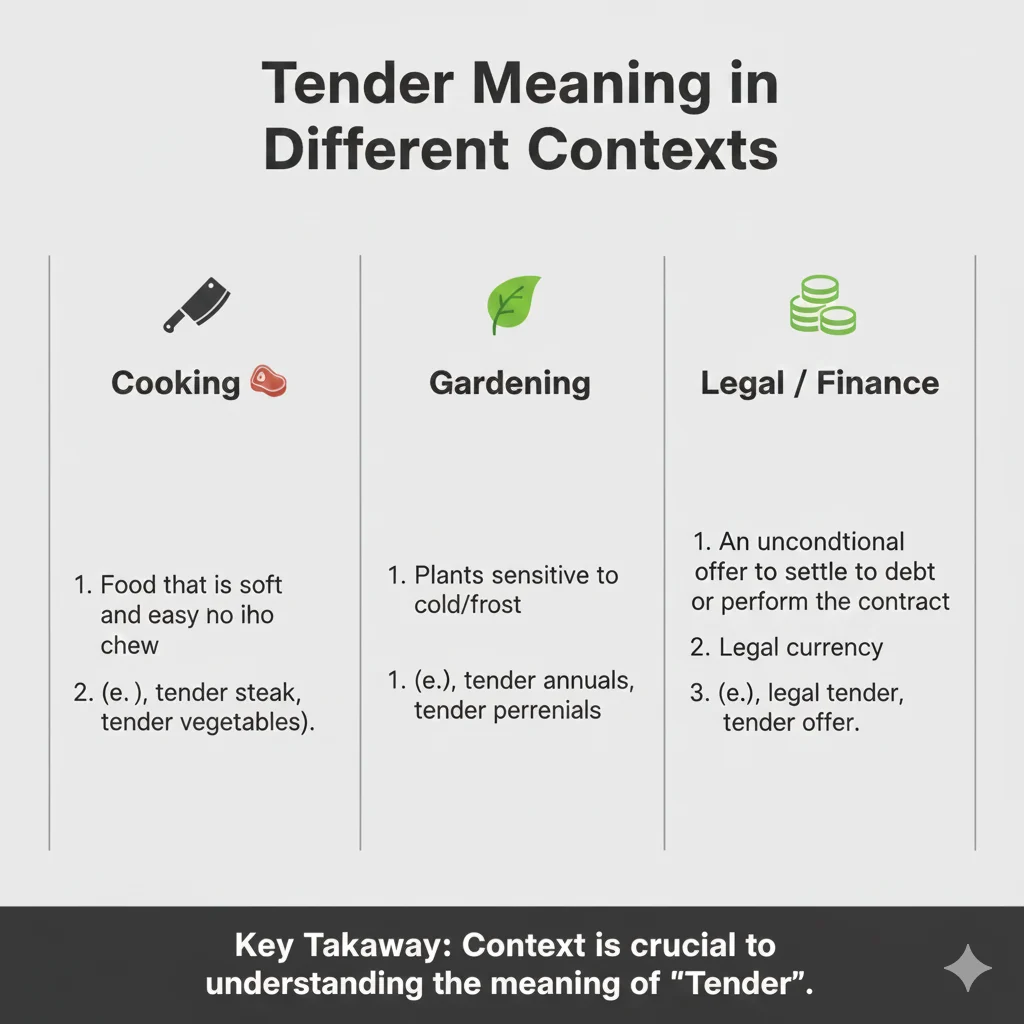
1. In Everyday Conversation
- Describes kindness or affection.
“She gave him a tender smile.”
“He has a tender heart.”
Used to show emotional sensitivity or warmth.
2. In Food
- Refers to soft texture.
“This steak is so tender.”
Common in cooking reviews or recipes.
3. In Business and Finance
- Means a formal offer to buy or do something — like tendering a bid.
“The company submitted a tender for the construction project.”
“A tender offer was made to purchase shares.”
4. In Legal Context
- To tender something means to formally present or offer.
“The defendant tendered an apology in court.”
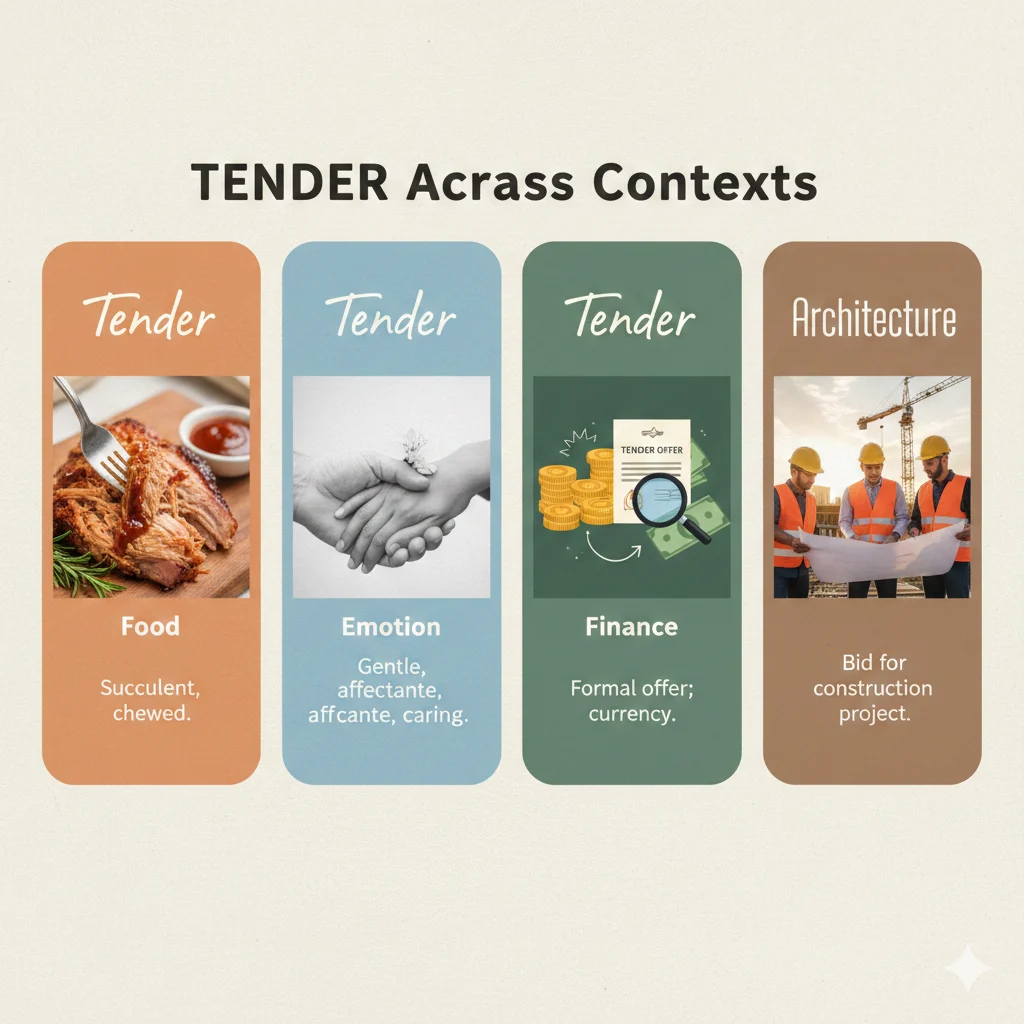
📊 Table: “Tender” Across Contexts
| Context | Meaning | Example Sentence |
| Emotional | Gentle, caring | “She gave him a tender hug.” |
| Culinary | Soft, easy to chew | “The chicken was tender and juicy.” |
| Business | Formal offer or bid | “They issued a tender for suppliers.” |
| Legal | Formal submission or presentation | “He tendered his resignation letter.” |
💬 Examples of “Tender” in Conversations
Example 1 – Emotional Context:
Alex: “He’s always so tender with his words.”
Jamie: “Yeah, he really cares about people’s feelings.”
Example 2 – Food Context:
Chef: “Cook it slowly to make the meat tender.”
Example 3 – Business Context:
Manager: “We’re preparing our tender proposal for the government project.”
Example 4 – Legal Context:
Lawyer: “We tendered the necessary documents this morning.”
🔍 Similar or Related Terms
Here are some related words to “tender” that can help understand its nuances:
| Term | Meaning | Context |
| Gentle | Kind, soft in action | Emotional |
| Delicate | Fragile, sensitive | Emotional / Physical |
| Offer | Propose or submit | Business / Legal |
| Proposal | Formal suggestion | Business |
| Affectionate | Loving, caring | Emotional |
🧠 How to Use “Tender” Correctly
✅ Do’s:
- Use “tender” to describe emotions or care.
“He gave her a tender touch.” - Use it in professional writing when referring to bids or offers.
“The firm submitted a tender offer.”
❌ Don’ts:
- Don’t confuse it with “tendon” or “tenure.”
- Avoid overusing it in formal reports unless referring to official bids.
Tone tip: “Tender” feels warm, emotional, or formal, depending on context — adapt it accordingly.
⚠️ Common Mistakes or Misinterpretations
- Mixing up meanings:
Some people think “tender” only means emotional softness, but it also has strong business and legal meanings. - Spelling confusion:
“Tender” vs. “Tinder” — Tinder is a dating app, while tender means soft or offering something. - Incorrect context:
Using “tender” for toughness — “He’s a tender man” ≠ “He’s weak.” Tenderness is emotional strength, not weakness.
❓ FAQs About “Tender”
1. What does “tender” mean in simple terms?
It means being gentle, soft, or caring — or, in business, making a formal offer or proposal.
2. Is “tender” slang or formal?
It’s not slang — it’s a standard English word used in both casual and formal settings.
3. What’s the difference between “tender” and “gentle”?
Both describe kindness or softness, but “tender” often carries emotional depth, while “gentle” focuses more on action or touch.
4. How do you use “tender” in a sentence?
“She has a tender heart.”
“They tendered their resignation.”
5. Where is “tender” most used?
Everyday English, business documents, legal contracts, and culinary reviews.
6. When should you avoid using “tender”?
Avoid in slangy or sarcastic tones — it’s best suited for sincere, emotional, or professional contexts.
🏁 Conclusion
Now you know that “tender” isn’t just about being soft — it’s a versatile English word that expresses gentleness, care, and formality, depending on where it’s used.
From tender love and emotions to tender offers in business, understanding its meaning helps you use it confidently and correctly in any context.
✨ Now that you know what “tender” means, you’ll never be confused again! Keep exploring our site for more word meanings, slang guides, and language tips.