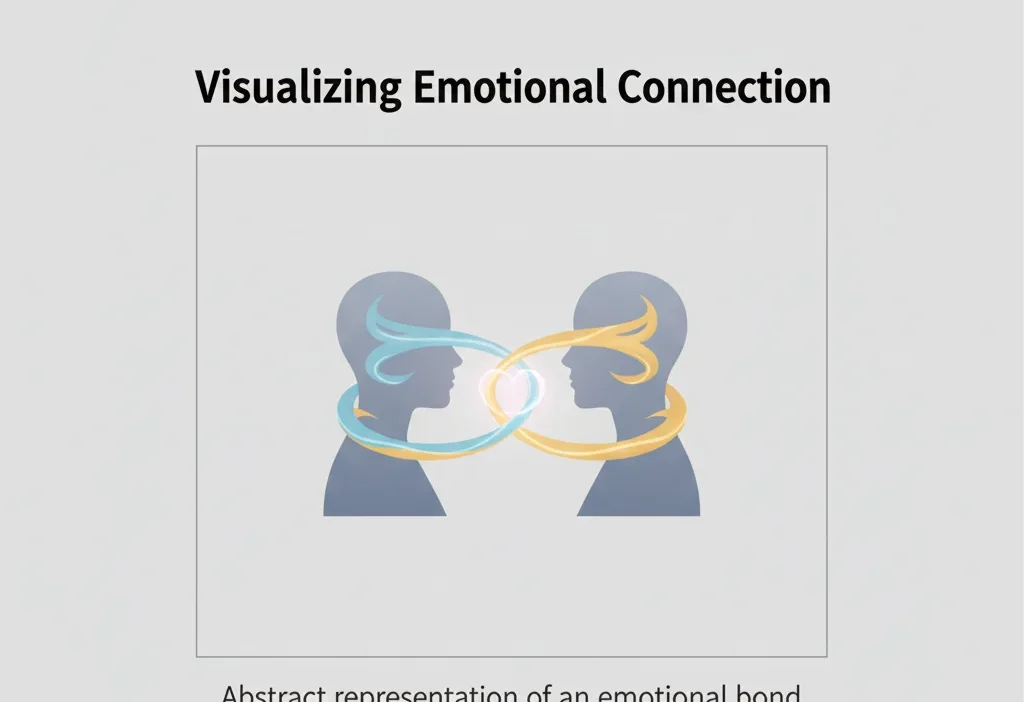
Ever heard someone say, “We’ve got a soul tie,” and wondered what that really means?
The phrase “soul ties” has become a buzzword across social media, therapy circles, and even pop culture — often used when describing deep emotional or spiritual connections with someone.
In this guide, we’ll break down the meaning of soul ties, where the concept originated, how it’s used in modern contexts (like TikTok or relationships), examples of how it shows up in real life, and how to identify if you might have one.
🕊️ What Does “Soul Ties” Mean?
Soul ties refer to a deep emotional, spiritual, or psychological connection between two people — often formed through close relationships, intimacy, or shared experiences.
It’s not an official psychological term but is widely used to describe bonds that feel hard to break, even after separation.
People often use it in the context of romantic relationships, friendships, or family connections.
🌱 Origin and Popularity of the Term “Soul Ties”
The concept of soul ties has spiritual and religious roots, dating back centuries.
In Christian teachings, a soul tie is thought to form when two people become deeply connected — often through sexual intimacy or emotional closeness — as mentioned in passages like 1 Samuel 18:1, where David and Jonathan’s souls are said to be “knit together.”
However, in the modern era, the term gained mainstream popularity through:
- Counseling and relationship therapy discussions about emotional bonds.
- TikTok and Instagram videos exploring “toxic soul ties” or “breaking soul ties” rituals.
- Pop culture and self-help influencers, who use it to explain lingering attachment after a breakup.
By the 2020s, “soul ties” became a trending topic in relationship advice and spiritual wellness communities.
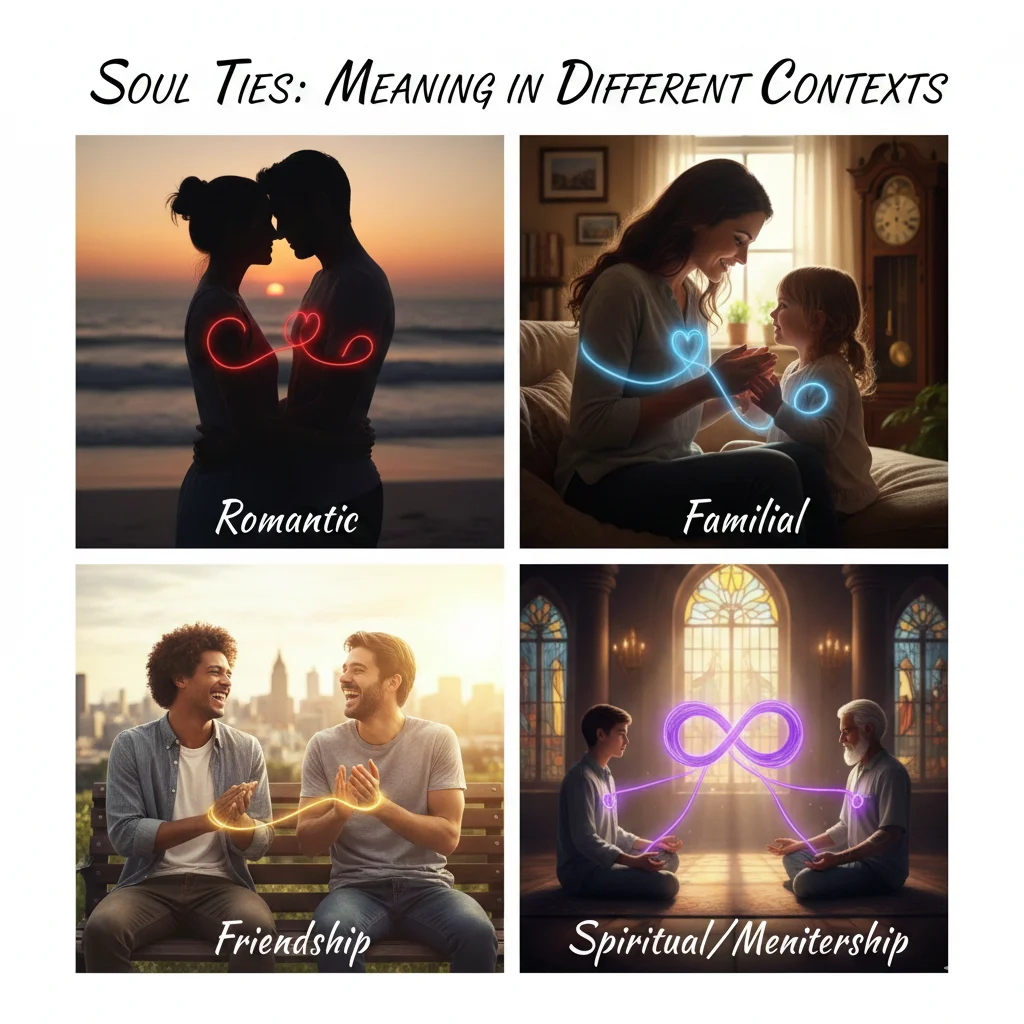
💞 Soul Ties Meaning in Different Contexts
Here’s how the phrase “soul ties” is used across different platforms and situations:
✉️ In Everyday or Text Conversations
Used to describe a deep, unexplainable bond:
“I can’t stop thinking about him — maybe we still have a soul tie.”
📱 On TikTok or Instagram
Often used in captions, videos, or reels discussing healing, trauma, or spiritual connection.
Example hashtags: #SoulTies, #EnergyBonds, #SpiritualConnection.
💼 In Counseling or Therapy
Describes emotional enmeshment or difficulty detaching from a person due to unresolved feelings or co-dependency.
| Context | Meaning | Common Tone |
| Texting | Emotional bond or attachment | Reflective |
| TikTok / Social Media | Spiritual or healing-focused | Inspirational |
| Therapy / Religion | Deep emotional or spiritual connection | Analytical |
🗣️ Examples of “Soul Ties” in Conversation
Here are some realistic examples showing how the term is used:
Example 1:
Friend 1: I thought I was over him.
Friend 2: Maybe it’s a soul tie — those take time to break.
Example 2:
“We had such a strong soul tie that even after years, I still felt his presence.”
Example 3 (spiritual context):
“Some relationships are meant to teach lessons — not to form lasting soul ties.”
🔗 Similar or Related Terms
Here are a few related concepts that often appear alongside “soul ties”:
| Term | Meaning |
| Twin Flame | A mirror soul or spiritual counterpart, believed to be one’s “other half.” |
| Soulmate | A person deeply compatible with your soul, often in love or friendship. |
| Karmic Relationship | A challenging relationship meant to teach important life lessons. |
| Energy Cord | A metaphysical link between two people’s emotional or spiritual energies. |
✅ How to Use “Soul Ties” Correctly
Here’s how to talk about soul ties appropriately and clearly:
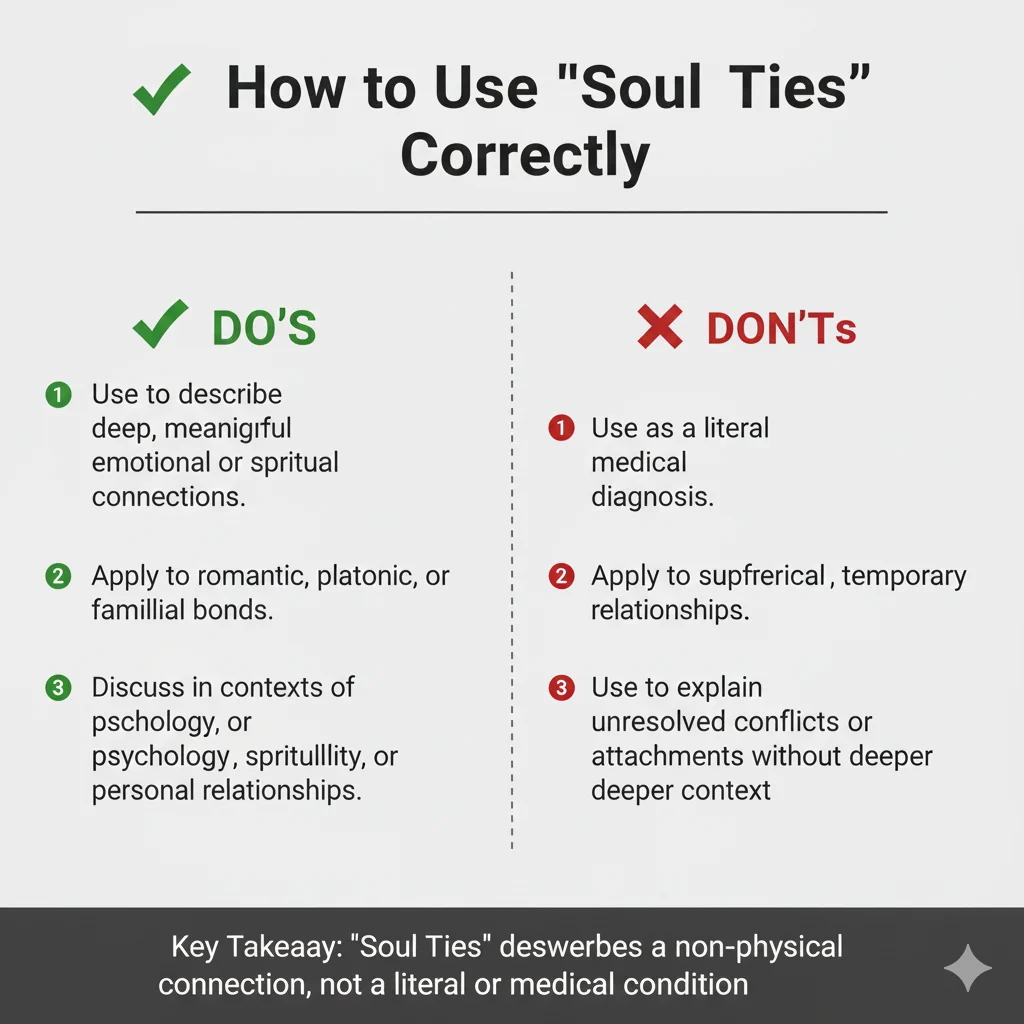
Do’s:
- ✅ Use it when describing deep emotional or spiritual connections.
- ✅ Use it in personal growth or relationship discussions.
- ✅ Be open to both religious and psychological interpretations.
Don’ts:
- ❌ Don’t assume every attachment is a soul tie.
- ❌ Avoid using it to label or guilt someone emotionally.
- ❌ Don’t confuse it with casual attraction or infatuation.
⚠️ Common Mistakes or Misinterpretations
Many people mistake a soul tie for obsession or dependency.
While both involve strong emotions, a soul tie implies a mutual or spiritual bond, not a one-sided fixation.
Another confusion is between “soul ties” and “soulmates.”
A soulmate represents a healthy, balanced connection, while a soul tie can sometimes feel binding or draining, especially if emotional healing hasn’t occurred.
❓ Soul Ties FAQ
1. What does “soul ties” mean in a relationship?
It means a powerful emotional or spiritual bond that keeps two people connected, often beyond physical interaction or time apart.
2. Are soul ties real or just a belief?
“Soul ties” are more of a spiritual and psychological concept than a proven scientific term. Many people use it to explain emotional attachment that feels deeper than usual.
3. How do you know if you have a soul tie with someone?
You may constantly think about them, feel their emotions, or find it hard to move on even after time passes. These signs are often linked to emotional dependency or unresolved attachment.
4. Can you break a soul tie?
Yes. Healing practices like forgiveness, therapy, journaling, or spiritual prayer can help release unhealthy emotional bonds.
5. What’s the difference between a soul tie and a twin flame?
A soul tie is a deep emotional connection, while a twin flame is believed to be a single soul split into two bodies — often more intense and transformative.
6. Should you talk about soul ties in therapy?
Absolutely. Many therapists explore attachment styles and emotional bonds, which can overlap with the idea of soul ties in a more scientific framework.
🌻 Conclusion
In short, the meaning of soul ties goes beyond simple attraction — it’s about deep, lasting emotional and spiritual connections that shape how we love, heal, and grow.
Understanding soul ties can help you recognize why some relationships linger and how to release bonds that no longer serve you.
Now that you know what “soul ties” mean, you’ll never be confused again!
✨ Keep exploring our site for more spiritual and relationship terms explained clearly and simply.