Have you seen someone say, “You’re such a sap,” and wondered what it means? Or maybe you encountered SAP in a job listing or business discussion and got confused.
The word “sap” has multiple meanings, depending on context.
Quick answer:
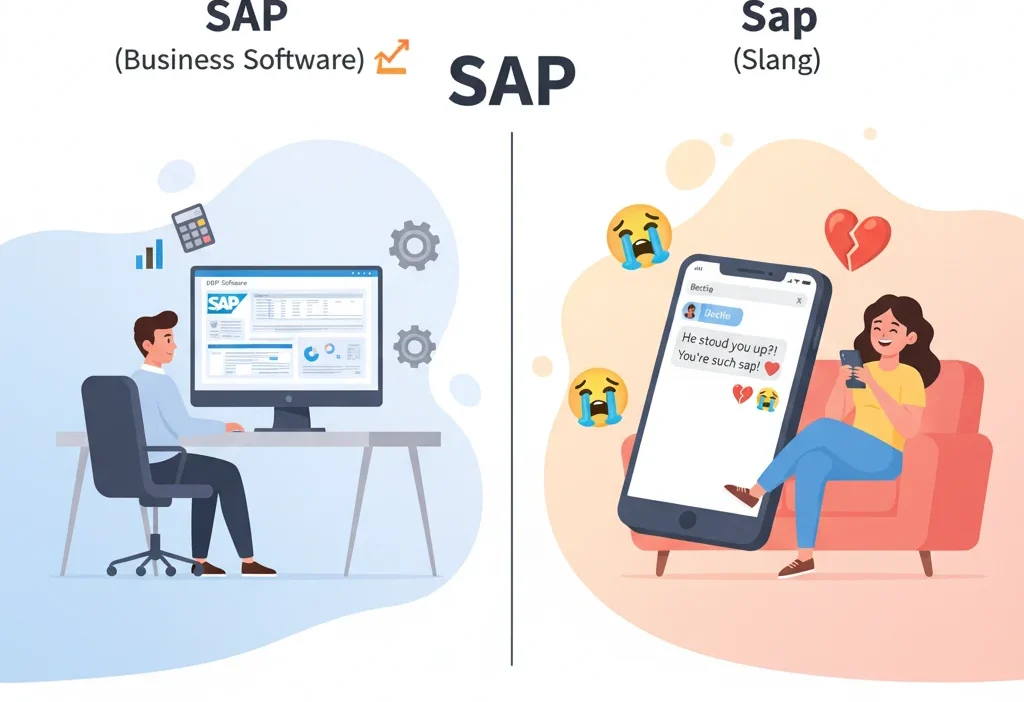
In informal English, a sap is someone who is overly sentimental, gullible, or easily fooled. In business and technology, SAP stands for Systems, Applications, and Products in Data Processing, a global enterprise software company.
Let’s break down every meaning clearly.
What Does Sap Mean? 🤔
The meaning of sap depends on how it’s used:
1️⃣ Sap Meaning in Slang
In slang, calling someone a sap means they are overly emotional, soft-hearted, or too trusting.
It is usually playful rather than cruel.
Example:
“You cried at that movie again? You’re such a sap!”
The sap meaning slang refers to someone who gets sentimental easily or believes others too quickly.
💕 Sap Meaning in Relationships
In romantic situations, being called a sap often means you’re overly sweet or emotional about love.
Example:
“I write her poems every week. I know, I’m such a sap.”
Here, sap meaning romantic refers to someone who wears their heart on their sleeve.
Sap Meaning in Social Media & Gen Z Culture 📱
Among Gen Z users, sap is often used humorously to describe emotional vulnerability. For example:
“I cried at a dog video again… I’m such a sap.”
On platforms like Instagram and TikTok, the word may be used ironically, where someone embraces being sentimental instead of hiding it.
Unlike harsher insults, calling someone a sap online usually signals playful teasing rather than serious criticism.
Sap Meaning in College or School Context 🎓
In college or school settings, calling someone a sap usually carries the same slang meaning — someone who is overly emotional, too trusting, or easily influenced.
For example:
“He did all her homework for free? What a sap.”
In student culture, the term is often used jokingly to describe someone who goes out of their way for others, especially in romantic situations. It’s rarely meant as a serious insult.
This informal use explains why “sap meaning college” and similar phrases appear in online searches — students frequently encounter it in casual conversation.
😅 “You’re Such a Sap” Meaning
When someone says “you’re such a sap”, they usually mean:
- You’re being overly sentimental
- You’re too trusting
- You’re acting soft-hearted
It’s typically teasing — not a serious insult.
💬 Sap Meaning in English (Insult Context)
As an insult, sap means a gullible or naive person. However, it’s mild and often humorous compared to harsher terms like “fool” or “idiot.”
🌳 Tree Sap Meaning (Original Definition)
Before slang existed, sap referred to the liquid inside trees that carries nutrients.
This is the original meaning of the word.
Example:
“The tree sap is sticky and sweet.”
The slang meaning developed later from the idea of someone being “soft” like plant sap.
🔊 How to Pronounce “Sap”
Sap is pronounced:
/sæp/
It rhymes with cap and map.
When referring to the company, it’s pronounced letter-by-letter:
S-A-P
SAP Meaning in Business 💼
In professional contexts, SAP is completely different from slang.
SAP stands for:
Systems, Applications, and Products in Data Processing
It is one of the world’s largest enterprise software companies.
What Does SAP Mean in Job Listings?
When you see SAP mentioned in job descriptions, it usually means the company uses SAP software and expects candidates to have experience with it.
For example:
“Must have 2+ years of SAP ERP experience.”
In this context, SAP refers strictly to business software knowledge, not the slang meaning.
How SAP Software Is Used in Modern Businesses 💼
SAP software helps organizations manage complex operations by integrating different departments into one system. Large corporations use SAP for:
- Financial reporting and accounting
- Supply chain management
- Payroll and human resources
- Inventory control
- Customer relationship management
Because SAP systems handle large amounts of data, they are commonly used by multinational companies and enterprises.
This explains why many job listings mention “SAP experience” as a required skill.
What Does SAP Mean in Business?
In business, SAP meaning refers to enterprise resource planning (ERP) software that helps companies manage:
- Finance
- Supply chain
- Human resources
- Data analytics
- Inventory
Example:
“Our company uses SAP ERP to manage accounting and logistics.”
What Does SAP Stand For?
SAP stands for Systems, Applications, and Products in Data Processing.
It is an acronym, meaning each letter represents a word in the company’s full name.
When referring to the software company, it is always written in uppercase: SAP.
What Does SAP Stand For in Software?
SAP stands for Systems, Applications, and Products.
It was founded in 1972 in Germany and has become a global leader in enterprise technology.
What Is a SAP Number?
In business systems, a SAP number is a unique identification number assigned to employees, vendors, or transactions inside SAP software for tracking purposes.
Origin of the Word “Sap” 📜
Slang Origin
The slang version of sap dates back centuries. It evolved from the plant-based meaning, suggesting someone “soft” or emotionally vulnerable.
SAP Software Origin
The company SAP was founded in 1972 by former IBM engineers in Germany and became globally popular in the 1990s with its ERP systems.
Sap Meaning in Different Contexts
| Context | Meaning |
|---|---|
| Slang | Gullible or sentimental person |
| Romantic | Overly emotional in love |
| Tree | Liquid inside plants |
| Business | Enterprise software company |
| Texting | Playful teasing term |
Is Sap a Real Word?
Yes. Sap is a real English word with multiple dictionary definitions, including plant liquid and slang usage.
Sap vs Similar Words: What’s the Difference?
Understanding the nuance between sap and similar words helps clarify its tone.
| Word | Meaning | Tone |
|---|---|---|
| Sap | Overly sentimental or gullible | Playful |
| Sucker | Easily tricked | Slightly harsher |
| Softie | Emotionally sensitive | Affectionate |
| Fool | Lacks judgment | More negative |
| Wimp | Weak or timid | Critical |
Compared to “fool” or “sucker,” sap is generally softer and less aggressive. It often implies kindness rather than stupidity.
Common Mistakes ⚠️
- Confusing SAP (software) with sap (slang)
- Thinking sap is a serious insult (it’s usually playful)
- Assuming SAP always refers to business
Context determines meaning.
Is Being a Sap Always Bad? 🤷
Interestingly, being called a sap isn’t always negative. In some contexts, it can suggest kindness, emotional openness, or romantic sincerity.
For example, someone who surprises their partner with thoughtful gifts might be called a sap — but in an affectionate way.
In modern culture, emotional vulnerability is often seen as strength rather than weakness. That’s why the word sap sometimes carries warmth instead of criticism.
FAQs About Sap Meaning ❓
What does sap mean in slang?
It refers to someone overly sentimental or easily fooled.
What does “you’re such a sap” mean?
It means you’re acting soft-hearted or emotional, usually playfully.
What does SAP stand for?
Systems, Applications, and Products in Data Processing.
Is sap an insult?
It can be teasing but is not a harsh insult.
What is tree sap?
The nutrient-rich liquid inside plants.
Conclusion 🎯
The word sap has more than one meaning:
- Lowercase sap = sentimental or gullible person
- Uppercase SAP = global enterprise software company
- Tree sap = plant liquid
Understanding the context makes all the difference.
Now when someone says “you’re such a sap” — or mentions SAP in a meeting — you’ll know exactly what they mean.

Evie Wyld is a word-meaning specialist at Meanovia.com. She simplifies complex words, phrases, and language trends, helping readers quickly grasp the exact meaning behind every term in a clear and approachable way.