

Ever come across the word “rendezvous” and wondered what it really means?
Maybe you’ve seen it in a movie title, a romantic novel, or even a text message like “Let’s have a little rendezvous later 😉.” The word sounds elegant — but what does it actually mean, and how do you use it correctly?
In this article, we’ll explore:
The definition of “rendezvous”
Its origin and history
Different meanings in various contexts
Examples in everyday use
Similar terms and FAQs to help you understand it clearly
🕯️ What Does Rendezvous Mean?
A rendezvous means a planned meeting or gathering between two or more people, usually at a specific place and time.
It’s a French-origin word often used in formal or romantic contexts, meaning “to meet” or “an arranged meeting.”
Example : “Rendezvous” means an arranged meeting or appointment between two or more people, often in a specific place or time.
🪶 Origin and Popularity
The word rendezvous comes from French, where “rendez-vous” literally means “present yourselves.”
- Root Words:
- Rendez = “present yourself”
- Vous = “you” (plural/formal)
- Rendez = “present yourself”
- First Recorded Use: Late 16th century, when it entered English through military and diplomatic usage.
Over time, the meaning expanded from “military assembly point” to include romantic or friendly meetings.
Today, it’s common in literature, film, and casual speech, giving a touch of sophistication to the idea of meeting someone.
🕰️ Timeline Snapshot:
- 1500s: Used in French military contexts.
- 1600s: Adopted into English vocabulary.
- 1900s: Became popular in romance and travel writing.
- Modern use: Common in texting, event planning, and pop culture.
💬 Rendezvous Meaning in Different Contexts
The term “rendezvous” can be used in several ways — from casual meetups to formal appointments. Let’s break it down:
📱 In Texting or Chatting
When someone says “Let’s rendezvous,” it means they’re suggesting to meet up.
Example: “Let’s rendezvous at the café after work!”
Tone: Playful, romantic, or casual depending on context.
🎬 In Pop Culture
Used in songs, movies, and TV shows to express secret or romantic meetings.
Example: “Our secret rendezvous spot by the lake.”
Tone: Mysterious or intimate — often implying something special or private.
💼 In Business or Professional Settings
Less common, but can mean a planned meeting point or appointment, especially in logistics or space missions.
Example: “The spacecraft successfully completed its orbital rendezvous.”
Tone: Formal, technical, or scientific.
| Context | Meaning | Common Tone |
| Texting | Meeting or hanging out | Friendly, flirty |
| Romantic | Secret or special meeting | Intimate |
| Military / Technical | Scheduled assembly or docking | Formal |
| Space / Science | Meeting between crafts or satellites | Technical |
🗣️ Examples of Rendezvous in Conversations
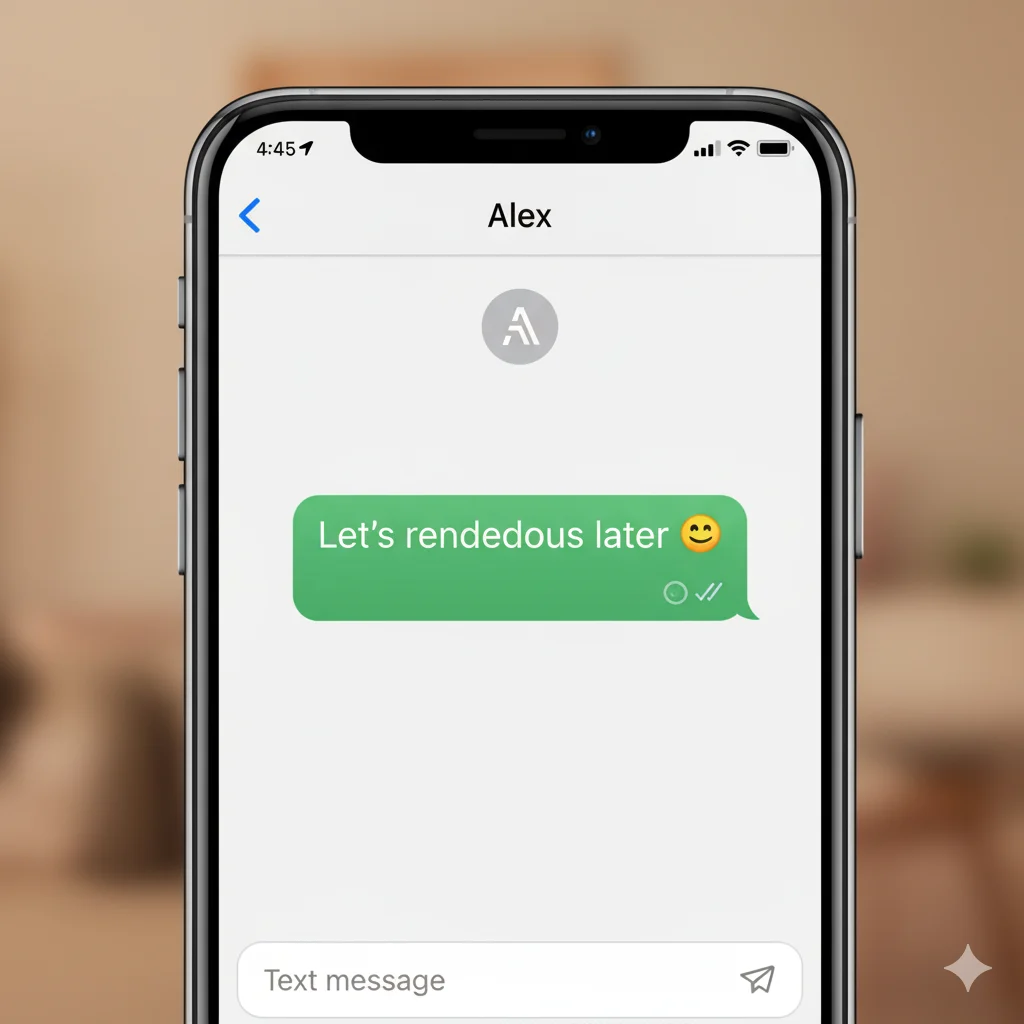
Example 1 (Casual Chat):
Friend 1: Let’s rendezvous downtown tomorrow.
Friend 2: Sounds good — coffee’s on me! ☕
Example 2 (Romantic):
“Our late-night rendezvous under the stars felt magical.”
Example 3 (Professional):
“The project team will rendezvous at 9 a.m. to discuss the next phase.”
Example 4 (Scientific):
“NASA announced a successful rendezvous between two spacecraft in orbit.”
🔁 Similar or Related Terms
Here are a few similar words and phrases often used instead of or alongside “rendezvous”:
| Term | Meaning |
| Meet-up | Informal meeting or gathering. |
| Appointment | A scheduled meeting for a specific purpose. |
| Date | A romantic meeting or outing. |
| Hangout | Casual get-together with friends. |
| Assembly | A formal gathering or meeting. |
Each of these words has a slightly different tone — “rendezvous” often feels more romantic, elegant, or secretive.
✅ How to Use “Rendezvous” Correctly
Do’s:
- ✅ Use when describing planned meetings, especially romantic or secret ones.
- ✅ Use in formal writing or creative expression to add sophistication.
- ✅ Use as both noun and verb:
- Noun: “Our rendezvous was unforgettable.”
- Verb: “We’ll rendezvous at noon.”
- Noun: “Our rendezvous was unforgettable.”
Don’ts:
- ❌ Don’t use it in very casual slang settings like “WYD” or “LMK.”
- ❌ Avoid misspelling it — correct spelling: rendezvous (not “rendevous” or “rondavous”).
- ❌ Don’t overuse it — it sounds better in moderation.
⚠️ Common Mistakes or Misinterpretations
- Confusing “rendezvous” with “date”
→ A “date” is specifically romantic, while a “rendezvous” can be romantic, friendly, or professional. - Mispronunciation
→ Correct pronunciation: “rahn-dey-voo.” (the “z” and “s” are silent). - Using it only romantically
→ While often romantic, it can also describe any planned meeting — even between coworkers or friends.
❓ FAQ Section
1. What does “rendezvous” mean in English?
“Rendezvous” means a planned meeting or appointment between two or more people, often arranged in advance.
2. Is “rendezvous” a French word?
Yes. It comes from the French phrase “rendez-vous,” which literally means “present yourselves.”
3. Can “rendezvous” be used as a verb?
Absolutely. Example: “We’ll rendezvous at the station.” It means “we’ll meet there.”
4. What’s the difference between a date and a rendezvous?
A date is usually romantic, while a rendezvous can be romantic, friendly, or professional.
5. How do you pronounce “rendezvous”?
It’s pronounced as “rahn-dey-voo.” The letters “z” and “s” are silent.
6. Is “rendezvous” formal or informal?
It’s neutral — suitable for both formal writing and romantic or creative expression.
🌟 Conclusion
To sum it up, “rendezvous” means a planned or arranged meeting between two or more people. Rooted in French, it brings an air of elegance and mystery to ordinary meetups — whether romantic, professional, or friendly.
So next time you see or use “rendezvous,” you’ll know it’s more than just a meeting — it’s a moment, a plan, or a memory in the making.
✨ Now that you know what “rendezvous” means, you’ll never be confused again! Keep exploring our site for more fascinating word meanings and trending phrases.

Claire Fuller is a word-meaning specialist at Meanovia.com. She explains complex words, phrases, and language trends in a clear, relatable way, helping readers quickly understand the exact meaning behind every term.