
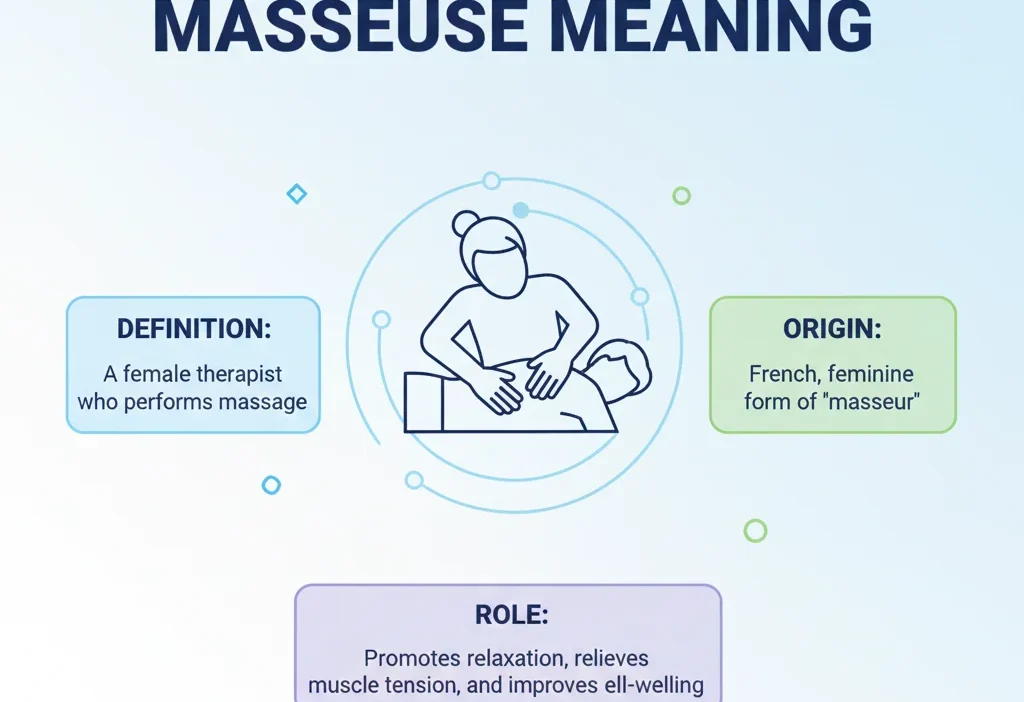
Ever heard someone say they’re going to see a “masseuse” and wondered what it really means?
The term masseuse has been around for centuries, but in recent years, it’s become less common — and even controversial — due to its outdated and gender-specific nature.
In this guide, we’ll break down:
The definition of “masseuse”
Its origin and evolution
How the term is used today
Examples and related terms
FAQs to clear up common confusion
🧠 What Does Masseuse Mean?
A masseuse is a female massage therapist — someone trained to manipulate muscles and soft tissues to relieve tension, stress, or pain.
The masculine form is “masseur,” and both come from French. However, today, professionals prefer the gender-neutral term “massage therapist.”
📜 Origin and Popularity
The word “masseuse” originates from the French language, where masseuse (feminine) and masseur (masculine) come from masser, meaning “to massage.”
- Late 19th century: The word entered the English language through European spa culture.
- Mid-20th century: Widely used to describe women providing massages in salons or spas.
- Modern day: Gradually replaced by “massage therapist” due to gender neutrality and professionalism.
🕰️ Quick timeline:
- 1880s: First recorded English use.
- 1920s–1960s: Common in beauty and wellness industries.
- 2000s–today: Shift toward inclusive, professional terminology.
💬 Masseuse Meaning in Different Contexts
The word’s meaning changes slightly depending on context and tone.
🧖 In Professional Settings
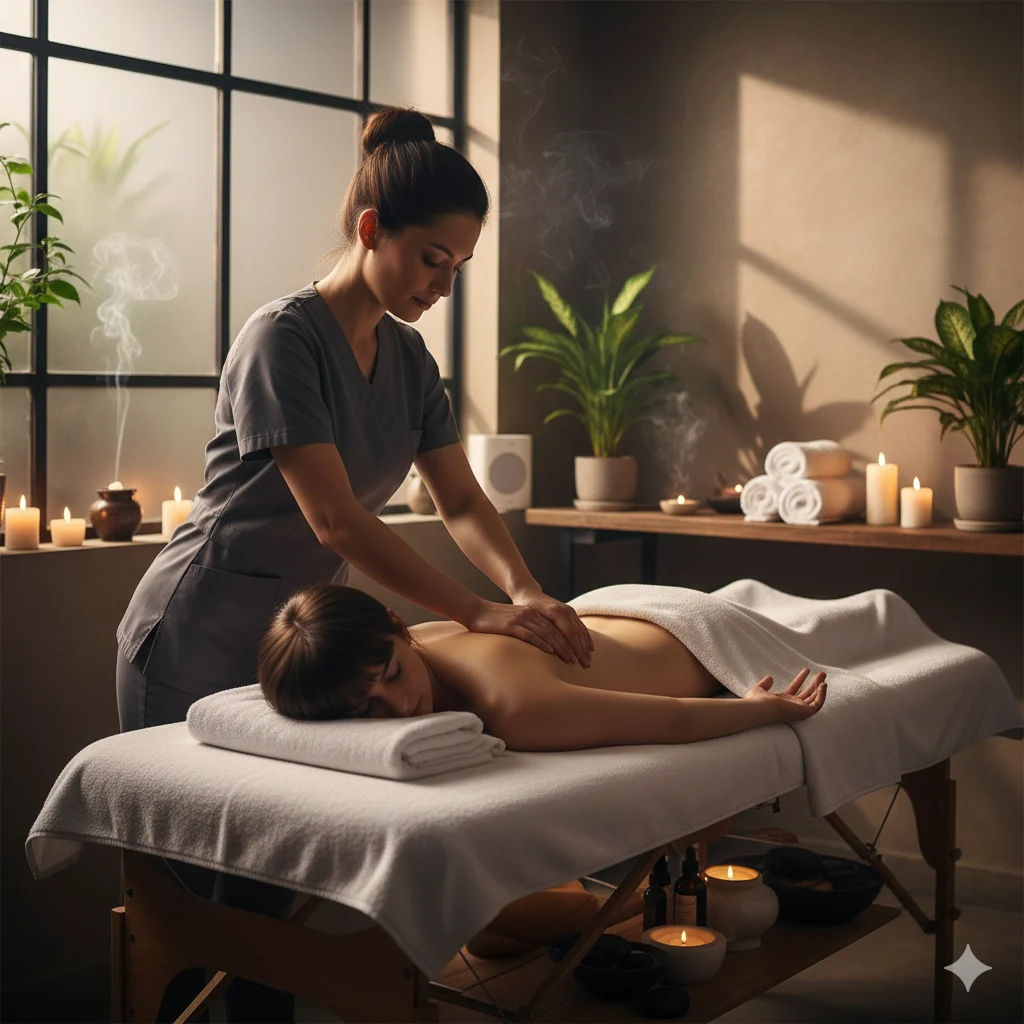
“Masseuse” refers to a trained female professional who provides therapeutic or relaxation massages.
Example: “The spa’s masseuse specializes in deep tissue massage.”
🌐 In Modern English
The term is falling out of favor, as it may sound outdated or carry inappropriate connotations in English.
Example: “I’d prefer to say ‘massage therapist’ — it sounds more respectful and modern.”
⚠️ In Informal or Misused Contexts
Unfortunately, the word “masseuse” has sometimes been misused in pop culture or informal speech to imply non-professional services. That’s one reason many professionals avoid it today.
Unique Boy Names with Meaning: The Truth Behind Each Name🌟
| Context | Meaning | Appropriateness |
| Spa or wellness industry | Female massage professional | Acceptable but old-fashioned |
| Modern job titles | Massage therapist | Most appropriate |
| Informal/slang use | May imply unprofessional context | Avoid |
💭 Examples of Masseuse in Conversations
Example 1:
Person A: “I booked a masseuse for my back pain.”
Person B: “Nice! Hope you feel better after the session.”
Example 2:
“The spa’s top masseuse is known for her Swedish massage technique.”
Example 3 (Modern correction):
“Actually, we prefer to say ‘licensed massage therapist’ now — it’s gender-neutral and professional.”
🔄 Similar or Related Terms
Here are some related and modern alternatives you might encounter:
| Term | Meaning |
| Massage Therapist | A certified professional who performs therapeutic massages (gender-neutral). |
| Masseur | The male equivalent of “masseuse.” |
| Bodyworker | A holistic practitioner focusing on body and energy therapies. |
| Physical Therapist | A licensed medical professional who treats injuries through physical techniques (more clinical). |
🧭 How to Use “Masseuse” Correctly
✅ Do’s:
- Use when referring to a female massage therapist in historical or traditional contexts.
- Use when describing older literature or titles (e.g., “She trained as a masseuse in 1950s Paris”).
❌ Don’ts:
- Avoid using “masseuse” in modern job titles or professional introductions.
- Don’t use it in a sexualized or informal tone — that’s considered disrespectful.
- Instead, say “massage therapist” to show professionalism and inclusivity.
⚠️ Common Mistakes or Misinterpretations
- Thinking “masseuse” = modern job title
→ It’s now outdated. Use “massage therapist” instead. - Using it in the wrong context
→ The term may unintentionally sound inappropriate, especially in English-speaking cultures. - Confusing masseuse and masseur
→ “Masseuse” = female; “masseur” = male. Both are French gendered words.
❓ FAQ Section
1. What does “masseuse” mean?
A “masseuse” means a female massage therapist, especially in older or French-influenced English. Today, “massage therapist” is preferred.
2. Is the word “masseuse” outdated?
Yes, it’s considered somewhat old-fashioned or gendered. Professionals in the wellness industry use “massage therapist” to sound more modern and inclusive.
3. What’s the difference between a masseuse and a masseur?
“Masseuse” refers to a female therapist, while “masseur” refers to a male therapist. Both come from the French verb masser.
4. Why is the term “masseuse” avoided today?
Because it’s gender-specific and sometimes misinterpreted as unprofessional, many spas and therapists now prefer “licensed massage therapist.”
5. Is it wrong to say “masseuse”?
Not entirely — but it’s better to use “massage therapist” in modern, professional communication to show respect and avoid confusion.
6. Where is the term still used?
You might still hear it in European spas, old films, or literary works, but not commonly in modern English-speaking wellness industries.
🌿 Conclusion
In short, the term “masseuse” means a female massage therapist, originating from French.
While once widely used, it’s now considered outdated and often replaced with “massage therapist” for professionalism and inclusivity.
So next time you visit a spa or wellness center, you’ll know the difference — and use the most respectful term for the skilled professionals who help us unwind and heal.
✨ Now that you know the real meaning of “masseuse,” keep exploring our site for more language, slang, and terminology guides to stay informed and confident

Patrick Gale is a word-meaning expert at Meanovia.com. He explains complex terms, definitions, and language trends with clarity and precision. His goal is to help readers understand the exact meaning behind every word they search.


