

You may hear the word lascivious in books, movies, or news. But what does it mean?
Quick answer: Lascivious means showing strong and improper sexual desire. It is used to describe behavior, looks, or talk that is not decent.
From helping students learn difficult English words, I see many people do not understand this word because it sounds formal. It is not a common everyday word. It is mostly used in books, legal writing, or serious talk.
The word comes from Latin and has a negative meaning. People often search for “lascivious meaning” when they read it in stories or news and want to know what kind of behavior it describes.
🧐 What Does Lascivious Mean?
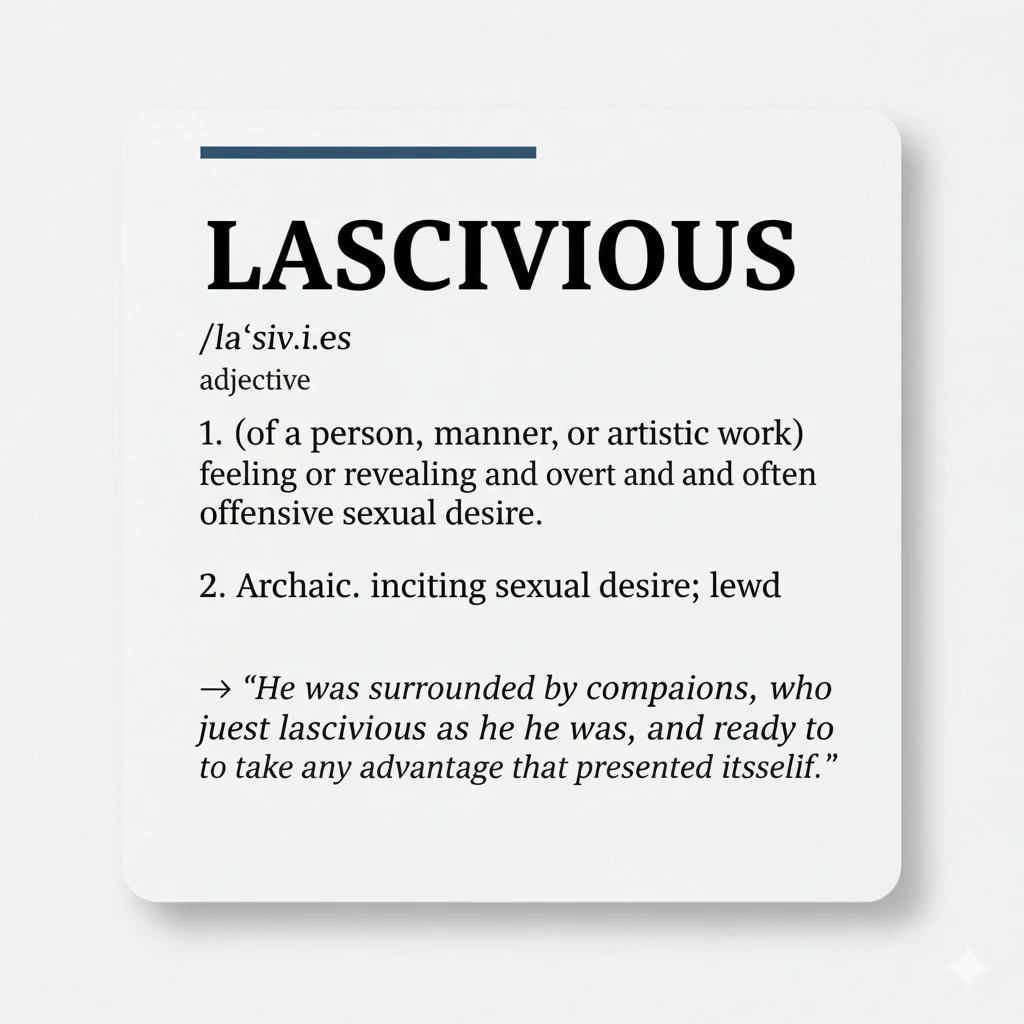
“Lascivious” means feeling or revealing an overt and often offensive sexual desire.
It’s an adjective used to describe lustful, lewd, or indecent behavior — usually with a negative tone.
👉 Commonly used in literature, law, and moral discussions, it often refers to actions or looks that are sexually suggestive in an inappropriate way.
Example:
“He gave her a lascivious glance.”
📜 Origin and Popularity of Lascivious
The word lascivious dates back to the 15th century, originating from the Latin word “lascīvus,” meaning “playful” or “wanton.”
Over time, its meaning evolved from lighthearted mischief to sexual indecency.
Quick Timeline:
| Era | Usage & Meaning |
|---|---|
| 15th Century | Used to describe playfulness or flirtation |
| 17th–18th Century | Gained moral undertones — linked with sin and temptation |
| Modern Day | Describes sexually inappropriate acts or behavior, especially in legal or moral contexts |
It’s still commonly seen in court rulings, classic literature, and news headlines when describing immoral or indecent conduct.
💬 Lascivious Meaning in Different Contexts
1. In Literature
In novels and poetry, lascivious often paints vivid, sensual imagery — used by authors like Shakespeare or Nabokov to describe lustful characters.
“The lascivious whispers filled the room with unspoken desire.”
2. In Legal Terminology
In law, “lascivious conduct” or “lascivious acts” refers to sexually explicit actions deemed offensive or indecent, often in the context of harassment or exploitation cases.
Example: “The court found the defendant guilty of lascivious behavior.”
3. In Everyday Speech
In modern casual usage, it’s rare and often sounds formal or literary. When used, it describes someone behaving overly flirtatious or suggestive.
“He made a lascivious joke that made everyone uncomfortable.”
| Context | Meaning | Tone |
|---|---|---|
| Literature | Sensual, poetic expression | Artistic |
| Legal | Sexually indecent act | Formal/Serious |
| Everyday | Lewd or inappropriate behavior | Negative |
💡 Examples of Lascivious in Conversations
In Daily Use:
A: “Did you see his comment on her post?”
B: “Yeah, that was a bit lascivious, don’t you think?”
In a Literary Description:
“Her lascivious smile could melt the coldest of hearts.”
In a Legal Report:
“He was charged with lascivious assault under state law.”
🔤 Similar or Related Terms
| Word | Meaning | Tone |
|---|---|---|
| Lewd | Vulgar or obscene behavior | Strongly negative |
| Salacious | Overly interested in sexual matters | Tabloid-like |
| Licentious | Morally unrestrained, sexually indulgent | Historical/formal |
| Sensual | Pleasing to the senses, not necessarily sexual | Neutral/Positive |
| Erotic | Relating to sexual love or desire | Artistic/Neutral |
👉 Lascivious sits closer to “lewd” or “salacious”, carrying a judgmental tone, often implying indecency or immorality.
🧭 How to Use Lascivious Correctly
✅ Do use it:
- In formal writing, essays, or literature
- To describe morally inappropriate sexual behavior
- When discussing legal or historical topics
❌ Avoid using it:
- In casual text or social media (it can sound pretentious or too strong)
- As a compliment — it’s not a positive term
Tip:
If you’re unsure, use “flirtatious” or “suggestive” instead — they’re softer and more appropriate for casual speech.
Read More Emasculate Meaning in English & Usage 🔍
⚠️ Common Mistakes or Misinterpretations
- Confusing “lascivious” with “sensual.”
➤ Sensual means pleasure-seeking or affectionate, not indecent. - Thinking it’s gender-specific.
➤ It can describe any person or act, regardless of gender. - Using it humorously.
➤ Be cautious — “lascivious” carries a moral judgment, not playful teasing.
❓ FAQ: Common Questions About Lascivious
1. What does “lascivious” mean in simple terms?
It means showing or expressing sexual desire in a way that’s considered inappropriate or offensive.
2. Is “lascivious” a bad word?
Yes, generally. It’s used to criticize behavior seen as indecent, immoral, or overly sexualized.
3. What’s the difference between “lascivious” and “lewd”?
Both imply sexual indecency, but “lewd” is more direct and vulgar, while “lascivious” can sound more literary or formal.
4. Can “lascivious” describe non-physical things?
Absolutely. It can describe thoughts, looks, jokes, or expressions — not just actions.
5. Is “lascivious” used in law?
Yes. In legal contexts, it refers to indecent acts that show sexual intent or gratification, often used in harassment or assault cases.
6. How do you pronounce “lascivious”?
It’s pronounced: luh-SIH-vee-uhs.
(Phonetic: /ləˈsɪv.i.əs/)
🧩 Summary and Final Thoughts
The word lascivious might sound elegant, but its meaning is far from innocent. It describes lustful, indecent, or sexually offensive behavior, with deep roots in both literary and legal history.
Understanding its tone and context is key — use it when discussing moral boundaries, law, or character analysis, but avoid dropping it casually in conversation.
✨ Now that you know what “lascivious” means, you’ll never misinterpret it again! Keep exploring our site for more fascinating word meanings and linguistic insights.

Evie Wyld is a word-meaning specialist at Meanovia.com. She simplifies complex words, phrases, and language trends, helping readers quickly grasp the exact meaning behind every term in a clear and approachable way.