
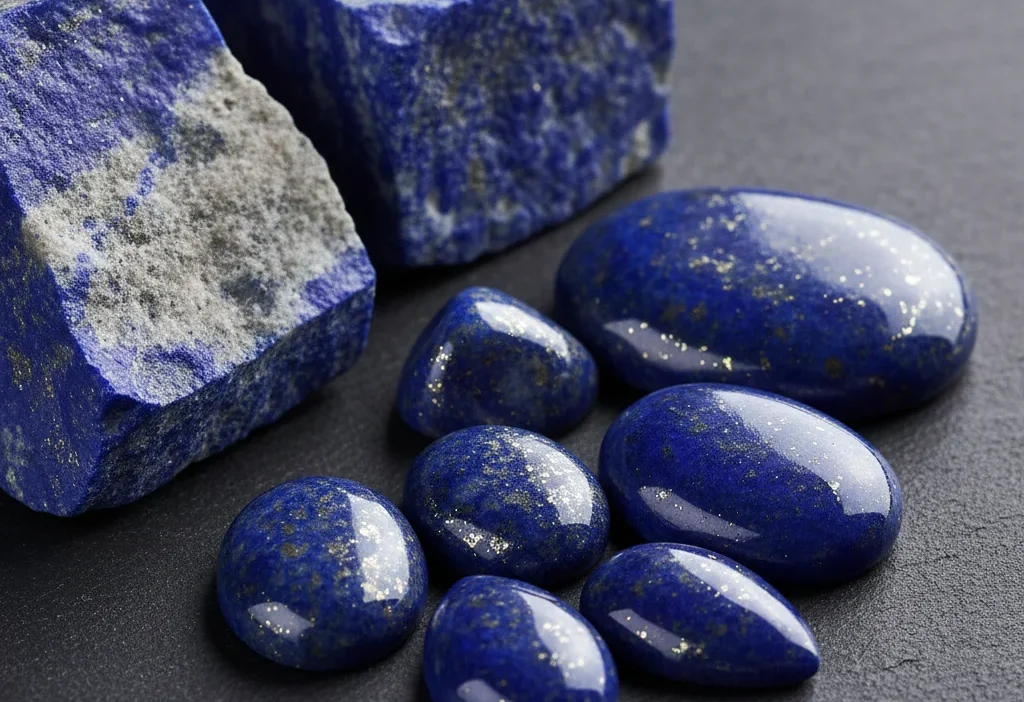
Have you ever seen a deep blue gemstone called lapis lazuli and wondered what it truly represents? Whether you’ve spotted it in jewelry, art, or spiritual settings, this ancient stone carries a meaning far deeper than its color.
In this article, we’ll explore the meaning of lapis lazuli, its origin, symbolism, uses across cultures, and real-life examples of how it’s valued today. By the end, you’ll understand why this mesmerizing gem has been treasured for over 6,000 years.
🔹 What Does Lapis Lazuli Mean?
Lapis lazuli means “blue stone” in Latin — from lapis (stone) and lazulum (sky or heaven).
It’s a semi-precious gemstone known for its intense deep blue hue, often sprinkled with gold-like flecks of pyrite. Spiritually, lapis lazuli symbolizes wisdom, truth, and inner power.
Used in jewelry, art, and meditation, it’s cherished worldwide as a stone of enlightenment and honesty.
🏺 Origin and Popularity
Lapis lazuli has one of the richest histories of any gemstone. It was first mined over 6,000 years ago in what’s now Afghanistan’s Badakhshan region — still one of its main sources today.
- Ancient Egypt: Cleopatra famously used powdered lapis lazuli as eyeshadow and amulets.
- Mesopotamia & Greece: Believed to connect mortals with divine energy.
- Renaissance Europe: Ground into ultramarine pigment — the most expensive blue paint used by artists like Michelangelo and Vermeer.
Today, lapis lazuli remains popular in spiritual practices, healing jewelry, and decorative art due to its timeless beauty and symbolic meaning.
🕰️ Timeline visual suggestion:
- 4000 BCE – First lapis mining in Afghanistan
- 1300 BCE – Egyptian pharaohs adorn tombs with lapis
- 1500s CE – Used in Renaissance paintings
- 2000s–2020s – Revival in spiritual and fashion trends
🌌 Lapis Lazuli Meaning in Different Contexts
In Spirituality and Healing
- Represents truth, self-awareness, and intuition.
- Said to activate the Third Eye chakra, promoting insight and clarity.
- Believed to calm the mind and encourage honest communication.
In Art and History
- Symbolized royalty and divine wisdom.
- Used to depict the robes of the Virgin Mary and the sky in sacred art.
In Modern Fashion and Jewelry
- Seen as a statement of sophistication and confidence.
- Often paired with silver or gold for an elegant, celestial look.
- Popular in boho and minimalist designs for its natural charm.
Table comparing meanings
| Context | Symbolism | Common Use |
| Spiritual | Wisdom, truth, clarity | Meditation, healing stones |
| Historical | Power, divinity | Ancient art, sacred objects |
| Modern | Elegance, authenticity | Jewelry, home decor |
Ambiguous Meaning: What It Really Means in Context
💬 Examples of Lapis Lazuli in
Conversations

Person 1: “I bought a lapis lazuli pendant for confidence.”
Person 2: “That’s the blue stone, right? It’s supposed to boost truth and intuition.”
In art: “The painter used real lapis lazuli pigment to create that stunning deep-blue sky.”
In spirituality: “Many believe meditating with lapis lazuli helps open the mind to higher understanding.”
🔷 Similar or Related Terms
Here are some related gemstones and symbolic stones often compared with lapis lazuli:
| Stone | Meaning | Color |
| Sodalite | Rational thought, logic | Blue with white streaks |
| Azurite | Insight, psychic awareness | Deep azure blue |
| Blue Sapphire | Protection, loyalty | Dark royal blue |
| Turquoise | Healing, communication | Blue-green |
These stones share similar color tones and spiritual themes but differ in mineral composition and energy symbolism.
💫 Soul Ties Meaning: What It Really Means and How It Affects You
💡 How to Use Lapis Lazuli Correctly
✅ Do’s:
- Wear as jewelry (necklaces, rings, or bracelets) to enhance self-expression.
- Place it on your desk or altar for mental clarity.
- Use it during meditation to promote focus and inner peace.
❌ Don’ts:
- Avoid confusing it with dyed stones — authentic lapis has natural gold flecks.
- Don’t expose it to harsh chemicals or sunlight for long periods (it can fade).
- Don’t expect instant “magic” — its symbolism is about mindfulness and growth.
⚠️ Common Mistakes or Misinterpretations
- Not all blue stones are lapis lazuli: Some cheaper stones are dyed or synthetic.
- It’s not just for aesthetics: Lapis carries deep spiritual and historical significance.
- Confusion with sapphire: Lapis is opaque and contains pyrite, unlike transparent sapphire.
Understanding these differences helps you appreciate its true cultural and energetic value.
❓ FAQ Section
1. What does lapis lazuli symbolize?
Lapis lazuli symbolizes wisdom, truth, and self-awareness. It’s often used to inspire clarity, confidence, and honest communication.
2. Is lapis lazuli a real gemstone?
Yes. It’s a natural metamorphic rock composed mainly of lazurite, calcite, and pyrite — prized for its intense royal blue color.
3. What chakra is lapis lazuli connected to?
It’s linked to the Third Eye chakra, which governs intuition, insight, and spiritual awareness.
4. How can you tell if lapis lazuli is genuine?
Authentic lapis has tiny golden pyrite flecks and a deep ultramarine tone. Fake versions may look overly uniform or bright.
5. Can anyone wear lapis lazuli?
Absolutely. It’s suitable for all zodiac signs, but especially beneficial for Sagittarius, Libra, and Virgo, enhancing wisdom and communication.
6. What is lapis lazuli used for today?
It’s commonly used in jewelry, decorative art, and meditation practices — blending beauty with spiritual symbolism.
🪶 Conclusion
Lapis lazuli isn’t just a stone — it’s a symbol of truth, wisdom, and timeless beauty. From ancient tombs to modern jewelry, it continues to inspire creativity and clarity in those who wear or admire it.
Now that you know the meaning of lapis lazuli, you can appreciate its depth both as a gemstone and as a reminder to live authentically and speak your truth.
✨ Keep exploring our site to uncover the stories and meanings behind more fascinating stones and symbols.

Claire Fuller is a word-meaning specialist at Meanovia.com. She explains complex words, phrases, and language trends in a clear, relatable way, helping readers quickly understand the exact meaning behind every term.