
Ever watched Inception or heard someone say, “That’s the inception of my idea,” and wondered what they really meant? The word “inception” pops up in movies, business talks, and everyday language — but its meaning can vary depending on context.
Inception means the beginning, start, or commencement of something, often referring to projects, ideas, or events.
The word inception is commonly used in business, academic, and everyday contexts, prompting people to search for its meaning. It refers to the starting point of an action, process, or institution, such as the inception of a company, a plan, or a movement. The term gained wider recognition through popular culture, like the movie Inception, though its primary meaning is about beginnings and foundations.
Understanding inception helps readers and speakers communicate clearly about timelines, origins, and development stages. Using the term correctly allows one to describe the start of ideas, initiatives, or events in writing, presentations, or discussions, emphasizing the importance of the initial phase.
🧩 What Does Inception Mean?
Inception means the beginning, start, or foundation of something — such as an idea, project, or event.
It’s a noun, used in both formal and informal contexts, often to describe the point when something significant starts or is conceived.
Example: “The company has grown rapidly since its inception in 2015.”
🕰️ Origin and Popularity of the Word “Inception”
The term “inception” originates from the Latin word inceptio, meaning “a beginning” or “undertaking.” It first appeared in English during the 15th century, mainly in academic and philosophical contexts.
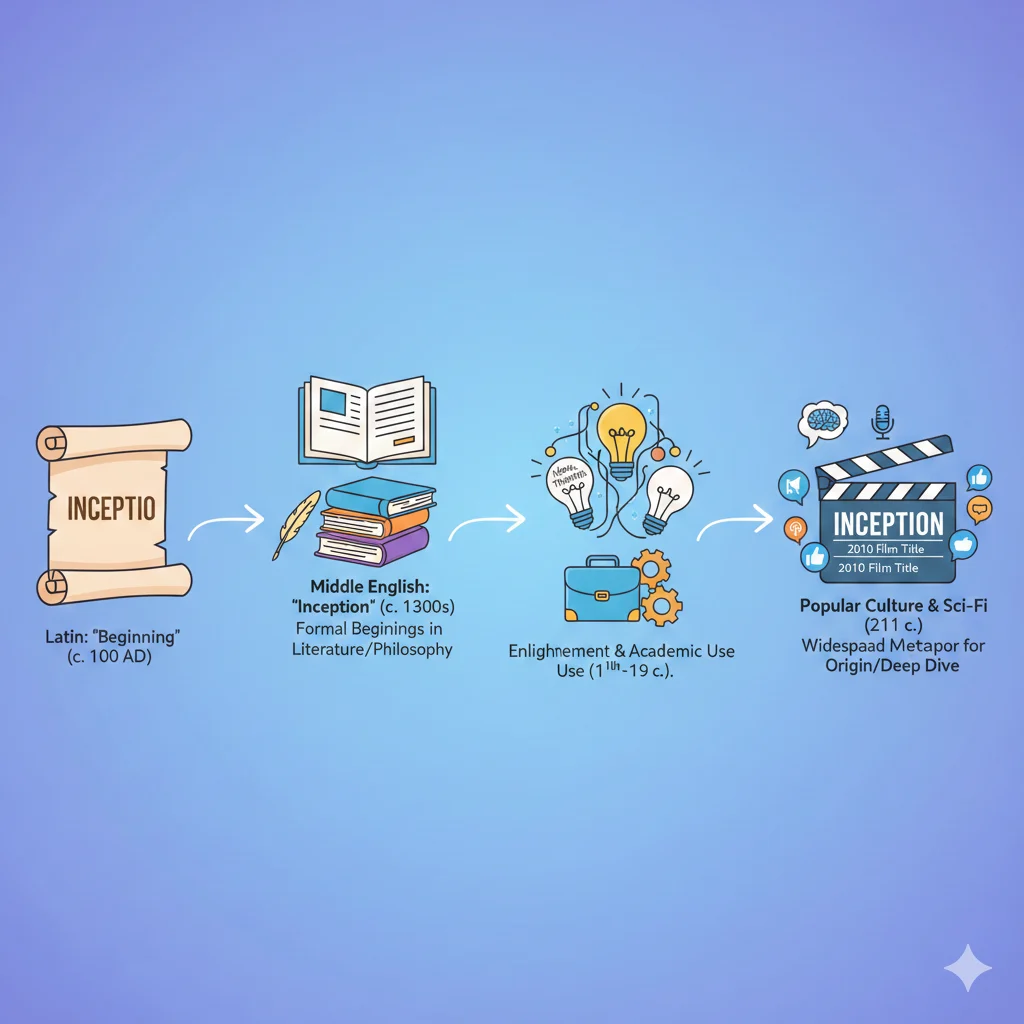
However, the word gained massive pop-culture recognition after the release of Christopher Nolan’s 2010 sci-fi film Inception — where it symbolized the planting of an idea deep within someone’s subconscious.
Timeline Snapshot:
- 1400s: Used in literature and academia.
- 1900s: Common in business and legal writing.
- 2010: Inception movie popularized it globally.
Since then, “inception” has come to represent not just a “beginning” but also the conceptual birth of ideas or dreams.
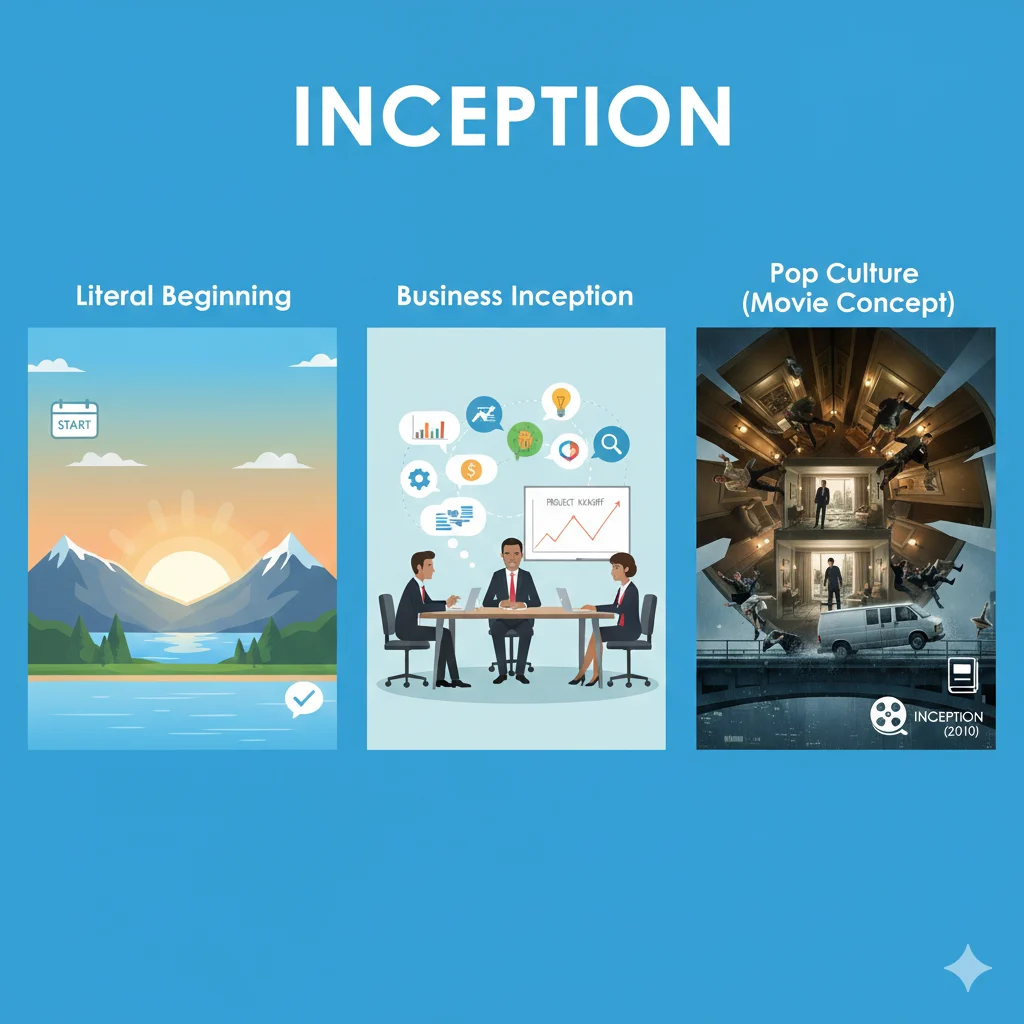
🌍 Inception Meaning in Different Contexts
💼 In Business and Professional Settings
- Refers to the founding or start of an organization, initiative, or project.
Example: “Since its inception, the startup has secured multiple investors.”
🎬 In Movies and Pop Culture
- Symbolizes the creation or implantation of an idea, famously from Inception (2010).
Example: “The movie explores the inception of thoughts inside the human mind.”
🗣️ In Everyday Conversation
- Used to describe when something first began.
Example: “We’ve been friends since the inception of college.”
| Context | Meaning of “Inception” | Example |
| Business | Founding/start of an entity | “At its inception, the firm had five employees.” |
| Pop Culture | Creation of an idea or dream | “The film shows the inception of thoughts.” |
| Daily Use | Beginning of any event or journey | “They’ve known each other since the inception of school.” |
Troglodyte Meaning: Cave Dweller, Primitive, or Something Else?
💬 Examples of “Inception” in Sentences and Conversations
1. Formal Example:
“The inception of the United Nations marked a turning point in global diplomacy.”
2. Business Example:
“Our mission has been clear since the company’s inception.”
3. Pop Culture Example:
“The movie Inception challenges our perception of reality.”
4. Everyday Use:
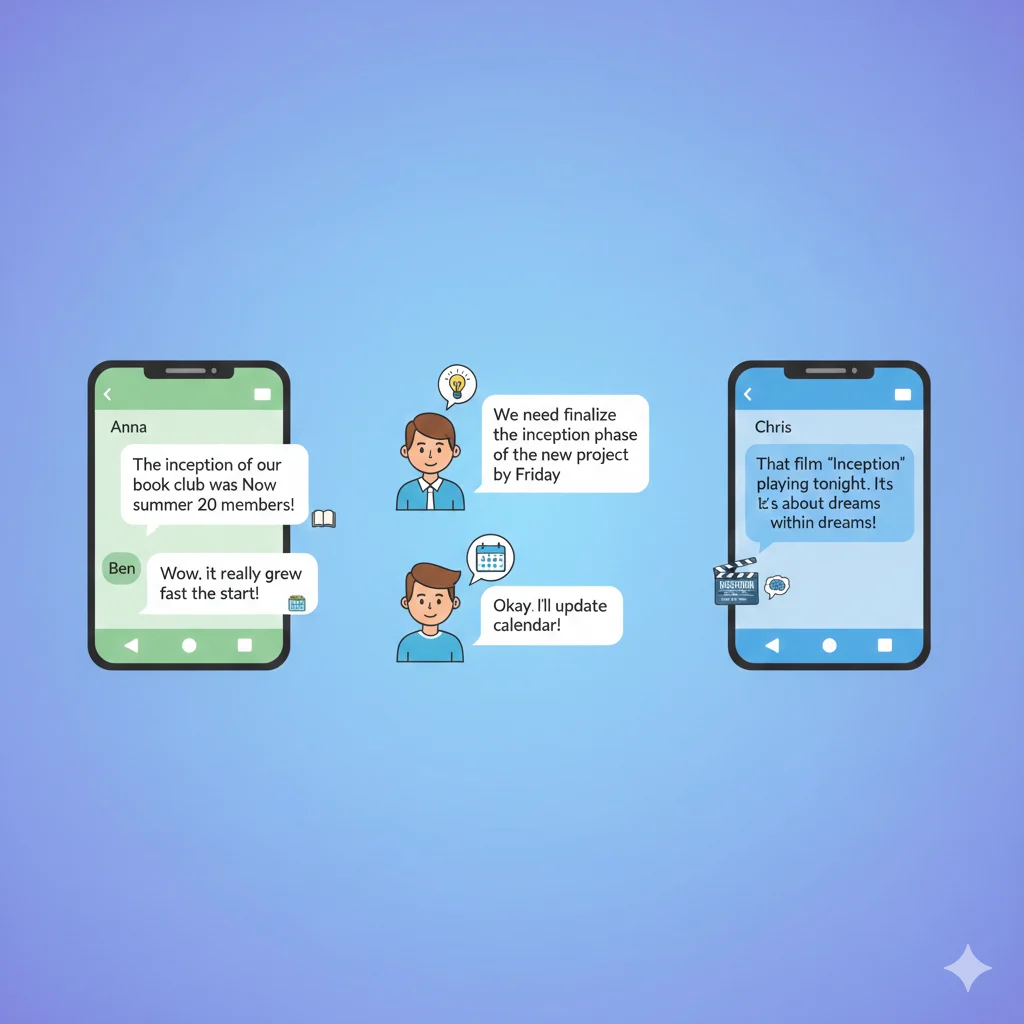
Friend 1: “When did your fitness journey start?”
Friend 2: “It’s been going strong since its inception last summer!”
🔄 Similar or Related Terms to “Inception”
| Term | Meaning | Difference from “Inception” |
| Commencement | The start or ceremony marking a beginning | Often used for formal events (e.g., graduations) |
| Genesis | Origin or mode of formation | Implies a more creative or natural start |
| Foundation | The base or groundwork of something | More structural or organizational |
| Conception | The forming of an idea or plan | Focuses on the thought or creation itself |
These terms are often used interchangeably, but “inception” usually emphasizes the official start or creation point of something important.
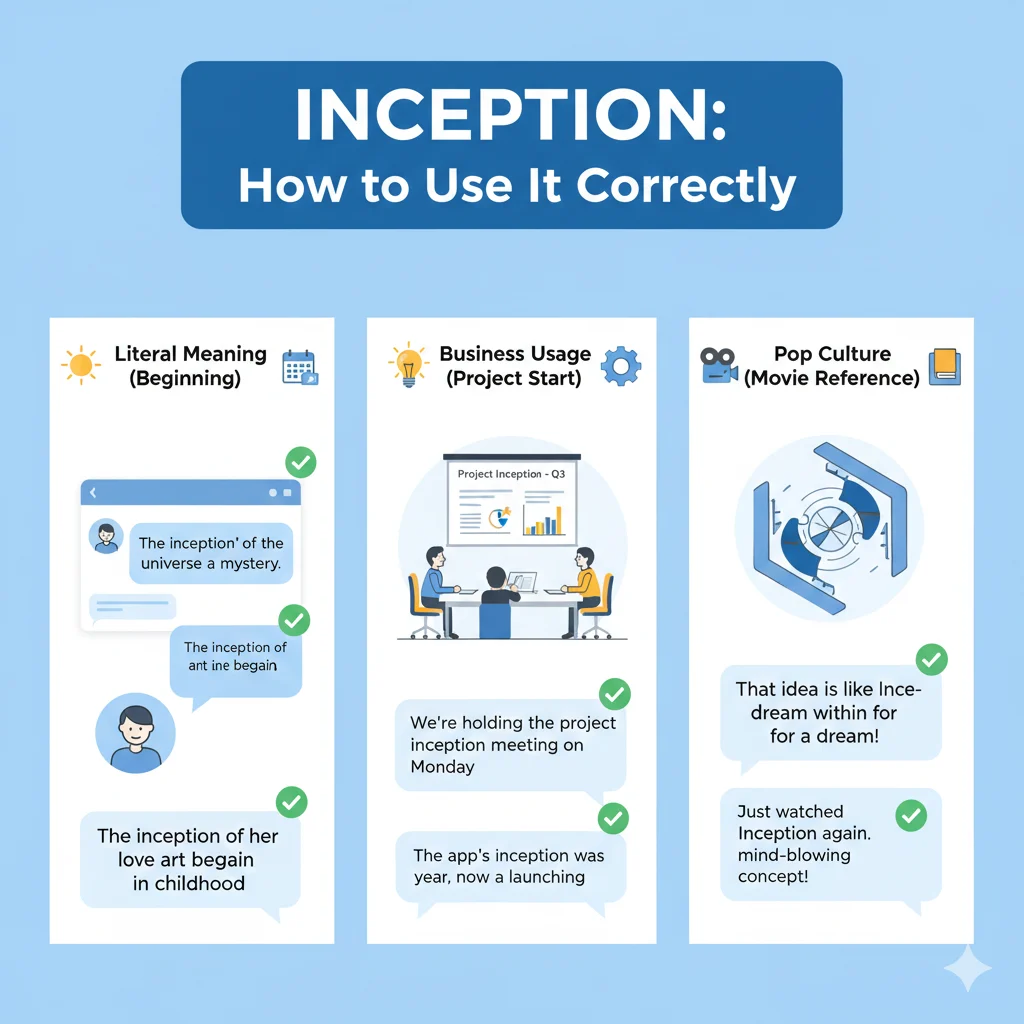
🧠 How to Use “Inception” Correctly
✅ Do’s
- Use it to describe the start of major projects or ideas.
- Suitable for formal writing, speeches, and reports.
- Works well in historical or organizational contexts.
❌ Don’ts
- Don’t use it casually for everyday small events (e.g., “the inception of dinner” sounds awkward).
- Avoid overusing it where “start” or “beginning” would sound more natural.
Tip: Think of “inception” as a word reserved for meaningful or official beginnings.
🚫 Common Mistakes or Misinterpretations
- Confusing “inception” with “conception”:
While both relate to beginnings, conception is more about the creation of an idea, whereas inception refers to the moment it officially starts. - Overcomplicating usage:
Some people use “inception” to sound formal, but it can come off as pretentious if the context is casual. - Pop culture confusion:
After the Inception movie, many think it only means “a dream within a dream.” In reality, that’s just one symbolic interpretation.
❓ FAQ: Common Questions About “Inception”
1. What does “inception” mean in simple words?
It means the beginning or start of something — like when a project, idea, or organization first begins.
2. Is “inception” formal or informal?
“Inception” is mostly formal, often used in academic, business, or professional writing.
3. What’s the difference between inception and conception?
Conception is about formulating an idea, while inception is putting that idea into action or existence.
4. How do you use “inception” in a sentence?
Example: “Since its inception, the charity has helped thousands of families.”
5. Where is “inception” most commonly used?
You’ll see it in business reports, academic papers, legal documents, and movie discussions.
6. When should you not use “inception”?
Avoid it in casual speech or simple writing — “start” or “beginning” are often clearer.
🏁 Conclusion
To sum up, “inception” means the start or founding of something significant — whether it’s a company, an idea, or a movement. It has Latin roots but gained modern fame through the film Inception, which redefined it as the birth of an idea.
Now that you know the true meaning, origin, and usage of “inception,” you’ll recognize it in both professional and pop-culture contexts. Keep exploring our site for more fascinating word meanings and modern language trends!

Claire Fuller is a word-meaning specialist at Meanovia.com. She explains complex words, phrases, and language trends in a clear, relatable way, helping readers quickly understand the exact meaning behind every term.