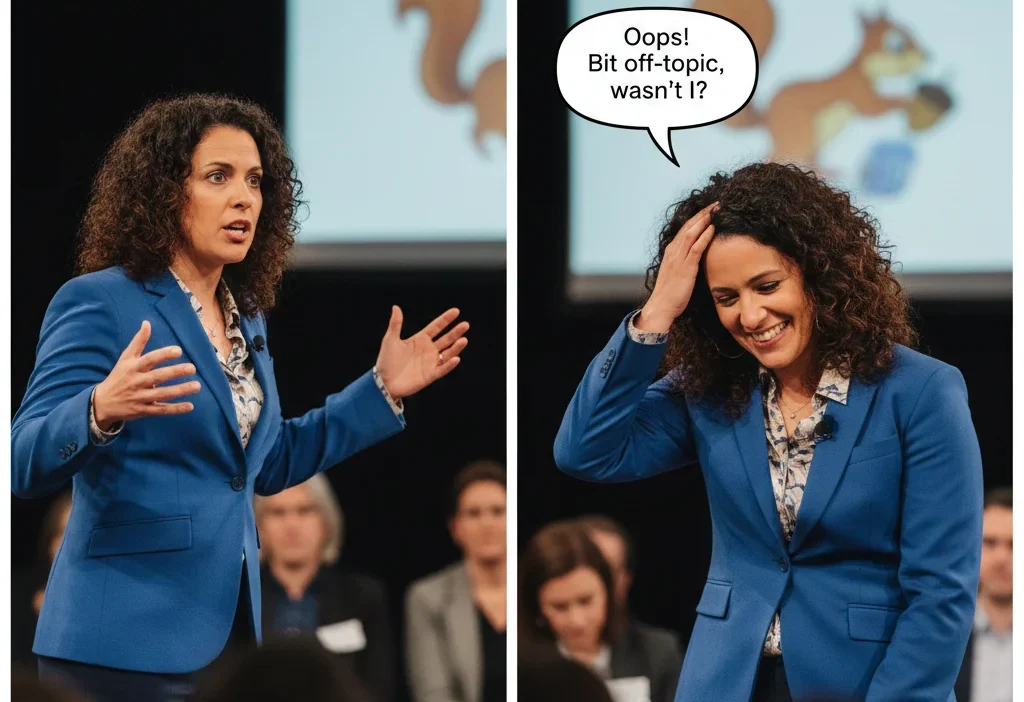
Ever been deep into a conversation, suddenly realize you’ve gone off-topic, and say, “But I digress”? 😅 It’s a phrase you’ve probably heard in speeches, essays, or podcasts — and it’s often used to gracefully steer a discussion back on track.
But what does “I digress” actually mean, and why do people use it?
In this guide, we’ll explore:
✅ The meaning of “I digress”
📜 Its origin and history
💬 How it’s used in different contexts
🧩 Real-life examples and related terms
⚠️ Common mistakes and FAQs
By the end, you’ll understand exactly when — and how — to use this classic phrase like a pro.
💡 What Does “I Digress” Mean?
“I digress” means ‘I have gone off-topic, but now I’m returning to the main point.’
It’s a formal English phrase often used in writing, speeches, or discussions to admit a brief detour from the main subject.
Example:
“Anyway, I digress — let’s get back to the original topic.”
It signals self-awareness and helps the speaker appear thoughtful or organized, even while drifting momentarily.
🕰️ Origin and Popularity
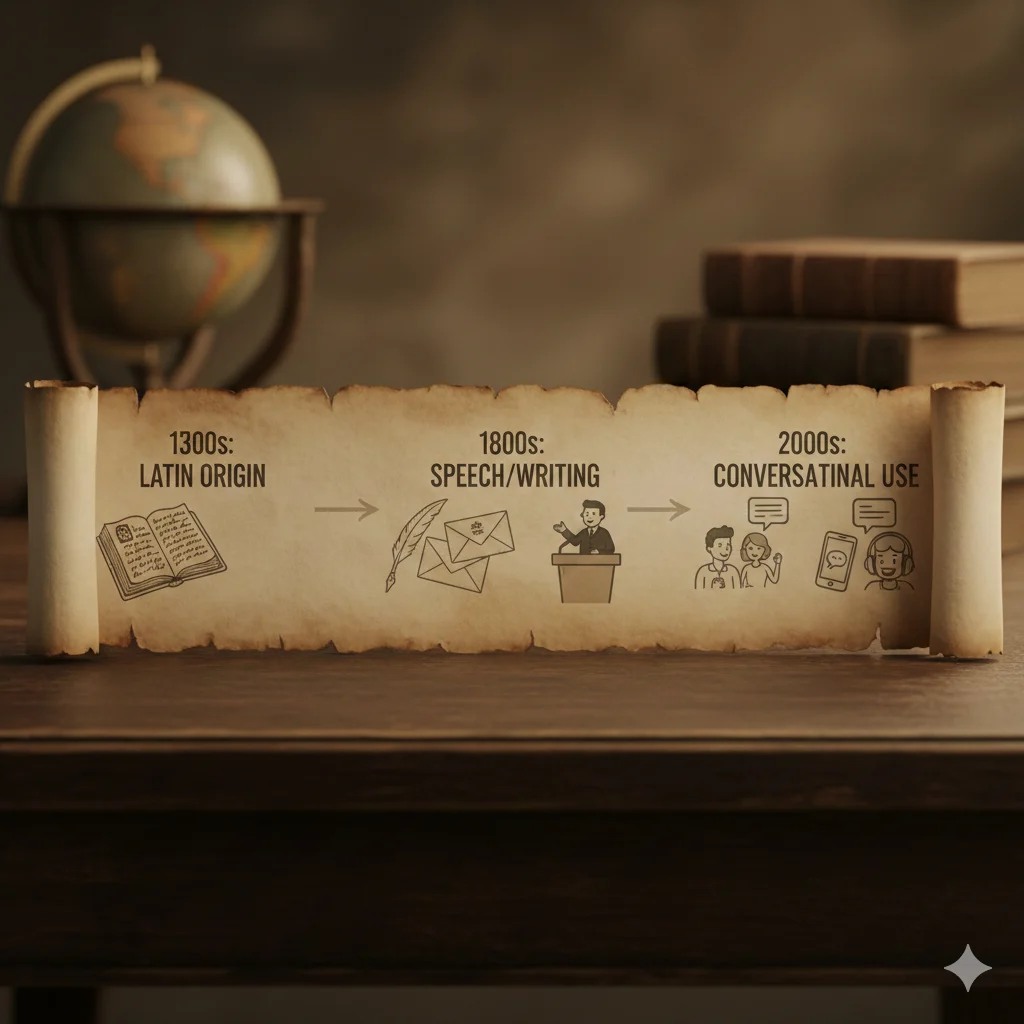
The word “digress” comes from the Latin “digressus,” meaning “to step aside” or “depart.” It entered English in the 14th century, describing the act of moving away from the main subject in speech or writing.
Historically, it became common in literature, essays, and oratory, especially among eloquent speakers who used digression as a rhetorical tool — a way to add color, humor, or detail before circling back.
By the 19th and 20th centuries, “I digress” gained popularity as a self-aware, slightly humorous phrase used to acknowledge going off-topic. Today, it’s often used online, in podcasts, and casual storytelling.
🧭 “I Digress” Meaning in Different Contexts
💬 In Everyday Conversation
Used to politely admit a tangent or shift in topic:
“We were talking about movies, and somehow I started discussing pizza. Anyway, I digress.”
Tone: Light, humorous, or self-aware.
🏢 In Business or Formal Writing
In formal writing, it shows structure and thoughtfulness, helping writers keep focus.
“Many factors contributed to the success of the project — but I digress; our main goal remains innovation.”
Tone: Polite and reflective.
📱 On Social Media / Blogs
Writers or influencers often use it for humor or dramatic flair when they go off-topic in a post or video.
“So I started with a recipe post and ended up ranting about my ex. I digress.” 😂
| Platform/Context | Tone or Purpose | Example Usage |
| Texting or Chat | Casual, funny | “I was talking about work… oh well, I digress.” |
| Formal Writing | Polished, controlled | “However, I digress — let us return to our main subject.” |
| Social Media | Playful, dramatic | “I could talk about dogs forever, but I digress.” 🐶 |
💬 Examples of “I Digress” in Conversations
Example 1:
Friend 1: You were telling me about your vacation.
Friend 2: Oh right! I started talking about airports — I digress, it was the best trip ever!
Example 2:
“We were supposed to discuss marketing strategies, not lunch options. But I digress.”
Example 3 (Formal):
“This report covers the quarterly sales — though I could discuss the market trends for hours, I digress.”
🔍 Similar or Related Terms
Here are words and phrases that are similar or often used in the same context:
| Term / Phrase | Meaning | How It Differs from ‘I Digress’ |
| Anyway | Used to change or resume a topic | Less formal; more casual |
| As I was saying | Brings focus back to earlier topic | Doesn’t admit digression |
| That’s beside the point | States something is irrelevant | Highlights irrelevance, not digression |
| Moving on | Indicates topic shift | Intentional, not self-aware |
| By the way | Introduces a tangent | Opposite of “I digress” (starts digression) |
🧠 How to Use “I Digress” Correctly
✅ Do’s:
- Use it when you’ve gone slightly off-topic and want to return.
- Great for essays, speeches, storytelling, and online writing.
- Works well with humor or self-awareness.
❌ Don’ts:
- Don’t use it before starting a new unrelated topic (that’s “by the way”).
- Avoid overusing it — too many digressions make your point unclear.
Examples:
✅ “I could talk about this for hours, but I digress.”
❌ “I digress — let’s start talking about something else entirely.” (Incorrect use)
⚠️ Common Mistakes or Misinterpretations
- Thinking it’s slang.
→ It’s not slang; it’s a formal English phrase used humorously in casual speech. - Using it to start a new topic.
→ It’s meant to bring you back to the main point, not introduce something new. - Assuming it’s negative.
→ It’s neutral and often playful — just a signal of self-awareness. - Overusing it in writing.
→ Occasional use adds charm, but constant digressions can feel unfocused.
❓ FAQ Section
1. What does “I digress” mean in conversation?
It means you’ve gone off-topic and are returning to the main point. It’s often used humorously or to show self-awareness.
2. Is “I digress” formal or informal?
It’s originally formal, but it’s now used in both formal and casual settings — from essays to social media posts.
3. Is “I digress” rude or polite?
It’s polite and thoughtful. It shows you recognize your tangent and want to stay focused.
4. What’s the difference between “I digress” and “anyway”?
“Anyway” is casual and conversational. “I digress” sounds more articulate and self-aware.
5. When should you not use “I digress”?
Avoid it when you’re not actually returning to the main point. It loses its meaning if misused as filler.
6. How can I replace “I digress”?
You can say “as I was saying,” “to get back on track,” or “but let’s return to…” depending on tone and context.
🏁 Conclusion
To sum it up, “I digress” means acknowledging a tangent and steering back to the main topic. Rooted in Latin, it’s been used for centuries by writers and speakers to show self-awareness and structure in communication.
Whether in essays, conversations, or witty tweets, “I digress” adds a touch of intelligence, humor, and charm. 😉
Now that you know the true “I digress” meaning, you’ll never misuse it again — and your conversations will sound all the more polished. Keep exploring our site for more smart word meanings and expressions! 💬✨

Jon McGregor is a language and word-meaning expert at Meanovia.com. He specializes in explaining complex words, phrases, and modern language trends in a clear, approachable style. His mission is to help readers quickly grasp the true meaning behind every term, making language learning and understanding effortless and engaging.