
You’ve seen strange symbols carved on stones, printed in books, or used in modern logos—but what are they really? These symbols are called glyphs, and they have been part of human communication for thousands of years.
Quick answer: A glyph is a visual symbol or shape that represents a letter, sound, word, or meaning.
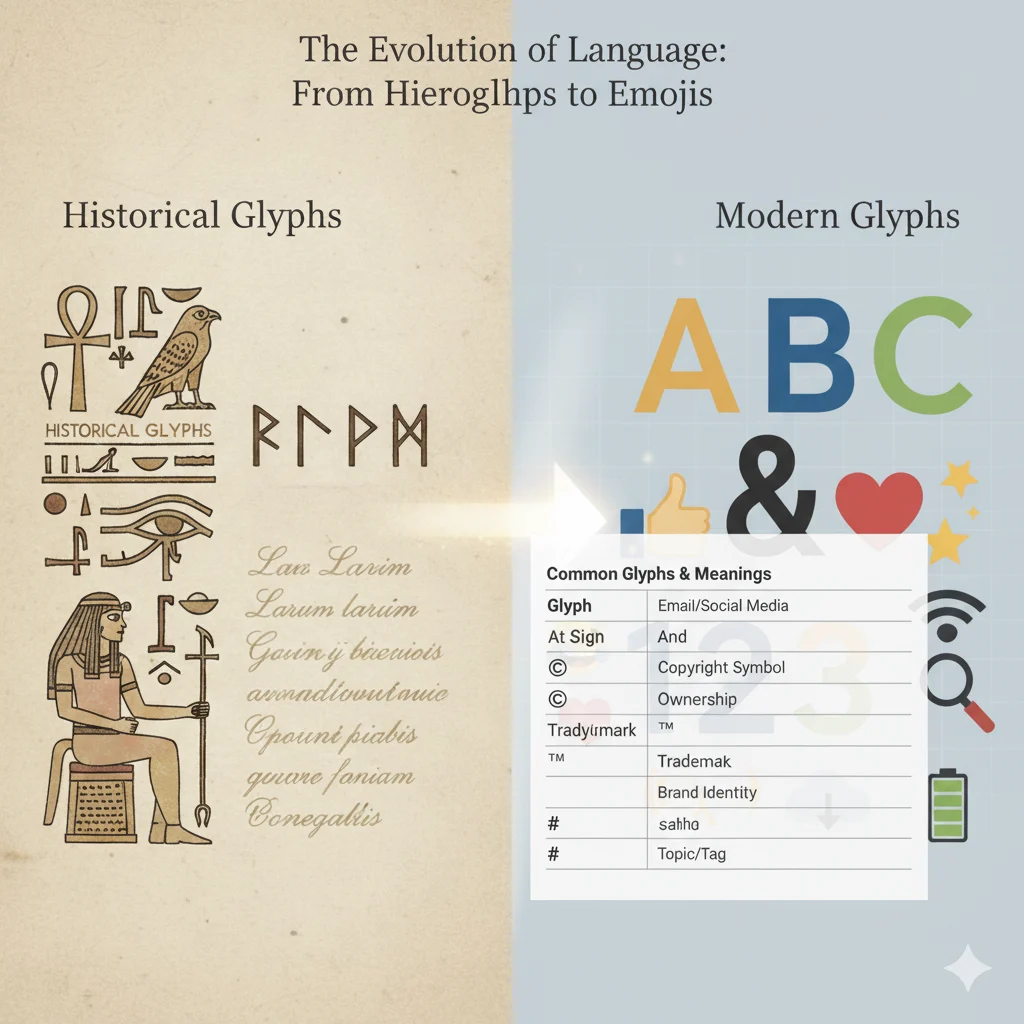
Think of ancient cave drawings, Egyptian hieroglyphs, or even emojis today. All of them are glyphs. Humans have always used symbols to share ideas faster than words. Over time, glyphs became part of languages, writing systems, art, religion, and digital design.
In 2026, the word glyph is used in history, linguistics, typography, gaming, and technology. Students, designers, writers, and curious readers often search for its meaning to understand symbols better. In this complete guide, you’ll learn the origin of glyphs, their types, and how they are used today—in simple, clear language
Glyph Definition
A glyph is a visual symbol or shape used to represent a letter, sound, word, or meaning in writing, design, or digital communication.
In simple terms, a glyph is how a character or symbol looks on the screen or page.
What Is a Glyph?
A glyph is the visible form of a symbol or character that people see in writing, design, or on a screen. It shows how a letter, number, or symbol actually looks rather than what it represents in theory.
For example, the letter “A” can appear differently across fonts, and each appearance is a separate glyph.
What Does Glyph Mean? 📝
A glyph is a visual symbol that represents a letter, character, or idea. It can appear in writing systems, fonts, or digital interfaces.
- Type: Symbol / Character
- Commonly Used In: Typography, digital design, ancient scripts, software icons
Example:
The letter “A” in different fonts is a glyph of the same character. Similarly, the heart emoji ❤️ is a modern glyph representing love.
Glyph Etymology
The word glyph comes from the Greek verb glýphō, meaning “to carve” or “to engrave.” It was first used to describe symbols carved into hard surfaces such as stone or metal.
Later, the term evolved to include written characters, printed symbols, and digital representations.
Origin and Popularity 🌍
The term glyph comes from the Greek word glýphō, meaning “to carve.” Glyphs were first used in ancient carvings, hieroglyphics, and inscriptions to convey ideas without words.
- Timeline:
- 3000 BCE: Egyptian hieroglyphs, one of the earliest known uses of glyphs
- Middle Ages: Decorative glyphs used in manuscripts
- Modern Era: Unicode standard allows digital representation of thousands of glyphs
- 3000 BCE: Egyptian hieroglyphs, one of the earliest known uses of glyphs
Glyphs gained modern popularity through digital typography, emojis, and software interfaces, making them integral to design and communication.
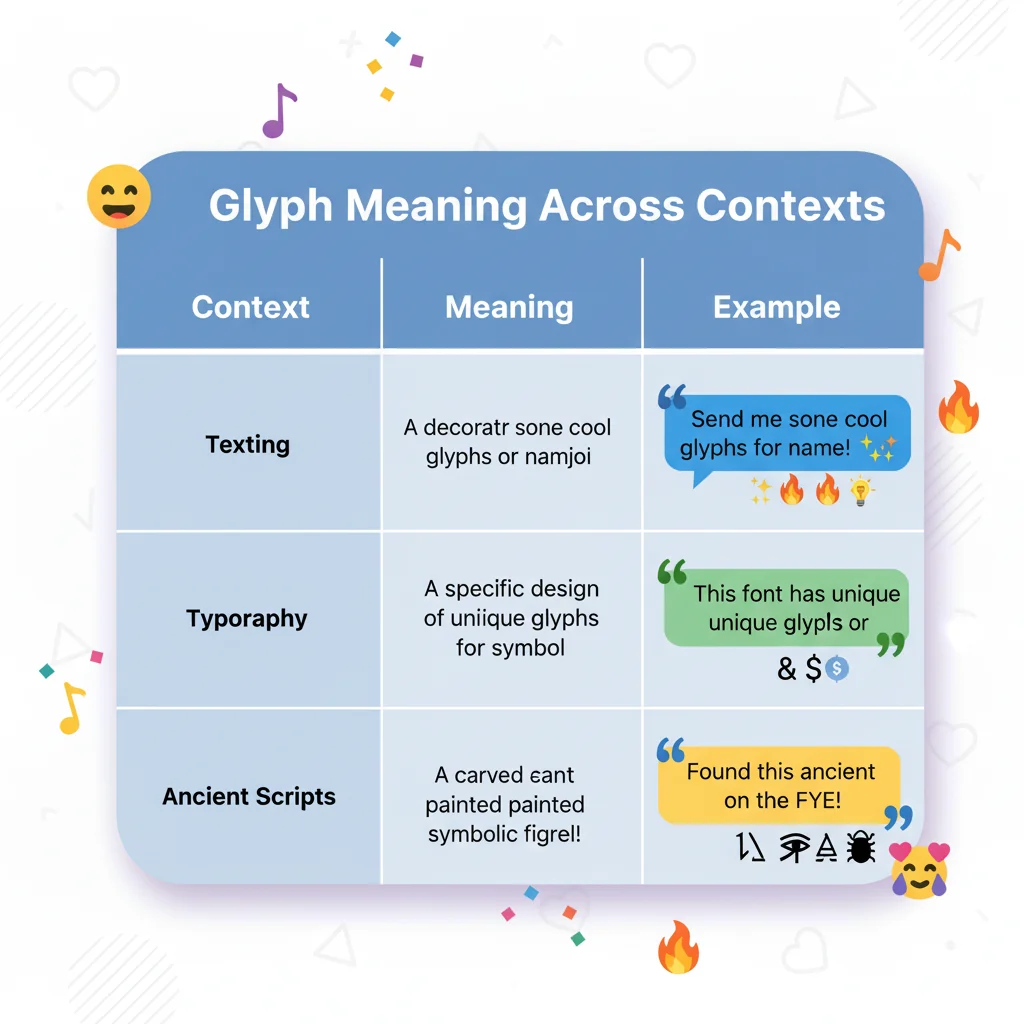
Glyph Meaning in Different Contexts 📱💻
In Texting and Digital Communication
Glyphs appear as emojis, symbols, or icons to express emotions, actions, or instructions.
- Example: ❤️ (heart) = love or affection
- ⚠️ (warning sign) = caution
In Typography and Fonts
A glyph represents a specific character in a typeface. Even if the letter is the same, different fonts give it unique glyphs.
- Example: “A” in Arial vs. “A” in Times New Roman
Glyph meaning in slang:
In slang or casual online use, glyph usually refers to a symbol, emoji, or special character used to express an idea, mood, or message without using words.
People may loosely call emojis, icons, or unusual symbols “glyphs,” even though the term is more technical by definition.
In Ancient Scripts
Glyphs were used to record ideas or sounds before alphabets became widespread.
- Example: Egyptian hieroglyphs representing gods, objects, or sounds
- 210+ WDYM Meaning 📱 | Text, Chat & Slang Definition 2025
Glyph Symbol Meaning
When used as a symbol, a glyph represents an idea, message, or concept through a visual sign instead of words.
These symbolic glyphs appear in ancient carvings, religious markings, logos, and modern digital icons.
Examples of Glyphs in Conversations 💬
Casual Texting:
Friend 1: Did you see the new movie? 🎬
Friend 2: Yes! Loved it ❤️
Formal / Design Context:
“The designer carefully selected glyphs from the typeface to maintain readability and aesthetic appeal.”
Ancient Scripts:
Hieroglyph of an owl 🦉 = represents the sound “M” in Egyptian writing
Similar or Related Terms 🔗
| Term | Meaning | Context |
| Symbol | Visual representation of an idea | General |
| Character | Single letter or number in writing | Typography |
| Icon | Graphic representing software function | Digital interfaces |
| Emoji | Modern glyph expressing emotion | Chat / Social Media |
These terms often overlap with glyphs, but glyphs specifically focus on visual representations of a character or symbol.
How to Use Glyphs Correctly ✅❌
Do’s:
- ✅ Use emojis to enhance casual messages
- ✅ Select appropriate glyphs in digital design or typography
- ✅ Learn historical glyphs for academic or artistic purposes
Don’ts:
- ❌ Don’t overuse glyphs in formal writing
- ❌ Avoid misinterpreting symbols without context
- ❌ Don’t assume all glyphs are universally understood
Common Mistakes or Misinterpretations ⚠️
- Confusing glyphs with icons or emojis: While all are visual symbols, glyphs include characters, not just images.
- Assuming meaning is universal: Cultural or platform context often changes glyph interpretation.
- Thinking glyphs are always letters: Some represent ideas, sounds, or actions instead.
Frequently Asked Questions (FAQs) ❓
1. What does glyph mean in texting?
In texting, a glyph is typically an emoji or symbol representing an emotion, object, or idea, like ❤️ for love or 🎉 for celebration.
2. Is glyph slang or formal?
The term “glyph” is formal in linguistics, design, and typography but can be used casually when referring to emojis or symbols.
3. What’s the difference between a glyph and a character?
A glyph is the visual representation of a character, while a character is the abstract unit of writing.
4. How do you reply to a glyph?
Replies depend on context; for emojis, match the tone (e.g., ❤️ = send ❤️ back). For symbols, respond with understanding or relevant content.
5. Where are glyphs most used?
Glyphs appear in digital design, fonts, texting, social media, and historical scripts.
6. When should you not use glyphs?
Avoid using glyphs in formal documents, academic writing, or professional emails unless part of design or technical notation.
7. What is the definition of glyph?
The definition of glyph refers to the written or drawn form of a symbol used to represent a letter, number, sound, or idea in a language or visual system.
Conclusion 🎯
Glyphs are versatile symbols representing letters, sounds, or concepts across cultures and technology. From ancient carvings to modern emojis, understanding glyphs meaning help in design, communication, and historical study. Whether in texting, typography, or ancient scripts, knowing how to use glyphs correctly ensures clarity and expression.
Now that you know what glyphs mean, you’ll never be confused by a symbol again! Explore our site for more insights on communication, internet slang, and design trends.

Deborah Levy is a word-meaning expert at Meanovia.com. She explains complex terms, phrases, and language trends in a clear, relatable way, helping readers quickly understand the exact meaning behind every word.