

Ever heard the word “foster” in a movie, workplace, or adoption story and wondered what it really means? 🤔 You’ve probably heard phrases like “to foster growth” or “a foster family,” but this versatile word goes far beyond one use.
In this guide, we’ll break down:
✅ The definition of foster
📜 Its origin and evolution
💬 Different meanings in various contexts (social, emotional, professional)
💡 Examples of how to use it naturally
🧩 Related terms and FAQs for better understanding
By the end, you’ll understand exactly what “foster” means, where it comes from, and how to use it confidently in conversation or writing.
💡 What Does Foster Mean?
“Foster” means to encourage, promote, or support the development of something or someone — often growth, learning, or care.
It can be used as both a verb and an adjective, and appears frequently in education, parenting, and business communication.
Example:
“Teachers work hard to foster creativity in their students.”
🕰️ Origin and Popularity
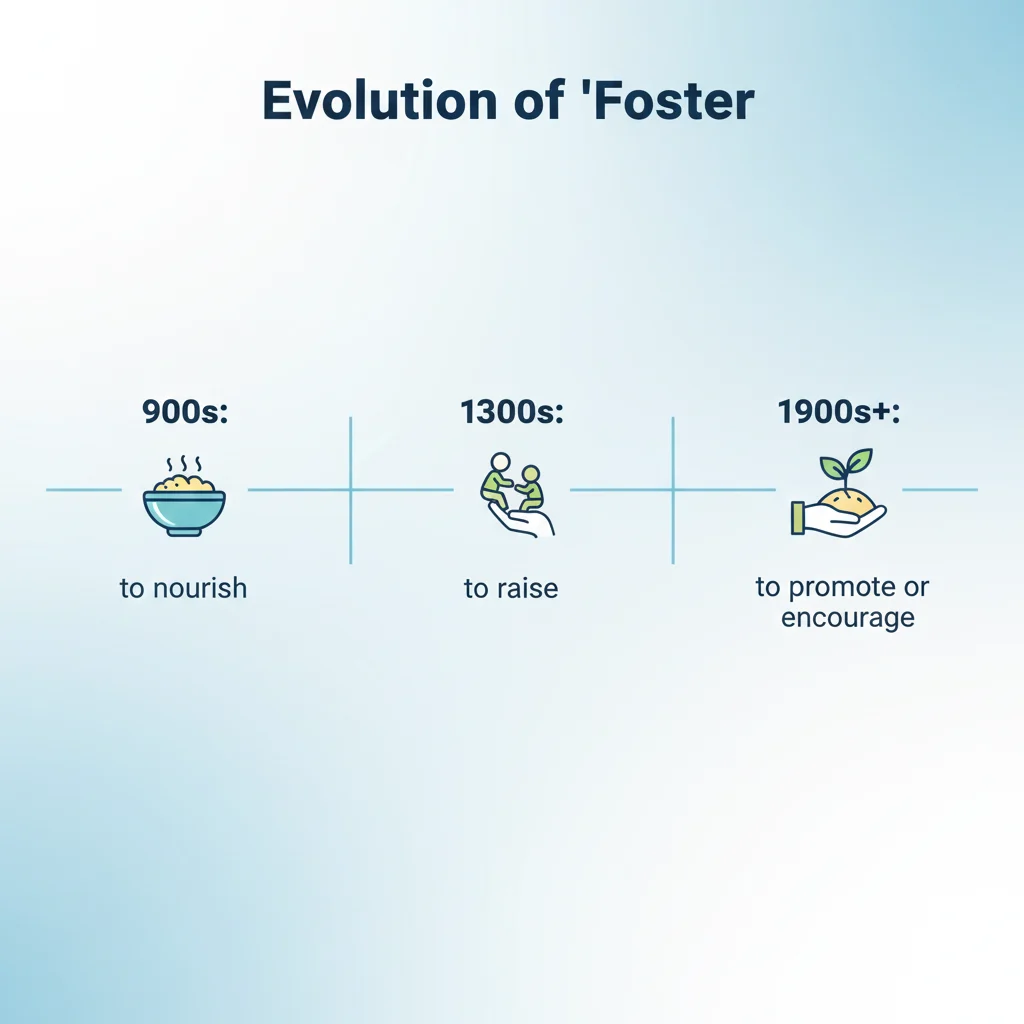
The word foster comes from the Old English word fōstrian, meaning “to nourish or bring up.” Originally, it described raising a child who wasn’t one’s own, but its meaning expanded over time to include encouraging growth or support in any form.
By the 14th century, “foster” appeared in English literature to describe emotional or intellectual nourishment. Today, it’s widely used in both social and professional contexts — from foster parents to fostering innovation in companies.
🗣️ Foster Meaning in Different Contexts
🏠 In Family or Social Contexts
- Foster (adjective): Refers to caring for a child temporarily or not biologically one’s own.
“They became foster parents to two children.” - It symbolizes love, care, and responsibility outside of blood relations. ❤️
💼 In Business or Education
- Foster (verb): Means to encourage development or positive change.
“Good leaders foster collaboration among team members.” - Common in corporate and motivational writing — emphasizes growth and innovation.
🌱 In Personal Growth or Emotions
- Used to describe nurturing positive feelings or habits.
“Meditation helps foster inner peace and patience.”
| Context | Meaning of Foster | Example Use |
| Family/Social | To care for a child not biologically yours | “She is a foster mother.” |
| Education/Work | To encourage growth or development | “The school fosters creativity.” |
| Personal Growth | To nurture qualities or emotions | “Travel fosters empathy.” |
💬 Examples of ‘Foster’ in Conversations
Example 1:
Teacher: Our goal is to foster curiosity in students.
Student: That’s what makes learning exciting!
Example 2:
Manager: We need to foster better teamwork across departments.
Employee: Agreed — more collaboration would improve results.
Example 3 (Social Context):
“They decided to foster a child until permanent placement was found.”
Example 4 (Personal Development):
“Reading diverse books can foster understanding and compassion.”
🔍 Similar or Related Terms
Here are words often used interchangeably with foster, along with how they differ:
| Word | Meaning | Difference from ‘Foster’ |
| Nurture | To care for and encourage growth | Focuses on emotional care |
| Encourage | To give support or confidence | Often short-term motivation |
| Promote | To help something grow or become known | Can be used for ideas or marketing |
| Support | To assist or uphold | More general; not always about growth |
🧠 How to Use ‘Foster’ Correctly
✅ Do’s:
- Use foster when talking about long-term support or growth.
- Apply it in formal, professional, or emotional contexts.
- Remember, it can describe both care for people and promotion of ideas.
❌ Don’ts:
- Don’t confuse it with adopt — fostering is often temporary care, while adoption is permanent.
- Avoid overusing it in casual texting; it’s more suitable for formal speech or writing.
Example:
✅ “The manager fostered a positive team culture.”
❌ “I’ll foster your message later.” (Incorrect use)
⚠️ Common Mistakes or Misinterpretations
- Mistaking “foster” for “adopt.”
- Foster means temporary or supportive care, while adopt is permanent.
- Foster means temporary or supportive care, while adopt is permanent.
- Using “foster” casually in informal chat.
- It’s more suitable for formal or professional communication.
- It’s more suitable for formal or professional communication.
- Overlooking its metaphorical meaning.
- Foster isn’t just about children — it also means to encourage or develop something intangible, like ideas or emotions.
- Foster isn’t just about children — it also means to encourage or develop something intangible, like ideas or emotions.
❓ FAQ Section
1. What does ‘foster’ mean in English?
It means to encourage the growth, development, or support of something or someone. It can describe raising a child or promoting ideas, relationships, and qualities.
2. Is ‘foster’ formal or informal?
It’s a formal word used in writing, education, and business. You’ll often see it in speeches, articles, or professional communication.
3. What’s the difference between ‘foster’ and ‘adopt’?
Foster is temporary care, while adopt means permanent legal parenting. For example, a foster family cares for a child until adoption or reunification.
4. Can I use ‘foster’ in business writing?
Yes! It’s commonly used in business contexts like “foster innovation” or “foster teamwork.” It adds professionalism and positivity to your tone.
5. What are some synonyms for ‘foster’?
Common ones include nurture, support, promote, encourage, and cultivate.
6. How can I use ‘foster’ in a sentence?
“Leaders should foster a culture of trust.”
“They decided to foster a child in need.”
🏁 Conclusion
To sum it up, “foster” means to encourage, support, or care for growth — whether it’s a child, an idea, or a feeling. 🌱
Originating from Old English roots meaning “to nourish,” this word beautifully bridges emotional, social, and professional contexts. Whether you’re talking about fostering creativity or fostering a child, it always centers on growth, care, and positive development.
Now that you know the foster meaning, you can use it confidently and correctly in any context! Keep exploring our site for more helpful word guides and explanations. 🌟💬

Deborah Levy is a word-meaning expert at Meanovia.com. She explains complex terms, phrases, and language trends in a clear, relatable way, helping readers quickly understand the exact meaning behind every word.