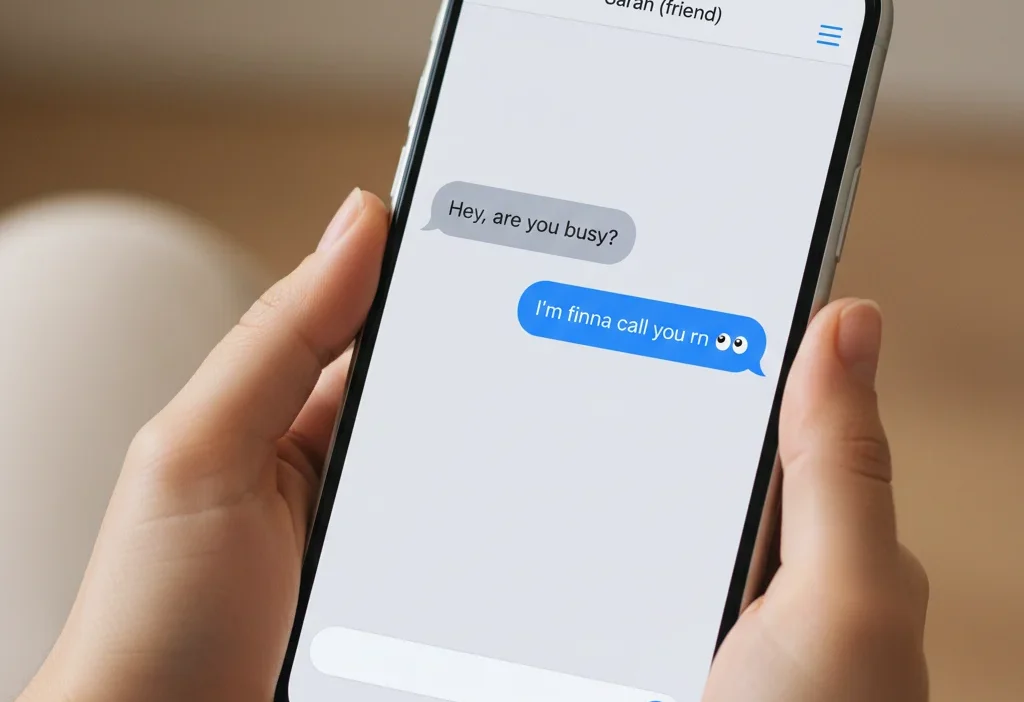
Ever heard someone say “I’m finna go to the store” and wondered what finna actually means? 🤔 You’re definitely not the only one! This short, catchy slang term has become a huge part of modern English, especially in texting, music, and social media.
In this article, we’ll explore:
✅ The definition of finna
📜 Its origin and history
💬 Meanings in different contexts (texting, social media, etc.)
💡 Examples of how to use it naturally
🧩 Related slang terms and FAQs
By the end, you’ll sound fluent in the language of modern internet slang.
💡 What Does Finna Mean?
“Finna” is a slang contraction of “fixing to,” meaning “about to” or “going to” do something.
It’s used mainly in African American Vernacular English (AAVE) and popularized through hip-hop culture, texting, and TikTok.
Example:
“I’m finna leave” = “I’m about to leave.”
🕰️ Origin and Popularity
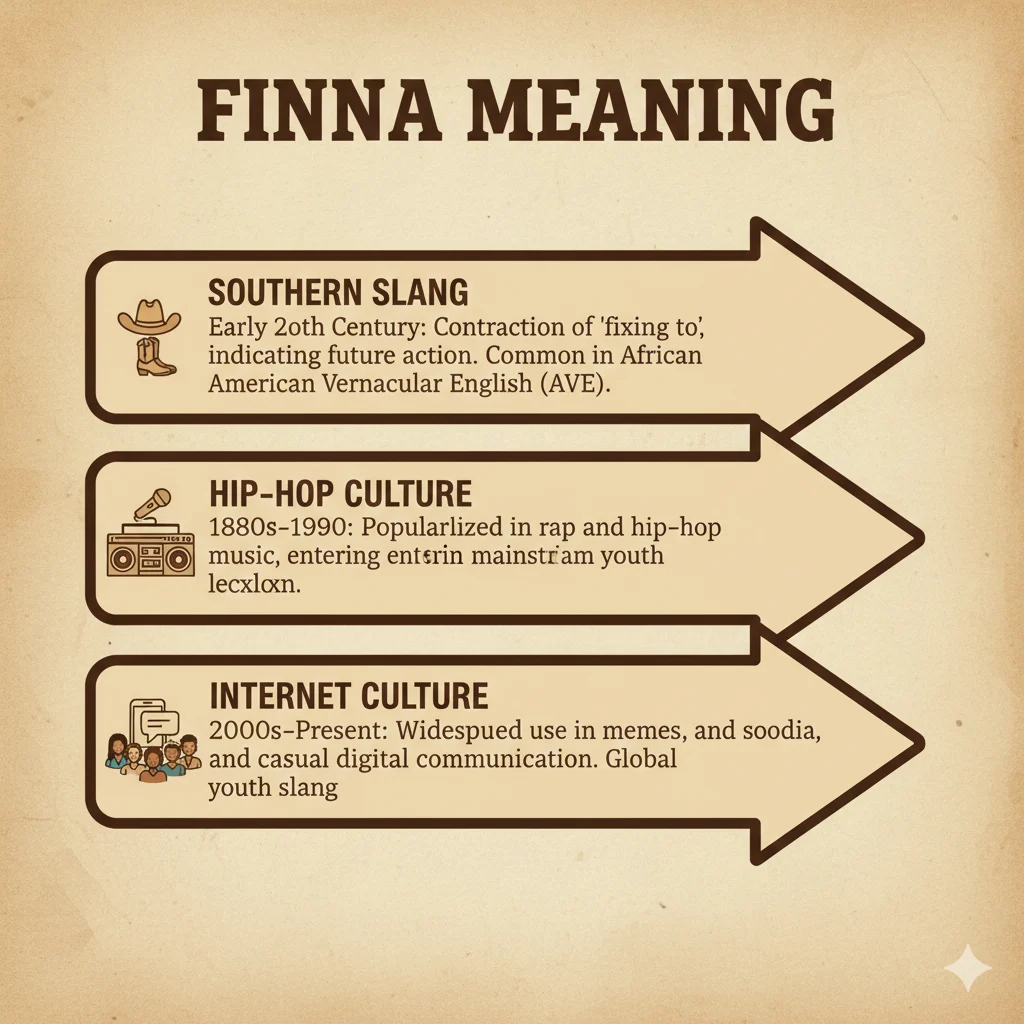
The word finna comes from Southern American English and AAVE, where “fixing to” (meaning “preparing to”) naturally shortened to “finna.”
📜 Timeline of its evolution:
- Early 1900s: Used regionally in the Southern U.S.
- 1980s–1990s: Popularized in rap and hip-hop music.
- 2010s–2020s: Spread widely on Twitter, TikTok, and memes as casual slang for “about to.”
Today, finna is widely recognized and used across generations — from everyday texts to song lyrics like:
🎶 “Finna get lit tonight!”
📱 Finna Meaning in Different Contexts
💬 In Texting or Chat
In texts, finna is a quick, relaxed way to say about to:
“Finna call you in a bit.”
“I’m finna crash, so tired rn.”
It gives your message a casual, chill vibe — perfect among friends or peers.
📸 On TikTok or Instagram
Online, finna adds humor or attitude to captions and memes:
“Finna post and dip 👋”
“Finna act like nothing happened 😎”
It’s often used with emojis or slang for emphasis.
💼 In Professional Settings
⚠️ Avoid using finna in formal or business communication. It’s casual slang and not appropriate for emails, reports, or interviews.
| Platform | Meaning of Finna | Tone |
| Texting | “About to” (casual) | Friendly |
| TikTok / Social Media | “Going to” (fun, expressive) | Playful |
| Business / Work | Not appropriate | Too informal |
💬 Examples of ‘Finna’ in Conversations
Example 1:
Friend 1: You coming to the party?
Friend 2: Yeah, I’m finna leave in 10 minutes.
Example 2:
Text: “Finna grab some food, you want anything?” 🍔
Example 3:
Post caption: “Finna start a new chapter ✨”
Example 4 (Group Chat):
Friend 1: It’s raining heavy outside 😩
Friend 2: Guess I’m finna stay in then ☔
🧩 Similar or Related Terms
| Term | Meaning | Difference from ‘Finna’ |
| Gonna | Going to | Standard English equivalent |
| Boutta | About to | Similar tone but slightly different regionally |
| Tryna | Trying to | Refers to an action in progress |
| Wanna | Want to | Expresses desire, not intention |
These terms often appear together in casual speech or social media, forming part of the same informal, conversational style.
🧠 How to Use ‘Finna’ Correctly
✅ Do’s:
- Use finna when chatting with friends or posting casually.
- Combine it with everyday verbs: finna eat, finna sleep, finna go out.
- Use it to show intention or near-future plans.
❌ Don’ts:
- Don’t use finna in essays, professional writing, or formal communication.
- Don’t confuse it with wanna or tryna — they mean different things.
Example:
✅ “I’m finna start my workout.”
❌ “I finna love pizza.” (Incorrect — it shows intention, not feelings.)
⚠️ Common Mistakes or Misinterpretations
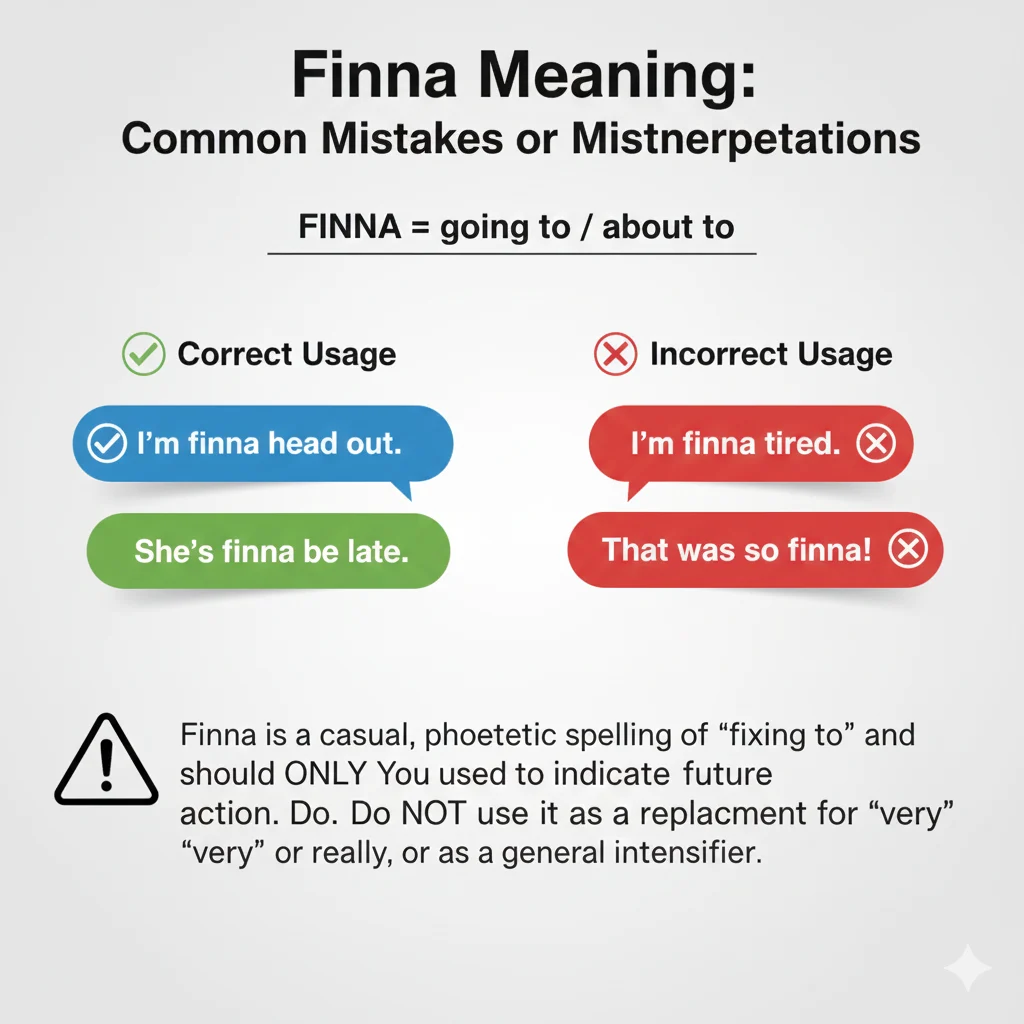
- Mistake: Thinking finna means want to.
➤ Wrong. It means about to or going to, not desire. - Mistake: Using finna in professional writing.
➤ It’s informal slang and shouldn’t appear in official documents. - Mistake: Confusing finna with gonna.
➤ Both mean going to, but finna has stronger cultural roots and an urban tone.
❓ FAQ Section
1. What does ‘finna’ mean in texting?
In texting, finna means about to or going to. It shows what someone plans to do next. Example: “I’m finna call you” = “I’m about to call you.”
2. Is ‘finna’ slang or formal English?
Finna is slang — not formal English. It’s widely used in casual speech, especially in pop culture and online conversations.
3. What’s the difference between ‘finna’ and ‘gonna’?
Both mean “going to,” but finna comes from African American Vernacular English (AAVE), while gonna is standard informal English.
4. How do you reply to someone saying ‘finna’?
Respond normally! For example:
“I’m finna leave.”
“Alright, see you later!”
5. Where is ‘finna’ most used?
It’s most popular in the United States, especially in Southern and urban slang, and across TikTok, Twitter, and text messages.
6. When should you not use ‘finna’?
Avoid it in school essays, job interviews, or formal chats — it’s too casual for professional contexts.
🏁 Conclusion
To sum it up, “finna” means “about to” or “going to,” a slang form of “fixing to” that comes from African American Vernacular English. Over time, it’s evolved into one of the most recognizable terms in digital culture, used to express plans or intentions casually.
So next time someone texts “I’m finna head out”, you’ll know they’re simply saying they’re about to leave. Now that you understand the finna meaning, you can use it confidently — just keep it casual!

Jon McGregor is a language and word-meaning expert at Meanovia.com. He specializes in explaining complex words, phrases, and modern language trends in a clear, approachable style. His mission is to help readers quickly grasp the true meaning behind every term, making language learning and understanding effortless and engaging.