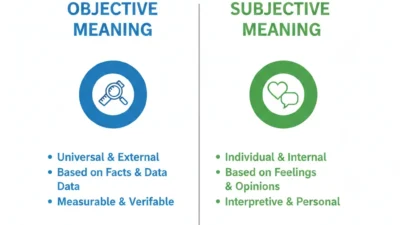
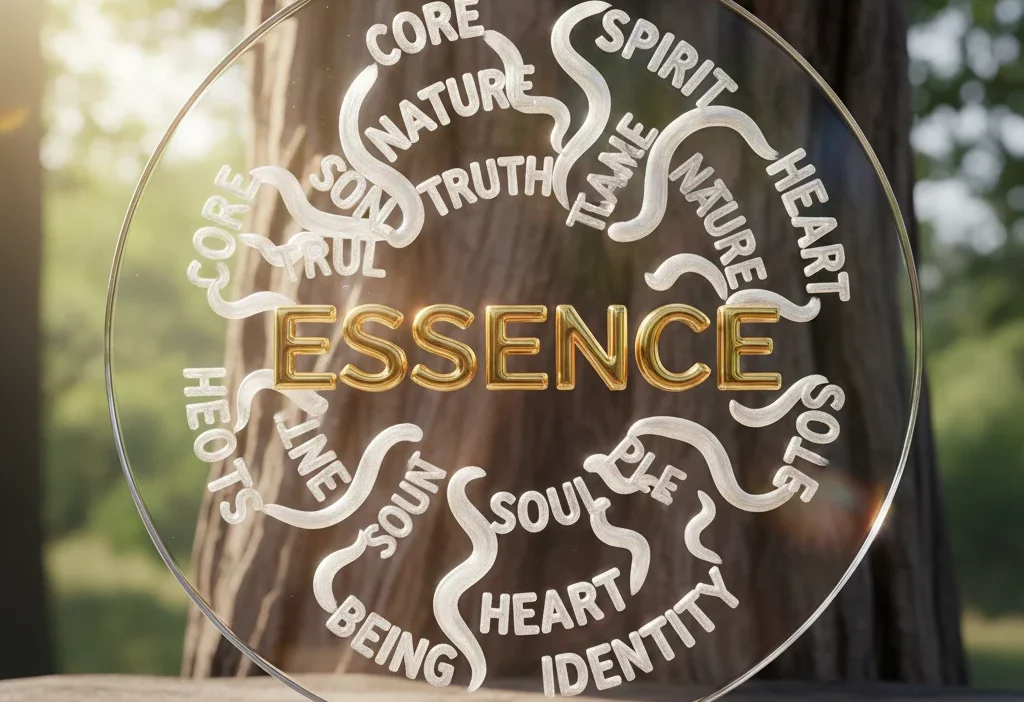
Essence refers to the core nature, most important quality, or fundamental characteristics of someone or something.
Have you ever heard someone say, “That’s the essence of true friendship,” and wondered what exactly “essence” means? The word essence might sound philosophical or poetic, but it’s actually used in everyday conversations, literature, and even business discussions.
Essence refers to the core nature, most important quality, or fundamental characteristics of someone or something.
The word essence is commonly used in writing, philosophy, and everyday conversation, prompting people to search for its meaning. It describes the intrinsic nature or most vital qualities that make something what it truly is. For example, the essence of a person could be their kindness or integrity, while the essence of a concept captures its core idea.
Understanding the meaning of essence helps readers and speakers express ideas clearly, describe people or things accurately, and capture fundamental truths. Using the term correctly allows you to focus on what truly matters, whether in discussion, analysis, creative writing, or self-reflection, emphasizing the heart of the matter.
What Does “Essence” Mean?
The word “essence” means the basic, most important quality that makes something what it truly is.
In simple terms, essence refers to the core nature or fundamental quality of a person, thing, or idea. It’s commonly used in both formal and casual language.
Essence means the core nature or fundamental quality of something that defines its true identity.
Origin and Popularity of the Word “Essence”
The term “essence” comes from the Latin word “essentia,” meaning being or existence. It entered the English language around the 14th century, originally used in philosophy to describe what makes something what it is rather than what it appears to be.
Over time, “essence” expanded from philosophical use to everyday speech, symbolizing authenticity, truth, and the “heart” of something.
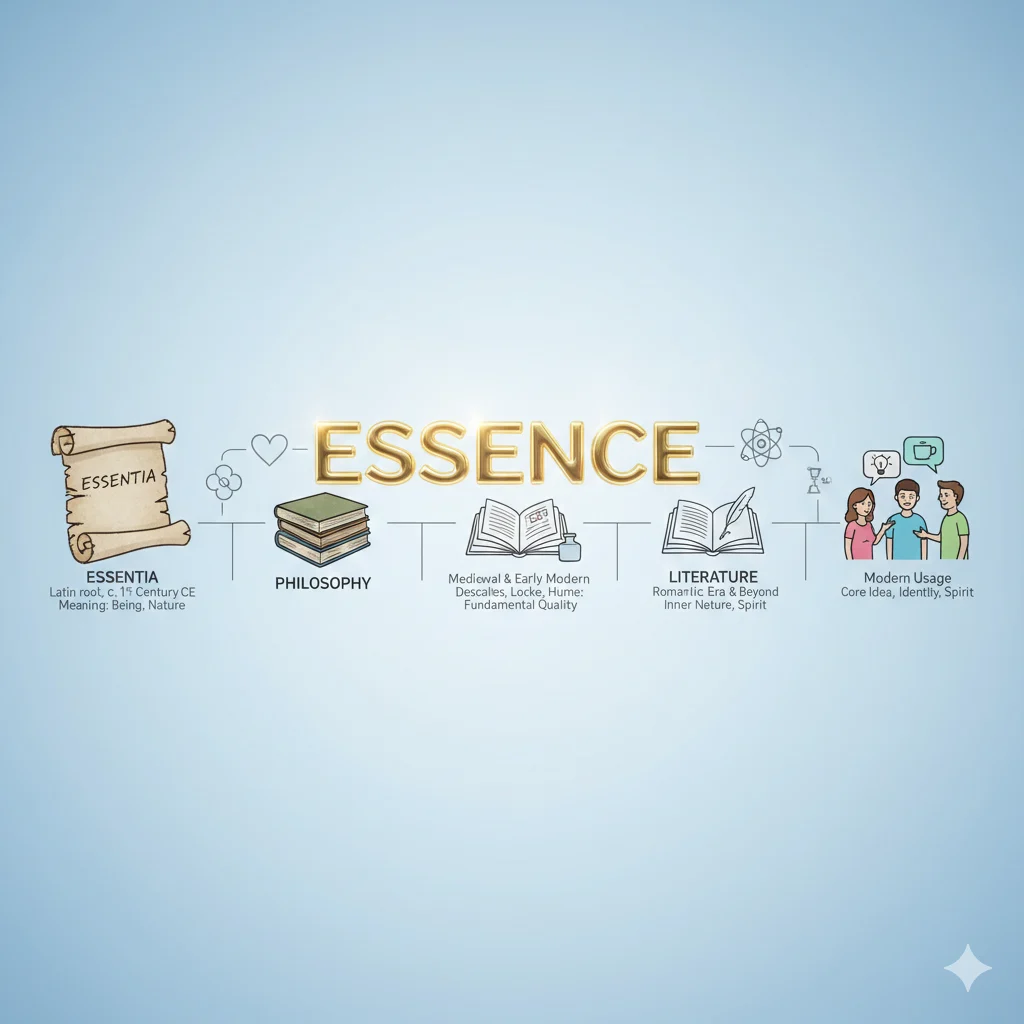
Timeline Snapshot
- 1300s – Used by philosophers to describe the nature of being.
- 1600s–1800s – Appeared in literature and theology.
- 1900s–Today – Common in business, personal growth, and casual speech.
Troglodyte Meaning: Cave Dweller, Primitive, or Something Else?
Essence Meaning in Different Contexts
| Context | Meaning of Essence | Example Usage |
| In Everyday Speech | The true nature or spirit of something | “The essence of friendship is trust.” |
| In Philosophy | What makes an entity what it fundamentally is | “Aristotle explored the essence of being.” |
| In Business | The core values or defining qualities of a brand | “Innovation is the essence of our company.” |
| In Art & Literature | The central theme or emotional truth | “The poem captures the essence of love.” |
| In Science | The pure extract or concentration of a substance | “Vanilla essence adds flavor to desserts.” |
Examples of “Essence” in Conversations
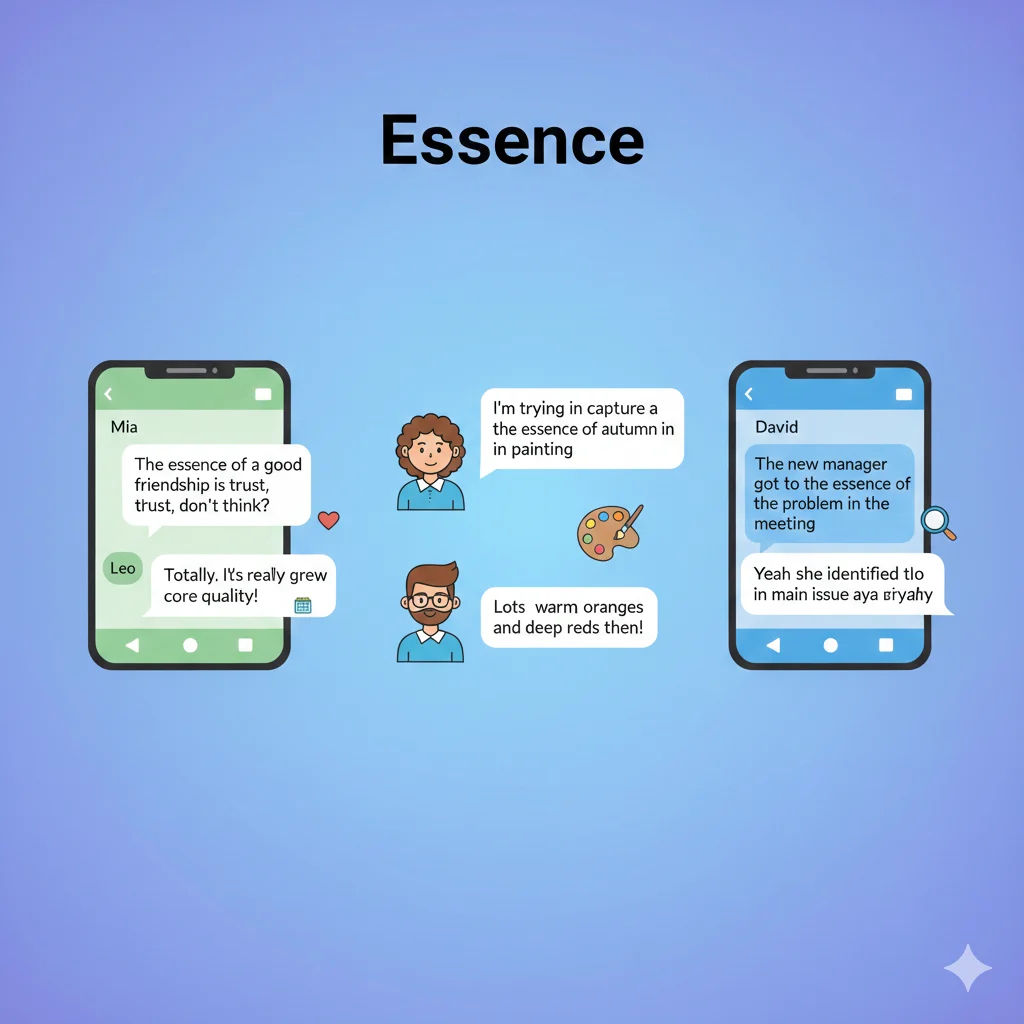
Here are some realistic examples showing how “essence” is used in different settings:
🗣 Everyday Conversation
Person A: What do you think makes a good leader?
Person B: I believe the essence of leadership is empathy and communication.
💼 Business Setting
“At its essence, our company stands for integrity and innovation.”
📚 Philosophical Thought
“The essence of humanity lies in our capacity to create and care.”
🍰 Casual Use
“I added a few drops of vanilla essence to the cake batter.”
Similar or Related Terms
Understanding similar words helps you grasp the nuances of “essence.”
| Term | Meaning | How It Differs |
| Core | The central or most important part | “Core” is more physical or practical. |
| Spirit | The emotional or moral quality | “Spirit” focuses on feelings or energy. |
| Nature | The inherent characteristics of something | “Nature” is broader and more descriptive. |
| Substance | The real meaning or value beneath appearance | “Substance” implies depth and seriousness. |
| Soul | The spiritual or emotional essence | “Soul” often relates to people or art. |
How to Use “Essence” Correctly
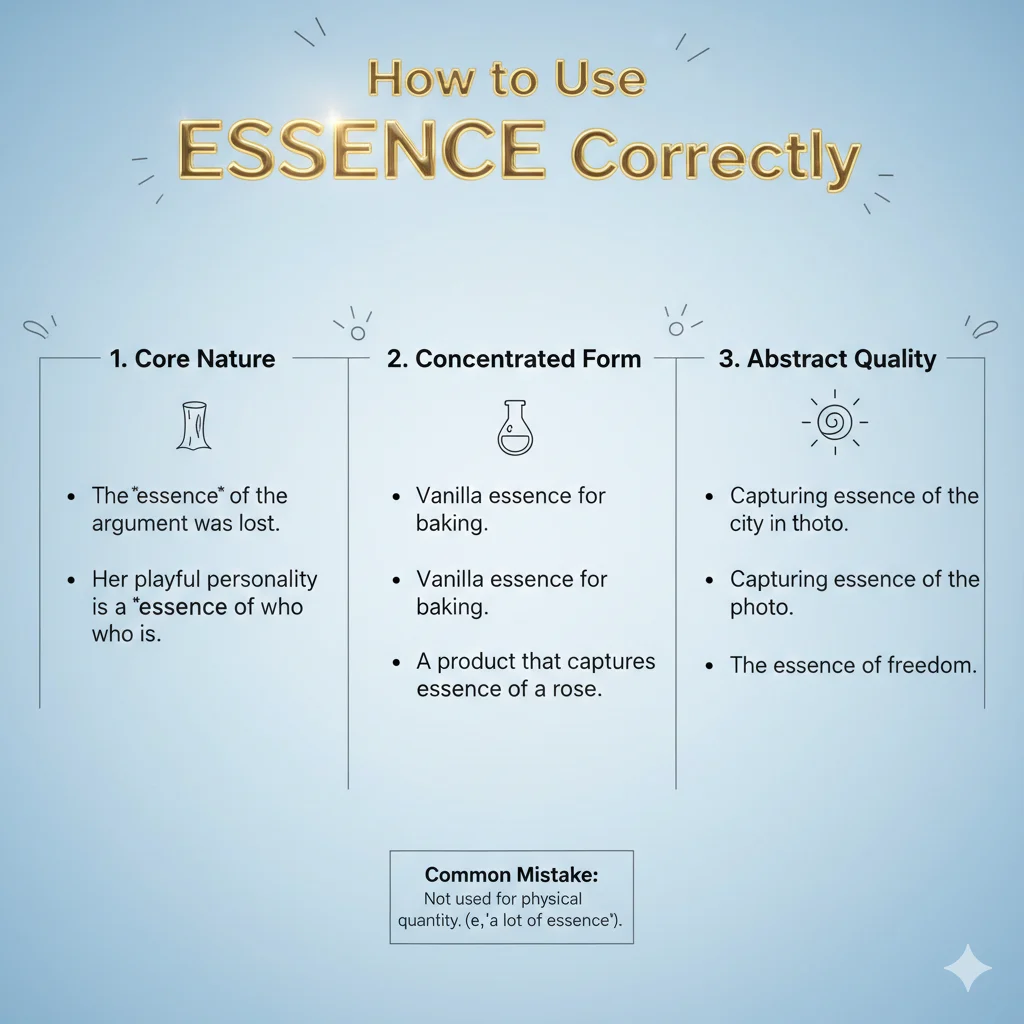
✅ Do Use:
- To describe the core idea or true nature of something.
- In both formal and creative contexts.
- When emphasizing authenticity or identity.
❌ Don’t Use:
- To describe physical appearance or surface qualities.
- In overly casual chats where it sounds unnatural (e.g., “That pizza’s essence was amazing” — better to say “flavor”).
Example:
✅ “The essence of kindness is understanding.”
❌ “The essence of this outfit is blue.”
Common Mistakes or Misinterpretations
- Confusing “essence” with “scent” – While “essence” can mean a perfume or extract, it usually refers to the fundamental nature of something, not just a fragrance.
- Overusing in casual speech – Using “essence” too often can sound overly poetic or formal in daily conversations.
- Mixing “essence” with “existence” – In philosophy, essence is what something is, while existence is that something is.
FAQ Section
1. What does “essence” mean in simple terms?
“Essence” means the core quality or true nature that defines something. For example, “The essence of love is trust.”
2. Is “essence” slang or formal?
“Essence” is a formal English word, not slang. It’s used in both academic and casual contexts to express authenticity or core meaning.
3. What is the difference between “essence” and “core”?
Both mean the central part of something, but “essence” often refers to abstract qualities (like truth or beauty), while “core” refers to practical or structural elements.
4. Can I use “essence” in business writing?
Yes! It’s common in mission statements and brand values, such as “The essence of our company is innovation.”
5. How is “essence” used in perfume or cooking?
In those contexts, it means a concentrated extract used for flavor or fragrance, like “vanilla essence” or “rose essence.”
6. When should I avoid using “essence”?
Avoid it when describing surface details or in very informal conversations — it can sound too serious or poetic for light chats.
Conclusion
In essence (pun intended!), the word “essence” represents the core truth or defining quality of something — whether that’s a person, idea, or object. From philosophy to perfume, its meaning adapts beautifully across contexts.
Now that you understand the essence meaning, you can use it confidently to express authenticity, purpose, and truth in any situation. Keep exploring our site to uncover the meanings behind more fascinating words and expressions!

Deborah Levy is a word-meaning expert at Meanovia.com. She explains complex terms, phrases, and language trends in a clear, relatable way, helping readers quickly understand the exact meaning behind every word.