
Have you ever read the word “equitable” in a law, policy, or workplace discussion and wondered what it really means?
You’re not alone — searches for “equitable meaning” have grown by over 160% worldwide as people focus more on fairness, justice, and inclusion.
“Equitable” isn’t just a buzzword — it’s a powerful concept that shapes how we design systems, resolve conflicts, and treat others.
It’s used everywhere — from legal courts to education, finance, and social justice movements — but many confuse it with “equal.”
Understanding the difference helps you communicate clearly, think critically, and act fairly in personal and professional life.
In this guide, we’ll break down its definition, origin, meanings across contexts, examples, and FAQs — all in simple, human language.
💡 What Does “Equitable” Mean?
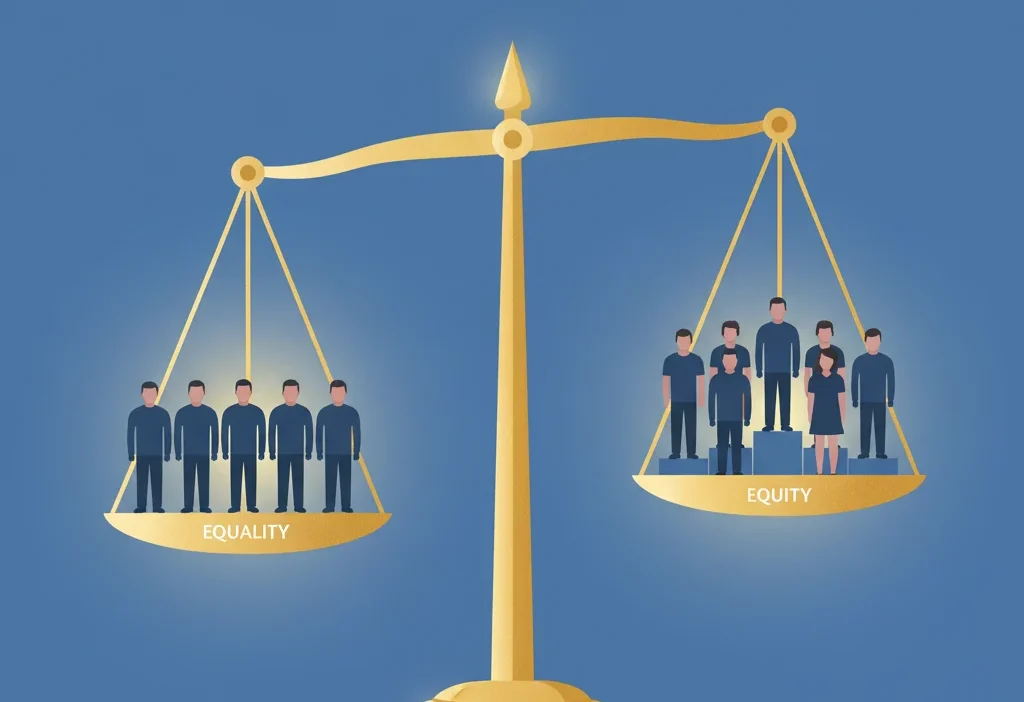
“Equitable” means fair, impartial, and just — treating everyone according to their needs and circumstances rather than giving everyone the exact same thing.
👉 Featured Snippet Definition
“Equitable” refers to fairness and justice — ensuring each person receives what they need to achieve equal outcomes, rather than identical treatment.
Example:
- “The teacher created an equitable grading policy that considered different learning needs.”
- “An equitable society ensures fairness, not sameness.”
🕰️ Origin and Historical Background
The word “equitable” comes from the Latin word aequitas, meaning fairness, equality, or justice.
It entered the English language around the 15th century, primarily through legal contexts in England.
In traditional law, “equity” was a system of justice developed to supplement strict legal rules — ensuring fair outcomes when applying the law literally would be too harsh.
📚 Fact: The Court of Equity in English history was designed to provide justice “in conscience and fairness,” not just by technical law.
Over time, the term spread beyond law — appearing in business ethics, education, social policy, and economics, especially in discussions of equity vs equality.
🌍 Equitable Meaning in Different Contexts
⚖️ In Law and Justice
“Equitable” describes fair treatment or just remedies in legal disputes.
Example: “An equitable settlement means both parties reach a fair outcome.”
Equitable relief (like injunctions or specific performance) aims to restore fairness rather than simply pay damages.
🏫 In Education
In schools and universities, “equitable” means giving each student what they need to succeed — not treating everyone identically.
Example: “Equitable access to education ensures every student, regardless of background, has the resources to learn.”
💼 In the Workplace
Employers use “equitable” to describe fair pay, opportunities, and treatment among staff.
Example: “The company strives for equitable promotion practices.”
It supports diversity, equity, and inclusion (DEI) efforts to balance systemic advantages.
💰 In Finance and Business
“Equitable” refers to fair distribution of resources, investments, or profits.
Example: “Investors expect an equitable share of returns.”
🧑🤝🧑 In Social Justice
“Equitable” solutions aim to close gaps created by inequality — focusing on justice in outcomes, not just rules.
Example: “Equitable healthcare ensures everyone receives care that meets their needs.”

| Context | “Equitable” Means | Example |
|---|---|---|
| Law | Fair remedy beyond legal rules | “Equitable relief was granted.” |
| Education | Fair opportunities for all learners | “An equitable system supports disadvantaged students.” |
| Workplace | Fair pay and opportunity | “We’re building an equitable promotion process.” |
| Finance | Fair distribution of profit | “An equitable division of assets.” |
| Social Policy | Justice-oriented fairness | “Equitable housing access for all.” |
💬 Real-Life Examples of “Equitable”
Example 1:
“The government introduced equitable healthcare reforms to reduce disparities.”
Example 2:
“She received an equitable share of the inheritance.”
Example 3:
“An equitable grading system accounts for students with different challenges.”
Example 4:
“An equitable agreement benefits both parties fairly.”
Example 5:
“They discussed how to make workplaces more equitable for women and minorities.”
🔍 Equitable vs Equal: What’s the Difference?
| Term | Meaning | Example |
|---|---|---|
| Equal | Giving everyone the same resources or treatment | “Each student got one laptop.” |
| Equitable | Giving each person what they need to succeed | “Students with no laptops received extra support.” |
✅ In short:
- Equality = sameness
- Equity = fairness based on need
✅ How to Use “Equitable” Correctly
Do’s:
✅ Use it when referring to fairness or justice in outcome.
✅ Pair it with nouns like solution, policy, treatment, decision, access, distribution.
✅ Great for professional, academic, and ethical writing.
Don’ts:
❌ Don’t confuse it with “equal.”
❌ Avoid using it to mean “identical” — it implies fair, not same.
Examples:
✅ “We need an equitable hiring process.”
❌ “We need an equitable number of pens.” (That would be equal.)
⚠️ Common Misunderstandings
- Equitable = Equal ❌
They’re related but not identical. Equality treats everyone the same; equity ensures fairness. - Equitable Means Generous ❌
It doesn’t mean giving more — it means giving what’s fair and just. - Equitable Only Applies to Law ❌
It’s now widely used in education, social issues, and even environmental policies.
❓ Frequently Asked Questions (FAQ)
1. What does “equitable” mean in simple terms?
It means fair and just, giving each person what they need rather than the same thing as everyone else.
2. What’s the difference between “equitable” and “equal”?
“Equal” means the same treatment; “equitable” means fair treatment considering differences.
3. Is “equitable” a formal word?
Yes. It’s commonly used in formal, academic, and legal contexts, though it appears in everyday discussions about fairness too.
4. What’s an example of an equitable policy?
A school giving extra tutoring to students who need help is an equitable policy — it supports fairness in outcomes.
5. What part of speech is “equitable”?
It’s an adjective. Example: “They made an equitable decision.”
6. What are synonyms for “equitable”?
Fair, impartial, just, unbiased, reasonable, and even-handed.
🧠 Quick Recap
- Meaning: Fair and just, based on individual needs and circumstances.
- Type: Adjective.
- Origin: Latin aequitas → Old French équité → English equitable.
- Contexts: Law, education, finance, social justice.
- Difference: Equality = same; Equity = fair.
- Tone: Formal, ethical, professional.
🏁 Conclusion
“Equitable” goes beyond treating everyone equally — it’s about ensuring true fairness.
In today’s world, where justice and inclusion matter more than ever, understanding this word helps us build systems that uplift everyone, not just a few.
Whether you’re discussing policy, law, or workplace culture, using “equitable” reflects thoughtfulness, integrity, and awareness.
Now that you know what “equitable” means, try using it confidently in your next discussion about fairness, equality, or justice. 🌍
💬 Keep exploring our site for more word meanings and real-world language guides that make English powerful, practical, and precise.

Claire Fuller is a word-meaning specialist at Meanovia.com. She explains complex words, phrases, and language trends in a clear, relatable way, helping readers quickly understand the exact meaning behind every term.