
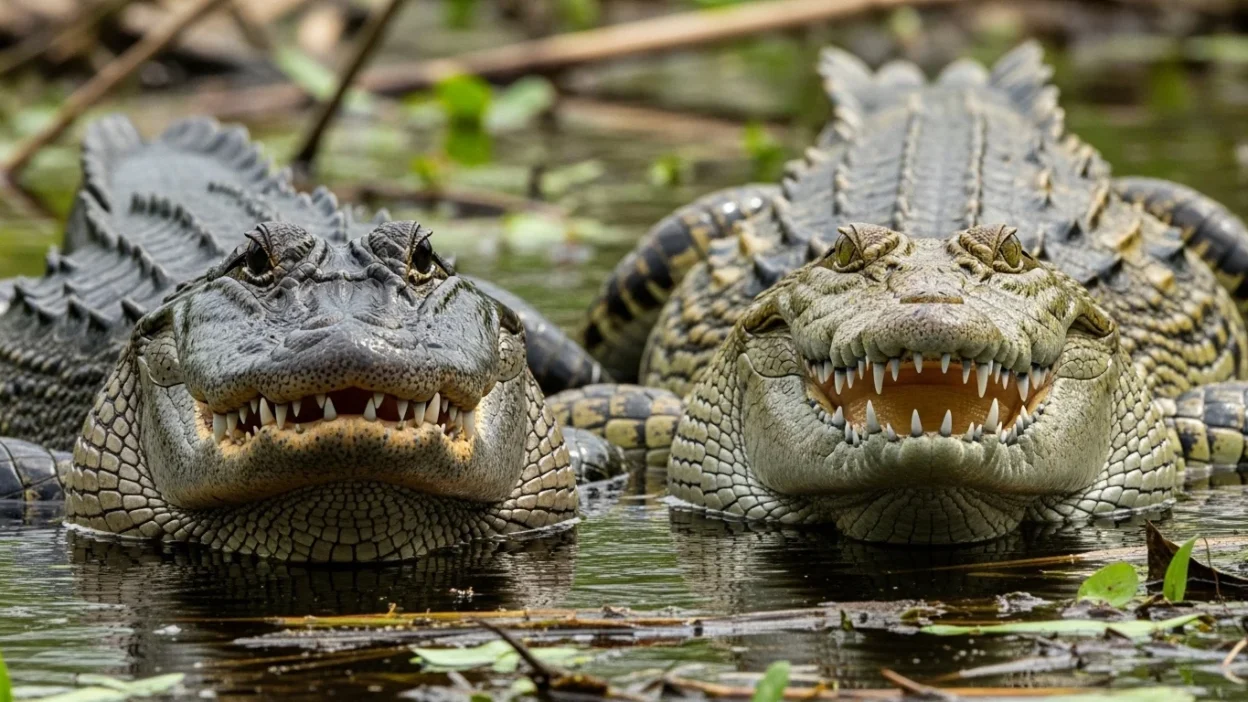
Last summer, my little cousin saw a big reptile in a zoo and shouted, “Look, a crocodile!” The guide smiled and said, “It is an alligator.” That day, we learned the difference between alligator and crocodile in a fun way.
Many people mix these two animals because they look alike. But the difference between alligator and crocodile is real and easy to learn. When you know the difference between alligator and crocodile, you can speak better English and also know more about nature.
This guide will help you see the difference between alligator and crocodile with simple words and real life ideas.
Key Difference Between the Both
Alligators have a wide U-shape snout. Crocodiles have a long V-shape snout. This is the fastest way to tell them apart.
Why Their Difference Is Important for Learners and Experts
Knowing their difference helps in school, exams, and travel. It also helps wildlife workers save animals. Clear words make better talk and better learning.
Pronunciation (US & UK)
- Alligator: US /ˈæl.ɪ.ɡeɪ.t̬ɚ/ | UK /ˈæl.ɪ.ɡeɪ.tə/
- Crocodile: US /ˈkrɑː.kə.daɪl/ | UK /ˈkrɒk.ə.daɪl/
Now let us move to the main guide and see the details step by step.
Difference Between Alligator and Crocodile
1. Snout Shape
Alligator snout is wide and round. Crocodile snout is thin and sharp.
- Example 1: Zoo guide saw a wide snout and said “alligator.”
- Example 2: A long snout in a river meant “crocodile.”
2. Teeth View
Alligator teeth hide when mouth is closed. Crocodile teeth show outside.
- Example 1: Closed mouth with no teeth = alligator.
- Example 2: Teeth showing = crocodile.
3. Color
Alligator is dark gray or black. Crocodile is olive or light brown.
- Example 1: Dark skin in swamp = alligator.
- Example 2: Light skin in river = crocodile.
4. Water Type
Alligator likes fresh water. Crocodile can live in salt water.
- Example 1: Lake in USA has alligators.
- Example 2: Sea coast has crocodiles.
5. Place
Alligators live in USA and China. Crocodiles live in Africa, Asia, and Australia.
- Example 1: Florida swamp = alligator.
- Example 2: Nile River = crocodile.
6. Temper
Alligator is shy. Crocodile is more aggressive.
- Example 1: Alligator ran from people.
- Example 2: Crocodile attacked near river.
7. Size
Crocodiles are often bigger. Alligators are a bit smaller.
- Example 1: 6 meter Nile crocodile.
- Example 2: 4 meter American alligator.
8. Lifespan
Both live long, but crocodiles may live a bit longer.
- Example 1: Alligator lived 40 years.
- Example 2: Crocodile lived 70 years.
9. Skin
Crocodile skin has salt glands. Alligator skin does not.
- Example 1: Crocodile swims in sea.
- Example 2: Alligator stays in lake.
10. Eggs
Both lay eggs, but nests are different.
- Example 1: Alligator nest in grass.
- Example 2: Crocodile nest in sand.
Nature and Behaviour
Alligator Nature
Alligators are calm. They hide and wait. They eat fish and small animals.
Crocodile Nature
Crocodiles are bold. They guard their area. They can attack if near.
Why People Confuse Them
They look alike. Both are big reptiles. Both live near water. Movies also mix them.
Table: Difference and Similarity
| Feature | Alligator | Crocodile | Same Point |
|---|---|---|---|
| Snout | Wide | Narrow | Both reptiles |
| Teeth | Hidden | Visible | Lay eggs |
| Color | Dark | Light | Eat meat |
| Water | Fresh | Fresh + Salt | Love warm places |
| Place | USA, China | Africa, Asia | Strong jaws |
Which Is Better in What Situation?
In zoos and parks, alligators are safer to keep because they are shy. They are good for learning and shows. Crocodiles are better for wild study because they live in many lands and seas. Scientists learn more about nature from crocodiles. But both animals need space and care. No animal is “better.” Each one is special in its own home.
How Are These Words Used in Metaphors and Similes
Connotative Meaning
- Alligator → Neutral or negative (slow, quiet danger)
- Example: “He smiled like an alligator in dark water.”
- Crocodile → Negative (fake tears or danger)
- Example: “She cried crocodile tears.”
Idioms
- Crocodile tears = fake sadness
- Example: He said sorry with crocodile tears.
- See you later, alligator = fun goodbye
- Example: Mom said, “See you later, alligator!”
Works in Literature
- “Peter Pan” – Play by J.M. Barrie, 1904
- “The Enormous Crocodile” – Children’s book by Roald Dahl, 1978
- “Alligator Bayou” – Novel by Donna Jo Napoli, 2009
Movies About Them
- “Lake Placid” – 1999, USA
- “Crawl” – 2019, USA
- “Black Water” – 2007, Australia
- “Primeval” – 2007, USA
FAQ About Their Difference
1. Are alligators and crocodiles the same?
No. They are different reptiles.
2. Which is more dangerous?
Crocodiles are more aggressive.
3. Where do alligators live?
Mostly USA and China.
4. Can crocodiles live in sea water?
Yes, many can.
5. How to tell them fast?
Check the snout shape.
How Are Both Useful for Surroundings
Both keep fish and animal numbers in balance. They clean rivers by eating dead animals. They help nature stay healthy.
Final Words for the Both
Alligators and crocodiles are old animals. They teach us about earth’s past. They need care and respect.
Conclusion
The difference between alligator and crocodile is simple when you know the signs. Look at the snout, teeth, place, and behavior. This knowledge helps students, travelers, and wildlife lovers. It also helps us speak clear English. When we know animals well, we respect nature more. Next time you see one in a zoo or on TV, you can smile and say the right name with pride.

Patrick Gale is a word-meaning expert at Meanovia.com. He explains complex terms, definitions, and language trends with clarity and precision. His goal is to help readers understand the exact meaning behind every word they search.