

Ever met someone who stood their ground no matter what? Or maybe you’ve heard the word “defiant” used to describe a rebellious teen, a bold activist, or even a fearless leader. But what exactly does defiant mean — and how should it be used correctly?
Defiant describes someone who boldly resists authority, rules, or expectations, often showing open disobedience or rebellious behavior.
The word defiant is commonly used in conversations, writing, and social media, and people search for its meaning to understand behavior or attitude. Someone who is defiant refuses to comply with rules or instructions, often deliberately challenging authority or norms. The term can describe both children refusing guidance and adults standing their ground in challenging situations.
Understanding the meaning of defiant helps in interpreting behavior, tone, and context accurately. It’s often used to describe courageous resistance in a positive sense or rebellious disobedience in a negative sense. Recognizing when someone is defiant allows for better communication, conflict resolution, and understanding of social dynamics.
✳️ What Does “Defiant” Mean?
Defiant means showing open resistance or bold disobedience toward authority, rules, or expectations.
It’s used as an adjective to describe someone who refuses to obey, challenges control, or stands up against something — often with confidence or pride.
Example:
“The student gave a defiant look when told to sit down.”
🕰️ Origin and Popularity of “Defiant”
The word “defiant” comes from the Middle French word “défiant,” meaning mistrustful or challenging, and from the verb defy, which means to resist or challenge authority.
It entered English in the 16th century, during a time when monarchs ruled strictly and acts of resistance were seen as bold or dangerous. Over time, “defiant” evolved to describe any person or action that stands against control, whether in politics, parenting, or everyday behavior.
Today, it’s a common term in psychology, education, and media, especially when describing confident rebellion or social activism.
📱 “Defiant” Meaning in Different Contexts
Let’s look at how the word defiant is used across various settings:
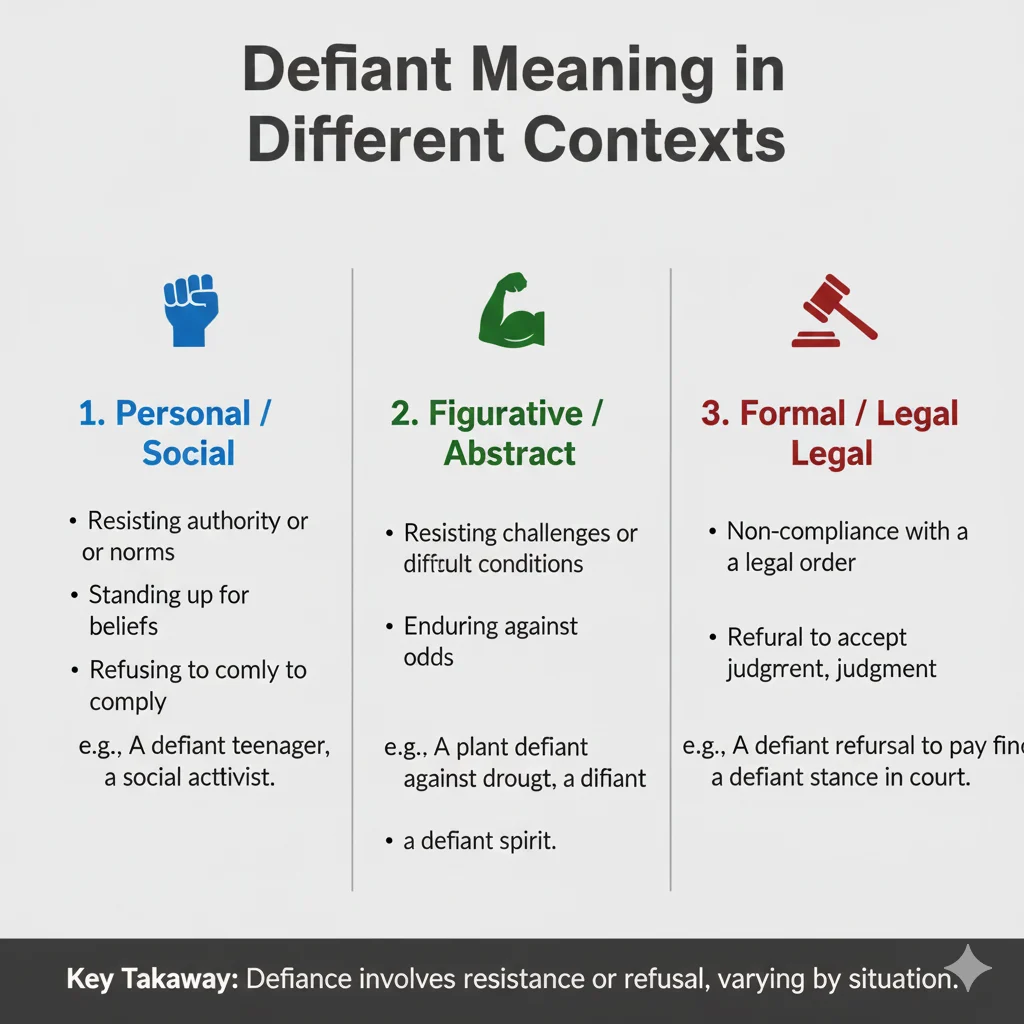
In Everyday Conversations
Used to describe bold or stubborn behavior:
“She crossed her arms and gave a defiant smile.”
In Schools or Parenting
Refers to children who resist rules or authority:
“The teacher noticed a defiant attitude in the classroom.”
In psychology, this may relate to Oppositional Defiant Disorder (ODD) — a behavioral condition where persistent defiance is a symptom.
In the Workplace
Describes someone who challenges management decisions or stands by their values:
“He remained defiant despite pressure from his boss.”
In Politics or Activism
Shows bravery and moral resistance:
“The leader’s defiant speech inspired millions to demand change.”
💬 Examples of “Defiant” in Sentences
Here are realistic examples showing how “defiant” appears in daily use:
Example 1:
“Even after being warned, the protestors stayed defiant.”
Example 2:
“Her defiant tone made it clear she wouldn’t back down.”
Example 3:
“He gave a defiant shrug, refusing to apologize.”
Example 4 (Formal use):
“The CEO’s defiant response to critics highlighted her confidence and independence.”

🔁 Similar or Related Terms
Here are a few words closely related to defiant:
| Term | Meaning | Tone |
| Rebellious | Refusing to follow rules or authority | Negative / Bold |
| Resistant | Opposed or unwilling to comply | Neutral |
| Unyielding | Firm and not giving in | Positive / Strong |
| Stubborn | Unwilling to change opinion | Slightly negative |
| Assertive | Confidently standing one’s ground | Positive |
🧩 How to Use “Defiant” Correctly
✅ Do’s:
- Use “defiant” to describe brave resistance or strong independence.
Example: “She remained defiant in the face of criticism.” - Apply it in emotional, moral, or social contexts.
❌ Don’ts:
- Don’t confuse “defiant” with “confident.”
Being confident is positive and cooperative; being defiant implies resistance or challenge. - Avoid using it for neutral behavior — it always implies some form of opposition.
⚠️ Common Mistakes or Misinterpretations
- Mistake: Thinking “defiant” just means confident
✅ Correction: It includes resistance or disobedience.
Example: A confident employee follows rules; a defiant one challenges them. - Mistake: Using “defiant” in purely positive contexts
✅ Correction: While it can show strength, it also suggests conflict or disapproval. - Mistake: Overusing it for minor disagreements
✅ Correction: Reserve it for serious or bold acts of opposition.
❓ FAQ
1. What does “defiant” mean in simple words?
“Defiant” means refusing to obey or showing bold resistance to authority or rules.
2. Is being defiant a good or bad thing?
It depends on the context — defiance can be positive when standing up for justice, but negative when it disrupts harmony or respect.
3. What is a defiant person like?
A defiant person is bold, resistant, and independent, often challenging control or societal norms.
4. What’s the difference between “defiant” and “rebellious”?
“Rebellious” often implies a broader rejection of control or tradition, while “defiant” focuses on specific acts of resistance.
5. How do you deal with defiance?
Use calm communication, empathy, and clear boundaries — whether it’s a child, employee, or peer showing defiance.
6. Can “defiant” be positive?
Yes! When used in the right context, defiance can symbolize courage, independence, and moral strength.
🏁 Conclusion
To sum it up, “defiant” means boldly resisting authority, control, or expectations. Originating from the word defy, it has evolved into a term that captures strength, rebellion, and conviction — depending on the situation.
Whether describing a fearless activist or a stubborn teen, understanding the tone and context is key.
✨ Now that you know what “defiant” means, you’ll never misuse it again! Keep exploring our site for more word meanings, slang, and language tips.

Patrick Gale is a word-meaning expert at Meanovia.com. He explains complex terms, definitions, and language trends with clarity and precision. His goal is to help readers understand the exact meaning behind every word they search.